
Precision Hydraulic Actuators & Structural Components
Manufactured with high-tolerance CNC turning, precision-honed barrels, and hardened chrome platings, our components provide robust stability under extreme tonnage, lateral loads, and continuous pressure holding.
Global Industrial Status & Commercial Landscape
Analysis of hydraulic stabilization technologies across modern crane engineering, heavy infrastructure, and mobile superstructure stability.
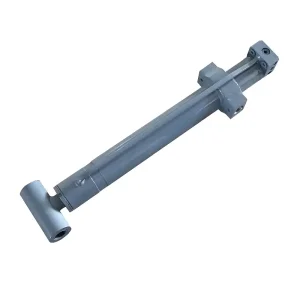
In mobile lifting machinery, truck-mounted knuckle booms, boom concrete pumps, and specialized foundation piling machines, the outrigger expansion cylinder serves as the fundamental mechanical bridge between unstable variable ground surfaces and massive working superstructures. Historically treated as simple linear push-pull devices, outrigger cylinders are now recognized as zero-failure safety barriers. Global construction standards, including EN 13000:2010 for mobile cranes and ASME B30.5, enforce stringent stability factors that have transformed the design requirements of wholesale outrigger expansion cylinders.
The global market is experiencing significant transformation due to infrastructure modernization across North America, the European Union, Southeast Asia, and the Middle East. Mega-infrastructure programs require mobile equipment with extended lateral reach, leading to a demand for larger horizontal stroke-to-retracted-length ratios. Modern outrigger expansion mechanisms typically operate in two coordinated stages: horizontal extension (the expansion or outrigger beam cylinder) and vertical leveling (the outrigger jack or stabilizer cylinder). As telehandlers, rough-terrain mobile cranes, and aerial work platforms (AWP) become lighter to meet highway axle-weight regulations, the hydraulic cylinders themselves must deliver higher yield strengths at reduced mass without sacrificing buckling stiffness.
Tier-1 equipment builders (OEMs) and international replacement distributors require manufacturing partners that deliver not only competitive pricing but also strict metallurgical traceability, zero-drift internal leakage metrics, and integrated valve cavity machining that eliminates external high-pressure hosing vulnerable to worksite impacts.
Technical Architecture, Metallurgy & Tolerancing
Detailed design specifications, seal geometries, and barrel treatments designed to eliminate rod buckling and lateral deflection.
Barrel & Tube Micro-Finishing
Fabricated from cold-drawn seamless carbon steel St52.3 (E355) or high-yield alloy 27SiMn. Barrels undergo internal precision skiving and roller burnishing to achieve Ra ≤ 0.2 µm surface roughness, minimizing friction and extending seal service life beyond 500,000 cycles.
Induction Hardened Rods
Machined from 40Cr, 42CrMo4, or high-strength micro-alloy steel, our piston rods are medium-frequency induction hardened to 50–56 HRC. They feature hard chrome plating (minimum 25–40 µm thickness), resisting ASTM B117 neutral salt spray tests up to 500 hours without oxidation.
Integrated Dual Pilot Valves
Direct flange-mounted or internally threaded dual counterbalance valve manifolds prevent fluid escape in the event of external hose rupture. Zero mechanical drift is achieved via hardened PO check valves, ensuring positive position locking under peak tonnage.
| Technical Parameter | Standard Duty Range | Severe / Heavy Crane Duty | Testing & Compliance Protocol |
|---|---|---|---|
| Bore Diameters | Ø 50 mm – 160 mm | Ø 180 mm – 320 mm+ | ISO 3320 / DIN 24336 Ultrasonic flaw detected |
| Piston Rod Diameters | Ø 35 mm – 110 mm | Ø 120 mm – 220 mm | Surface finish Ra ≤ 0.15 µm, Runout < 0.02 mm |
| Operating Working Pressure | 160 – 250 bar (2300–3625 PSI) | 315 – 420 bar (4568–6090 PSI) | Dynamic hydraulic cycle tested to 1.5× design pressure |
| Operating Temperature | -25°C to +80°C | -45°C to +110°C (Arctic / Desert) | Low-temperature NBR/Polyurethane or Viton/PTFE seals |
| Integrated Safety Valves | Single Pilot-Operated Check | Dual Counterbalance Manifolds | Hose-burst safety shut-off, < 15 ms response time |
| Corrosion Resistance | Class 9 (ISO 4540) > 240 hrs NSS | Dual layer chrome or Ni-Cr > 1000 hrs | ASTM B117 / ISO 9227 Salt Spray Testing |
Localized Scenarios & Technology Trends
How customized outrigger expansion mechanisms solve real-world challenges across diverse operating climates and equipment types.
1. Extreme Arctic & Sub-Zero Cold-Climate Machinery
In high-latitude mining developments across Northern Canada, Scandinavia, and Siberia, machinery operates in ambient temperatures dropping to -40°C to -50°C. Conventional nitrile elastomer seals become brittle, leading to micro-cracking and sudden loss of hydraulic pressure during outrigger extension. Our Arctic-spec expansion cylinders utilize proprietary cold-resistant polyurethane rod seals combined with cryogenic-rated impact-tested steel (impact toughness Charpy V-notch tested at -40°C ≥ 27J). This ensures stable horizontal deployment of mobile crane stabilizers without hydraulic fluid leakage or catastrophic seal blowout.
2. Corrosive Coastal, Offshore & Port Container Handling
Reach stackers, marine pedestal cranes, and port-side rescue platforms face high-salinity air, ocean spray, and high humidity. In these corrosive environments, unprotected piston rods pit and rust rapidly, tearing through rod wipers and contaminating the entire hydraulic power unit. Qingdao Micro Precision Machinery deploys advanced multi-layer nickel-chromium electroplating or optional high-velocity oxygen fuel (HVOF) ceramic thermal coatings. This engineering standard exceeds 1,000 hours of continuous salt spray exposure, preventing rust jacking and extending seal life on extended stabilizer beams.
3. High-Cycle Concrete Boom Pumps & Seismic Foundations
Truck-mounted concrete boom pumps subject outrigger cylinders to continuous cyclic pulsating loads. Every stroke of the twin concrete pumping cylinders creates a dynamic recoil through the vehicle chassis. If the outrigger cylinders lack adequate internal cushioning, or if the barrel-to-mounting-flange welds suffer from micro-porosity, fatigue failure occurs at the weld roots. By employing submerged arc welding (SAW) and robotic continuous welding with full weld penetration and ultrasonic non-destructive testing (NDT), our cylinders easily withstand more than 1,000,000 load-reversal pulsations without fatigue cracking.
4. The Next Frontier: Smart Sensors & IoT-Integrated Stabilizers
The industrial hydraulics landscape is evolving toward real-time telemetry. Modern intelligent outrigger expansion cylinders increasingly feature integrated contactless magnetostrictive linear position sensors directly within the gun-drilled piston rod. These smart sensors communicate position signals via CAN-bus (J1939) to the vehicle's electronic control unit (ECU). This integration enables automated outrigger beam extension tracking, anti-tipping envelope calculation, and predictive maintenance alerts based on seal cycles and load-time history.
OEM/ODM Turnkey Engineering & Quality Control
Since 2006, Qingdao Micro Precision Machinery has delivered end-to-end hydraulic cylinder engineering tailored to demanding OEM design criteria.
1. Finite Element Analysis (FEA)
Every outrigger cylinder design undergoes comprehensive 3D finite element structural analysis to identify stress concentrations, calculate rod column buckling limits (Euler's buckling formulas), and optimize barrel wall thicknesses for high-strength, lightweight performance.
2. In-House CNC Machining
Equipped with modern CNC turning centers, deep-hole drilling and boring machines, and internal grinding machines. Tight concentricity tolerances between rod bore, piston land, and cylinder cap threads are maintained within ±0.015 mm to eliminate internal seal distortion.
3. Rigorous Pressure & Drift Testing
Every individual cylinder manufactured at our Qingdao facility undergoes 100% full-stroke hydrostatic proof testing up to 150% of rated operating pressure. Zero-drift pressure holding checks confirm pilot check valve sealing and piston seal integrity before packaging.
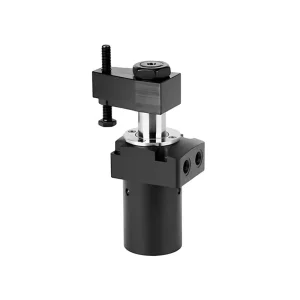
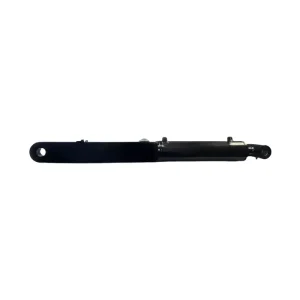
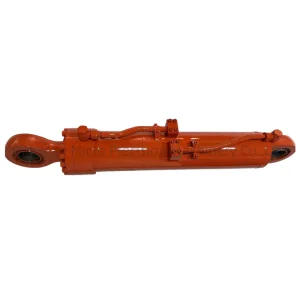
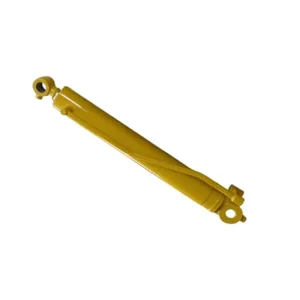
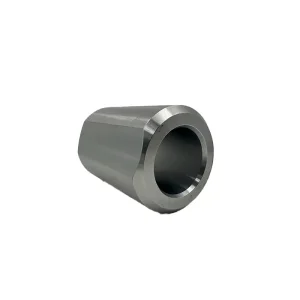
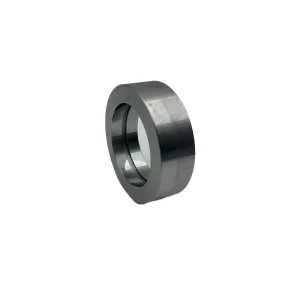
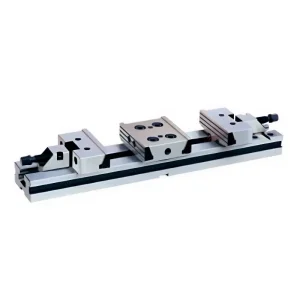
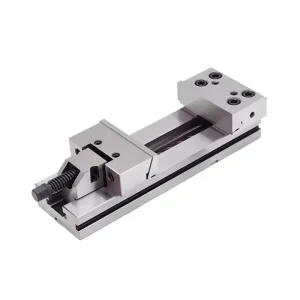
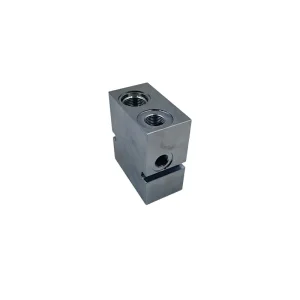
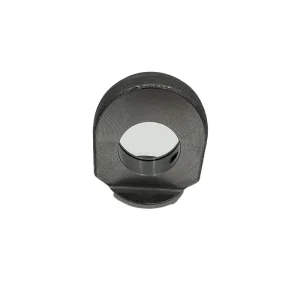
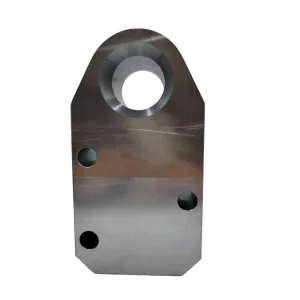
Precision Hydraulic Manifolds, Cylinders & CNC Accessories
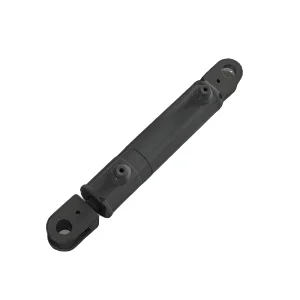
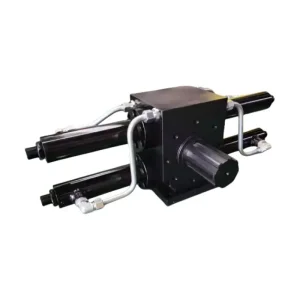
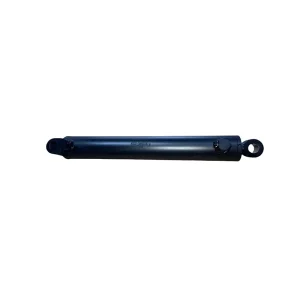
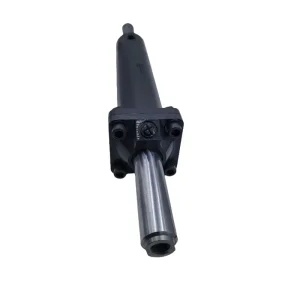
Explore our core manufactured hydraulic components, valve systems, and tooling accessories built for reliable integration in construction, mining, and industrial machinery.
Frequently Asked Questions on Outrigger Cylinders
Comprehensive engineering insights for procurement directors, mechanical design engineers, and equipment rebuilders.
What distinguishes an outrigger expansion cylinder from a standard industrial tie-rod cylinder?
How do you prevent hydraulic cylinder drift during heavy crane or aerial lift operations?
What technical parameters are needed to quote custom outrigger expansion cylinders?
- Dimensional Specs: Piston bore diameter, rod diameter, working stroke length, and closed pin-to-pin retracted length.
- Operating Parameters: Working pressure, maximum system relief pressure, push/pull tonnage requirements, and expected cycle frequency.
- Mounting Geometry: Pin eyes with spherical bearings, trunnions, clevises, flange mounts, or cross-tube configurations.
- Hydraulic Interfacing: Port standards (SAE, BSPP, metric O-ring boss), port orientations, and integrated counterbalance valve cavity specifications.
- Operating Environment: Operating temperature range (e.g., Arctic -40°C vs. desert +50°C) and environmental exposure conditions (coastal salt fog, quarry dust, chemical washdowns).