High-Performance Crane Hydraulic Actuators
Explore our core engineered hydraulic cylinders specifically calibrated for maximum pressure thresholds, harsh environmental duty cycles, and strict safety holding specifications.
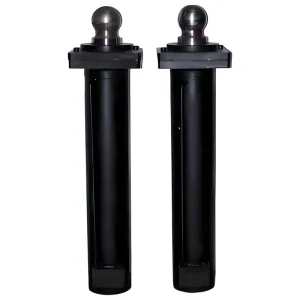
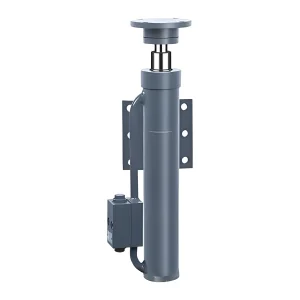
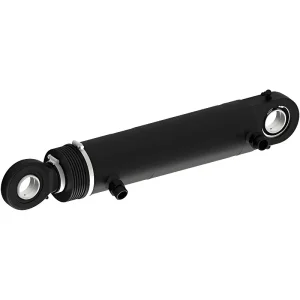
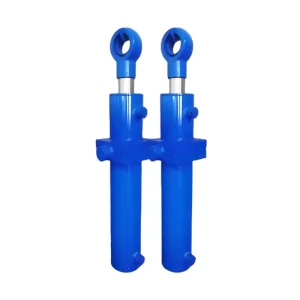
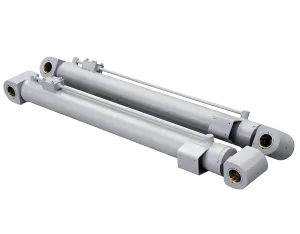
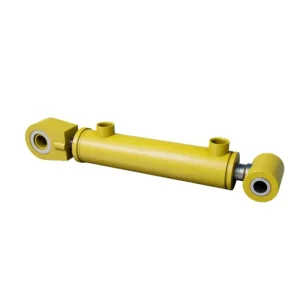
Engineering Solutions for Mobile Hydraulic Cranes
Modern mobile truck cranes operate at the intersection of extreme mechanical tension, dynamic crosswinds, and micro-precision fluid power. Discover how custom hydraulic cylinder topologies resolve complex kinematic stresses.
Multi-Stage Boom Telescoping
Telescopic boom cylinders execute linear proportional extension under intense cantilever moments. Utilizing single-cylinder pin-locking or synchronized wire-rope telescoping mechanisms, our barrels employ proprietary internal oil distribution circuits that eliminate external tubing, reducing dead weight and mitigating snag risks during high-elevation crane operations.
Heavy-Duty Boom Luffing
Luffing cylinders support the full operational mass of the multi-section boom and suspended payload. Designed with thick-walled cold-drawn alloy steel and dual-pilot integrated check valves, these units eliminate hydraulic drift and prevent boom collapse under catastrophic line ruptures, maintaining zero micro-creep over continuous duty cycles.
Outrigger Jack & Beam Systems
Stabilization relies on outrigger expansion and vertical jack cylinders. Fitted with mechanical screw locks or integral double counterbalance cartridges, they absorb irregular eccentric ground-reaction forces, ensuring an unyielding, level crane base on asphalt, unpaved gravel, or marsh terrain pads.
Global Commercial Dynamics & Hydraulic Evolution
An in-depth analysis of worldwide commercial shifts, lightweighting imperatives, and regional manufacturing benchmarks driving next-generation truck crane fluid power engineering.
High-Pressure Downsizing
Global crane manufacturers (OEMs) are transitioning from traditional 28–32 MPa platforms to compact 35–42 MPa systems. Elevating hydraulic pressure reduces bore diameter requirements, cutting overall actuator mass by up to 22% and granting mobile cranes improved axle weight compliance under strict European and North American road transport regulations.
Hybrid & Electric Cranes
With electric mobile cranes entering commercial infrastructure zones, fluid power systems demand ultra-low parasitic energy loss. Friction-optimized polyurethane-PTFE step seal matrices and micro-finished honed bores drop breakaway friction, preserving battery bank charge during extended lifting shifts in metropolitan low-emission zones.
Total Cost of Ownership
Fleet operators and Tier-1 contractors prioritize mean time between overhaul (MTBO). The supply bottleneck is no longer simply procurement cost, but field seal durability and anti-scuffing piston rings that prevent unplanned operational stoppages on mission-critical bridge installations and high-rise construction.
| Cylinder Designation | Bore / Rod Range | Rated Working Pressure | Fatigue Life Expectancy | Integrated Safety Valve Logic |
|---|---|---|---|---|
| Telescopic Boom Cylinder | Ø 160 mm – Ø 360 mm | 35 MPa (Peak 42 MPa) | > 250,000 extension cycles | Direct-flange double counterbalance, burst check |
| Main Luffing / Derricking | Ø 200 mm – Ø 450 mm | 32 MPa – 38 MPa | > 350,000 full load cycles | Hose-rupture safety block, zero-leakage pilot lock |
| Vertical Outrigger Jack | Ø 110 mm – Ø 220 mm | 31.5 MPa | > 500,000 deployment cycles | Mechanical swivel locks, bidirectional checks |
| Counterweight Lifting | Ø 80 mm – Ø 160 mm | 25 MPa – 31.5 MPa | > 200,000 cycles | Mechanical detent & piloted directional valves |
Metallurgy, Seal Physics & CNC Tolerances
Long cylinder strokes and colossal bending moments demand extreme internal concentricity. Here is how Micro Precision Machinery enforces quality at every micron.
High-Yield Steel Tubes
We source seamless cold-drawn alloy tubes (27SiMn, ST52, and 42CrMo4) with ultimate tensile strengths exceeding 850 MPa. Every lot undergoes full ultrasonic flaw detection (UT) and Eddy Current non-destructive testing to verify metallurgical integrity before skiving and roller burnishing.
Rod Hard Chrome Plating
Piston rods undergo medium-frequency induction quenching to a case depth of 1.5–3.0 mm (hardness HRC 52–58), followed by micro-crack hard chrome deposition (30–50 µm). Salt spray corrosion resistance satisfies ASTM B117 standards for over 960 hours without pitting or flaking.
Low-Friction Seal Engineering
Employing premium polyoxymethylene (POM) guide rings, polyurethane U-rings, and virgin/bronze-filled PTFE step seals, our dynamic configurations handle velocity spans from 0.005 m/s to 1.5 m/s while maintaining operational fluid seal integrity up to 120°C.
Worldwide Crane Deployment Scenarios
From sub-zero Siberian oil fields to equatorial desert installations, our hydraulic cylinders are specifically matched to challenging environmental and geotechnical conditions.
Sub-Zero Climates (-40°C)
Standard nitrile seals fail when exposed to cryogenic brittleness. For sub-arctic construction and mining support, we integrate low-temperature HNBR and specialized fluorocarbon compounds alongside internal pre-heating ports to eliminate cylinder stiction and catastrophic seal fracturing.
High Heat & Silica Dust
Airborne silica abrasives can degrade rod plating within months. Our desert package incorporates bi-directional aggressive metal scraper rings and nickel-chromium dual-layer plating that repels quartz grit and withstands ambient temperatures exceeding +55°C without hydraulic seal degradation.
Marine & Offshore Ports
Dockside mobile cranes encounter airborne sodium chloride and sulfur oxides. We apply HVOF (High-Velocity Oxygen-Fuel) supersonic ceramic coating to external rod bodies and marine epoxy coating to cylinder barrels, providing impervious defense against galvanic corrosion.
Wind Turbine Erection
Tower-assembly cranes demand extended luffing stability at heights surpassing 140 meters. Ultra-rigid cylinder guidance prevents structural buckling and lateral oscillation, enabling millimeter-level blade alignment in fluctuating wind shears.
Global Standards, Traceability & Safety Compliance
Micro Precision Machinery provides full engineering dossiers, localized documentation, and third-party validation to satisfy North American and European regulatory bodies.
EN 13000 & ASME B30.5
Mobile crane regulations mandate fail-safe boom holding mechanisms. Every luffing and outrigger cylinder is designed in strict accordance with European EN 13000 and American ASME B30.5 crane safety standards, featuring pilot-to-open counterbalance manifold logic with zero internal drop-leakage.
ISO 4406 Cleanliness Audit
Hydraulic spool failure is predominantly caused by particulate contamination. Our post-machining ultrasonic washing and clean-room assembly processes guarantee system fluid cleanliness adhering strictly to ISO 4406 Grade 16/14/11 standards prior to factory pressure testing.
EN 10204 3.1 Certification
Every forging, welded eye, and honed cylinder tube is tagged with batch traceability. We furnish mill test certificates, ultrasonic non-destructive testing reports, and individual hydrostatic proof-test inspection charts running at 1.5x working pressure for 100% of outbound shipments.
Technology Roadmap: Smart Sensing & Digital Fluid Power
The crane industry is advancing toward autonomous synchronization and condition-based predictive maintenance. Review our active engineering integration pathways.
Integrated Magnetostrictive Sensors
Embedded linear displacement sensors machined directly inside the cylinder rod provide absolute stroke feedback with sub-millimeter resolution. Compatible with CANopen and SAE J1939 protocols, these sensors provide real-time telemetry to the crane’s Load Moment Limiter (LML) system.
Wireless IoT Health Monitoring
We are piloting micro-sensor manifolds embedded in the cylinder head that track fluid temperature spikes, high-frequency pressure pulsations, and seal degradation biomarkers, signaling preventive maintenance alerts before unplanned job-site delays occur.
Bio-Degradable Fluid Compatibility
As environmentally sensitive urban and waterway construction projects ban mineral-based hydraulic oils, our engineering laboratory validates seal formulations compatible with synthetic ester (HEES) and polyglycol (HEPG) fluids without seal hardening or swelling.
Frequently Asked Technical & Procurement Questions
Direct insights from our senior hydraulic design engineers addressing critical considerations for global buyers, crane retrofitters, and OEMs.
How do you engineer truck crane cylinders to prevent buckling under high cantilever strokes?
Buckling resistance in long-stroke telescopic and luffing cylinders is calculated using advanced Euler and Rankine formula models combined with non-linear Finite Element Analysis (FEA). We increase the outer diameter of the main barrel, utilize thickened wall profiles in peak bending zones, integrate wide composite wear rings with high compressive strength (over 300 MPa) to optimize mechanical guidance length, and maintain strict concentricity between the piston rod, gland head, and cylinder tube.
Can you replicate or customize cylinders for obsolete or existing crane models from samples?
Yes. Our engineering division in Qingdao specializes in both OEM co-development and reverse engineering from legacy assemblies or sample parts. We utilize precision coordinate measuring machines (CMM), optical spectroscopy for alloy verification, and surface roughness profilometers to map the exact dimensions, porting standards, and pin clearances. A formal 2D/3D CAD blueprint is submitted for customer sign-off prior to CNC milling and machining.
What valve manifold configurations are integrated into your outrigger and luffing cylinders?
We build our own hydraulic manifold valve blocks directly mounted to the cylinder ports to prevent line-rupture hazards. For luffing cylinders, we incorporate dual-pilot counterbalance valves with a minimum 4.5:1 pilot ratio and hardened steel check seats. For outrigger jacks, we install mechanical zero-leakage pilot-operated check valves and manual screw-down detents to safeguard against pressure loss over prolonged lifting operations.
What surface treatment ensures rod longevity in corrosive marine or chemical work sites?
For standard heavy applications, our medium-frequency induction hardened rods with 30–50 µm hard chrome achieve 960 hours in ASTM B117 salt spray tests. For severe chemical or offshore installations, we provide optional dual-layer nickel-chromium electroplating (30 µm nickel + 20 µm hard chrome) or supersonic HVOF ceramic coatings that surpass 1,500 hours of continuous corrosion exposure testing without surface degradation.
What testing protocols are executed before export release?
100% of our manufactured cylinders undergo computerized pressure testing. Protocols include: internal bypass leakage testing at nominal pressure, dynamic low-pressure friction tests (ensuring no stick-slip behavior at 0.5 MPa), high-pressure hydrostatic proof testing held at 150% of rated operating pressure for a minimum of 10 minutes, and particle cleanliness analysis in compliance with ISO 4406.
What is your production lead time for prototype and volume OEM orders?
Prototype samples and custom replacement cylinders typically require 3 to 4 weeks from approved design drawings to completion. Standard batch production orders for mobile crane OEMs typically ship within 30 to 45 days. We provide sea freight, multimodal rail transport, or air express solutions complete with customs documentation, export-grade fumigated wooden crating, and anti-corrosive VCI vapor barrier wrapping.
Industrial Hydraulic Cylinders & CNC Tooling Components
Explore our extended catalog of mobile equipment cylinders, steering actuators, bulldozer attachments, and precision CNC machine tool fixtures manufactured in Qingdao.