High-Duty Hydraulic Actuators & Control Blocks
Engineered for high burst ratings, multi-axis shock absorption, and contamination resilience across severe civil and quarry infrastructure projects.
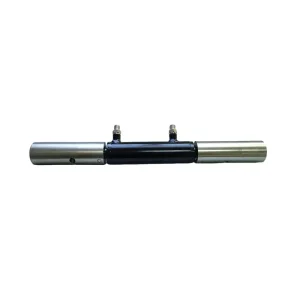
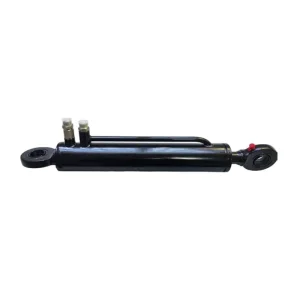
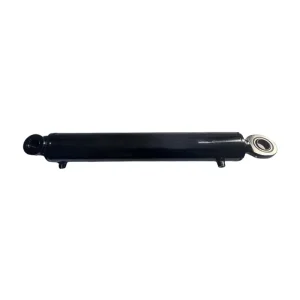
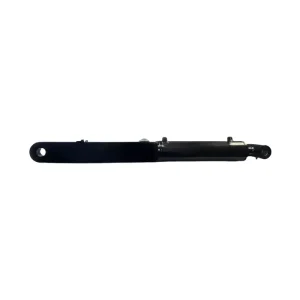
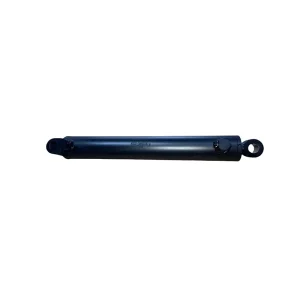
Engineering Loader Cylinders for High-Frequency Earthmoving Operations
A rigorous review of structural dynamics, micro-crack fatigue mitigation, and global procurement criteria for OEM and aftermarket engineering divisions.
Dynamic Side-Load Absorption
Wheel loaders operating under asymmetric penetration face extreme radial side loads. Our heavy-wall 27SiMn and ST52 honed barrels feature extended bronze wear rings that distribute lateral forces across the cylinder head, preventing localized score marks and premature oil bypassing.
Advanced Surface Metallography
Piston rods undergo medium-frequency induction quenching (HRC 52-58) down to a depth of 1.5–3.0 mm, topped with 30-50 μm of hard chrome plating. Salt spray resistance exceeds ASTM B117 200 hours, keeping rods scratch-free in granite dust, clay, and coastal port loading operations.
Hydraulic Cushion Deceleration
Sudden bucket breakout shocks and rapid return cycles are throttled using internal non-return cushion sleeves. These slow the piston rod down across the final 20 mm of travel, reducing peak spike pressure from 500 bar down to stable operating thresholds.
Evolutionary Trends in Wheel Loader and Earthmover Hydraulics
The global off-highway mobile equipment sector is demanding lighter weight, higher hydraulic pressures, and intelligent status feedback. Modern compact and heavy wheel loaders run working cycles 15% faster than previous generations. Operating pressures have moved from legacy 210-bar designs to 280–350 bar circuits, demanding tighter internal tolerances and stronger steel alloys to avoid barrel deformation under pulse loading.
In response to tighter environmental standards and electric wheel loader developments, Qingdao Micro Precision Machinery has re-engineered hydraulic pathways to cut internal flow turbulence and reduce heat buildup. Lowering parasitic losses not only extends hydraulic fluid life but also cuts battery drain on emerging electric-drive loaders.
Procurement Priorities for Global Equipment Fleets
Procurement directors and hydraulic system engineers running multi-regional assembly lines look for three main factors when qualifying a loader cylinder manufacturer:
- Bore Concentricity & Sealing Longevity: Honed tube tolerance must stay within ISO H8/H9, with surface roughness held at Ra ≤ 0.2 μm. Variations cause micro-extrusion of polyurethane seals, causing rod weepage and equipment downtime.
- Pin-to-Pin Accuracy for High-Speed Robotic Insertion: Automated assembly lines need strict pin bore tolerances within ±0.05 mm to prevent pin bind and speed up installation.
- Reliable Raw Material Provenance: Certified mechanical mills must provide full traceability for chemical properties, yield strength (over 550 MPa), and low-temperature impact resilience down to -40°C.
| Cylinder Parameter | Standard Commercial Grade | Micro Precision Mining/Heavy Spec | Design Advantage |
|---|---|---|---|
| Barrel Material | #20 / #45 Carbon Steel Pipe | 27SiMn / Cold-Drawn ST52 Seamless Alloy | Yield strength > 580 MPa prevents barrel bulge under spikes |
| Piston Rod Finishing | Hard Chrome Only (< 20 μm) | Induction Quenched (HRC 55+) + 40 μm Hard Chrome | Resists stone strikes, rock pitting, and salt corrosion |
| Internal Sealing Suite | Standard NBR O-Rings | Hallite / Parker Premium Polyurethane Step Seals | Operational stability between -40°C and +115°C |
| Proof Pressure Testing | Static 1.25x working pressure | 100% Dynamic 1.5x working test for 180 seconds | Guarantees zero internal seal bypass and weld integrity |
Integrated Engineering Verification & Process Control
From metallurgical analysis to coordinate measuring machines (CMM) and dynamic testing benches, we eliminate variation at every production stage.
100% Mill Certificate Traceability
Every batch of raw tubing and solid round bar comes with certified heat numbers and chemical analysis reports. Our in-house metallurgists run ultrasonic flaw detection to catch internal slag inclusions or wall thickness variations before tubes reach the CNC line.
Automated Robot-Shielded Welding
Cylinder trunnions, flange mounts, and base clevises are joined using multi-pass robotic metal active gas (MAG) welders. Ultrasonic weld testing verifies zero porosity and uniform fusion along the root face, eliminating structural failure at high cyclic pressure.
Smart Sensor Ready (Future Roadmap)
We are integrating non-contact linear variable differential transformers (LVDT) and magnetostrictive stroke sensors right into the cylinder rod. These deliver real-time position data for autonomous loader operations, digital grade-control, and automated return-to-dig cycles.
Frequently Asked Questions on Loader Cylinder Sourcing
Detailed engineering guidelines and operational requirements for custom designs, maintenance cadences, and supply chain timelines.
What specific operating parameters are required to generate an exact custom quote?
To produce an engineering quotation and structural drawing, provide the inner bore diameter, outer rod diameter, stroke length, pin-to-pin closed retracted dimension, maximum working pressure (nominal and peak), mounting style (cross-tube, spherical clevis, or trunnion), port thread standard (SAE, BSPP, or metric), and operating temperature range. Supplying CAD drawings (.STP / .DWG) or original equipment manufacturer (OEM) replacement part numbers cuts the technical review cycle down to under 24 hours.
Why do wheel loader tilt and lift cylinders develop internal leakage over time?
Internal leakage typically stems from three mechanical factors: micro-fine contamination in the hydraulic oil scoring the piston seals, persistent side-loading that deforms guide rings and creates uneven clearance, or high thermal cycles causing seal material hardening. We address this with double-lip polyurethane step seals, heavy phenolic fabric guide strips, and optional rod scrapers to stop dust from entering through the gland head.
Can you manufacture replacement cylinders matching discontinued or legacy loader brands?
Yes. Our Qingdao engineering facility regularly reverse-engineers hydraulic assemblies from physical samples, worn components, or legacy technical manuals. We re-dimension all wear surfaces, run structural load calculations for modern working pressures, and generate new digital drawings for your sign-off before manufacturing begins.
What surface treatment is best for loader cylinders working in maritime ports or fertilizer handling?
For corrosive environments, standard chrome plating can be upgraded to multi-layer nickel-chrome plating (nickel undercoat ≥ 20 μm plus hard chrome ≥ 30 μm) or continuous QPQ (Quench-Polish-Quench) liquid nitriding. This finish resists salt-induced pitting and passes 500+ hour neutral salt spray tests under ASTM B117 standards.
How does Micro Precision handle batch consistency and packaging for overseas container shipments?
Every production run follows defined coordinate measuring machine (CMM) routines and pressure testing procedures recorded under ISO 9001:2015 tracking. Finished cylinders are flushed with rust-inhibiting oil, hydraulic ports are plugged with threaded caps, and parts are wrapped in VCI anticorrosion film before being packed into steel-reinforced, export-grade plywood crates built for overseas container handling.
Precision Hydraulic & Tooling Components
High-precision components built to international ISO, DIN, and JIS standards for heavy equipment workshops and manufacturing operations.