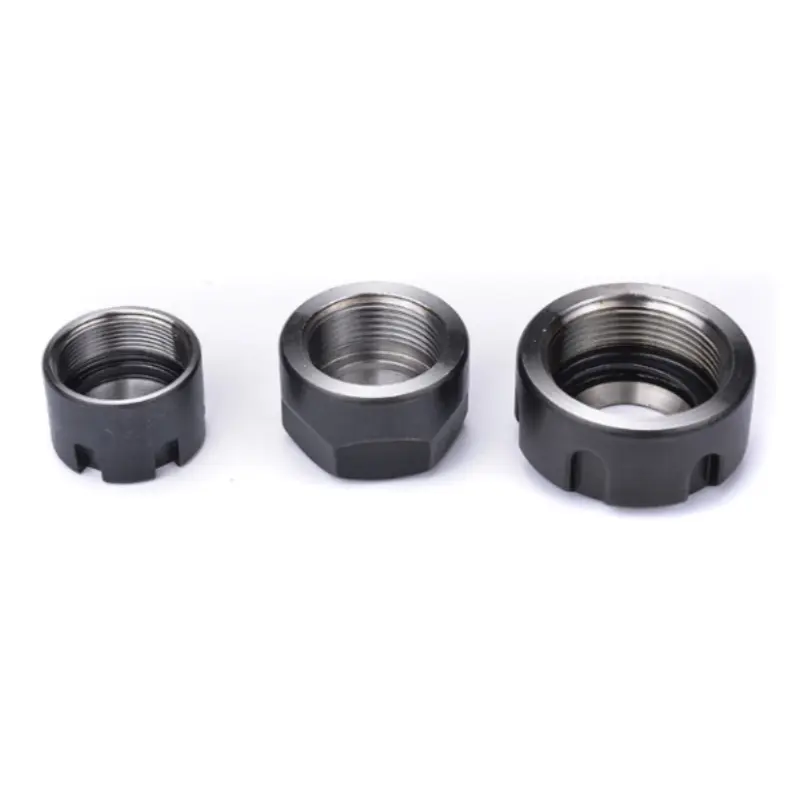
OEM ER Collet MPM-EN0072 Suppliers, Factories
Product Description
Core Function: By tightening the ER nut, the ER collet is contracted, securely grasping the tool holder (or workpiece shaft). This ensures that during high-speed cutting and precision machining operations, the tool or workpiece remains firmly in place without loosening or shifting, guaranteeing machining accuracy and operational safety.
The clamping system combining the ER nut and ER collet features strong versatility, a wide clamping range, and high precision. It can be adapted to tools or workpieces of different diameters and serves as a crucial element in achieving efficient and precise clamping in CNC machining.
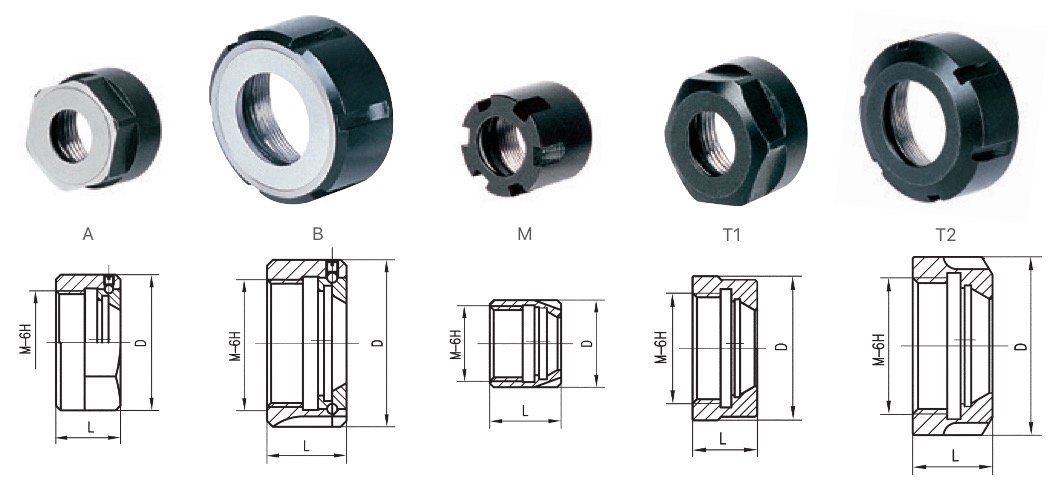
| Model No. | Type | D (mm) | L (mm) | M | W (Kg) |
|---|---|---|---|---|---|
| ER11-A | A | 19 | 11.3 | M14x0.75 | 0.005 |
| ER16-A | A | 28 | 17.5 | M22×1.5 | 0.01 |
| ER20-A | A | 34 | 19 | M25×1.5 | 0.05 |
| ER25-B | B | 42 | 20 | M32×1.5 | 0.14 |
| ER32-B | B | 50 | 22.5 | M40×1.5 | 0.20 |
| ER40-B | B | 63 | 25.5 | M50x1.5 | 0.30 |
| ER50-B | B | 78 | 35.5 | M64x2 | 0.50 |
| ER8-M | M | 12 | 12 | M10×0.75 | 0.005 |
| ER11-M | M | 16 | 12 | M13×0.75 | 0.01 |
| ER16-M | M | 22 | 18 | M19×1 | 0.05 |
| ER20-M | M | 28 | 19 | M24×1 | 0.05 |
| ER25-M | M | 35 | 20 | M30×1 | 0.08 |
| ER11-T1 | T1 | 19 | 11.3 | M14×0.75 | 0.005 |
| ER16-T1 | T1 | 28 | 17.5 | M22×1.5 | 0.01 |
| ER20-T1 | T1 | 34 | 19 | M25×1.5 | 0.05 |
| ER25-T2 | T2 | 42 | 20 | M32×1.5 | 0.14 |
| ER32-T2 | T2 | 50 | 22.5 | M40×1.5 | 0.20 |
| ER40-T2 | T2 | 63 | 25.5 | M50×1.5 | 0.30 |
| ER50-T2 | T2 | 78 | 35.5 | M64×2 | 0.50 |
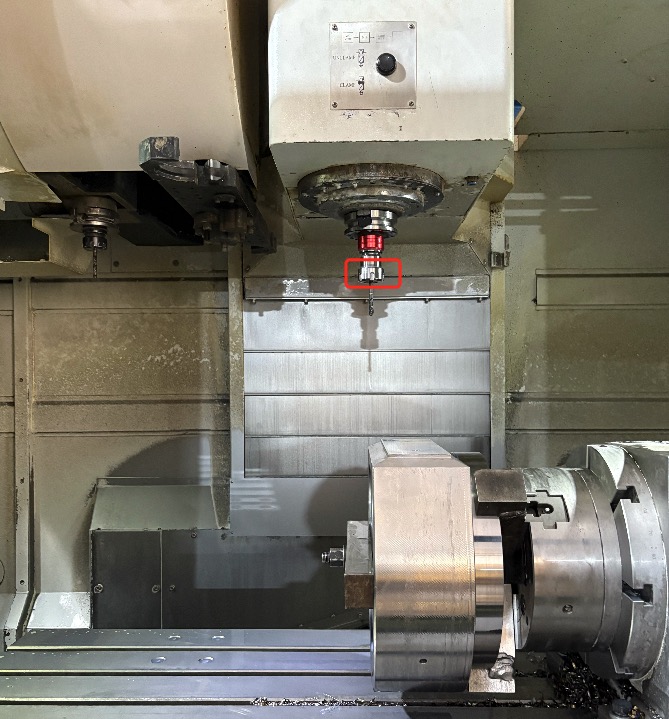
Qingdao Micro Precision Machinery Co., Ltd. has been providing high-precision CNC tool solutions and services to global customers for decades.
- Reliable Quality
- Competitive Price
- High Precision & Tight Tolerance
- Continuous Improvement
- Defect-Free Products
- On-Time Delivery
- Customer Satisfaction
- Excellent After-Sales Service
Q What is the difference between ER Nut Type A, Type B, and Type M?
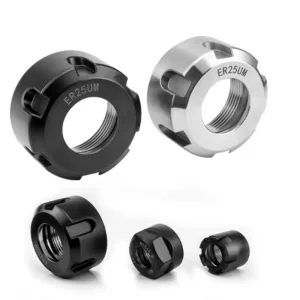
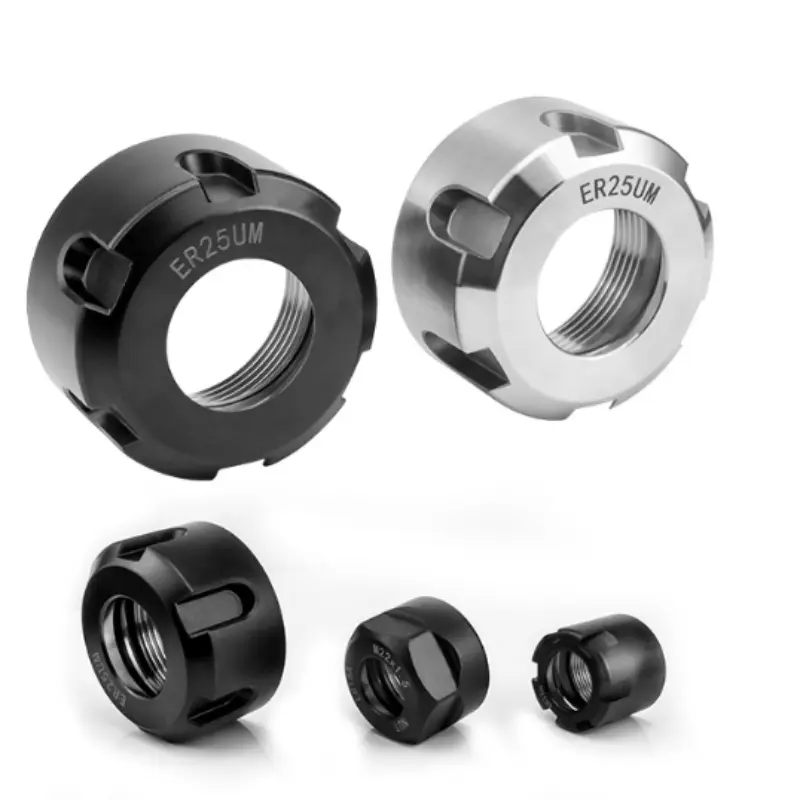
Type A features a hexagonal profile suitable for open wrenches, commonly used on smaller sizes like ER11 to ER20. Type B (or UM) features castle-style outer slots meant for hook or spanner wrenches on medium to large sizes. Type M is a mini nut with a smaller outside diameter, engineered specifically for slim chuck holders and tight machining areas.
Q How does an ER nut secure the cutting tool?
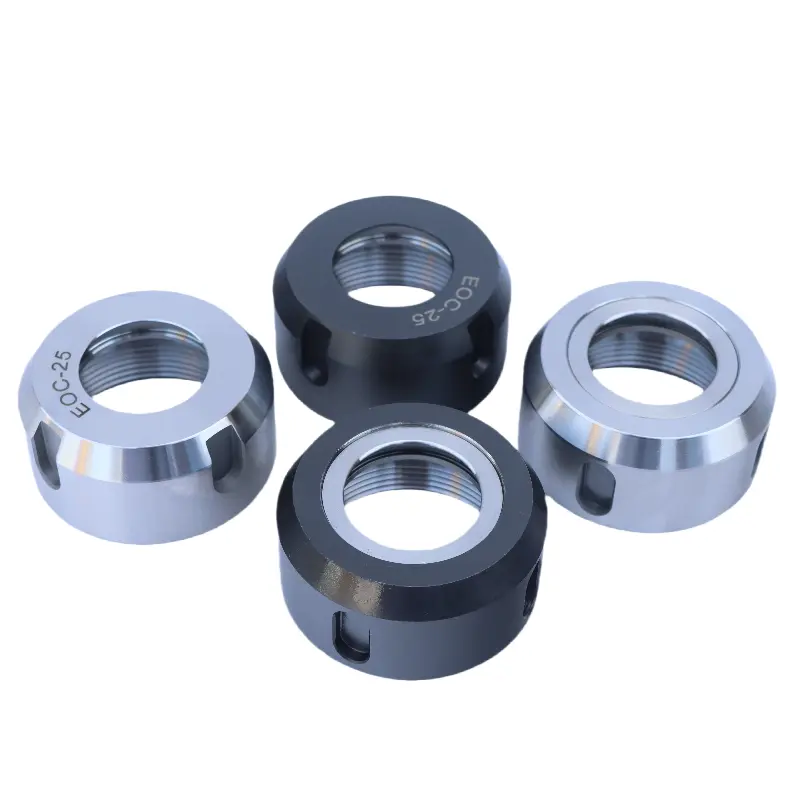
The ER nut has an eccentric extractor ring inside. When screwed onto the tool holder, it presses the tapered ER collet into the holder's mating cavity, collapsing the collet evenly around the cutting tool shank to achieve firm, concentrated clamping force and minimal runout.
Q Can you manufacture custom ER clamping nuts based on technical drawings?
Yes. As an OEM and ODM manufacturer, we provide custom processing services according to technical drawings in formats including STEP, DWG, PDF, and IGES, provided minimum batch quantity requirements are satisfied.
Q What thread precision and quality management standards are applied?
All ER nuts undergo strict quality control under the ISO9001: 2008 standard. Thread pitches and dimensions are manufactured to tight tolerances to prevent tool deflection, imbalance, or premature wear during high-speed CNC spindle rotations.
Q What is the correct way to insert the collet into the ER nut?
The collet must always be tilted and snapped into the eccentric ring of the nut before threading the assembly onto the tool holder. Never push the collet into the holder first and attempt to tighten the nut over it, as this causes misalignment and will damage the clamping assembly.
Q What packaging is used to protect threads during international shipping?
Each ER nut is coated with anti-rust oil, placed into an individual plastic protective casing or moisture-resistant bag, and packed into reinforced master cartons to prevent surface scratches and thread damage in transit.