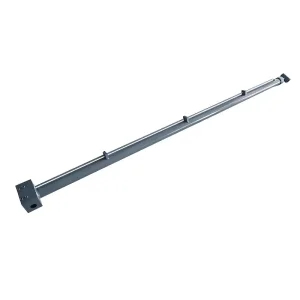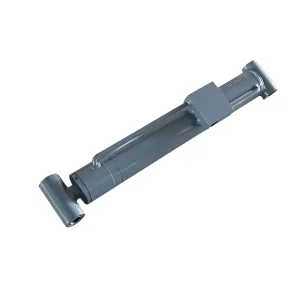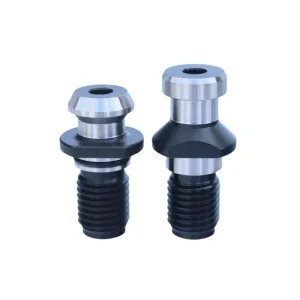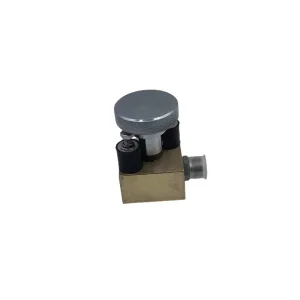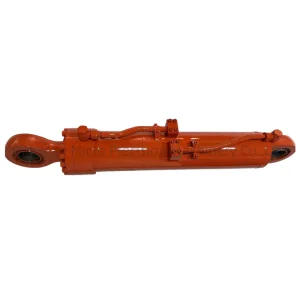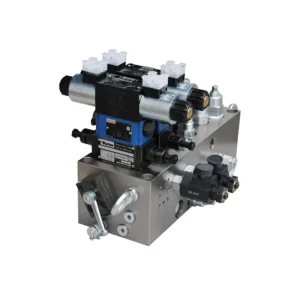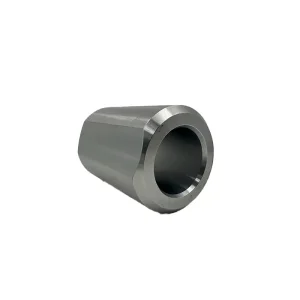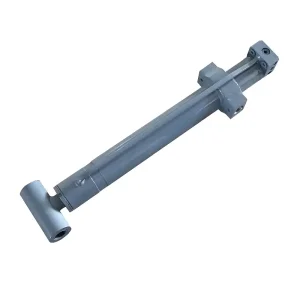
Featured Pneumatic & Fluid-Power Actuation Units
Engineered to exact OEM specifications, tested under dynamic load thresholds, and exported directly from our Qingdao manufacturing hub.
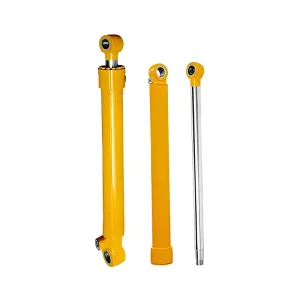
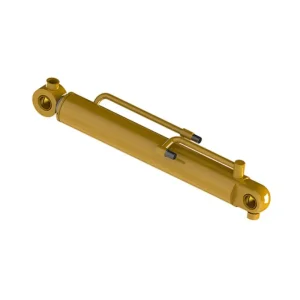
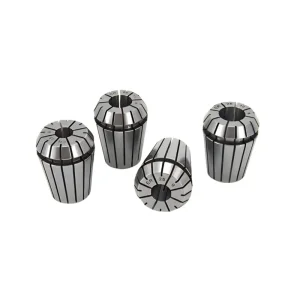
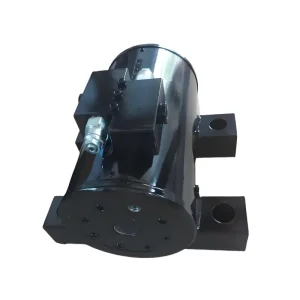
Established Engineering History
Global Tier-1 OEM Brands
Precision CNC Factory Floor
Monthly Precision Unit Output
Rotary Pneumatic Actuation Trends in Heavy Automation
In modern industrial processes, rotary pneumatic actuators function as the muscle of quarter-turn process valves, automated robotics, workholding fixtures, and aerial access systems.
Rack-and-Pinion vs. Scotch-Yoke Realignment
Global procurement demands distinct internal mechanics depending on operational torque curves. Rack-and-pinion architectures offer linear torque output throughout the 90° or 180° swing, crucial for precision pick-and-place indexing and robotic end-effectors. Conversely, symmetric scotch-yoke kinematics deliver peak breakaway torque at stroke initiation and conclusion, fulfilling the torque profile needed for high-pressure butterfly and ball valves.
Advanced Tribology & Micro-Honed Bore Coatings
Actuator longevity relies directly on surface integrity and seal interface tribology. Modern factory implementations leverage hard-anodized aluminum or micro-honed steel barrels internally lubricated with fluoropolymer infusions. Holding internal cylinder bore roughness to sub-micron thresholds eliminates stiction, facilitates high-cycle frequency exceeding 1 million cycles, and protects low-friction dynamic seals from premature extrusion.
Digital Smart Feedback & IO-Link Actuation
The era of dumb binary limit switches is ending. OEM pneumatic actuator factories now integrate digital position transmitters, hall-effect angle sensors, and IO-Link communication bus interfaces directly into actuator housings. This real-time positional intelligence permits continuous travel logging, predictive seal degradation diagnostics, and velocity profiling within automated production lines.
Global Enterprise Procurement: Criteria & Factory Audits
Purchasing managers, engineering directors, and global supply chain executives rely on key technical benchmarks when qualifying an OEM pneumatic actuator manufacturing partner.
Bespoke Shaft & Flange Geometries (ISO 5211 / VDI-VDE 3845)
Global compatibility hinges on standard interface compliance. Actuator units must align precisely with ISO 5211 mounting pads and NAMUR/VDI-VDE 3845 accessory drill patterns. Custom OEM orders frequently demand double-D shafting, keyed shafts, or custom splined outputs to match proprietary transmission splines without secondary adapter plates.
Material Selection for Harsh & Corrosive Environments
Standard anodized aluminum housings fail quickly in marine splash zones, chemical refineries, and mining wash plants. High-specification enterprise buyers mandate 316 stainless steel housings or specialized electroless nickel plating capable of enduring 1,000+ hours of ASTM B117 neutral salt spray testing without pit formation or seal breach.
Total Cost of Ownership (TCO) & Rapid Field Replaceability
Procurement teams evaluate lifetime seal wear over initial purchase price. Leading factories provide fully contained, pre-compressed spring cartridges for single-acting (fail-safe) models to prevent catastrophic release hazards during field maintenance, cutting actuator refurbishment time from hours down to minutes.
Cross-Sector Actuator Applications & Macro Solutions
Translating compressed air energy into smooth angular torque across the most challenging modern industries.
Process Flow & Cryogenic Valve Automation
Pneumatic rotary actuators manage critical quarter-turn isolation valves for water treatment, LNG processing, and petrochemical cracking. Low-temperature FKM/silicone seal packages sustain dynamic elasticity down to -40°C, while fire-safe graphite trims maintain sealing integrity under extreme thermal shock.
Industrial Robotics & Pick-and-Place Transfer Systems
High-speed manufacturing cells require lightweight rotary actuators featuring built-in adjustable end-stop cushions (±5° range) to absorb kinetic momentum at extreme swing speeds. Integrated pneumatic manifolds cut external line routing, reducing weight on automated arms.
Mobile Work Platforms & Aerial Articulation
Working in synergy with specialized fluid cylinders, compact rotary actuators drive basket rotation and jib articulation on boom lifts. Mechanical splines and zero-backlash gearing preserve operator safety and stability in elevated work environments.
Global Regulatory Assurance & Localized Engineering Support
Ensuring compliance, zero import friction, and dedicated engineering consultation across North American, European, and Asia-Pacific territories.
ATEX, CE & SIL3 Functional Safety Compliance
For applications in hazardous, explosive dust, or gas-laden atmospheres, units comply with ATEX Ex h IIC T6 Gb certifications. Actuator geometries and internal spring safety factors are verified for IEC 61508 SIL3 safety instrumented systems, guaranteeing reliable fail-close/fail-open trip execution.
Standardized Threading & Port Geometry Standards
Exporting across overseas markets demands precision port threading without cross-threading risks. MPM machines NPT, G (BSPP), and metric ports with high-tolerance chamfering, supplemented by ISO 6H thread precision to guarantee zero pressure leakage under peak surges.
Export Packaging & Technical Logistics Tracking
Precision-ground actuator shafts, valve manifolds, and cylinder components undergo anti-corrosive oil immersion, vapor corrosion inhibitor (VCI) shrink-wrapping, and heavy-gauge fumigated wooden crating. Sea freight, air express, and localized customs clearance paperwork are supplied with full documentation.
Next-Generation Pneumatic Technology Roadmap
Anticipating the transition toward sustainable factories, lower air consumption, and self-monitoring pneumatic assets.
Energy-Efficient Air Consumption Designs
As plant energy costs rise, reducing compressed air wastage is essential. Next-generation designs focus on minimizing dead-volume cavities in end-caps and pistons, achieving a 15% reduction in cubic-foot-per-minute (CFM) consumption per cycle while maintaining full torque delivery.
Lightweight High-Strength Composite Pistons
Transitioning from cast iron or standard cast aluminum to carbon-reinforced polymer pistons reduces actuator inertia. This enables millisecond-level cycle speeds on automated manufacturing lines, reduces internal wear, and avoids galvanic corrosion.
Autonomous Edge Health Diagnostics
Smart actuators will incorporate internal piezoresistive micro-sensors measuring piston travel vibrations, chamber pressure decay, and thermal deviations. Real-time condition metrics feed into plant SCADA systems to forecast maintenance needs before unexpected shutdowns occur.
Frequently Asked Sourcing & Engineering Questions
Essential guidance covering design customization, material specifications, MOQ structures, and quality inspection.
What parameters are required to calculate the correct actuator torque?
Provide the nominal working pressure (typically 4 to 8 bar), the required breakaway, run, and end torque of the application, rotation angle (90°, 120°, 180°), action type (double-acting or spring return), and operating medium details to ensure a minimum 25% safety torque margin.
Can you manufacture custom mounting interfaces and splines?
Yes. In addition to ISO 5211 / NAMUR dimensions, our in-house CNC machining centers turn and mill specialized drive shafts, custom bolt patterns, keyway slots, and extended stems according to your proprietary drawings or physical samples.
How does MPM control production quality across multi-thousand unit runs?
Every critical component undergoes dimensional verification using coordinate measuring machines (CMM). Internal bores undergo optical surface roughness checks, and completed actuators undergo 100% pressure holding and dynamic leakage tests before boxing.
What are your typical prototype and mass-production lead times?
Custom OEM engineering reviews and initial design confirmation take 24–48 hours. First-article prototypes are typically completed in 2 to 3 weeks, while scalable containerized production runs average 4 to 5 weeks from approved drawing freeze.
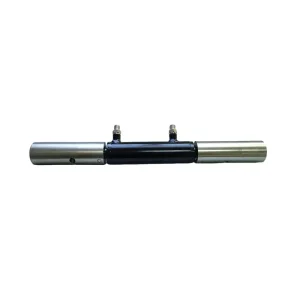
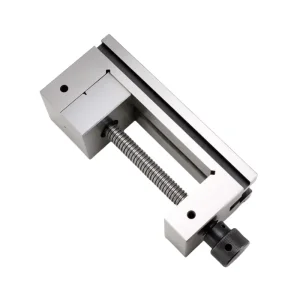
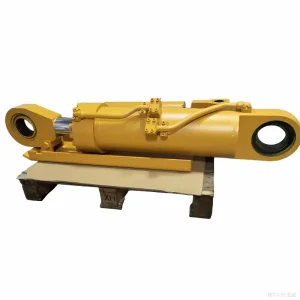
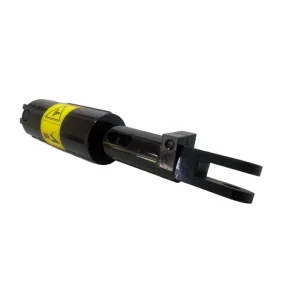
Engineered Cylinders, Manifolds & Machine Components
Heavy machinery cylinders, manifold valve blocks, and precision tooling accessories manufactured to strict ISO and DIN standards.