
Mission-Critical Components for Industrial Forklifts
Engineered for high duty cycles, dynamic cross-axle articulation, and high-pressure fluid control across demanding material handling profiles.
The Global Commercial Reality of Diesel Forklift Manufacturing
Analyzing high-torque logistical resilience, modern powertrain architecture, and emission-tier transformations in heavy freight.
Continuous High-Duty Operations
Unlike electric units challenged by battery depletion cycles and thermal throttling in unconditioned environments, diesel internal combustion (IC) forklifts remain the global benchmark for outdoor heavy logistics, steel yards, ports, and timber processing. Their thermal reliability guarantees nonstop multi-shift operation with rapid refueling protocols.
Emissions Compliance Convergence
Global suppliers are standardizing around EPA Tier 4 Final and EU Stage V diesel platforms. Equipped with Common Rail Direct Injection (CRDI), Diesel Particulate Filters (DPF), and Selective Catalytic Reduction (SCR), our engineering processes optimize hydraulic-engine cross-talk to reduce fuel consumption while delivering maximum low-end torque.
Supply Chain Reconfiguration
Global OEMs face margin pressures and supply bottlenecks for heavy structural frames and mast hydraulics. Partnering with dedicated Chinese OEM/ODM component fabricators provides precision manufacturing capability—matching ISO 6H tolerances, forged alloy resilience, and hydraulic manifold stability at competitive production scales.
Precision Specifications Across OEM Diesel Handling Systems
Measurable standards that define durability, hydraulic efficiency, and operating longevity.
Tailored Engineering for Demanding Terrains
Custom diesel forklifts must adapt to varied operating environments, from sub-zero timber logistics to high-humidity breakbulk terminals.
Port & Intermodal Freight
High-salinity maritime exposure demands ceramic-plated cylinder rods, double-sealed chrome housings, and anti-corrosive manifold finishes for 10-45 ton reachstackers and heavy diesel counterbalanced trucks.
- ASTM B117 Salt-Spray Hardened
- Counterbalance Hose-Burst Locks
Lumber & Heavy Timber Mills
Navigating rough yard surfaces under variable center-of-gravity loads creates heavy lateral mast torsion. Requires reinforced steering knuckles and high-damping tilt cylinder assemblies.
- Dual-acting Dampened Steering
- High Impact Side-Shift Cylinders
Rough-Terrain Yard Logistics
Uneven grades require differential lock solenoid valves, wide-oscillation steer axles, and high ground clearance configurations to maintain continuous ground contact and load balance.
- Integrated DLSV Differential Locks
- Heavy Forged Spherical Bearings
Extreme Arctic Operations
Operation in sub-zero mining or construction sites requires low-temperature steel structures, Arctic-grade polyurethane seals, and heated hydraulic flow channels to prevent valve freezing.
- Low-Viscosity Fluid Flow Blocks
- -45°C Rated Fluorocarbon Seals
Diesel Forklift Technology Roadmap & OEM Outlook
Tracking the integration of intelligent telemetry, smart electro-hydraulics, and hybrid powertrains.
Smart Electro-Hydraulics
Transitioning from mechanical multi-spool levers to CAN-bus proportional solenoid valves. Enables precise fingertip control, software load-sway dampening, and automated lift-height presets.
IoT Telemetry Integration
Integration of embedded displacement sensors inside lift and steering cylinders. Delivers continuous data on seal friction, oil temperature, and cycle wear directly to fleet telematics hubs.
Hybrid Hydraulic Recovery
Mast-descent energy recovery setups use gravity-assisted fluid flows to recharge compact hydraulic accumulators, reducing engine load during subsequent lift cycles by up to 18%.
HVO & Synthetic Biofuels
Engine-manifold re-engineering designed to run Hydrotreated Vegetable Oil (HVO) and synthetic diesel blends without seal degradation, offering near carbon-neutral operation on heavy diesel chassis.
End-to-End Manufacturing Protocols for Global Forklift Builders
Integrated supply-chain services covering raw forgings, CNC five-axis milling, clean-room assembly, and 100% pressure-decay testing.
Monolithic Manifold Machining
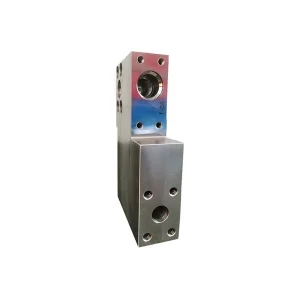
High-grade ductile iron and aircraft-spec forged aluminum manifolds machined on multi-axis CNC centers. Internal galleries eliminate external hydraulic tubing, removing leak paths and ensuring burst resistance under peak pressure spikes.
Advanced Seal System Integration
Equipped with step seals, wear rings, and double-lip polyurethane wiper assemblies from certified polymer compounders. Bore micro-honing maintains surface finishes of Ra 0.2–0.4 µm to extend packing life across millions of stroke cycles.
ISO 9001:2015 Rigorous Validation
Every custom forklift hydraulic cylinder and valve manifold undergoes single-unit pressure-decay validation at 1.5× rated design pressure. Full traceability is maintained with serialized laser etching and metallurgical test certifications.
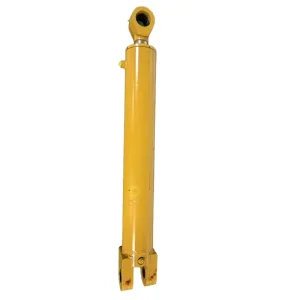
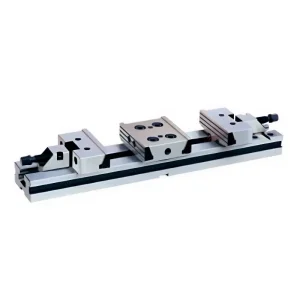
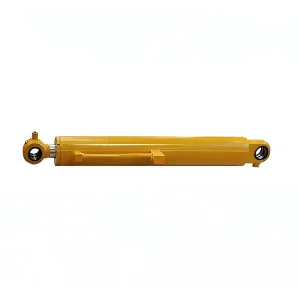
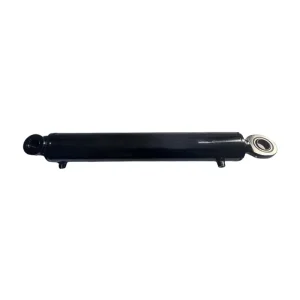
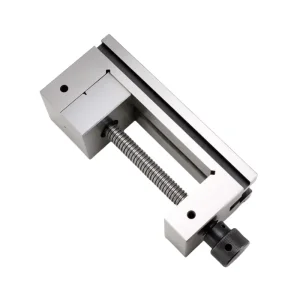
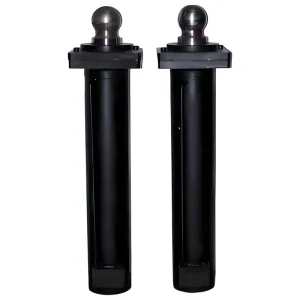
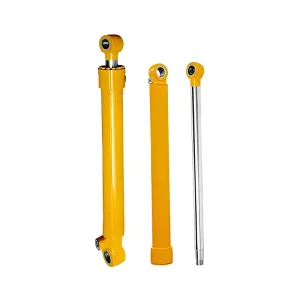
Precision Assemblies for OEM Material Handling Machinery
Built to custom specifications, imperial or metric drawing packages, and OEM interchangeability requirements.
Frequently Asked Questions for Diesel Forklift Buyers
Direct technical guidance covering OEM sourcing, valve block performance, interchangeability, and delivery logistics.
Standard off-the-shelf forklifts are engineered for median operating profiles. In heavy port transit, foundry slag removal, or timber staging, custom configurations optimize mast cylinder cushioning, hydraulic cooling radiators, heavy-duty filtration, and chassis geometry to extend vehicle lifespans and cut total cost of ownership (TCO).
Our engineering division uses 3D coordinate measuring machines (CMM) and laser scanning to reverse-engineer physical samples. We provide comprehensive CAD drawings detailing pin-to-pin retracted centers, spherical eye tolerances, port thread configurations (BSPP, SAE, JIC), and static/dynamic load envelopes before fabrication starts.
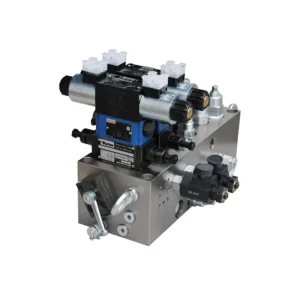
We incorporate directly flanged velocity fuses and integrated T3A counterbalance valve blocks. If a supply hose shears, the manifold locks oil in the cylinder chamber within 15 milliseconds, maintaining load position and meeting international safety standards such as ISO 3691 and ANSI/ITSDF B56.1.
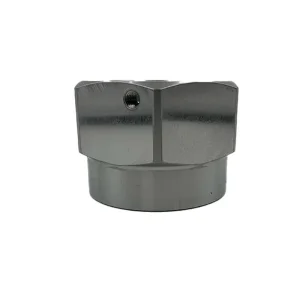
All hydraulic cylinder nuts, heads, and gland retaining rings are CNC-turned to ISO 6H thread tolerances. This prevents micro-loosening under vibration from diesel engines and pressure hammering during high-speed lowering and braking.
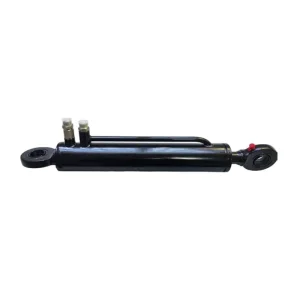
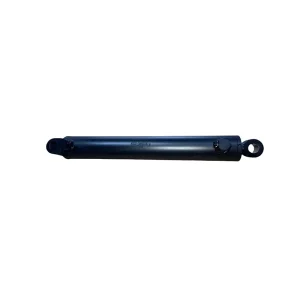
Yes. We specialize in double-acting, equal-displacement single-rod and double-ended steering cylinders. Designed for forklift steer axles, our internal cushioning eliminates end-of-stroke mechanical slap, protecting the kingpins and tie-rod joints from shock loads.
Piston rods are coated with anti-corrosion barrier oil, wrapped in VCI (Vapor Corrosion Inhibitor) plastic membranes, sleeved in protective cardboard cores, and crated inside heavy, fumigated fumigation-free plywood boxes braced against rough container movements.