Precision Hydraulic & Machine Components Catalog
Engineered to international mechanical standards, offering interchangeability and robust metallurgy.
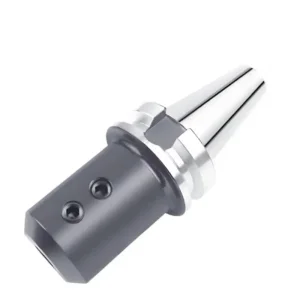
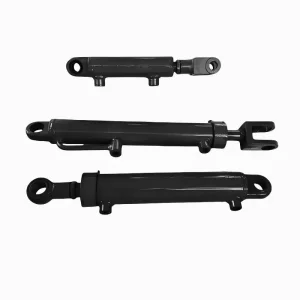
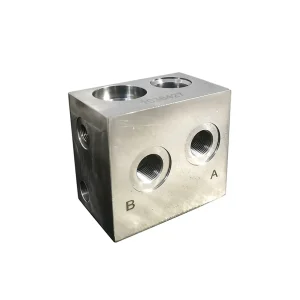
Cheap T13A Hydraulic Flow Control Valve Block MPM-HFCVB13A Supplier, Manufacturers
View Product Details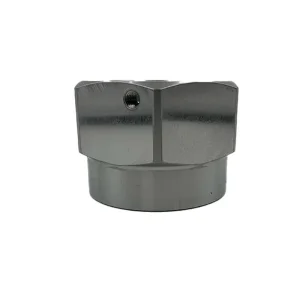
Engineering Architecture of Cylinder Rod Nuts
In-depth technical review of thread engagement, clamping forces, and metallurgical specifications in heavy-duty fluid power actuators.
Tolerances & Thread Geometry
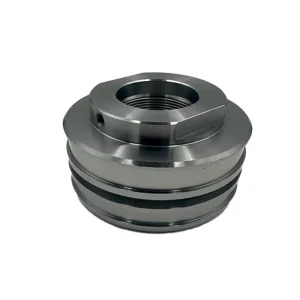
The structural efficacy of a cylinder rod nut hinges on maintaining ISO 6H tolerance classes or ANSI Class 3B unified threads. Our specialized CNC thread turning and milling ensure root radii remain crack-free, mitigating fatigue fractures induced by rapid micro-pulsations in high-cycle equipment.
Alloy Selection & Heat Treatment
Utilizing high-tensile 42CrMo4, 40Cr, and AISI 4140 forged stock, our rod nuts undergo controlled quenching and tempering to achieve a homogeneous hardness profile of 28-34 HRC. This mechanical envelope provides yield strengths beyond 800 MPa, resisting axial push-pull cycles up to 400 bar.
Anti-Loosening Architectures
High-shock hydraulic applications necessitate fail-safe retaining features. We manufacture cross-hole split pin configurations, prevailing-torque nylon insert retaining mechanisms, mechanical radial grub-screw clamp profiles, and DIN 70852 slotted nut geometry to prevent catastrophic de-threading in the field.
| Material Grade | Yield Strength (Rp 0.2) | Tensile Strength (Rm) | Impact Toughness (KV) | Core Hardness | Typical Rod Nut Spec |
|---|---|---|---|---|---|
| 42CrMo4 / AISI 4140 | ≥ 750 - 900 MPa | 1000 - 1200 MPa | ≥ 35 J (-20°C) | 28 - 34 HRC | Excavator & Mining Boom Cylinders |
| 40Cr / AISI 5140 | ≥ 550 - 700 MPa | 850 - 1000 MPa | ≥ 40 J (+20°C) | 22 - 28 HRC | Agricultural & Sanitation Actuators |
| 35CrMo / AISI 4135 | ≥ 835 MPa | ≥ 980 MPa | ≥ 47 J (+20°C) | 26 - 32 HRC | Telescopic Long-Stroke Lift Systems |
| 304 / 316 Stainless Steel | ≥ 205 - 240 MPa | 515 - 620 MPa | ≥ 60 J (-196°C) | ≤ 95 HRB | Offshore Marine & Subsea Actuators |
Local Application Scenarios & Global Industry Context
Operational resilience mapped against diverse environmental extremes and high-stress industrial work cycles.
Heavy Earthmoving & Construction
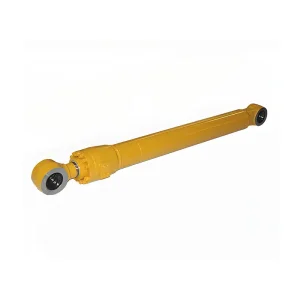
Piston rods in excavators, track loaders, and bulldozers encounter non-axial lateral loads, rapid pressure spikes, and massive cycle fluctuations. Our rod nuts maintain precise preload integrity against the piston shoulder, preventing microscopic fretting corrosion and seal lip distortion in continuous 350-bar duty cycles.
Underground Mining & Tunnel Boring
Confined spaces in underground load-haul-dump (LHD) equipment expose fluid actuators to abrasive rock fines, acidic water leaching, and sudden impact spikes. Our rod nuts undergo controlled salt spray validation, zinc-nickel plating, or phosphating treatments to resist harsh chemical degradation.
Modern Agricultural Mechanization
Harvesters, large-frame reversible ploughs, and chemical spray booms operate seasonally under demanding conditions. Compact profile rod nuts manufactured with tight concentricity tolerances avoid hydraulic fluid starvation across narrow internal return galleries during high-speed turnover indexing.
Offshore & Marine Engineering
Naval winches, container vessel hatch actuators, and offshore drill platforms demand saltwater corrosion protection. Our manufacturing portfolio delivers stainless alloy grades (AISI 316, Duplex 2205) and specialized multi-layer nickel-chromium coatings passing 1,000-hour ASTM B117 salt fog benchmarks.
Supply Chain Resilience & Industrial Advantage in China
Combining complete regional raw material ecosystems, precision manufacturing clusters, and automated quality infrastructure.
Integrated Metallurgical Access
Based in Qingdao, Shandong—one of China’s premier industrial equipment manufacturing corridors—we benefit from proximate high-grade steel mills and forging facilities. We maintain comprehensive traceable mill test certs (MTC EN 10204 3.1) for every batch of alloy steel bars, ensuring verified chemical composition before machining.
Agile CNC Machining Capacity
Our workshop houses high-precision multiaxis turning centers, computerized thread rolling, and automated internal grinders. From rapid single-piece reverse-engineered prototypes to serial orders exceeding 50,000 units, automated tool monitoring keeps cycle times optimized and dimensional variance minimal.
Total Inspection Metrology
Quality reliability is anchored by our in-house measurement laboratory equipped with Coordinate Measuring Machines (CMM), optical contour projectors, thread pitch micrometers, profile roughness meters, and magnetic particle flaw detectors, ensuring true zero-defect shipments for critical hydraulic cylinder assemblies.
Technology Roadmap & Future Outlook
Continuous evolution toward sensor integration, lightweight composite metallurgy, and digital twins.
Smart Preload Monitoring
We are actively researching piezoelectric and strain gauge sensor integration embedded directly in the nut assembly. This smart fastening architecture transmits real-time bolt pretension and fatigue data to mobile telematics, warning maintenance teams before joint looseness precipitates piston blow-out.
Advanced Surface Engineered PVD Coatings
Beyond traditional yellow zinc plating and hard chrome treatments, our R&D pathway emphasizes DLC (Diamond-Like Carbon) and multi-layered PVD ceramic coatings. These high-lubricity outer matrices dramatically lower dynamic breakout friction when the nut interacts directly with internal damper rings.
High-Strength Weight Reduction
For aerospace ground-support equipment and extended crane booms, mass reduction is vital. We are deploying titanium alloy (Grade 5 Ti-6Al-4V) and high-modulus forged aluminum rod nut variants that offer a 40% reduction in inertia while fulfilling OEM pressure safety margins.
Global Compliance, Documentation & International Logistics
Stringent compliance standards ensure uninterrupted customs clearance and zero warranty liability for international importers.
Standard Regulatory Compliance
All rod nuts and complementary hydraulic parts are manufactured strictly compliant with ISO 9001:2015 quality frameworks, RoHS environmental directives, and REACH material hazard classifications. Formal certificates of compliance are archived for ten years to facilitate traceability.
Export-Grade Vapor Barrier Packaging
Long-distance maritime transit subjects precision ground steel parts to humidity and salt fog corrosion. We utilize multi-layer VCI (Vapor Corrosion Inhibitor) packaging, nitrogen vacuum bagging, and heat-treated ISPM-15 compliant solid plywood crates to guarantee dry, pristine part delivery upon arrival.
Comprehensive Multi-Modal Freight Support
Capitalizing on Qingdao's deepwater international container port, we offer FOB, CIF, DDP, and multimodal air-freight arrangements with direct tracking documentation. Our dedicated documentation team manages customs manifests, HS code classifications, and Origin Certificates for hassle-free customs release.
Frequently Asked Questions (FAQ)
Essential guidance on thread standards, custom drawings, surface treatments, and order processing.
Q: What thread standards can you machine on custom cylinder rod nuts?
We routinely machine ISO metric fine threads (e.g., M24x1.5 up to M160x3 with 6H/6g tolerance fit), UN/UNF/UNS Unified Imperial standards (Class 2B/3B), British Standard Whitworth (BSW), and trapezoidal/buttress thread geometries per customer design drawings.
Q: How do you prevent thread galling on stainless steel or high-torque nuts?
To resist thread galling in high-torque installations, we offer anti-galling coatings such as molybdenum disulfide (MoS2) dry film lubricants, precision silver plating, liquid nitriding, or recommend specific pairing alloys with differing Brinell hardness ratings.
Q: Can you produce rod nuts matched to non-standard or obsolete hydraulic cylinders?
Yes. By leveraging our reverse engineering protocols, you can send worn or broken physical samples. Our metrology team digitizes the exact pitch, flank angle, and lock dimensions on a CMM, generating confirmed 2D/3D CAD models prior to manufacturing.
Q: What is the typical lead time for custom OEM rod nut production?
Standard prototyping runs require approximately 7 to 15 business days depending on raw material sourcing. Serial batch production typically takes 25 to 35 calendar days, supported by buffer stocking agreements for recurring volume purchase contracts.
Complementary Actuator & Hydraulic System Components
Fully certified fluid power components machined to rigid technical specifications.
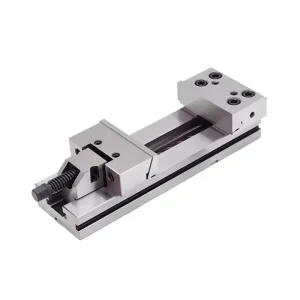
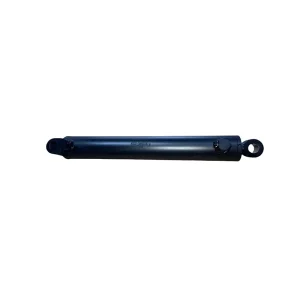
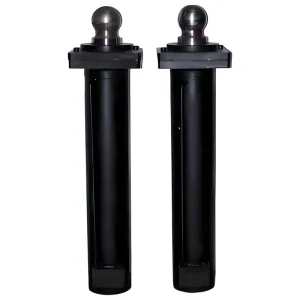
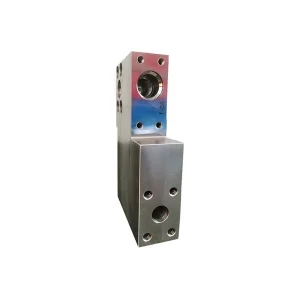
High-Quality T2A Hydraulic Relief Valve Block MPM-HRVB2A Manufacturers, Factory
View Product Details