Precision Tooling & Hydraulic Systems Showcase
Engineered for high-stress industrial environments, our factory-direct products deliver verified dimensional stability, interchangeability, and high-tensile longevity.
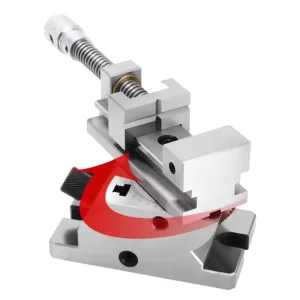
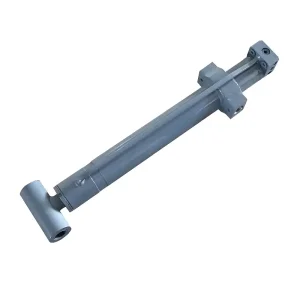
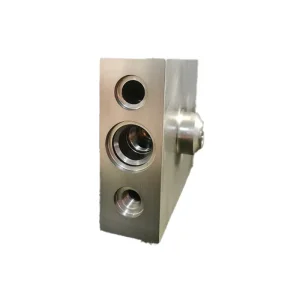
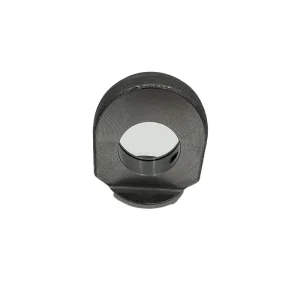
Engineering Fundamentals of Precision Milling Universal Vises
Achieving micron-level repeat positioning across multi-axis compound angles demands uncompromising structural stability, harmonic damping, and hardened contact surfaces.
Ductile Iron Meehanite Casting
Wholesale milling universal vises produced by leading Chinese industrial factories use FC300 to FCD600 spheroid graphite iron. This structural metallurgy delivers superior harmonic vibration absorption compared to standard gray cast iron, eliminating chatter marks during heavy hogging cuts on CNC mills.
Tri-Axial Angular Calibration
A true 3-way universal milling vise features horizontal 360-degree swivel bases, vertical 90-degree tilting, and secondary compound incline adjustment. Precision laser-etched vernier scales provide accurate angular positioning within ±15 arc-seconds, reducing setup times on complex 3-axis and 4-axis machining routines.
HRC 58-62 Case-Hardened Jaws
Sliding guideways, lead screw sleeves, and interchangeable jaw plates undergo deep vacuum carburizing and induction flame hardening. Ground on high-precision surface grinders, our universal vises retain parallel tolerances of ≤0.01 mm per 100 mm stroke, preventing workpiece lift under maximum clamping force.
Why Tier-1 Global Machine Shops Source Universal Vises from China
The convergence of advanced foundries, in-house sub-micron 5-axis machining capacity, and coastal export logistics in regions like Qingdao (Shandong) provides unprecedented value.
Vertically Integrated Foundries
By controlling both molten iron casting and secondary precision CNC machining under one roof, Chinese factories avoid component outsourcing markups and ensure structural casting density without porosity flaws.
Rapid OEM/ODM Turnaround
From custom metric/imperial bolt patterns to hydraulic boost cylinders integrated directly into the vise base, local engineering units transform CAD designs into production tooling within 15–20 business days.
Interchangeable Ecosystem
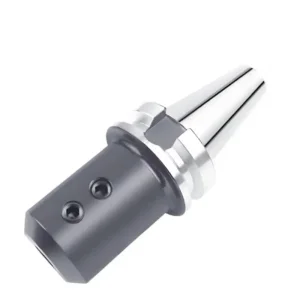
Chinese universal vise manufacturers build products compatible with standard DIN 69872 tool holder arbors, hydraulic valve blocks, quick-change zero-point tooling, and ISO standard T-slot spacing.
Export Sea Freight Efficiency
Situated adjacent to deepwater container terminals like Qingdao Port, bulk pallet shipments of cast steel vises and hydraulic components clear export customs smoothly, reducing maritime transit lead times to North America and Europe.
Universal Milling Vise Engineering Specifications
Comparing standard mechanical universal vises, angular lock vises, and pneumatic-hydraulic high-pressure universal vises for industrial milling operations.
| Vise Type / Architecture | Jaw Width Range | Max Jaw Opening | Clamping Force (kN) | Parallelism / 100mm | Primary Industrial Use Case |
|---|---|---|---|---|---|
| Mechanical 3-Way Universal (CHM/QHK) | 100 mm – 200 mm | 105 mm – 220 mm | 25 – 35 kN | ≤ 0.015 mm | Compound tool-and-die grinding, 3-axis oblique milling |
| Angle-Lock Hydraulic Universal Vise | 130 mm – 200 mm | 150 mm – 300 mm | 45 – 65 kN | ≤ 0.010 mm | Heavy CNC milling, high-torque titanium & steel alloy roughing |
| Pneumatic-Hydraulic Fast-Clamping Vise | 100 mm – 160 mm | 120 mm – 250 mm | 20 – 40 kN | ≤ 0.012 mm | High-throughput batch production, robotic pallet loader setups |
| Modular Precision Multi-Vise System | 75 mm – 150 mm | 100 mm – 400 mm | 30 – 50 kN | ≤ 0.008 mm | 5-axis machining centers, horizontal tombstones, aerospace structural parts |
Trends Reshaping the Universal Milling Vise Sector
From manual machine shops to fully lights-out automated CNC cells, fixturing equipment is evolving rapidly toward sensor integration, quick-clamping robotics, and structural weight reduction.
IoT Clamping Pressure Monitoring
Modern machine shops handling thin-walled aerospace aluminium and hydraulic manifold blocks are adopting smart universal vises. Built-in piezoresistive strain sensors transmit clamping force data in real time via wireless telemetry, preventing part distortion or ejection under spindle load spikes.
Zero-Point Interface Integration
Rather than bolting universal vises directly to machine T-slots with T-nuts, modern factories are machining universal vise bases with pre-installed pull studs. This configuration snaps instantly onto standardized 96mm or 52mm pneumatic zero-point plates, slashing setup times from 25 minutes to under 30 seconds.
Hydraulic & Pneumatic Power Boosting
Manual lead screws are increasingly backed by integrated hydraulic stroke multipliers. A single operator turn of the handle can produce up to 6 tons of mechanical holding power without operator fatigue, ensuring consistent gripping forces across three shifts.
Macro Industry Solutions & Local Application Scenarios
How precision universal vises, hydraulic cylinders, and CNC tool holders create an unbroken ecosystem across heavy equipment, mold making, and energy sectors.
Hydraulic Manifold Block Machining
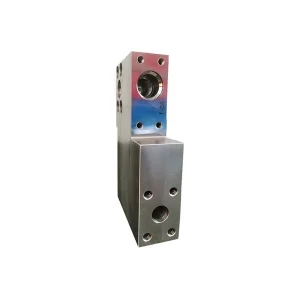
Drilling cross-over ports in complex hydraulic manifold blocks requires rigid holding at exact compound angles. Universal vises eliminate multi-axis repositioning errors, ensuring concentric alignment between valve cavities and high-pressure ports.
Heavy Construction Machine Actuators
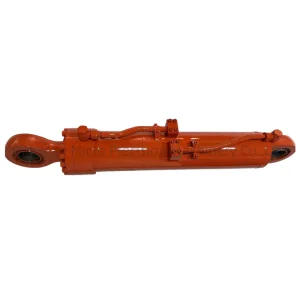
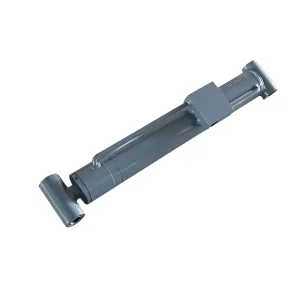
In the manufacture of excavator boom, arm, and leveling cylinders, specialized universal milling fixtures grip spherical bearings, end-cushioned bases, and integrated cylinder heads during multi-surface CNC facing and boring cycles.
Precision Die & Mold Engineering
Injection mold cavities, lifters, and sliding inserts frequently feature drafted angles ranging from 0.5° to 45°. Tilting universal vises allow toolmakers to grind shut-off surfaces and EDM electrodes without custom angled sine plates.
Mining & Heavy Off-Road Mucking
Refurbishing harsh-environment underground LHD lift cylinders demands deep re-machining of damaged clevis ends and lock nuts. Rugged 200mm universal milling vises absorb extreme side torque during intermittent heavy cuts.
Wholesale Supplier Auditing Guide for International Buyers
Key technical criteria overseas purchasing managers and quality assurance teams must verify prior to signing high-volume workholding contracts.
CMM Dimensional & Squareness Verification
Require your Chinese manufacturer to provide Zeiss or Hexagon 3-coordinate measuring reports verifying that base-to-jaw squareness, swivel flatness, and jaw parallelism all stay within 0.01 mm across full stroke expansion.
Hardness & Grain Structure Testing
Ensure suppliers conduct regular Rockwell C indentation checks on jaw faces (standard specification: HRC 58–62) and metallurgical microscopy on ductile casting batches to prevent subsurface embrittlement.
VCI Anti-Corrosion & Export Packaging
Machined iron oxidizes quickly during ocean transport. Leading Chinese exporters apply multi-stage rust preventative oils, vacuum-seal vise assemblies in heavy poly bags with desiccant, and bolt units into reinforced fumigated plywood crates.
Frequently Asked Questions: Sourcing Universal Milling Vises
Actionable answers to technical questions about angular accuracy, lead-time guarantees, custom OEM jaw tooling, and hydraulic integration.
Q: How does an angle-lock universal vise prevent workpiece lift?
Angle-lock designs incorporate a 45-degree internal spherical or segmented wedge mechanism. When horizontal clamping torque is applied, the drive mechanism converts a portion of the forward force into a downward vector, pulling the movable jaw tightly down against the hardened bed guideways.
Q: Can Chinese universal vise factories produce customized jaws for irregular parts?
Yes. OEM/ODM production supports custom aluminum soft jaws, serrated carbide-insert jaws, prism-V jaw profiles for round stock, and step jaws machined to CAD models for specific casting and forging profiles.
Q: What is the standard MOQ and production lead time for wholesale orders?
For standard catalog sizes (such as 100mm, 130mm, 160mm, and 200mm vises), baseline MOQs typically start at 10 units. Standard production lead time is roughly 25 to 35 days, while customized castings or specialized hydraulic adaptations require 40 to 45 days.
Q: What is the mechanical difference between a 2-way and a 3-way universal vise?
A 2-way vise allows horizontal base swivel (360 degrees) and vertical tilt (typically 0 to 90 degrees). A 3-way universal vise adds a third compound inclination axis (±45 degrees left/right), allowing simultaneous multi-angle setups without extra sine plates.
Q: How is zero-point clamping repeatability verified on CNC beds?
Repeatability is verified using dial test indicators against ground master arbors or reference blocks. Quality manufacturers guarantee re-positioning repeatability within ≤ 0.005 mm across repeated clamping cycles.
Q: Can manual universal vises be converted into hydraulic or air-over-oil systems?
Yes. Most heavy-duty universal vise bodies feature modular end-plates that allow manual mechanical lead screw assemblies to be swapped for pneumatic-hydraulic boost cartridges, providing automated clamping via CNC foot pedals or M-code commands.
Precision Hydraulic Cylinders & Component Portfolio
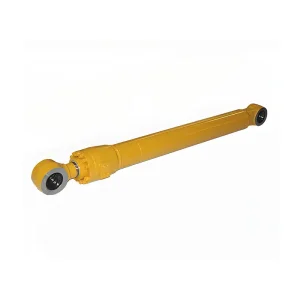
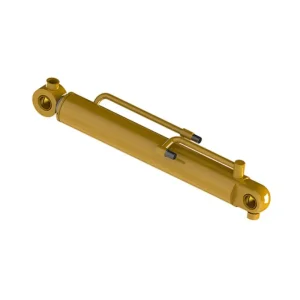
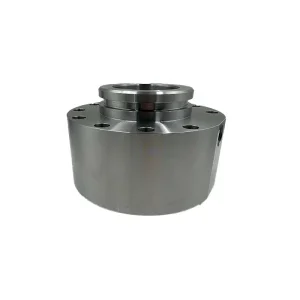
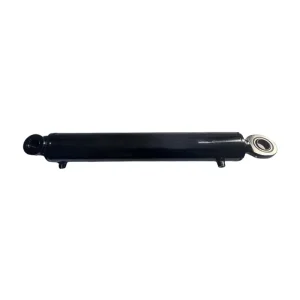
Complementary precision products engineered to the same high tolerances as our CNC workholding fixtures, serving mining, construction, and heavy agricultural equipment worldwide.