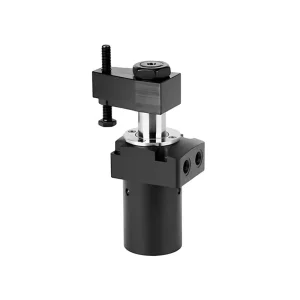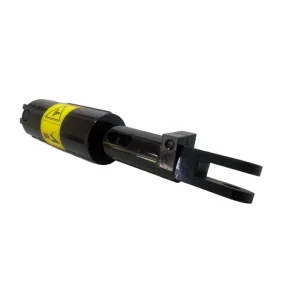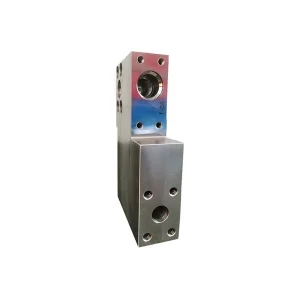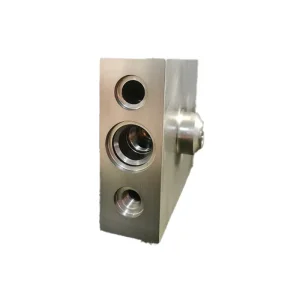
Precision Tooling & Hydraulic Engineering Highlights
Explore our foundational hydraulic engineering components and high-precision CNC tool holding interfaces engineered for severe industrial duty cycles.
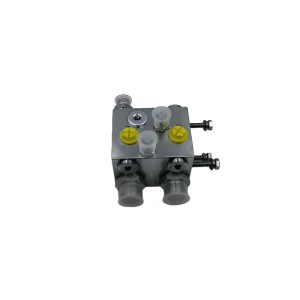
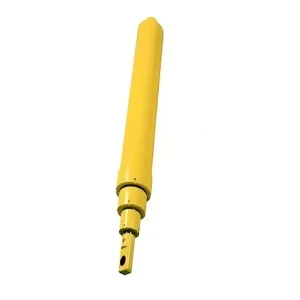
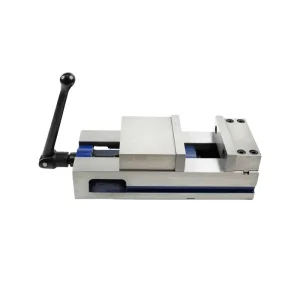
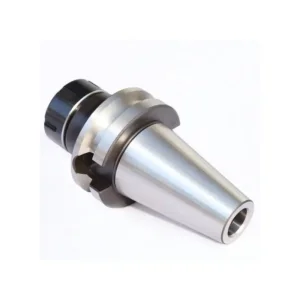
Macro Dynamics in Global Machine Tool Retention Mechanics
A strategic breakdown of procurement challenges, metallurgical parameters, and micro-defects in high-speed CNC spindle drawbar connections.
Spindle Load & Vibration Fatigue
In vertical and horizontal 5-axis machining, JIS B6339 (MAS 403 BT) pull studs endure dynamic clamping forces reaching 25 kN. Inadequate core ductility invites catastrophic brittle fracture under high resonant chatter.
Through-Coolant Integrity
Modern internal spindle high-pressure cooling systems (7 MPa to 14 MPa) demand flawless inner bore finish and precisely seated O-ring cavities to prevent fluid leakage directly into the spindle collet mechanism.
Thread Pitch & Taper Concentricity
Deviation in retention knob thread concentricity exceeding 0.005mm introduces lateral runout, transmitting off-axis deflection to the cutting tool tip and degrading critical workpiece tolerances in aerospace applications.
JIS B6339 (MAS 403) Technical Geometry Matrix
Quantitative dimensional and metallurgical thresholds enforced across high-precision wholesale manufacturing batches.
| Standard Model | Taper Interface | Pull Head Angle (θ) | Pilot Diameter (d1) | Thread Specification | Core Hardness | Case Hardening Depth |
|---|---|---|---|---|---|---|
| JIS B6339 BT30-15° | BT 30 (7:24) | 15° Chamfer | 12.00 mm ±0.005 | M12 × 1.75P | HRC 35-40 | 0.8 mm – 1.2 mm |
| JIS B6339 BT40-30° | BT 40 (7:24) | 30° Chamfer | 19.00 mm ±0.005 | M16 × 2.00P | HRC 35-42 | 1.0 mm – 1.5 mm |
| JIS B6339 BT40-45° | BT 40 (7:24) | 45° Chamfer | 19.00 mm ±0.005 | M16 × 2.00P | HRC 35-42 | 1.0 mm – 1.5 mm |
| JIS B6339 BT50-60° | BT 50 (7:24) | 60° Chamfer | 28.00 mm ±0.005 | M24 × 3.00P | HRC 38-44 | 1.5 mm – 2.0 mm |
| JIS B6339 BT50-90° | BT 50 (7:24) | 90° Chamfer | 28.00 mm ±0.005 | M24 × 3.00P | HRC 38-44 | 1.5 mm – 2.0 mm |
Precision Metallurgy: SNCM420 vs. 20CrMnTi Structural Life Cycle
In high-speed CNC operations, the retention knob represents the critical single point of failure between the machine tool holder and the electrospindle gripper petals. Our engineering and manufacturing processes deploy vacuum carburized SNCM420 (AISI 4320) nickel-chromium-molybdenum alloy steel or premium low-carbon alloy 20CrMnTi. Through controlled sub-zero cryogenic stabilization and multi-stage tempering cycles, the component attains a case surface hardness of 58–62 HRC for extreme resistance to gripper wear, coupled with a ductile core of 35–42 HRC that absorbs severe axial harmonic shock waves during heavy roughing cuts.
Macro-Industrial Solutions & Localization Architecture
Optimizing end-to-end tooling distribution networks across North America, the European Union, and Asia-Pacific manufacturing hubs.
Tier-1 Automotive & EV Machining
Delivering high-volume BT30 and BT40 JIS pull studs for robotic continuous milling cells producing powertrain casings, electric motor enclosures, and precision steering geometry.
Aerospace Titanium & Inconel Profiling
Heavy BT50 retention studs designed with customized thread lead tolerances to withstand high axial cutting loads up to 35 kN encountered during exotic superalloy turbine blisk machining.
Medical Implant & Micromachining
Sub-micron ground pull studs ensuring minimal runout and zero harmonic resonance for swiss-type and micro-vertical machining centers turning titanium surgical plates.
Regional Warehouse Hubbing
Consignment stock setups across Rotterdam, Chicago, and Monterrey ensure guaranteed 48-hour delivery windows for critical OEM replacement retention components.
Full EN 10204 3.1 Traceability
Each factory production batch comes with raw material spectral heat logs, heat treatment certification, micro-hardness curves, and calibrated coordinate inspection logs.
Anti-Corrosive Packaging
Precision multi-stage black oxide finishing or proprietary micro-thin zinc phosphate coating protected by automated VCI (Vapor Corrosion Inhibitor) heat-sealed barrier wrapping.
Next-Generation Spindle Retention Architecture (2025–2030)
Addressing the shifting paradigm toward Industry 4.0 tool management and ultra-high-rpm machine dynamics.
Smart RFID / NFC Integrated Pull Studs
Development of embedded UHF memory chips inside the pull stud stress relief chamber, enabling automated tool cycle counts, real-time drawbar tension verification, and automated maintenance triggers.
Dynamic CFD Coolant Porting
Integration of additive computational fluid dynamic internal conduits. Eliminates pressure drop turbulence at the tool holder boundary, boosting coolant velocity by 28% at the cutting edge.
Nanocomposite Diamond-Like Carbon Coatings
Transition from traditional black oxide to specialized DLC surface deposition yielding a friction coefficient below 0.08, drastically reducing gripper claw wear and eliminating micro-galling under dry high-speed tool changes.
Frequently Asked Questions: Sourcing & Engineering
In-depth responses covering interchangeability, drawbar force thresholds, failure mitigation, and OEM wholesale logistics.
Industrial Hydraulic Cylinders, Tooling & Fluid Control Components
Explore our complete manufacturing spectrum, integrating hydraulic power transmission solutions with advanced CNC toolholding accessories.