
Featured Heavy-Duty Hydraulic Assemblies & Tooling
Manufactured to strict micron tolerances under full ISO/DIN guidelines in our Qingdao CNC facility. Directly compatible with international OEM footprints, designed to handle extreme burst pressure and harsh duty cycles.
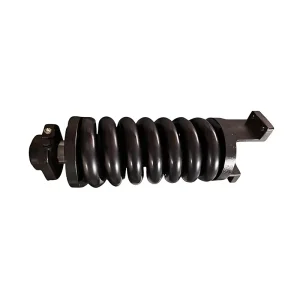
Tightening Cylinder MPM-HCT401 for Excavator & Loader
View Specifications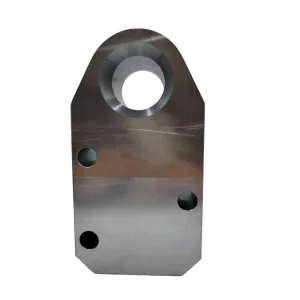
Custom Integrated Cylinder Barrel MPM-HCIB11
View Specifications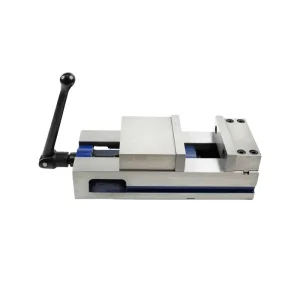
ZQ80 Precision Horizontal Vertical Clamping Vise
View Specifications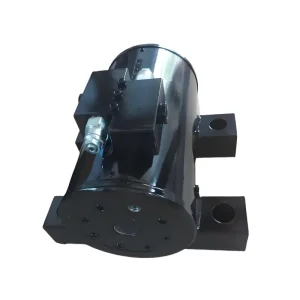
Rotary Actuator HCR801 Hydraulic Swing Mechanism
View Specifications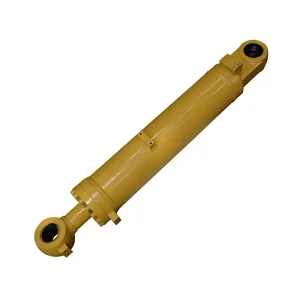
Heavy Duty Mobile Chassis Telescopic Cylinder
View Specifications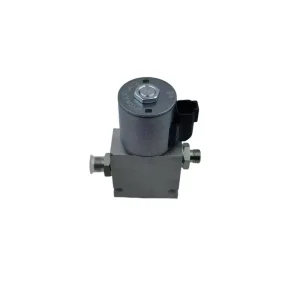
MPM-QCSV12 Quick-Change Directional Solenoid Valve
View Specifications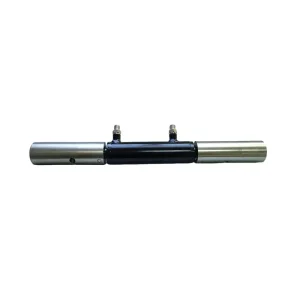
ODM Quick-Change Cylinder MPM-HCQ501 for Couplers
View Specifications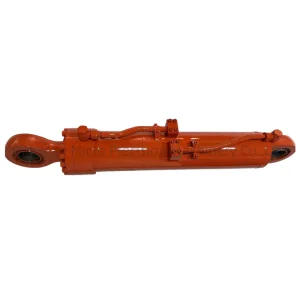
Underground Mining LHD Loader Lift Cylinder
View SpecificationsAnatomy of Industrial Hydraulic Manifold Block Assemblies
In modern mobile and stationary fluid power architecture, the hydraulic manifold assembly (also classified as a Hydraulic Integrated Circuit, or HIC) serves as the central nervous system. By consolidating directional valves, pressure controls, flow regulators, and check valves into a single compact block, OEMs eliminate up to 85% of rigid piping and flexible hose leak points.
At Qingdao Micro Precision Machinery (MPM), established in 2006, our manifold assemblies are precision-machined from forged billets of ductile iron (EN-GJS-400-15 / QT450-10 / 65-45-12), high-strength carbon steel (#45 / AISI 1045), or aerospace-grade 6061-T6 / 7075-T6 aluminum alloys. Operating pressures range from standard 210 bar (3,000 psi) industrial platforms up to 420 bar (6,000 psi) and 700 bar (10,000 psi) extreme-duty hydrostatic circuits.
Key Cavity & Interface Standards
- ISO 4401 / NFPA: D03 (CETOP 3), D05 (CETOP 5), D07, and D08 directional subplate mountings.
- Cartridge Cavities: Standard Sun Hydraulics, HydraForce, Comatrol, and Bosch Rexroth common cavities (VC, C-series).
- Slip-in Logic: DIN 24342 / ISO 7368 two-way cartridge valve cavities up to size NG63.
- Port Threading: SAE J1926-1 (O-ring Boss), ISO 6149, ISO 1179-1 (BSPP), and ISO 6162 Code 61/62 split flanges.
Monoblock vs. Modular Sandwich Architecture Analysis
Evaluating Total Cost of Ownership (TCO) across mobile machinery lifecycles. Selecting the optimum hydraulic integration method significantly impacts assembly line labour, hydraulic fluid drag, and field reliability.
| Technical Parameter | Traditional Piped Circuit | Modular Subplate Stack | Custom Integrated Manifold (HIC) |
|---|---|---|---|
| Leak Point Exposure | Extreme (20–50 discrete fittings, adapters, and flexible hose crimps) | Moderate (Multiple interfacial O-ring sandwich seals subject to bolt relaxation) | Minimal (Up to 85% reduction; internal CNC drilled channels eliminate external joints) |
| Pressure Loss & Heat Gen. | High turbulence caused by elbow fittings and diameter step-downs | Moderate across multiple stacked valve interfaces and galleries | Optimized (Precision drilled internal fluid paths contoured via CFD simulation) |
| Assembly Footprint (Volume) | 100% (Bulky, complex routing envelopes requiring mounting brackets) | 65% (Compact vertical footprint, but tall stack height prone to vibration) | 35% to 45% (Ultra-compact, monolithic envelope tailored directly to machine chassis) |
| Assembly Labour & Line Cycle | High (Labor-intensive manual tube bending, flare torquing, clamp fixing) | Moderate (Stacking modular valves; torque critical to avoid spool bind) | Drop-in Simplicity (Pre-tested multi-valve assembly mounted in minutes) |
| Failure Modes Under Vibration | High risk of fatigue cracking in metal pipes and hose rub abrading | Tie-rod stretch and O-ring extrusion under harmonic structural shock | Exceptional Resistance (Solid cast iron or forged steel block dampens vibrations) |
Strategic Advantages of China Factory Supply Chains
How Qingdao Micro Precision Machinery leverages Shandong’s mature heavy-machinery supply ecosystem to deliver world-class hydraulic manifold blocks with unmatched lead times and cost efficiency.
Direct Foundry & Billet Metallurgy
Close geographic proximity to top-tier metallurgical casting clusters in northern China ensures continuous access to high-density, defect-free continuous-cast ductile iron bars (Dura-Bar equivalents) and forged alloy steels. Our strict ultrasonic non-destructive testing (NDT) screens out subsurface shrinkage cavities and pinhole porosity prior to CNC machining, avoiding costly micro-leakage failures under high operating pressures.
Multi-Axis CNC Precision Capacity
Our 3,500 m² Qingdao workshop houses high-speed horizontal machining centers (HMCs) equipped with dual pallets, multi-axis capability, and dedicated hydraulic tooling carousels. Custom cavity reamers, multi-step drill bits, and burnishing tools allow us to achieve valve pocket surface finishes down to Ra 0.4 µm in a single clamped setup. This eliminates cumulative clamping errors and maintains precise bore perpendicularity.
Agile NPI & Turnaround Speeds
While traditional Western hydraulic manifold suppliers quote 8 to 14 weeks for custom tooling and first-article prototyping, our streamlined engineering workflow turns 3D CAD step files into machined, tested, and anodized prototypes within 10 to 15 business days. With an output exceeding 20,000 units monthly across our cylinder and manifold departments, we support low-volume high-mix (LVHM) as well as mass-production scales.
Cross-Hole Deburring & Cleanliness Compliance
Over 75% of hydraulic control failures stem from particulate contamination or dislodged machining burrs. Our multi-stage cleaning and verification process sets the global benchmark for manifold reliability.
Thermal Energy Deburring (TEM) & Extrusion Honing
Complex cross-drilled internal galleries undergo stoichiometric methane-oxygen thermal deburring, vaporizing internal micro-burrs and loose metallic flakes even in deep intersections where manual deburring brushes cannot reach.
100% Hydrostatic Proof & Helium Leakage Checks
Every manifold block assembly is tested on custom automated test benches up to 1.5× rated maximum working pressure. We measure internal inter-gallery bypass leakage (measured in drops/min or mL/min) to verify zero spool cross-talk and seat tight shut-off.
Cleanliness Verification to ISO 4406 & NAS 1638
Multi-stage heated ultrasonic solvent baths with multi-frequency cavitation strip all cutting fluid residues and swarf. Gravimetric membrane analysis confirms adherence to target cleanliness standards (e.g., ISO 4406 16/14/11 or NAS Class 5) before port plugging.
Global Compliance Documentation
Every export batch is provided with full traceability documentation to facilitate rapid customs clearance and immediate integration onto international OEM production lines:
- EN 10204 Type 3.1 Material Test Reports (MTR) with chemical and tensile data
- Coordinate Measuring Machine (CMM) Zeiss dimensional inspection reports
- RoHS 3 (EU 2015/863) & REACH Compliance Declarations
- Pressure Equipment Directive (PED 2014/68/EU) technical files
- Factory Acceptance Test (FAT) sign-off sheets with serialized pressure logs
Mission-Critical Industry Application Scenarios
Our hydraulic manifold assemblies and matched hydraulic cylinders are engineered to perform under extreme temperature swings, mechanical shock, and contamination-heavy real-world environments.
Earthmoving & Excavators
Auxiliary attachment valve blocks for hydraulic breakers, tilt-rotators, and quick-couplers. Incorporates pressure-compensated proportional flow control, dual shock cross-over relief, and check valves to manage high-frequency back-pressure spikes up to 350 bar.
Underground Mining & LHD Loaders
High-shock lift and tilt circuits engineered for underground mining equipment. Manifold blocks feature heavy-duty corrosion-resistant phosphate or electroless nickel plating, designed to operate with water-glycol fire-resistant hydraulic fluids (HFC).
Mobile Cranes & Aerial Platforms
Zero-leakage load-holding counterbalance valve blocks mounted directly to telescopic boom cylinder ports. Pilot-assisted relief designs eliminate uncontrolled load descent and feature emergency manual override spools for safety assurance.
Agricultural Harvesting & Implements
Electro-hydraulic hitch draft control blocks and sequence turnover manifolds for reversible ploughs. Designed with integrated poppet check valves that guarantee zero drift during road transport and smooth reversal under high soil resistance.
Future Trends: Additive Manufacturing & IoT Telemetry
The convergence of digital fluid power, additive 3D metal printing, and machine condition monitoring is redefining the hydraulic manifold industry. Here is where the sector is heading over the next decade.
Additive Manufacturing (SLM 3D Printing)
Selective Laser Melting (SLM) in titanium (Ti6Al4V), AlSi10Mg, and 316L stainless steel allows the production of curved internal fluid conduits that are impossible to machine with traditional orthogonal CNC drills. Eliminating right-angle intersections reduces flow turbulence and parasitic pressure losses by up to 35%, while trimming manifold mass by up to 60%—a critical advantage for aerospace and battery-electric heavy equipment.
Smart Manifolds & Embedded IO-Link Sensors
Next-generation manifold assemblies integrate miniature piezoresistive pressure transmitters, PT100 temperature probes, and micro-viscosity sensors directly into auxiliary test ports. Connected via IO-Link or CANopen protocol, these smart valve blocks deliver real-time predictive analytics, flagging cavitation spikes, valve sticking, and oil degradation before unexpected machine downtime occurs.
Electro-Hydraulic Actuation (EHA) Synergy
As mobile machinery electrifies, traditional central hydraulic pumps are replaced by decentralized electro-hydraulic actuators (EHA). Our specialized compact manifold blocks bolt directly to variable-speed servomotors and bi-directional gear pumps, forming fully enclosed, self-contained hydrostatic drive packages with near-zero fluid consumption and maximum energy recuperation efficiency.
Technical Sourcing & Engineering FAQ
Comprehensive answers to the most common engineering, quality, and commercial questions raised by international procurement managers and hydraulic system designers.
1. What material specifications do you recommend for high-pressure hydraulic manifold blocks?
2. How do your engineers avoid internal cross-port breakthrough during multi-axis deep hole drilling?
3. Which cartridge valve cavity profiles and tooling standards do you support?
4. Can you supply completely assembled and tested manifold assemblies rather than bare blocks?
5. How do you address the international export challenge of corrosion protection during maritime transit?
6. What is your standard prototyping and production lead time?
7. Can you reverse-engineer a manifold block from a physical sample without original engineering drawings?
8. What hydraulic testing certificates are furnished with each shipment?
Cylinder Components, Bases & Precision Tooling
Explore our complementary range of forged cylinder bases, heavy-duty excavator actuators, telescopic cylinders, and high-precision CNC modular vises manufactured in-house to match our manifold block assemblies.
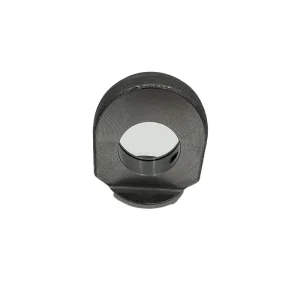
Hydraulic Cylinder End Base MPM-HCBS11 Forging
View Specifications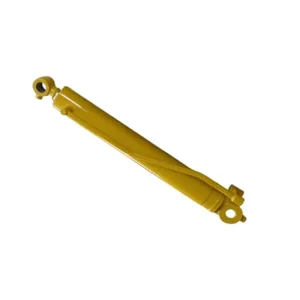
Excavator Arm Stick Cylinder MPM-HCS301
View Specifications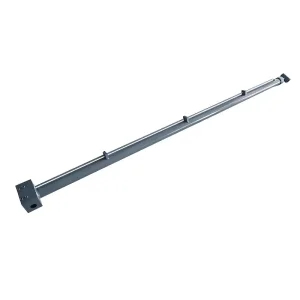
Custom Multi-Stage Telescopic Cylinder HCT403
View Specifications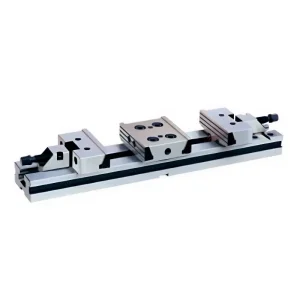
ZQ83 Single & Double Action Workholding Vise
View Specifications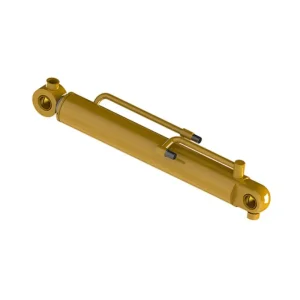
Compact Excavator Bucket Actuator Cylinder
View Specifications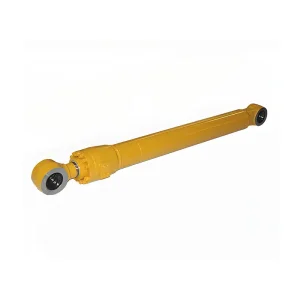
Main Boom Lift Cylinder MPM-HCB212 for Loaders
View Specifications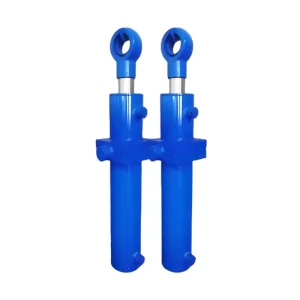
Heavy Duty Dump Trailer Telescopic Cylinder
View Specifications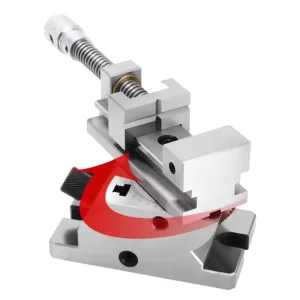
CHM Precision Universal Machine Vise MPM0356
View SpecificationsReady to Optimize Your Hydraulic Manifold Assembly?
Submit your hydraulic circuit diagram, 2D/3D step model, or reverse engineering sample to our Qingdao engineering team. Receive detailed DFM feedback, pressure drop estimates, and competitive wholesale factory pricing within 24 hours.