
Integrated Precision Machining & Actuation Hardware
Explore our industrial-grade components, hydraulic assemblies, and high-precision CNC workholding devices engineered to sub-micron concentricity benchmarks in our Qingdao production plant.
Global Landscape of Precision Collets & CNC Clamping
In modern computer numerical control (CNC) manufacturing, the precision collet represents the critical tribological bridge between the machine tool spindle arbor and the cutting instrument. As global manufacturing transitions toward multi-axis Swiss-style mill-turning, 5-axis simultaneous high-speed machining (HSM), and lights-out automated production, the mechanical requirements placed upon spring collets (DIN 6499 ER series, DIN 6388 TG/OZ series, and high-precision SK/PMA types) have shifted radically from standard tooling accessories to mission-critical precision dynamic components.
Micro-Centric Runout Control
Total Indicated Runout (TIR) at 3×D and 4×D overhang is no longer acceptable at conventional 10–15 micron thresholds. Tier-1 automotive and aerospace subcontractors now demand repeatable concentricity below 5 µm (Standard Class), 3 µm (UP Class), and under 1.5 µm (AAA Ultra-Grade) to mitigate tool deflection and premature edge micro-chipping during trochoidal milling passes.
- Elimination of harmonic tool chatter
- 300% to 400% extended carbide cutter lifespan
Extreme Clamping Torque Retention
Modern cutter geometries generate aggressive axial pull-out forces, particularly during dynamic roughing in aerospace titanium (Ti-6Al-4V) and nickel-chromium superalloys (Inconel 718). Collets must deliver high radial friction coefficients without galling the tool shank, utilizing specialized slotted geometry, micro-honed bores, and specialized anti-friction clamping nut thread treatments.
- Positive friction drive overcoming tool slip
- Uniform 16-slot elastomeric deformation
High-Pressure Coolant Delivery
High-efficiency deep cavity drilling and high-pressure through-spindle cooling (TSC) mandate collets with dynamic elastomer sealing or vulcanized rubber channel barriers. These sealed configurations endure up to 150 bar (2,175 PSI) fluid pressures without leakage, directly evacuating chips, cooling the cutting shear zone, and eliminating swarf re-cutting.
- Direct-to-tip fluid conveyance
- Debris exclusion from toolholder tapers
Advanced Metallurgy, Heat Treatment & Manufacturing Roadmap
A precision collet is fundamentally an elastic spring element that must endure millions of clamping cycles without dimensional creep, plastic deformation, or fatigue cracking. Qingdao Micro Precision Machinery utilizes an exhaustive multi-stage thermal and grinding metallurgical sequence.
Premium SUJ2 / 100Cr6 High-Carbon Chromium Alloy Selection
Our collets are manufactured from vacuum-degassed SUJ2 (AISI 52100 / DIN 100Cr6) bearing steel, chosen for its supreme hardenability, clean microstructural grain homogeneity, and remarkable fatigue strength. The chemical formulation provides optimal chromium carbide dispersion, which gives our ER collets outstanding wear resistance along the internal clamping bore while preserving bulk toughness across the spring bridges.
Vacuum Sintered Quenching & Cryogenic Austenite Elimination (-196°C)
Collet blanks are austenitized in a computer-controlled vacuum furnace, quenched under high-purity nitrogen gas, and subjected to multiple sub-zero deep cryogenic stabilization cycles at -196°C. This sub-zero transformation forces residual austenite down to less than 0.5%, virtually eradicating future dimensional drift, thermal warping, and stress-relaxation over years of continuous clamping operations. The finished product achieves a uniform hardness of HRC 44–48 on the elastic clamping body and up to HRC 58+ on critical contact seating tapers.
Sub-Micron Multi-Axis CNC Internal & External Angle Honing
The 8-degree DIN 6499 cone angle and the inner cylindrical bore are ground in a single clamping setup on ultra-precision Studer CNC cylindrical grinders. By grinding the external taper and internal clamping cylinder simultaneously, concentricity runout errors are mechanically minimized. Specialized micro-slitting electro-discharge machining (EDM) or ultra-thin cubic boron nitride (CBN) grinding wheels create the slotted segments, followed by precision vibratory deburring and thermal stress relieving.
Laser Interferometry & Dynamic G2.5 Balance Certification
Every batch undergoes non-contact laser micrometer scanning and pneumatic gauging across 3 distinct zones along the shank: at the collet mouth, at 1.5× diameter, and at 3× diameter. Collets destined for high-speed machining (HSM) applications are dynamic balanced to ISO 1940-1 Grade G2.5 at 25,000–45,000 RPM in symmetric balanced chuck bodies to eliminate high-frequency centrifugal harmonics.
Localized Application Scenarios & Sector Solutions
From the production of mission-critical hydraulic valves to micro-surgical tooling and commercial aviation components, precision collets act as the silent arbiters of geometric accuracy and machining economics.
Heavy Hydraulics & Valve Blocks
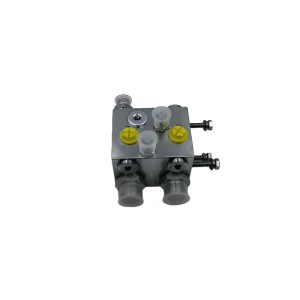
In our own manufacturing of excavator counterweight cylinders, telescopic booms, and hydraulic manifold valve blocks (such as the MPM-HCVB3A counterbalance valve), deep-hole drilling and precision cartridge cavity reaming require high-rigidity ER32 and ER40 collet systems. Maintaining concentric bore alignment ensures zero bypass leakage across valve spools.
- Spool bore finish Ra < 0.2 µm
- Elimination of stepped reamer taper drift
Aerospace Multi-Axis Profiling
High-efficiency milling of forged titanium airframe ribs and blisk contours requires extreme radial stiffness. Our Ultra-Precision (UP) collet series prevents cutter pullout under heavy radial cutting depths, protecting high-cost aerospace workpieces from dimensional scrap and unexpected machine tool stoppages.
- Tested under extreme chip loads
- Optimized for Trochoidal HSM cutting
Medical Micro-Machining
Manufacturing titanium bone screws, dental implants, and endoscopic surgical tools on Swiss-type lathes requires miniature ER8 and ER11 collets. Operating at spindle velocities up to 40,000 RPM, these micro-collets provide sub-micron rotational stability for tiny 0.2mm carbide micro-endmills without premature breakage.
- Micro-tool runout < 0.003 mm
- Extreme geometric consistency
Automotive Transmission & E-Drive Production
Automated transfer lines producing electric vehicle (EV) reducer housings and planetary gear carriers execute thousands of cycles daily. Synchronized tapping collets with axial compensation and sealed coolant flow reduce cycle times while safeguarding expensive sync-tap tools against thermal cracking and breakage.
- High-speed synchronized tapping compensation
- Continuous chip clearance via internal high-pressure coolant
Die, Mold & Precision Toolmaking
Hard milling of mold steels (P20, H13, and D2 hardened to 55–62 HRC) requires rigid tool clamping to prevent vibration chatter that destroys surface finish. Our precision collet chuck systems maintain consistent clamping pressure throughout lengthy 40-hour semi-finishing and EDM-eliminating mirror-finish cycles.
- Mirror mold surface finishing directly off CNC mills
- 50% reduction in secondary manual bench polishing
Comprehensive Collet Engineering & Tolerance Architecture
Reference engineering parameters for our DIN 6499/ISO 15488 ER Collet systems, providing manufacturing and sourcing teams with exact geometric metrics.
| Collet Standard | Clamping Range (mm) | Overall Length (L) | Major Diameter (D) | Standard TIR | UP Precision TIR | Max RPM (G2.5) | Applicable Nut Torque |
|---|---|---|---|---|---|---|---|
| ER8 (DIN 6499A/B) | 0.5 mm – 5.0 mm | 13.5 mm | 8.5 mm | ≤ 0.010 mm | ≤ 0.003 mm | 45,000 RPM | 8.5 Nm |
| ER11 (DIN 6499B) | 0.5 mm – 7.0 mm | 18.0 mm | 11.5 mm | ≤ 0.008 mm | ≤ 0.003 mm | 40,000 RPM | 24 Nm |
| ER16 (DIN 6499B) | 1.0 mm – 10.0 mm | 27.5 mm | 17.0 mm | ≤ 0.008 mm | ≤ 0.003 mm | 35,000 RPM | 56 Nm |
| ER20 (DIN 6499B) | 1.0 mm – 13.0 mm | 31.5 mm | 21.0 mm | ≤ 0.008 mm | ≤ 0.003 mm | 30,000 RPM | 80 Nm |
| ER25 (DIN 6499B) | 1.0 mm – 16.0 mm | 34.0 mm | 26.0 mm | ≤ 0.008 mm | ≤ 0.003 mm | 25,000 RPM | 104 Nm |
| ER32 (DIN 6499B) | 2.0 mm – 20.0 mm | 40.0 mm | 33.0 mm | ≤ 0.008 mm | ≤ 0.003 mm | 20,000 RPM | 136 Nm |
| ER40 (DIN 6499B) | 3.0 mm – 26.0 mm | 46.0 mm | 41.0 mm | ≤ 0.010 mm | ≤ 0.005 mm | 15,000 RPM | 176 Nm |
| ER50 (DIN 6499B) | 6.0 mm – 34.0 mm | 60.0 mm | 52.0 mm | ≤ 0.012 mm | ≤ 0.006 mm | 10,000 RPM | 280 Nm |
Macro-Industry Challenges & Engineering Mitigations
In high-volume machine shops, over 65% of premature tool failures, bore taper defects, and inconsistent surface finishes stem directly from improper tool clamping kinematics. Here is how our OEM manufacturing solutions address these systemic failure points.
Elimination of Fretting Corrosion
Fretting corrosion occurs when micro-slippage between the collet exterior and toolholder taper generates localized friction welding and oxide pitting. We apply a proprietary sub-micron electroless nickel or black-oxide surface conversion to the collet body, mitigating contact micro-welding and ensuring easy, clean extraction from the toolholder arbor during automatic tool changes (ATC).
Mitigating Taper Runout Stack-Up
Runout is cumulative: spindle taper error + toolholder arbor taper error + collet cone error + collet bore eccentricity. Qingdao Micro Precision controls the critical 8° cone angle tolerance to within AT3 precision standards. This ensures near-100% taper seating area against the chuck cavity, eliminating localized point loading and cantilevered angular deflection under heavy cutting force.
Eliminating Tool Shank Pull-Out
During heavy helical plunge cuts or trochoidal toolpaths, the upward pulling component of spiral flutes can extract the carbide shank from standard collets. We manufacture specialized non-slip grooved bore collets and positive form-fit locking collets compatible with Weldon-flat systems, guaranteeing zero axial movement under maximum machine spindle torque load.
Precision Built Since 2006: Qingdao Micro Precision Machinery
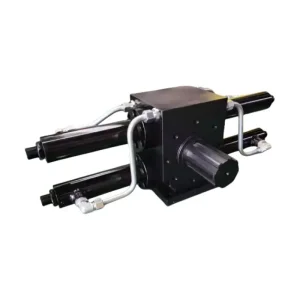
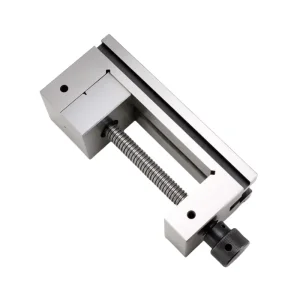
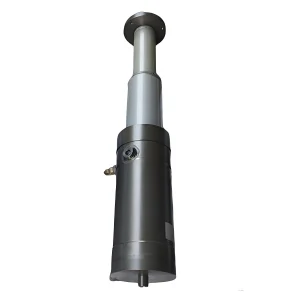
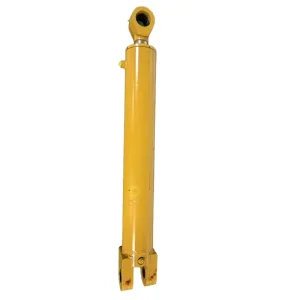
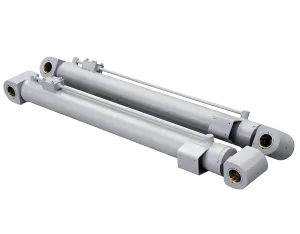
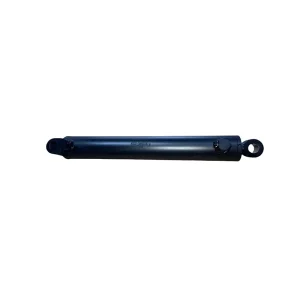
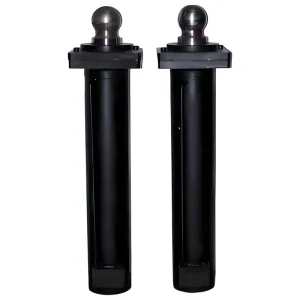
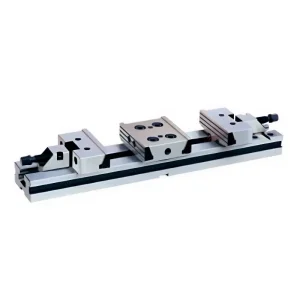
Founded in 2006, Qingdao Micro Precision Machinery Co., Ltd. operates 3,500 m² of modern climate-controlled CNC production facilities in Qingdao, China. Supplying over 50 global heavy equipment brands and industrial tool distributors, our manufacturing scope encompasses custom welded hydraulic cylinders, high-pressure manifold blocks, cylinder heads and pistons, alongside ISO/DIN-compliant CNC toolholders, retention knobs, precision vises, and ultra-precision collets. Every single component leaves our factory with full dimensional traceability, material certification, and rigorous batch inspection documentation.
OEM Hydraulic Components & Industrial Tooling Assemblies
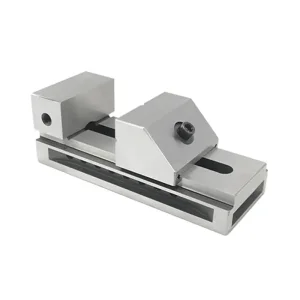
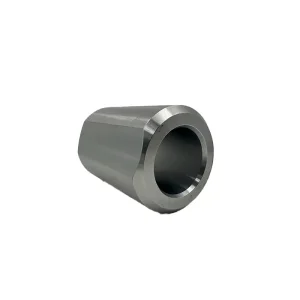
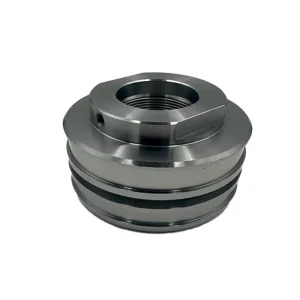
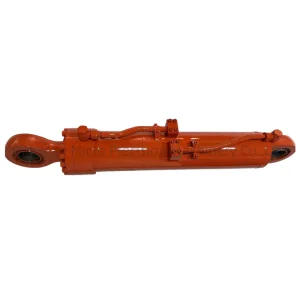
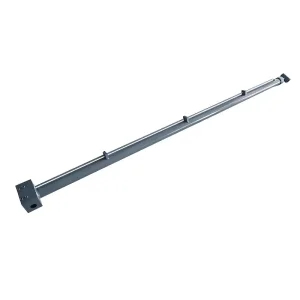
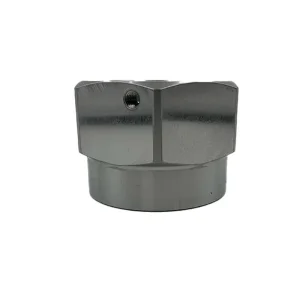
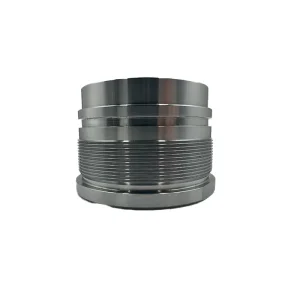
Review the second group of our engineered precision components, manufactured to strict DIN/ISO standards for heavy equipment builders, cylinder workshops, and precision machining facilities.
Engineering Questions & Direct Sourcing Guidance
Comprehensive technical inquiries addressed by our senior production tooling engineers and metallurgical specialists.
What constitutes the difference between Standard, Precision (UP), and Ultra-Precision (AAA) Collets?
The classification is determined strictly by Total Indicated Runout (TIR) verified at 3× cutter shank diameter overhang. Standard grade collets exhibit a TIR between 0.010 mm and 0.015 mm, suitable for conventional drilling, rough milling, and general machining. Precision (UP) collets guarantee TIR under 0.005 mm (or 0.003 mm for small sizes such as ER8/ER11), designed for multi-axis high-speed milling, reaming, and carbide tooling where tool lifespan is paramount. Ultra-Precision (AAA) grade collets maintain concentricity under 0.002 mm to 0.003 mm across the entire collapse range, individually laser-certified for micro-machining and high-speed Swiss-type operations running above 30,000 RPM.
Why is vacuum cryogenic treatment (-196°C) critical for precision spring collets?
During standard heat quenching of SUJ2/100Cr6 steel, up to 8%–12% of the microstructure can remain as untransformed "retained austenite," which is thermodynamically unstable at room temperature. Over months of thermal cycling and mechanical shock in machine spindles, this retained austenite gradually transforms into martensite, causing localized volumetric expansion and permanent runout distortion. Deep cryogenic freezing at -196°C forces complete transformation of retained austenite into stable martensite, locking in the 8-degree cone geometry for the working lifespan of the collet and preventing dimensional drift.
How does collet clamping torque influence cutting tool concentricity and life?
Under-tightening a collet nut permits cutting tools to micro-slip, producing chatter marks, destructive harmonic vibrations, and catastrophic carbide chipping. Conversely, over-tightening past calibrated torque limits deforms the front slots of the collet plastically, pinching the front mouth ("bell-mouthing") while relieving radial grip along the rear of the tool shank. This results in severe angular runout and permanently ruins the collet's internal cylindrical geometry. Adhering strictly to manufacturer torque ratings using a calibrated torque wrench is vital for maintaining certified runout ratings.
Can ER collets handle high-pressure through-spindle coolant without specialized seals?
Standard slotted ER collets cannot seal coolant because fluid escapes through the longitudinal expansion slots. For high-pressure through-spindle coolant applications (up to 70–150 bar), machine shops must utilize either vulcanized rubber-sealed collets or collets equipped with interchangeable face-seal discs. These configurations channel 100% of the cutting fluid through the interior flute channels of the cutting tool, maintaining critical hydrodynamic pressure to flush chips from deep blind bores.
What are the design differences between DIN 6499 ER Collets and High-Precision SK/PMA Collets?
DIN 6499 ER collets feature an 8° half-angle taper, allowing a wide 0.5 mm to 1.0 mm clamping collapse range per collet size, making them extremely versatile for diverse shank sizes. SK (or PMA/GS) systems utilize a steeper 4° half-angle taper, restricting clamping collapse to 0.1 mm–0.2 mm. However, the steeper taper provides double the radial contact rigidity, superior radial stiffness, and substantially lower runout at high RPM, making SK systems preferred for heavy-duty solid carbide end milling where tool deflection cannot be tolerated.
How does Qingdao Micro Precision coordinate tooling accuracy with hydraulic cylinder manufacturing?
Because we produce both hydraulic cylinders and precision CNC machine tooling accessories under one roof, our tooling line is practically validated on our own heavy production floor. Machining seamless cylinder barrels, piston seal grooves, and hydraulic manifold valve cavities requires strict runout control to achieve ISO 6H thread tolerances and sub-micron concentricity between the cylinder rod bore and barrel spigot. We machine our CNC tooling with the exact precision we demand for our own OEM hydraulic products.
What inspection protocols and certifications accompany OEM collet orders?
Every OEM production batch is supplied with comprehensive quality documentation: 3.1 Mill Test Certificates verifying SUJ2/100Cr6 chemical composition, vacuum heat-treatment hardness records (HRC 44–48), laser profilometer taper angle inspection curves, dynamic balance certification reports (G2.5 at designated RPM), and individual optical runout verification data measured at 3×D shank overhang.
Can you produce custom dimension collets, non-standard inch sizes, or specialized shapes?
Yes. In addition to standard metric and imperial fractional sizes, our CNC grinding cells engineer custom collets tailored to customer drawings: square and hex shank clamping bores, tap-holding collets with positive square drive tangs, extended-nose (over-length) collets for 5-axis mold clearance, and specialized vulcanized or hard-faced clamping surfaces for automated robotic workholding grippers.
What is the expected operating life of a precision collet, and when should it be retired?
In standard production environments with correct torque application and clean maintenance, high-grade SUJ2 collets retain certified TIR for approximately 800 to 1,200 clamping cycles or 3 to 6 months of multi-shift operation. Collets should be immediately retired from service if: (a) external taper micro-galling or scratching exceeds 10% of contact area, (b) measurable runout at 3×D exceeds certified limit by 0.005 mm, (c) axial fretting marks appear on the internal bore, or (d) an unchucked spindle collision occurs.
How are collet products packaged to prevent corrosion during overseas maritime transit?
After ultrasonic cleaning and final metrology verification, all collets are coated in high-performance synthetic anti-rust dipping oil, sealed within hermetic VCI (Vapor Corrosion Inhibitor) plastic containers, and boxed in reinforced export-grade cartons. Sea freight consignments are vacuum-palletized with moisture desiccants to prevent oxidation during extended ocean voyages across fluctuating climatic zones.