Precision Products & Hydraulic System Tooling
Integrated manufacturing workflows featuring complementary cylinder mechanisms, CNC fixtures, and high-tolerance fluid control components.
The Science of Hydraulic Cylinder Bushing Performance
A hydraulic cylinder bushing functions as the sacrificial boundary between the moving rod/piston pin and the cylinder body. Precision manufacturing ensures long run-life under extreme pressure velocity (PV) metrics.
Radial Load Absorption
Bushing architecture directly controls the distribution of severe side-load vectors. By maintaining a uniform hydrodynamic or solid-film boundary, our sleeves prevent localized stress concentrations that trigger rod scoring and gland deformation.
- Dynamic contact pressure analysis up to 350 bar
- Finite Element Analysis (FEA) verified elastic limits
- Compensation for eccentric mechanical loading
Micro-Concentricity Management
Rod deflection under load requires tight concentricity between the bushing inner diameter and the seal packing pocket. Our factory utilizes multi-axis CNC machines to achieve micron tolerances, extending primary seal life.
- Tolerances held within ISO H7/f7 sliding fits
- Total runout controlled under 0.012 mm
- Optimized Ra 0.2–0.4 µm micro-finish textures
Anti-Galling & Seizure Protection
Micro-welding between steel pins and cylinder eyes under boundary lubrication leads to catastrophic seizure. We utilize specialized metallurgy, case-hardening, and self-lubricating dry carbon matrix formulations.
- Differential hardness profiling (>58 HRC)
- Integrated diamond and helical lubrication grooves
- Solid lubricant plug implants (Graphite/MoS2)
Macro Industry Landscape: The Shift Toward Advanced Cylinder Tribology
Global original equipment manufacturers (OEMs) face severe field operating criteria: elevated pressure thresholds up to 420 bar, extended warranty commitments, and aggressive green environmental mandates that eliminate standard greasing regimens.
The Demise of Manual Lubrication Routines
In modern industrial applications—ranging from offshore mooring actuators to automated agricultural harvesters—maintenance intervals have stretched from daily lubrication checks to 5,000+ operating hours without manual greasing. Standard brass and mild steel bushings fail rapidly under boundary friction conditions. Global machine buyers now mandate composite bi-metallic or graphite-plugged matrix bearings capable of maintaining dry friction coefficients below 0.08.
- Elimination of toxic lithium grease leakage into open waterways
- Operational stability across -40°C to +260°C ambient temperatures
- Significant reduction in field warranty claims for hydraulic cylinder manufacturers
Supply Chain Reshoring & Quality Traceability
OEM equipment integrators across North America, Europe, and Australasia are moving away from multi-tiered broker supply chains. They demand direct, auditable partnerships with precision machining factories capable of handling comprehensive raw material testing, induction hardening, grinding, and automated dimensional verification under ISO 9001:2015 frameworks.
- Strict raw material heat tracking via optical emission spectrometry
- Standardized EN 10204 3.1 inspection certification per consignment
- Direct factory-to-assembly-line delivery pipelines eliminating tier markups
OEM Material Selection Guide for Hydraulic Cylinder Bushings
Matching dynamic loading parameters, oscillation speed, and chemical exposure environments with optimized structural metallurgy.
| Material Class | Alloy Grade / Structure | Dynamic Load (N/mm²) | Max Velocity (m/s) | Key Cylinder Applications |
|---|---|---|---|---|
| Continuous-Cast Bronze | CuSn8P, CuSn12, CuAl10Fe3Mn2 | 85 – 120 | 1.5 | Excavator bucket hinges, loader tilt linkage, rod guide heads |
| Carburized & Hardened Steel | 20CrMnTi, 42CrMo4, 100Cr6 | 180 – 250 | 0.6 | Heavy mining excavator arm ends, hydraulic rock breaker cylinders |
| Self-Lubricating Metal-Polymer | Steel Backing + Sintered Bronze + PTFE | 140 | 2.5 | Clean-room automation, aerial work platforms, agriculture steering |
| Bi-Metallic Sintered Alloy | SAE 1010 Steel + CuPb10Sn10 | 130 – 160 | 2.0 | Commercial vehicle steering, forklift masts, telescopic crane cylinders |
| Solid Graphite Impregnated | CuZn25Al5Mn4Fe3 + Solid Lubricant | 100 – 150 | 0.4 | Hydropower gates, marine offshore cylinders, injection molding tie-bars |
Localized Support & Global Compliance Guarantees
Eliminating cross-border technical risk through comprehensive engineering review, standardized quality regimes, and rapid localized replacement inventory.
Stringent Metallurgy Audits
Every melt batch undergoes in-house spectroscopic analysis before machining. We certify tensile strength, elongation, yield point, and core-to-case microhardness depth to prevent cracking during press-fit assembly.
- Standardized ASTM, DIN, and JIS grade cross-referencing
- Induction case depth controlled to ±0.2 mm precision
- Charpy V-notch impact testing for sub-zero mining machinery
Dimensional Fit Guarantee
Bushing field performance depends entirely on press-fit housing retention. We supply precision interference engineering calculated against dynamic thermal expansion, preventing spun bushings and housing scoring.
- Interference fit calculations based on housing alloy type
- Chamfer lead-in profiles precision-cut for automatic assembly
- 100% CMM verification of critical bore roundness
Export-Grade Protection
Corrosion protection is non-negotiable for trans-ocean freight. All finished bushings receive multi-stage ultrasonic solvent washing, VCI (Vapor Corrosion Inhibitor) packaging, and vacuum sealing inside structural export crating.
- 72-hour salt spray baseline corrosion defense
- Anti-humidity sealed interior barriers for tropical transit
- Consignment tracking and express air-dispatch for urgent field builds
Mission-Critical Applications: Where Bushing Quality Dictates Uptime
Specific field conditions demand distinct mechanical solutions. Discover how our precision-machined bushings perform across frontline industrial equipment.
Earthmoving & Mining Actuators
Excavator booms, bucket links, and underground LHD machines face abrasive rock dust, high-impact cycle reversals, and heavy side deflections. Our carburized 20CrMnTi steel and high-tin bronze bushings resist galling under severe conditions.
Agricultural Equipment
Combine harvesters and reversible plough cylinders operate in fine soil and organic debris. Self-lubricating composite bushings run smoothly without greasing, eliminating abrasive grit build-up that scores pins.
Mobile Cranes & Aerial Lifts
Telescopic boom cylinders require ultra-smooth sliding dynamics without stick-slip. Our thin-wall bi-metallic bearings deliver high load capacity and uniform sliding friction for steady boom extension at height.
Industrial Hydraulic Presses
Metal stamping and injection molding cylinders work continuously at elevated operating temperatures. Solid bronze bushings with embedded graphite plugs deliver dry boundary lubrication, resisting thermal seizure over long cycles.
Next-Generation Technology Roadmap: Intelligent Bushings & Green Tribology
Our Qingdao engineering center is pioneering the integration of additive manufacturing, nanotech coatings, and condition monitoring into hydraulic bearing components.
Smart Wear Monitoring (IoT Integration)
We are embedding passive thin-film sensor arrays into bushing backing surfaces. These sensors track wear depth and temperature spikes, transmitting early warning signals to machine telematics before metal-on-metal pin contact occurs.
Laser Cladding & Micro-Porous Tribo-Surfaces
By replacing traditional continuous casting with precision robotic laser cladding, our production line reduces bronze alloy waste while producing fine grain structures with superior fatigue resistance.
Bio-Hydraulic Fluid Compatibility
Synthetic and vegetable ester-based hydraulic fluids can degrade standard PTFE composites. Our R&D team is qualifying carbon-polymer matrix formulas optimized specifically for biodegradable fluids.
Frequently Asked Questions: OEM Hydraulic Cylinder Bushings
Comprehensive engineering clarifications addressing critical design, sourcing, and operational considerations.
How do I calculate the correct interference fit for hydraulic cylinder bushings?
Interference fit calculation depends on the bushing wall thickness, material yield strength, and housing composition (cast iron, forged steel, or aluminum). As a rule of thumb, interference is set between 0.0015 to 0.0025 inches per inch of outer diameter. When press-fitting thin-walled bronze or composite bearings, the internal diameter closes by 70% to 100% of the interference value. This inner diameter closure must be accounted for during the design stage to ensure the pin retains its required running clearance after installation.
When should self-lubricating composite bushings replace bronze in cylinder eye ends?
Self-lubricating composite bushings excel in low-speed, high-load oscillating applications where regular grease maintenance is difficult, costly, or environmentally restricted (e.g., agricultural machinery, aerial lifts, and waterway gate cylinders). However, for applications with heavy shock loads, high continuous sliding speeds, or severe contamination (such as hydraulic rock breakers or primary mining excavators), case-hardened alloy steel or cast aluminum bronze with active grease replenishment remains the preferred choice.
What causes premature bushing spin or migration inside the cylinder eye?
Bushing migration or spin occurs when operating frictional torque exceeds the retention force of the press-fit interface. Common causes include: (1) Insufficient machining tolerance on the cylinder eye bore, (2) Thermal expansion differentials where aluminum housings expand faster than bronze or steel bushings, (3) Inadequate lead-in chamfers causing shearing of the bushing OD during assembly, or (4) Intermittent lubrication starvation resulting in momentary pin galling that forces the bushing to spin in its housing.
How does Micro Precision ensure batch-to-batch concentricity on high-volume runs?
Our Qingdao production facility utilizes multi-axis CNC turn-mill centers that perform outer-diameter turning, inner-diameter boring, grooving, and facing operations in a single workholding setup. This process eliminates reclamping errors and maintains runout within 0.012 mm. Every production lot is verified using coordinate measuring machines (CMM) and air-gauge bore micrometers, with statistical process control (SPC) data available on request.
Can you manufacture replacement bushings directly from worn field samples?
Yes. Our reverse-engineering team inspects the unworn portions of the sample, uses optical coordinate measuring tools to map internal grease groove geometry, and performs spectrometer scans to verify the base metallurgy. We then generate a detailed 2D production drawing with restored original clearances and send it for customer sign-off prior to CNC production.
What documentation is provided with international shipments?
All export consignments include a full quality documentation package: Material Test Reports (MTR) according to EN 10204 3.1, heat treatment hardness test logs, surface roughness inspection profiles, dimensional CMM sample sheets, and a Certificate of Origin. Customized barcode tagging and OEM private-label laser marking are also supported.
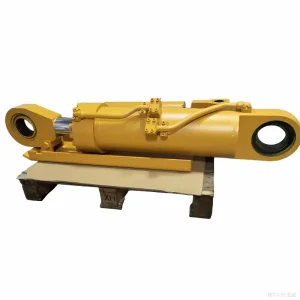
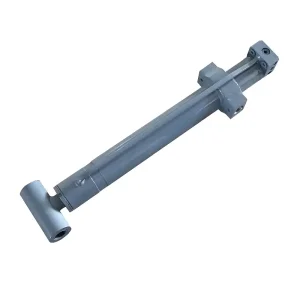
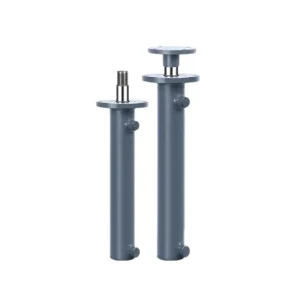
Hydraulic Cylinders & Core Structural Components
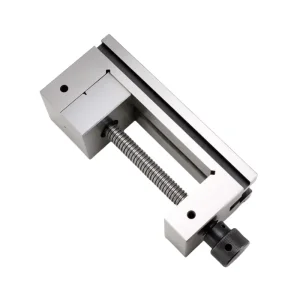
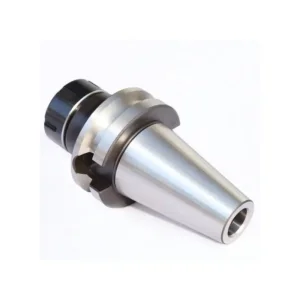
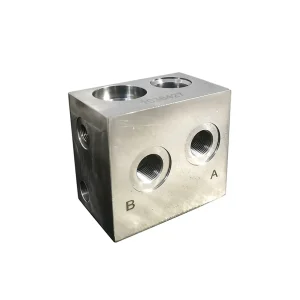
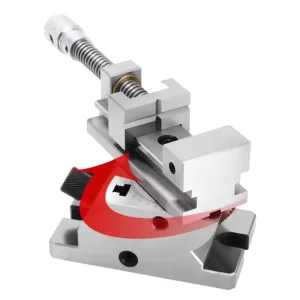
Explore heavy-duty cylinders, custom manifolds, and high-precision machine fixtures manufactured at our facility.