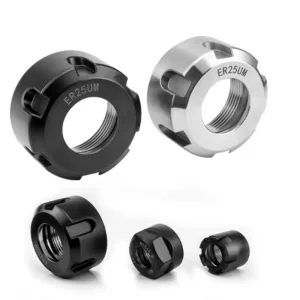
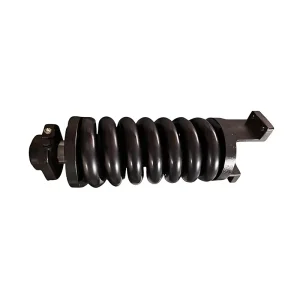
Precision Tooling & Hydraulic System Showcase
Explore our core OEM/ODM precision engineered components, manufactured in-house with micron-level CNC tolerances to withstand high axial clamping loads and harsh duty cycles.
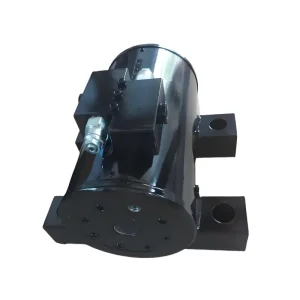
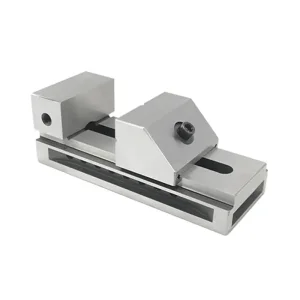
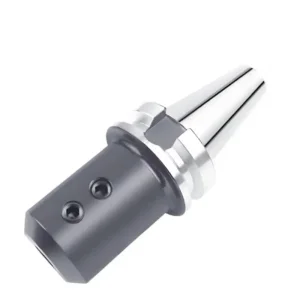
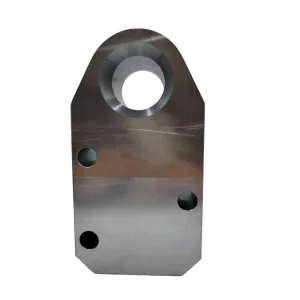
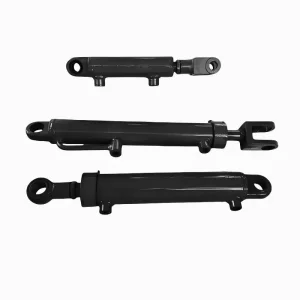
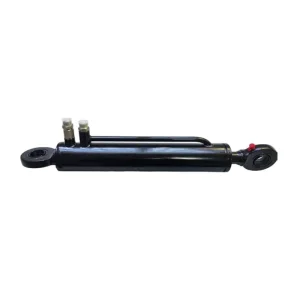
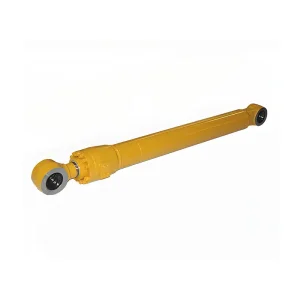
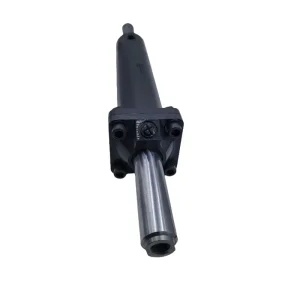
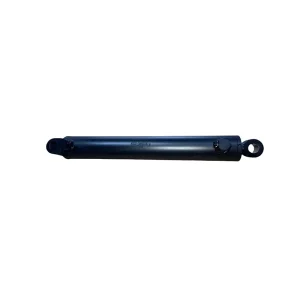
Cheap Boom Cylinder MPM-HCB212 for Excavator and Loader Manufacturer, Factories
Explore Specifications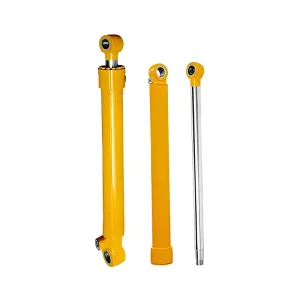
<0.003 mm
Total Radial Runout (TIR)58-62 HRC
Controlled Case Hardness40,000 RPM
Dynamic Balance G1.0/G2.5100% NDT
Magnetic Particle InspectionThe Critical Mechanical Nexus: Spindle Retention Knobs in High-Speed Machining
Tri-Zone Differential Metallurgy
Pull studs must never be uniformly through-hardened. Through-hardening creates glass-like brittleness under axial tension. MPM executes specialized carburization and localized induction hardening to yield:
- Head & Gripper Flange: 58-62 HRC surface hardness resisting abrasive gripper indentation and mechanical galling.
- Taper Pilot & Threads: Precise ISO 4H/6H ground threads with tempered ductility to eliminate root micro-cracking.
- Structural Core: 32-38 HRC ductile core absorbing intense dynamic vibrations and harmonic chatter during deep milling.
Precision Ground Relief & Concentricity
Thread pitch-line runout relative to the external seating pilot causes severe angular misalignment, cocking the tool holder inside the spindle cavity:
- Total Indicated Runout (TIR): Held strictly under 0.003 mm across all critical datum reference surfaces.
- Flange Shoulder Perpendicularity: Precision face-ground to ±0.002 mm, guaranteeing 100% surface contact against tool arbor back-faces.
- Stress Relieving Undercuts: Engineered toroidal fillet radii behind the pilot shoulder to disperse stress concentrations.
Through-Spindle High Pressure Coolant (CTS)
Modern manufacturing requires high-volume coolant pressures reaching 70 to 120 bar. MPM engineers advanced through-hole seals preventing catastrophic leakage:
- High-Durometer Fluorocarbon O-Rings: Viton / FKM elastomer formulation resistant to synthetic metalworking emulsions.
- Deep-Hole Micro-Honed Bores: Ultra-smooth central coolant channels preventing internal vortex turbulence and pressure drops.
- Zero-Washout Seating Grooves: Machined with positive geometric stops preventing hydraulic back-pressure seal expulsion.
Macro Trends Transforming Global Retention Knob Procurement
How aerospace lightweighting, EV powertrain machining, and multi-tasking mill-turn platforms have reshaped quality criteria for global OEM buyers.
High-Dynamics 5-Axis HSM
With axis acceleration rates exceeding 1.5G to 2.0G, transient lateral cutting forces generate massive bending moments at the spindle-tool gauge plane. Pull studs must exhibit heightened shear yield strength to arrest micro-fretting corrosion.
Elimination of Taper Swelling
Over-tightened or low-precision pull studs pull the thin-wall region of steep tapers outward, creating "taper expansion". This distorts 7:24 taper geometry, ruining contact ratio and spindle bearing preload. MPM ODM knobs incorporate balanced thread relief zones.
Dual-Contact (Face & Taper)
Platforms utilizing simultaneous taper and flange contact (e.g., Big Plus, dual-contact systems) require micro-inch dimensional height precision. If pull stud axial height varies by >0.005 mm, face contact cannot engage properly, eliminating the intended rigidity gain.
Non-Destructive Testing (NDT)
Aerospace and automotive engine lines enforce strict batch traceability. Tier-1 enterprise procurement now mandates 100% electromagnetic eddy-current or wet continuous fluorescent magnetic particle inspection to verify zero surface micro-fissures.
| Standard Specification | Spindle Interface Type | Typical Clamping Angle | Coolant Through-Hole Spec | Recommended Steel Grade | MPM Manufacturing Tolerance |
|---|---|---|---|---|---|
| DIN 69872 / ISO 7388-2 Type A | SK30 / SK40 / SK50 / SK60 | 15° Clamping Shoulder | Central bore with O-Ring recess | 20MnCr5 / SNCM420 Alloy | Concentricity ≤ 0.003 mm; TIR |
| JIS B6339 (MAS 403) P-Type | BT30 / BT40 / BT50 | 30°, 45°, 60°, 90° Angular Heads | Sealed or High-Pressure CTS | SCM415 / 8620 Nickel-Chrome | Angle Precision ±5 Arc Minutes |
| ANSI/ASME B5.50 (CAT) | CAT40 / CAT50 Heavy Duty | 45° / 60° Retention Contour | Dry solid or drilled coolant passage | AISI 8620 / 4140 Carburized | Thread Class 2A / 3A precision ground |
| ISO 7388-2 Type B (Former AFNOR) | ISO steep taper shanks | 45° Truncated Cone | Flange seal or bore gasket | 20MnCr5 Controlled Case-Hardened | Gauge height ±0.005 mm max dev. |
| Custom ODM / OEM Blueprint | Dual-Contact & High-Pressure HMC | Engineered per Drawbar Collet | Multi-channel or cryogenic channel | Custom SNCM439 / Aerospace alloys | Customized per customer specification |
Why Machine Tool Precision Governs Heavy Equipment Reliability
Bore Circularity & Micro-Cylindricity
Spindle chatter originating from loose pull stud clamping creates microscopic waviness along the cylinder bore wall. Under 350+ bar working pressures in hydraulic cylinders, this waviness shears polyurethane step seals, inducing internal bypass leaks.
Manifold Cavity Concentricity
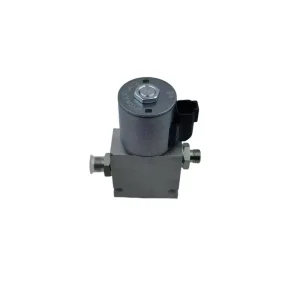
Differential lock solenoid valves (MPM-DLSV12) and quick-change manifold blocks (MPM-QCSV12) require valve seat concentricity within ±0.005 mm. Tool arbor vibration causes spool binding and response delays.
Tool Life Extension & Carbide Economy
Rigid drawbar clamping via zero-runout pull studs eliminates harmonic micro-chipping on indexable carbide inserts. Customers machining tough alloys (42CrMo, forged steel) report tool life increases of 28% to 45% simply by replacing worn retention knobs.
Stringent Metallurgy, Metrology & Compliance Assurance
From chemical spectrometry of raw billet heats to multi-axis coordinate measuring verification, every stage adheres to ISO 9001:2015 frameworks.
Vacuum Carburizing & Cryogenic Cycling
Our pull studs undergo low-pressure vacuum carburizing followed by deep sub-zero cryogenic quenching at -196°C. This critical treatment transforms 99.8% of unstable retained austenite into stable martensite, completely eliminating delayed micro-cracking and dimensional drift over millions of operational cycles.
Thread Grinding & Root Radius Control
Unlike budget suppliers who single-point chase or aggressively roll threads post-heat-treat, MPM finishes thread profiles using specialized CNC thread grinding. Thread root radii are kept strictly rounded to distribute axial pre-load stress evenly across five active thread pitches without notch stress peaks.
Traceability & Batch Metallurgy Certification
Every single production batch receives laser-etched matrix tracking. We provide full material chemistry breakdown certificates (3.1 EN 10204), micro-hardness depth profile cross-sections, and tensile destruction proof test reports verifying safety margins exceeding 250% of machine drawbar ratings.
Future Outlook: Smart Retention Knobs & Industry 4.0 Connectivity
IoT Sensor-Integrated Pull Studs
Prototypes under development incorporate micro thin-film strain gauges and wireless telemetry transmitters embedded within the internal coolant bore. These sensors communicate real-time drawbar tension directly to the CNC machine controller, alerting operators immediately if spindle Belleville disc springs fatigue or clamping pressure degrades.
Supercritical Cryogenic Machining Channels
For machining aerospace titanium (Ti-6Al-4V) and nickel superalloys (Inconel 718), MPM engineers custom retention knobs configured for liquid nitrogen (LN2) and supercritical carbon dioxide (scCO2) delivery, featuring specialized cryogenic thermal expansion seals rated down to -196°C.
Diamond-Like Carbon (DLC) Nanocoatings
To eliminate the need for toxic high-pressure greases in cleanroom semiconductor and medical tooling environments, our advanced coating lines apply ultra-low-friction DLC coatings to the pull stud gripping shoulder, offering exceptional wear endurance with dry drawbar mechanisms.
Frequently Asked Questions: CNC Retention Knob Engineering
Comprehensive engineering clarifications addressing drawbar maintenance, torque specifications, taper expansion, and failure prevention.
Yes, incorrect tightening torque is the leading cause of premature tool holder and spindle damage. Overtightening a retention knob produces excessive axial stress that physically expands (swells) the narrow, flexible small-end taper of the tool holder shank. This creates two severe issues: First, the tool holder no longer achieves its prescribed 80%+ taper contact area against the spindle wall, causing contact localized only at the upper neck. Second, this localized expansion damages the precision ground spindle socket, triggering heavy runout, chatter marks, and tool holder binding during automatic tool changes (ATC). Always utilize an accurate, calibrated torque wrench matched to manufacturer torque specifications (typically 35–45 Nm for 40-taper and 90–120 Nm for 50-taper).
Industry best practices, validated by aerospace tooling standards, recommend replacing retention knobs every 2,000 to 3,000 spindle operational hours, or every 12 to 18 months in high-duty cycle applications. In high-speed machining environments with continuous roughing cuts, accelerated tool change counts, or high-pressure through-spindle coolant, pull studs undergo severe cyclical fatigue loading. They should be inspected every 500 hours using magnetic particle testing or optical comparator inspection for gripper indentation, thread micro-fretting, or galling. Never reuse a retention knob that has been involved in a spindle crash or axis collision.
The fundamental difference resides in the gripping angle, head profile dimensions, and shoulder length. DIN 69872 features a distinct 15-degree engagement shoulder with a cylindrical head profile designed for multi-finger collet chucks. JIS B6339 (MAS 403) utilizes angled undercuts, commonly at 30, 45, 60, or 90 degrees, designed for ball-type or segment-type drawbar mechanisms. Attempting to clamp a DIN knob in a JIS spindle or vice versa can result in catastrophic drawbar failure, inadequate pull force, or accidental tool holder release at high spindle speeds. Always confirm machine drawbar blueprints before installation.
Yes. Our engineering department specializes in custom OEM/ODM retention knob development. Whether your application requires proprietary clamping angles, non-standard thread lengths, high-pressure coolant internal check valves, or exotic steel alloys for extreme shock damping, our in-house multi-axis CNC turn-mill centers and vacuum heat-treatment furnaces can produce fully validated prototypes and high-volume orders strictly to your engineering specifications.
Coolant bypass typically indicates either chemical degradation of the O-ring seal, improper seat chamfer geometry on the tool holder arbor, or installation damage. Standard nitrile (NBR) O-rings deteriorate rapidly when exposed to aggressive synthetic water-soluble machining coolants. MPM pull studs utilize chemical-resistant FKM/Viton fluorocarbon O-rings supported by precision-ground backer shoulders. Furthermore, if the retention knob is torqued into an arbor lacking a proper 60-degree counter-bore lead-in chamfer, the O-ring can be sheared during initial assembly.
The retention knob acts as the pre-loaded spring transmitting drawbar force into the tool holder taper. If retention force is compromised—due to worn Belleville washers, drawbar linkage wear, or improper pull stud neck engagement—the tool holder loses intimate taper contact under radial cutting forces. Even a microscopic separation of 2 to 3 microns allows the tool holder to pivot inside the spindle cavity, generating aggressive high-frequency harmonic chatter, ruining surface finish, and causing micro-chipping on cutting tool carbide edges. Regular drawbar force gauge testing paired with precision MPM pull studs guarantees consistent rigidity.
Precision Hydraulic & CNC Tooling Infrastructure
Connecting heavy construction reliability with high-accuracy manufacturing. Every component machined, inspected, and verified in Qingdao, China.
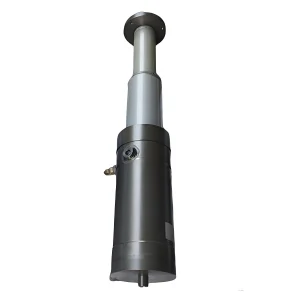
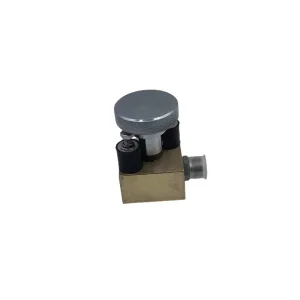
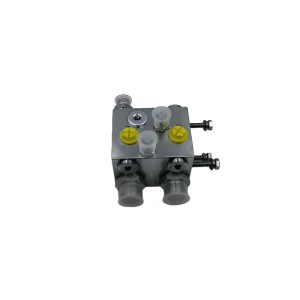
Wholesale Manual Speed Control Copper Valve Block MPM-MSCCVB12 Supplier, Factories
Explore Specifications