
Featured Industrial Components & Actuators
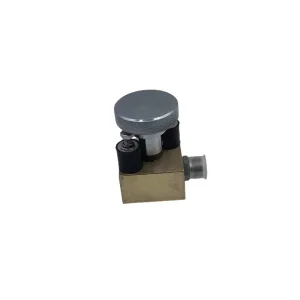
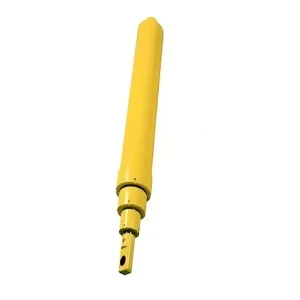
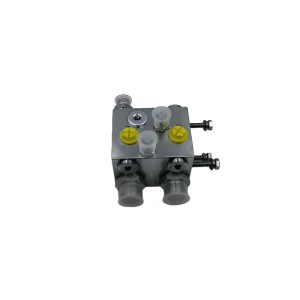
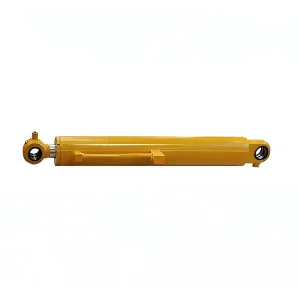
OEM-grade integrated valves, heavy-duty telescopic stages, and precision-honed cylinders built under strict ISO tolerances.
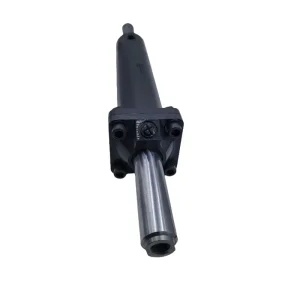
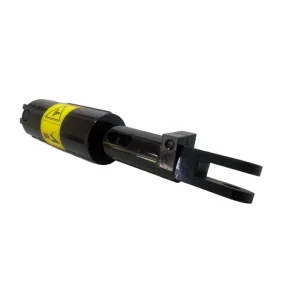
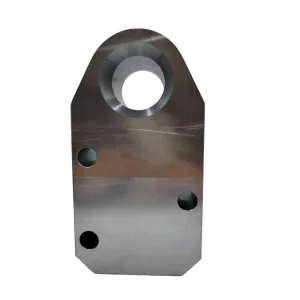
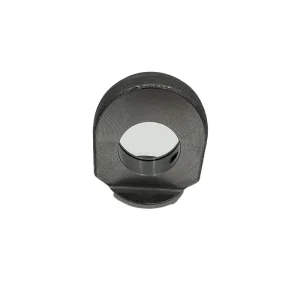
Macro-Industry Solutions in Forklift Actuation Architecture
The global logistics framework requires fluid power systems that reconcile continuous cyclic stress, zero internal leakage tolerances, and extreme thermal resilience. Our ODM solutions address these structural demands through engineered precision.
Dynamic Lift & Free-Lift Systems
Forklift mast lift cylinders operate under unrelenting cyclic duty cycles where load-holding reliability is non-negotiable. MPM designs dual-action primary and secondary free-lift actuators featuring integrated velocity fuses to prevent uncontrolled descent during hydraulic line rupture. Our tight concentricity tolerances between the piston rod and barrel spigot minimize stick-slip friction, protecting the mast assembly and ensuring continuous operator control during high-bay rack insertions.
Tilt Stabilization & Load Pitch Control
Mast tilt cylinders endure massive reversing forces during braking, acceleration, and tier stacking. Utilizing induction-hardened chrome rods with corrosion-resistant layers up to 30 microns, our tilt cylinders mitigate mechanical deflection and seal extrusion. Precision hydraulic cushioning dampens forward and backward mast stops, neutralizing shock pulses transmitted to the chassis and reducing operator fatigue over multi-shift warehouse schedules.
Zero-Backlash Steering Actuation
Compact steer axles in counterbalanced forklifts demand double-ended balanced steering cylinders that fit confined chassis envelopes while resisting high curb impacts. We engineer low-friction guide rings and PTFE-bronze composite seal packages that guarantee zero internal fluid bypass, enabling instantaneous hydrostatic steering feedback and preventing uneven tire scrub in high-throughput distribution hubs.
Global Commercial & Industrial Landscape
The shift toward lithium-electric material handling equipment (Class I, II, and III) places strict volumetric efficiency and parasitic loss restrictions on fluid power assemblies.
Electrification Efficiency Demands
Battery-powered counterbalanced forklifts demand actuators with minimal mechanical dragging force. High-precision honing of cold-drawn seamless tubing (Ra < 0.2 μm) combined with energized U-cup seals reduces parasitic hydraulic drag, extending battery duty cycles per charge across cold-storage and indoor fulfillment centers.
Autonomous Mobile Robot (AMR) Integration
Unmanned automated guided forklifts (AGVs) rely on micro-positioning precision. Cylinders must maintain strict displacement repeatabilities under fluctuating ambient temperatures. Integrated linear transducer sensors provide millimeter-accurate real-time stroke feedback directly to vehicle bus controllers.
High-Pressure Miniaturization
Global chassis designs favor smaller, lighter cylinders operating at higher system pressures (25 MPa to 35 MPa). By utilizing high-yield alloy steels (such as 27SiMn and 42CrMo), MPM maintains structural bursting safety factors exceeding 3:1 while minimizing overall actuator envelope weight.
Localized Application Scenarios & Environmental Resilience
OEM equipment builders operate across diverse geographic and chemical operating envelopes. Actuator engineering must reflect actual field variables.
Cold Chain Storage & Sub-Zero Logistics
Operated down to -35°C in continuous frozen distribution facilities. Standard nitrile seals embrittle, leading to premature leakage. MPM configures low-temperature polyurethane (TPU) and specialized fluoroelastomer compounds coupled with low-viscosity synthetic hydraulic media to eliminate pressure spikes and maintain flexible seal lips without fluid leakage.
Marine Terminals & Coastal Port Operations
Exposed to salt-laden sea air, chemical fertilizers, and heavy humidity. Standard chrome coatings pit quickly, cutting seal surfaces. We employ multi-layer nickel-chromium plating or laser cladding technologies exceeding 500 hours in ASTM B117 neutral salt spray testing, guaranteeing uninterrupted port freight transit.
Foundry & High-Temperature Heavy Industry
Subject to radiant molten heat and slag contamination in steel mills and casting plants. Cylinders feature metallic scrapers, internal high-temperature Viton sealing packs, and integrated thermal-dissipation bypass paths in the cylinder barrel to avoid thermal fluid thinning and pressure-locking.
Localized OEM Support & Compliance Assurance
Navigating global supply chain regulations requires comprehensive traceability, verified metallurgical integrity, and localized standard alignment.
ISO & ANSI/ITSDF Compliance
Engineered to satisfy ISO 3691-1 industrial truck safety mandates and ANSI/ITSDF B56.1 performance thresholds. Actuators undergo proof-pressure testing at 150% rated load prior to batch packing.
Traceable Material Certifications
All seamless steel tubes and piston rods arrive with EN 10204 3.1 chemical and mechanical inspection certificates. Ultrasonic testing eliminates internal inclusions or micro-fissures in welded caps.
Fluid Compatibility & Cleanliness
Flushed and checked to ISO 4406 fluid cleanliness standards (≤ 18/16/13) prior to assembly. Ready for direct installation in electro-proportional hydraulic valve lines without filter blinding.
Engineering Reverse-Design
Equipped with coordinate measuring machines (CMM) and laser scanning, our Qingdao design team accurately reverses and optimizes obsolete OEM cylinder geometries within 72 hours of sample intake.
Technical Roadmap & Future Outlook
The convergence of IoT analytics, smart valve integration, and friction-reducing nanocomposites defines the future of material handling hydraulics.
Embedding contactless magnetostrictive stroke sensors and internal pressure transducers directly within the cylinder base. This provides millisecond-level telemetry to the forklift's CAN-bus node for continuous load calculations, automatic height limits, and dynamic tilt-speed dampening.
Migrating from central hydraulic pump stations to decentralized autonomous servo-actuators for mast movements. Eliminates central valve lines, reduces overall chassis fluid volume by up to 60%, and drastically reduces standby electric energy consumption in warehouse operations.
Phasing out conventional hexavalent chrome electroplating in favor of high-velocity oxygen fuel (HVOF) thermal spray and ceramic nanocomposite coatings. Delivers a zero-porosity surface with 3x higher scratch resilience against coarse debris in cement and scrap yards.
Integrating non-invasive acoustic emission micro-sensors into the cylinder gland. Monitors high-frequency acoustic friction signatures indicating early seal degradation, enabling condition-based preventative maintenance prior to on-site hydraulic loss.
Expanding multi-axis CNC turn-mill machining centers and automated robotic dual-torch orbital welding cells in our Qingdao facility to maintain weld penetration uniformity of ≥ 98%, ensuring structural failure rates remain below 10 PPM across export batches.
Extended Actuation & Precision Fastening Assemblies
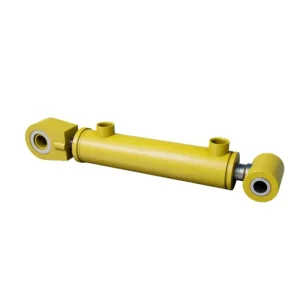
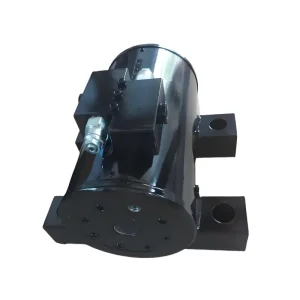
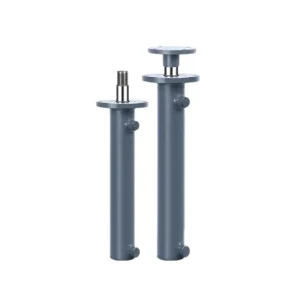
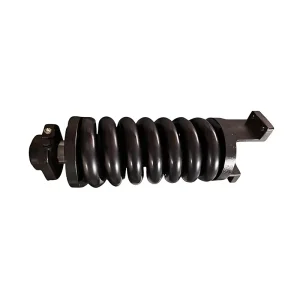
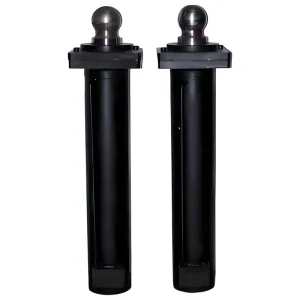
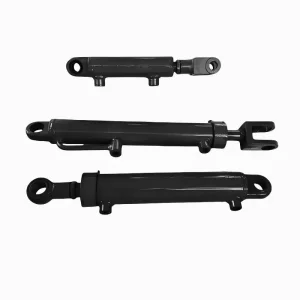
OEM-certified tilt assemblies, crane outriggers, rotary positioners, and ISO-grade fastener components for material handling and heavy equipment.
Technical Sourcing & Manufacturing Answers
Critical engineering metrics, reverse-manufacturing processes, and delivery protocols for international procurement teams.
What precise technical parameters are needed for a custom forklift hydraulic cylinder quotation?
To provide a firm technical review and commercial quote, our engineering team requires: internal bore diameter, rod diameter, extended and retracted pin-to-pin lengths, working stroke, maximum operating and relief pressures (typically 16-25 MPa), single-acting or double-acting preference, mounting interfaces (trunnion, clevis, cross-tube, or spherical bearing), fluid port specifications (SAE, BSPP, or metric threads), environmental duty cycle (e.g., cold store, chemical, outdoor), and projected annual production volumes. Submitting full 2D/3D CAD models (.step, .dwg) or physical OEM samples accelerates validation.
How does Qingdao Micro Precision guarantee interchangeability with existing OEM assemblies?
Every reverse-engineering project begins with optical non-contact laser scanning and mechanical CMM verification of the sample component. We create a complete dimensional drawing package detailing gland dimensions, pin bore concentricities, port offsets, and seal groove geometries. Machining is frozen only after customer technical drawing approval, ensuring 100% bolt-on interchangeability without mast or chassis modifications.
Which international manufacturing and thread tolerances do your components satisfy?
Components are manufactured to drawing specifications in both metric and imperial units. Critical cylinder retaining nuts are held strictly to ISO 6H thread tolerance classes. Mounting ears comply with ISO 6020/2 and DIN 24554 standards. For related CNC tooling operations, pull studs reference DIN 69872 and JIS B6339 standards, with ER collet geometries adhering strictly to DIN 6499 specifications.
Can you supply discrete hydraulic cylinder replacement components individually?
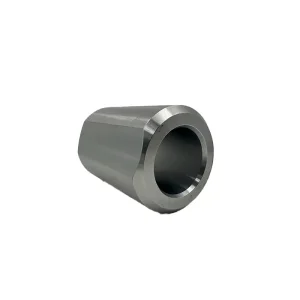
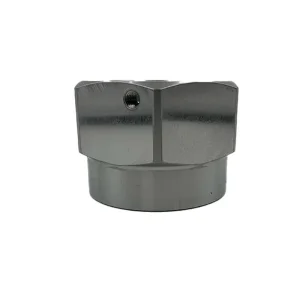
Yes. In addition to complete welded actuators, MPM supplies individual precision-machined elements to cylinder builders and maintenance depots. This includes cylinder heads (glands), pistons, threaded locknuts, mounting flanges, forged end-caps, integrated barrels, hardened self-lubricating bushings, spherical bearings, and complete CNC manifold valve blocks.
What testing and export preservation methods are utilized prior to overseas shipment?
Every actuator undergoes 100% hydrostatic pressure testing to verify internal and external seal integrity. Following testing, ports are plugged with threaded caps, rods are retracted, and unpainted steel interfaces receive rust-inhibiting VCI coatings. Units are enclosed in heavy-gauge poly tubing, cradled in custom-slotted wooden crates, and secured with steel strapping to prevent movement during ocean intermodal transit.
What is the standard turnaround time for engineering inquiries and production orders?
Our sales engineering staff replies to all technical inquiries and RFQs within 24 hours. Prototype and pilot sample fabrication generally completes within 3 to 4 weeks depending on raw material sourcing (special alloy tubes or forgings). Standard production batch lead times are maintained between 30 and 45 days, with direct ocean container loading arranged directly from Qingdao Port.