
High-Performance Actuators & Hydraulic Assemblies
Explore our precision-machined heavy machinery cylinders and critical internal tooling manufactured under strict DIN/ISO dimensional tolerances.
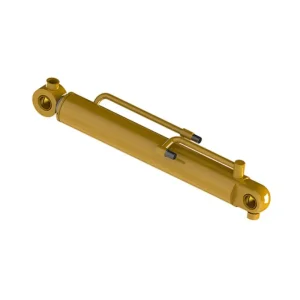
Technological Frontiers in Telescopic Hydraulic Cylinders
Analyzing global design paradigms: Micro-gap honing tolerances, tribological barrier coatings, high-pressure multi-stage sequencing, and digital sensorization.
Technical Definition: Telescopic Multi-Stage Actuation
A telescopic hydraulic cylinder (also designated as a multi-stage cylinder) utilizes a sequence of nested, progressively smaller tubular steel sleeves (stages) to provide an extended working stroke significantly longer than the nominal retracted length of the outer cylinder barrel. As global heavy equipment moves toward hyper-compact installation envelopes, the mechanical challenge shifts to preserving structural rigidity under dynamic column buckling loads (Euler's critical load formula) across all extended stages while preventing pressure spikes, seal extrusion, and hydraulic stage chatter.
Micro-Tolerance Honing & SRB Finishing
Traditional manufacturing often relies on cold-drawn seamless tubing with standard commercial tolerances. Modern Tier-1 engineering demands Deep-Hole Skiving and Roller Burnishing (SRB) processes. This achieves internal bore tolerances down to ISO H8/H9 and microscopic surface roughness Ra < 0.2 µm. Roller burnishing introduces a residual compressive stress layer on the sleeve interior, extending fatigue resistance under cyclic multi-stage hydraulic pressures up to 35 MPa (5,076 PSI).
HVOF & Laser Cladding vs. Hard Chrome
While hard chrome electroplating (25–35 µm thickness) remains a commercial workhorse, extreme mining and coastal marine tipping applications suffer from micro-crack oxidation and pitting corrosion. High-Velocity Oxygen-Fuel (HVOF) thermal spray and High-Power Diode Laser Cladding (applying nickel-chromium and tungsten-carbide alloys) deliver zero-porosity surface layers exceeding 850–1000 HV microhardness, surviving salt spray tests past 1,000 hours per ASTM B117 standards.
Integrated Linear Transducers (Smart Cylinders)
The rise of automated fleet telematics and autonomous earthmoving equipment requires precise stroke position feedback. Modern Chinese OEM manufacturing integrates embedded magnetostrictive and Linear Variable Differential Transformer (LVDT) displacement sensors directly within gun-drilled piston rods. These sensors feed real-time stage extension metrics over CAN bus / J1939 protocols to prevent asymmetric roll-off tipping risks on uneven terrain.
What Global Equipment Manufacturers Require
Purchasing teams across North America, Europe, Australia, and South America balance total cost of ownership (TCO) against catastrophic field failure risks.
Sourcing telescopic hydraulic cylinders from overseas factories requires rigorous cross-examination of structural metallurgical integrity. When a 5-stage telescopic dump cylinder extends to a height of 7 meters under a 45-ton payload, lateral wind gusts, uneven load dispersion, and chassis torsion exert immense bending moments. Global OEMs require strict adherence to five fundamental purchasing criteria:
| Evaluation Parameter | Legacy Industry Standard | MPM High-Spec Benchmark | Engineering Benefit to Equipment Builders |
|---|---|---|---|
| Raw Material Formulation | Standard Q235B / Q345B Carbon Steels | 27SiMn / ST52 / 42CrMo Cold-Drawn Alloys | Yield strength > 650 MPa prevents sleeve bulging and plastic deformation under hydraulic pressure spikes. |
| Stage Sequencing Control | Unregulated friction-dependent stage drops | Hydrodynamic stage balancing & internal orifices | Eliminates dangerous velocity jolts during stage transition, saving chassis subframes and trunnion mounts. |
| Sealing Architecture | Generic NBR Nitrile O-rings | Polyurethane U-cups + PTFE Bronze Guides + Viton Wipers | Resists extrusion at 30 MPa, limits fluid bypass, and operates reliably in -40°C Siberian winters or 50°C Outback heat. |
| Tolerancing & Thread Fit | Standard metric rough commercial fit | ISO 6H Class Tolerance CNC Threading | Prevents head nut back-off under continuous high-frequency vibration and heavy cyclic pulsation. |
| NDT & Quality Traceability | Batch-level sampling inspection (5%) | 100% Full-Stroke Hydrostatic + Ultrasonic Testing | Eliminates micro-pinhole leaks, cold shut welding defects, and internal porous inclusions before shipping. |
Total Cost of Ownership (TCO) vs. Initial Sourcing Price
For fleet operators and machinery distributors, a low-cost cylinder that suffers premature seal failure at 1,500 operating hours incurs thousands of dollars in downtime, hydraulic fluid cleanup, and crane mobilization expenses. Qingdao Micro Precision Machinery focuses on the "Zero-Intervention" operational model—achieving an expected service envelope of 5+ years without intermediate packing rebuilds.
China Industry 4.0: Supply Chain Resilience & Efficiency
How Qingdao Micro Precision Machinery integrates raw alloy sourcing, automated CNC machining clusters, robotic welding, and intelligent testing under one roof.
Vertical Raw Material Metallurgy
Situated in Shandong province—the epicenter of heavy mechanical engineering and specialized alloy tube manufacturing in China—MPM leverages direct mill relationships for 27SiMn and 42CrMo cold-drawn precision seamless steel tubes. Every tube bundle arrives with complete Mill Test Certificates (MTRs), verified through ultrasonic non-destructive testing (NDT) to prevent laminar inclusions and structural porosity.
Automated Multi-Axis CNC Turning Cells
Telescopic cylinder sleeves require impeccable concentricity between outer sliding surfaces and inner guiding bores. Our 3,500 m² Qingdao manufacturing floor utilizes synchronized multi-axis CNC turning and milling centers. Critical features such as stop-ring retaining grooves, step seal counter-bores, and guide-ring seating are turned in single-setup operations to hold runout tolerances within ±0.015 mm.
Robotic Tandem Welding & Pressure Validation
Mounting trunnions, base eyes, and port blocks undergo robotic pulsed GMAW (Gas Metal Arc Welding) and submerged arc welding with controlled pre-heating cycles. After welding and stress relief, each cylinder passes to automated computerized test benches for 100% full-stroke hydrostatic proof testing up to 1.5 times nominal working pressure, accompanied by precision laser contamination counters monitoring ISO 4406 fluid cleanliness.
Why Coastal Qingdao Port Location Matters for Global OEMs
Logistics volatility can derail global machinery assembly lines. Situated only 40 minutes from Qingdao Port (one of the world's top container hubs), MPM eliminates domestic inland transfer delays. Standard sea freight consignments to Long Beach, Rotterdam, Hamburg, or Sydney clear customs swiftly, supported by specialized vapor-phase corrosion-inhibitor (VCI) bagging, desiccant packs, and heavy-duty ISPM-15 certified wooden crating to guarantee pristine arrival.
Mission-Critical Applications Across Global Continents
Engineered to endure severe mechanical shock, sub-zero cold, salt fog, and abrasive particulate contamination.
Commercial Semi-Trailer & Dump Truck Tipping
In heavy North American Class 8 dump trailers and European rigid tipper trucks, pin-to-pin telescopic cylinders provide multi-stage front-end tipping. Single-acting gravity-return designs with integrated bleed valves and internal stop cushions ensure rapid cycle dumping of aggregate, gravel, and asphalt without whipping or sleeve bind under windy site conditions.
Underground Mining Loaders & Tunneling (LHD)
Confined underground hard-rock mines in Australia, Canada, and South Africa operate in acidic water, ambient rock dust, and heavy impact vibrations. MPM manufactures specialized double-acting telescopic actuators featuring nitrided sleeves, high-wear bronze guide rings, and heavy-duty spherical bearings capable of high cyclic tilt cycles without galling.
Waste Management & Sanitation Refuse Compactors
Municipal garbage trucks utilize custom horizontal double-acting telescopic packing ejector cylinders. These require continuous retraction power under dense compaction resistance. Multi-lip chevron seal packages and anti-debris scraper rings prevent organic leachate penetration from eroding cylinder barrel surfaces.
Multi-Stage Telescopic Agricultural Trailers & Harvesters
Modern intensive farming requires high-capacity grain dump trailers and variable-width plows. MPM manufactures cost-effective, high-reliability 3-stage and 4-stage agricultural cylinders equipped with port restrictor safety check valves to prevent rapid uncontrolled descent in the event of an external hydraulic supply hose rupture.
End-to-End OEM/ODM Engineering Protocol
From initial 3D CAD modeling or physical field sample reverse engineering to structural finite element analysis (FEA) and batch delivery.
Stage 1: Design Input & Reverse Engineering
Clients provide detailed 2D/3D models (STEP, DWG, SLDPRT) or send worn field samples. Our engineering team uses coordinate measuring machines (CMM) and optical profilometers to capture critical sleeve diameters, stop ring profiles, port thread pitches, and trunnion pin tolerances.
Stage 2: FEA Buckling & Stress Simulation
Before steel is cut, engineers simulate maximum extension under rated load with offset side-load angles (typically 2°–5°). Finite Element Analysis (FEA) verifies safety factors against Euler column buckling, guiding wall thickness optimization to minimize gross vehicle weight without sacrificing rigidity.
Stage 3: Design Approval & Tolerance Freezing
Comprehensive manufacturing drawings detailing metric and imperial thread standards, surface finish specifications (Ra, Rz), material hardness grades, and seal compound selections (e.g., Parker, Hallite, Merkel) are signed off by the customer before volume release.
Frequently Asked Questions on Telescopic Hydraulic Sourcing
Direct engineering answers addressing real-world operational challenges, seal configurations, failure mode mitigation, and procurement lead times.
What causes "stage jumping" or irregular extension in telescopic cylinders, and how does MPM prevent it?
Stage jumping occurs when smaller stages extend prematurely before larger stages complete their stroke, or when internal friction differentials cause erratic, abrupt movements under load. In single-acting multi-stage cylinders, physics dictates that the largest stage (which has the largest effective piston area: Force = Pressure × Area) must extend first under a constant load. If internal friction on a larger sleeve exceeds that of a smaller sleeve—due to tight seal tolerances, bore out-of-roundness, or inadequate lubrication—the cylinder may jump stages erratically. MPM prevents this by maintaining tight concentricity tolerances (within ±0.02 mm) across all sleeve diameters, utilizing high-sphericity CNC roller burnishing, and integrating hydrodynamic internal flow orifices that balance fluid entry pressures smoothly across all nested chambers.
What is the difference between single-acting and double-acting telescopic cylinders, and where is each used?
Single-Acting Telescopic Cylinders: Hydraulic fluid pressure powers the extension of each sleeve. Retraction is achieved solely by gravity or the external mechanical load pushing down on the body (such as an empty dump truck box lowering). These cylinders feature a single hydraulic port, simpler internal seal arrangements, and lower total weight. They are common in end-dump semi-trailers, three-way tippers, and agricultural grain wagons.
Double-Acting Telescopic Cylinders: Hydraulic fluid pressure powers both extension and forced retraction. Fluid must be routed through intricate internal sleeve ports, telescopic oil delivery tubes, or specialized passage rings. Double-acting designs are mandatory when the external load cannot overcome seal friction on retraction, or when precise bidirectional force is required—such as horizontal refuse packer ejection blades, drill rig masts, tunneling mole thrust arms, and specialized crane booms.
Which seal packages and wear rings does MPM configure for severe environments?
Because telescopic cylinders lack external piston rods on intermediate stages, the outer diameter of each sleeve functions simultaneously as a cylinder barrel and a sliding rod. This creates severe tribological demands. MPM specifies multi-lip polyurethane (PU) or PTFE-bronze blend chevron packings paired with glass-filled nylon or phenolic resin guide rings to absorb lateral side-thrust. For low-temperature Siberian or Scandinavian applications (-40°C), we utilize specialized low-temperature polyurethane and HNBR formulations. For high-temperature desert or steel-mill environments (+100°C), premium fluorocarbon (Viton/FKM) seals are configured to prevent hardening, cracking, and premature fluid leakage.
Can Qingdao Micro Precision Machinery replicate OEM replacement cylinders from a physical sample?
Yes. Our in-house engineering and R&D department regularly reverse-engineers legacy OEM cylinders from international brands (such as Hyva, Mailhot, Parker, Edbro, Caterpillar, and Komatsu). When you send a sample or damaged field unit to our Qingdao facility, our technicians perform ultrasonic wall thickness analysis, optical surface profilometry, thread pitch identification (NPT, SAE O-ring boss, BSPP, metric), and metallurgical hardness testing. We then prepare a full 3D CAD assembly and 2D manufacturing blueprint for your technical sign-off prior to prototype cutting.
What are typical production lead times, and how do you protect cylinders against maritime transit corrosion?
Initial custom prototypes typically require 3 to 4 weeks for complete engineering drawing, tooling setup, CNC machining, and hydrostatic validation. Repeat OEM volume orders are completed within 25 to 35 calendar days depending on stage count and tonnage. For maritime shipping, finished cylinders are flushed with ISO VG 46 rust-inhibitive hydraulic test oil, externally coated with industrial epoxy anti-corrosion primer, and tightly sealed with protective composite threaded port plugs. The entire assembly is wrapped in Vapor Corrosion Inhibitor (VCI) active film, padded with shock-absorbing membranes, and secured inside reinforced fumigated wooden crates built to withstand international container handling.
Specialized Hydraulic Actuators & Precision Components
Explore our heavy-duty industrial cylinders, specialized spherical bearings, valve tooling, and precision retention hardware manufactured for extreme load cycles.
Request an Engineering Review & Quotation
Send your drawings, operating pressure requirements, stroke envelopes, or sample photographs. Our technical engineering desk in Qingdao provides full feedback and quotation within 24 hours.