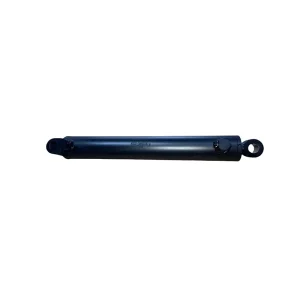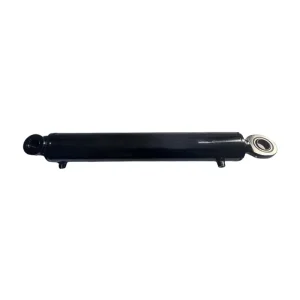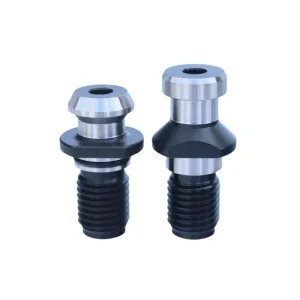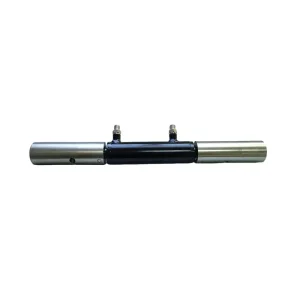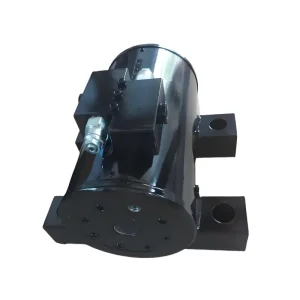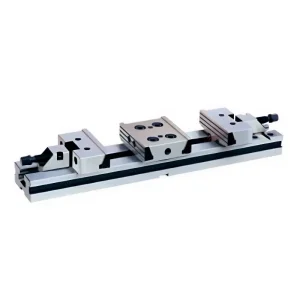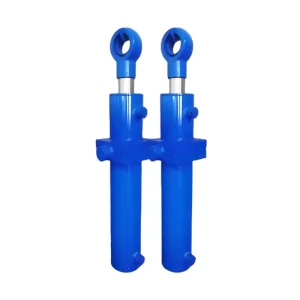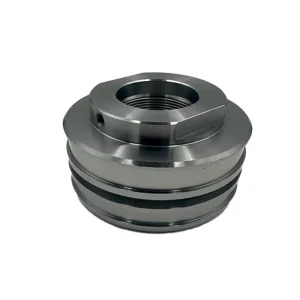
Precision Hydraulic Assembly Portfolio (Series I)
Engineered for high-stress continuous duty, fluid containment under harsh shock pressures, and micron-level mechanical repeatability across heavy commercial machinery.
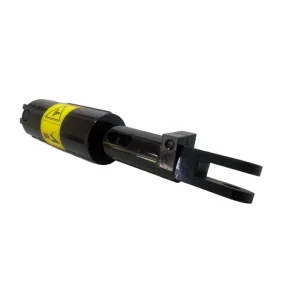
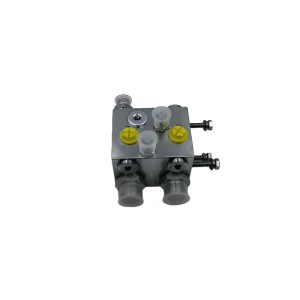
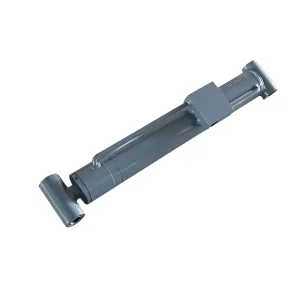
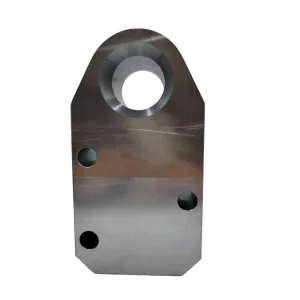
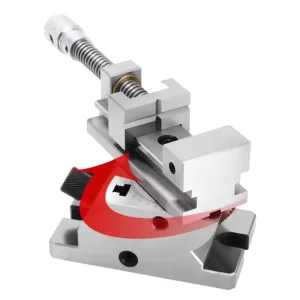
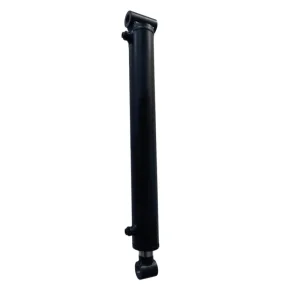
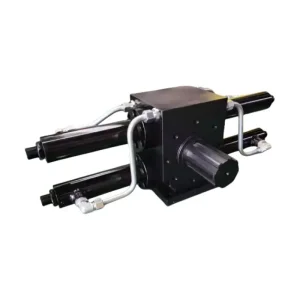
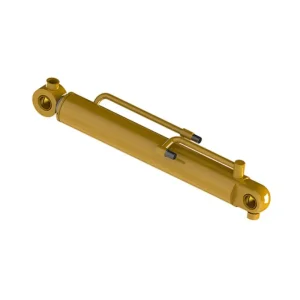
Macro Hydraulic Solutions: Eliminating Failure at the Component Root
In high-pressure fluid power systems, downtime rarely originates from system sizing—it occurs when microscopic rod runouts degrade seals, unbalanced backpressures cavitate manifold ports, or uncontrolled thermal spikes cause barrel ovality.
Founded in Qingdao, China
Global Machinery Brands
Specialized CNC Plant
Precision Units Monthly
Monoblock Barrel Integration
Traditional multi-piece welded cylinders suffer from localized metallurgical distortion near flange weldments under severe cyclic loading. MPM integrates cylinder barrel and mounting flange through unitary 5-axis forging and deep-hole skiving, eliminating weld seam stress concentrations and external leak paths completely.
Compact Manifold Fluid Control
Hydraulic manifolds must mitigate pressure shock and eliminate fluid stagnation zones. Our CNC-machined ductile iron (QT500-7) and aircraft-grade aluminum manifold blocks feature optimized cross-drilled gallery routing designed to minimize Reynolds turbulence and maintain response rates under 15 milliseconds.
Dynamic Thermal & Cushioning Systems
Severe equipment operation in heavy earthmoving and mining platforms incurs devastating end-stroke deceleration spikes. MPM incorporates hydraulic floating cushion collars with integrated check valving to bleed kinetic energy exponentially, sparing pin connections and extending packings 300% longer.
The Global Hydraulic Landscape: Strategic Shifts in China Manufacturing
A rigorous examination of shifting procurement frameworks, dual-sourcing architectures, and why Western OEMs are relocating precision hydraulic cylinder and manifold block machining to Tier-1 Chinese manufacturing centers.
Structural Procurement Shift from Off-the-Shelf to Collaborative Drawing-Based Engineering
The global fluid power sector has transitioned past catalog procurement. The rapid proliferation of compact excavators, high-reach aerial platforms, and electrified hybrid construction equipment has constrained envelope spaces while increasing dynamic operating pressures from 210 bar (3000 psi) standard to 350–420 bar (5000–6000 psi) heavy duty. Standard catalogue hydraulic cylinders fail to meet custom stroke-to-retraction ratios, integrated counterbalance valve mounts, and tailored port configurations required by modern machinery architects.
Qingdao Micro Precision Machinery operates as an engineering partner, resolving the gap between raw mechanical blueprints and industrial high-volume repeatability. By mastering in-house CNC turning, horizontal boring, induction hardening, sub-micron cylindrical grinding, and 100% pressure-holding verification, Chinese manufacturing hubs provide Tier-1 capability at scalable lead times.
| Engineering Parameter | Standard Market Specification | MPM Precision Factory Standard |
|---|---|---|
| Cylinder Piston Rod Hardness & Coating | 20-30 µm Hard Chrome, 800-900 HV | ≥35 µm Engineered Chrome, Micro-cracked, 950-1050 HV, Induction Hardened 52-58 HRC |
| Internal Barrel Surface Finish | Ra 0.4 µm to 0.8 µm Honed | Ra 0.15 µm to 0.25 µm Deep-hole Skived & Roller Burnished |
| Hydraulic Valve Block Cavity Machining | Standard tolerance Sun/Rexroth cavity forms | Class H7 reamed cavity dimensions with Burr-Free thermal chemical deburring |
| Hydraulic Nut & Thread Fits | Standard ISO Class 6g/6H loose engagement | ISO 6H High-Torque tight fit with anaerobic mechanical anti-vibration locking |
| Full Pressure Testing Protocol | Batch sampling at working pressure | 100% individual hydrostatic testing at 1.5× rated design pressure with 0-leakage dwell |
Localized Support & International Compliance Assurance
Sourcing overseas requires verifiable material pedigree, unambiguous standard harmonization, and total traceability from raw billet to port delivery.
Metallurgical Traceability (EN 10204 3.1)
Every batch of steel—whether 42CrMo4, 40Cr, C45E, or ST52-3 cold drawn tubing—is accompanied by mill inspection certificates detailing chemical composition, tensile yield strength, and ultrasonic crack detection results.
Harmonized Thread & Port Geometry
We eliminate installation friction by engineering directly to destination port standards: SAE J1926 O-ring Boss (ORB), ISO 6149 metric, BSPP British standard parallel threads, and ISO 6162 (Code 61/62) split-flange interfaces.
Export-Conditioned Packaging
Long sea voyages expose steel to moisture and chloride attack. Finished cylinders undergo vapor corrosion inhibitor (VCI) fogging, sealed end-capping, multi-layer oil film wrapping, and tailored fumigated timber crating.
Engineering by Duty Cycle: Tailored Mobile & Industrial Scenarios
Mechanical stress is distinct across equipment types. Our components are designed around real axial force, lateral loads, fluid velocity, and abrasive exposure.
Underground Mining & Tunnelling
Load-Haul-Dump (LHD) equipment operates in cramped, abrasive mine environments. Piston rods face acidic mine runoff and impact from falling aggregate. We incorporate nitrocarburized or dual-layer chrome coatings alongside heavy-duty spherical plain bearings (GE series) to accommodate severe oscillatory angular misalignments.
Aerial Work Platforms & Scissor Lifts
Zero drift is mandatory for human safety. Over-center counterbalance manifolds and zero-internal-leakage locking valves lock the platform rigidly even if feeder hoses suffer sudden hydraulic shear. Built-in velocity fuses throttle flow instantly to avert uncommanded gravitational descent.
Agricultural Reversible Implements
Reversible ploughs demand smooth 180° inversion under combined dynamic rotational momentum and soil drag resistance. Our width adjustment and inversion cylinders employ integrated sequence valving with stepless positioning, allowing operators to modulate furrow cutting width on the fly.
Waste Management & Compaction
Refuse collection trucks subject tailgates and packer plates to continuous cyclic crushing loads combined with abrasive organic fluids. MPM multi-stage telescopic cylinders utilize high-tensile ST52-3 barrel tubes and dual internal scraper rings to prevent leachate ingress.
Engineering Roadmap: Digitalization, Smart Sensing & Electrification
The convergence of industrial automation, smart telematics, and electrification is fundamentally restructuring mobile hydraulic architecture across global markets.
Smart Sensor Integration
Embedding magnetostrictive and LVDT linear position transducers directly inside hollowed cylinder rods for real-time stroke feedback to autonomous excavator grade control systems.
Electro-Hydraulic Actuators (EHA)
Decentralized self-contained linear actuators uniting electric brushless motors, variable miniature pumps, and cylinder chambers, eliminating hydraulic routing hoses for hybrid construction vehicles.
Micro-Texture Laser Surfacing
Employing picosecond laser texturing on piston rod chrome layers to generate micro-oil reservoirs, reducing boundary friction by up to 34% and minimizing slip-stick phenomenon at micro-speeds.
Bio-Degradable Fluid Sealing
Upgrading seal elastomers (fluoropolymer and FKM blends) resistant to synthetic esters and bio-hydraulic oils for environmentally sensitive forestry and marine excavating.
Essential Sourcing & Engineering Questions Answered
Direct technical answers from Qingdao Micro Precision Machinery engineers for OEM buyers, component designers, and procurement managers.
What engineering data is mandatory for a custom hydraulic cylinder quotation?
To deliver an accurate quote and feasibility analysis, provide: 1) Bore and rod diameter, 2) Extended and retracted pin-to-pin dimensions and stroke, 3) Working and peak proof pressure, 4) Mounting configuration (clevis, trunnion, cross-tube, flange), 5) Operating fluid, temperature, and environmental ambient, and 6) Target annual volume. Providing a CAD file (.STEP/.DWG) or nameplate sample accelerates review significantly.
Can MPM reproduce or re-engineer legacy OEM replacement cylinders?
Yes. Our engineering division routinely performs full reverse engineering from physical customer samples or worn components. We perform 3D coordinate measuring (CMM), analyze metallographic composition via optical emission spectrometers, identify seal package profiles, and generate comprehensive 2D/3D fabrication prints for approval before metal cutting.
Which dimensional and thread standards does the factory adhere to?
We machine to both metric and imperial blueprints. Key referenced standards include ISO 6020/2 and ISO 6022 for tie-rod and circular cylinders, ISO 6H class thread fit tolerances for high-tensile cylinder nuts, DIN 69872 and JIS B6339 for CNC retention knobs, and SAE J1926/BSPP for hydraulic fluid ports.
Can individual hydraulic cylinder parts be purchased without complete assemblies?
Absolutely. MPM supplies cylinder heads (glands), forged pistons, end caps, mounting bushings, spherical plain bearings, locking nuts, and deep-hole honed barrels to cylinder rebuilders, heavy repair yards, and Tier-2 manufacturers across North America, Europe, and Australia.
How does the factory prevent internal seal failure and rod corrosion?
All rods utilize induction-hardened alloy (minimum depth 1.5–2.5 mm, 50–54 HRC) plated with at least 30–40 microns of hard micro-cracked chrome to survive >200 hours NSS testing. Piston rod grooves are precision-turned to Ra 0.2 to prevent micro-shearing of elastomer lips, and we partner with global seal innovators (Hallite, Parker, SKF) for demanding applications.
What is the typical prototype lead time and export logistics handling?
Custom engineering prototypes are generally delivered within 25–35 days from approved drawing sign-off. High-volume serial production runs average 30–45 days. We provide complete sea freight (FCL/LCL), air cargo, and express courier arrangements with export-grade steel-reinforced wooden packaging and real-time transit tracking.
Precision Hydraulic Assembly Portfolio (Series II)
Explore specialized sanitation cylinders, precision retention studs, rotary actuation modules, and heavy-duty multi-stage telescopic cylinders manufactured in Qingdao.