
Featured Clamping, Actuation & Valve Systems
Explore our industrial-grade components, hydraulic units, and high-precision tooling engineered under micron-level tolerance management.
Global Procurement Demands for 5C Collet Chucks
A rigorous evaluation of workholding rigidity, concentricity, and mechanical repeatability for tier-1 OEMs and automated CNC manufacturing cells.
Total Radial Runout (TIR) Control
Global aerospace and medical machining operations require collet chuck systems maintaining radial runout within ≤0.005mm (0.0002"). Chinese precision factories leverage hardened alloy steel (20CrMnTi/SCM415) carburized to HRC 58-62, undergoing cryogenic treatment to ensure structural dimensional stability over millions of clamping cycles.
- Sub-micron finish on internal ground cones
- Elimination of tool vibration during ultra-high RPM turning
- Consistent clamping force distribution minimizing tool wear
Rotational Kinematics & Dynamic Balancing
Modern CNC turning centers operating up to 6,000 RPM demand balanced assemblies. Leading Chinese manufacturing partners employ dynamic balancing to G2.5 standards at 10,000–15,000 RPM, shielding CNC machine spindle bearings from harmonic degradation and extending spindle longevity.
- Pre-balanced body structure eliminates centrifugal loosening
- Optimized dead-length actuation prevents axial part movement
- Smooth external geometry decreases aerodynamic air friction and coolant splash
Supply Chain Resilience & Total Cost
Procuring directly from industrial hubs like Qingdao and Zhejiang provides international distributors with a 35%–50% cost arbitrage without sacrificing metrological performance. In-house metallurgical laboratories verify core toughness and tensile parameters before export clearance.
- Fully traceable material test certificates (EN 10204 3.1)
- Multi-spindle direct-mount integration (A2-4, A2-5, A2-6, D1-4, Flat Back)
- Scalable batch production capacity exceeding 50,000 units annually
Engineered Cross-Sector Workholding Deployments
5C Collet Chucks serve as the crucial nexus between rotational spindle drives and bar-fed stock in high-throughput automated machining ecosystems.
Automotive Powertrain & Sensor Production
High-volume manufacture of common-rail fuel injector nozzles, hydraulic spool valves, and transmission sensor housings relies on 5C air-actuated and hydraulic collet chucks. Rapid cycle pneumatic clamping delivers clamping actuation in under 0.4 seconds, mitigating part deformative deflection during high-velocity skimming cuts.
Medical Bone Screws & Dental Implants
Processing Grade 5 Titanium (Ti-6Al-4V) and PEEK bars requires vibrationless stability. 5C vulcanized segmented collet systems within precision chuck bodies guarantee concentric clamping on miniature stock without marring polished surgical surfaces, maintaining total positioning integrity across multi-axis Swiss-type and standard CNC lathes.
Precision Electronics & Fiber Optic Connectors
For brass, copper, and engineering plastics used in 5G connectors, 5C dead-length chuck arrangements prevent part pushback during heavy facing and threading operations. Chinese direct factories provide interchangeable smooth, serrated, and stepped internal profiles matching diverse material hardness classes.
Technical Evolution & Smart Manufacturing Horizons
Strategic technological transitions defining the next generation of precision 5C collet chuck engineering.
IoT Sensor-Embedded Chuck Bodies
Integration of wireless piezo-resistive force sensors within the collet chuck sleeve to measure real-time dynamic gripping forces during high-speed rotation, preventing micro-slippage and component loss in lights-out factory environments.
DLC & Nano-Composite Coatings
Application of Diamond-Like Carbon (DLC) and titanium aluminum nitride (TiAlN) coatings on inner sliding taper surfaces reduces sliding friction by 40%, preventing metal galling under continuous automated actuation.
Additive Manufacturing Hybrids
Utilization of selective laser melting (SLM) additive manufacturing to construct hollow internal chuck bodies with internal conformal coolant channels, delivering high-pressure coolant directly to the cutting shear zone.
Zero-Point Quick Change Compatibility
Next-gen modular 5C chuck bases configured for immediate pneumatic docking onto five-axis machining tables and automated rotary indexing heads, shrinking setup and changeover times from 25 minutes to under 60 seconds.
Manufacturing Compliance, Material Integrity & Export Standards
Ensuring absolute metallurgical traceability, dimensional adherence, and robust multimodal sea-air logistics.
ISO 9001:2015 & Metrology Protocols
Every 5C collet chuck is verified via Zeiss Coordinate Measuring Machines (CMM), Taylor Hobson roundness instruments, and laser interferometry. Inspection records covering concentricity, thread pitch (1.041" x 24 TPI standard 5C spec), and taper angles are digitally archived per lot number.
Global CE & RoHS Environmental Compliance
Our raw materials and electro-plating finishes strictly satisfy European Union REACH and RoHS standards. Rust preventative coatings utilize environmentally neutral, vapor-phase corrosion inhibiting (VCI) organic layers that rinse cleanly without hazardous solvents.
Export Barrier Packing & Global Hub Support
Precision chucks are hermetically vacuum-sealed in foil barrier bags with desiccant, seated in shock-absorbent custom molded EPE casings, and crated in fumigated solid-ply wood. Direct consolidation through Qingdao and Shanghai deep-water ports guarantees rapid vessel departures.
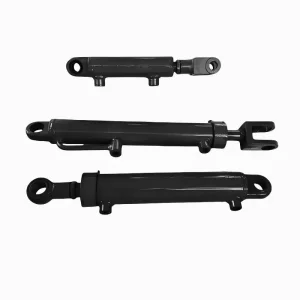
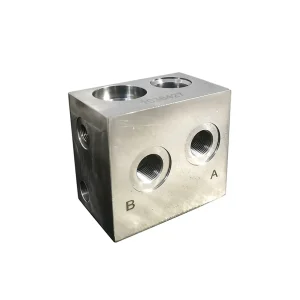
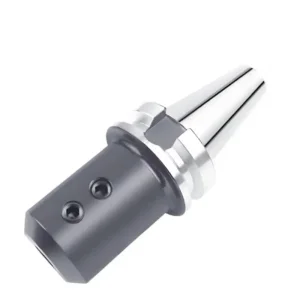
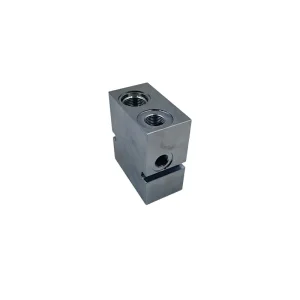
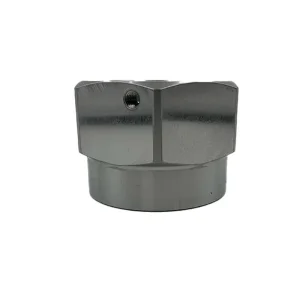
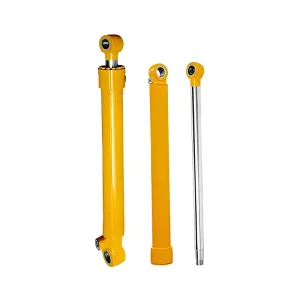
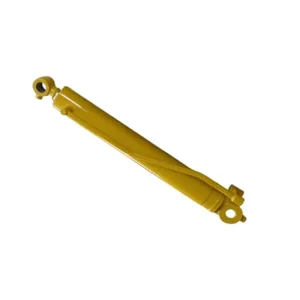
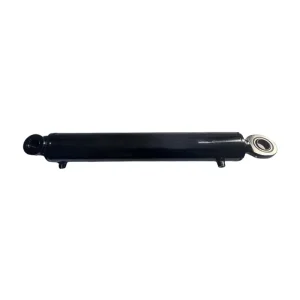
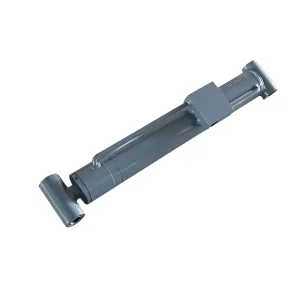
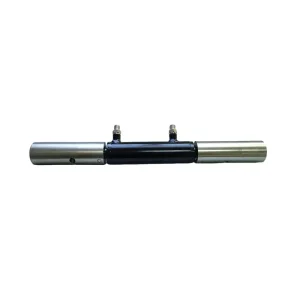
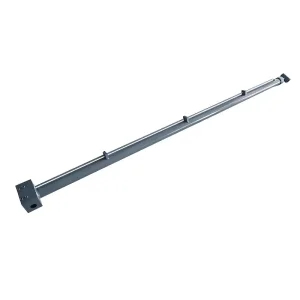
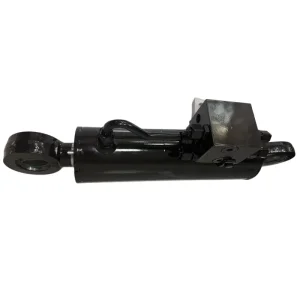
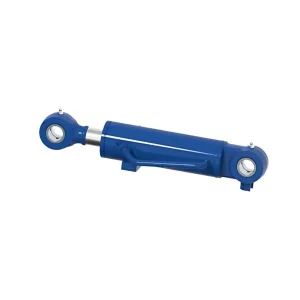
OEM Cylinders, Valve Blocks & Hydraulic Solutions
Direct supply line for heavy-duty industrial machinery, material handling equipment, and specialized hydraulic subsystems.
Frequently Asked Questions: Sourcing 5C Collet Chucks
Essential technical clarifications for manufacturing engineers, toolroom superintendents, and global sourcing specialists.
What is the fundamental difference between standard scroll chucks and 5C collet chucks?
Standard 3-jaw scroll chucks clamp via three localized radial points, which can introduce component distortion on thin-walled stock and typically deliver runout between 0.03mm and 0.08mm. A 5C collet chuck applies a concentric, 360-degree cylindrical wrap around the bar stock via a 10-degree matched taper angle. This yields superior runout precision (≤0.005mm TIR), significantly higher rigidity, and zero part marring, rendering it optimal for high-RPM precision turning, milling fixtures, and second-operation cycles.
Can your 5C collet chucks be customized for specific CNC lathe spindle noses?
Yes. We engineer and manufacture directly compatible mounts for ISO/DIN standards including ANSI A2-4, A2-5, A2-6, Camlock D1-3, D1-4, D1-5, threaded noses (such as 2-3/16"-10 or 1-1/2"-8), and straight cylindrical flat-back receded designs for custom sub-plates. Every adapter plate is heat-treated and ground on precision CNC cylindrical grinders to match your machine spindle register precisely.
What actuation mechanisms are available for automated 5C chuck applications?
We supply three distinct operational variants: 1) Handwheel or manual lever-operated chucks for conventional engine lathes and indexing heads; 2) Key-operated precision scroll 5C chucks designed for milling table setups; and 3) Pneumatic and hydraulic push-to-close or pull-to-close power chucks equipped with rear draw-tube connectors designed for continuous CNC automation.
What metallurgical grade and surface treatment are utilized in your production line?
Chuck bodies are forged from premium 20CrMnTi or high-tensile 42CrMo structural alloy steel. Components undergo multiple stages of thermal processing: vacuum carburizing, deep sub-zero cryogenic quenching at -120°C to convert residual austenite, and tempering to establish a surface hardness of HRC 58-62 with a resilient shock-absorbing core (HRC 32-38). Critical taper bores are finished via high-frequency internal grinding spindles.
What documentation and quality assurance certifications are delivered with international shipments?
Each delivery includes an individual metrology inspection report with verified TIR runout charts, dynamic balancing validation data, material test certificates (MTC) conforming to EN 10204 3.1, heat treatment charts, and RoHS / CE regulatory compliance documentation.