
Precision Multi-Stage & Heavy-Duty Actuators
Explore our core selection of precision-machined telescopic cylinders, replacement components, and specialized actuators manufactured to strict international tolerances.
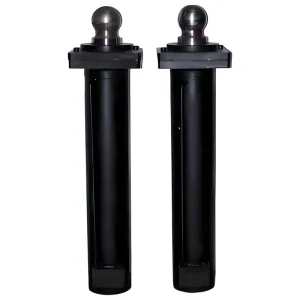
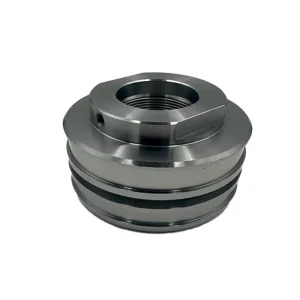
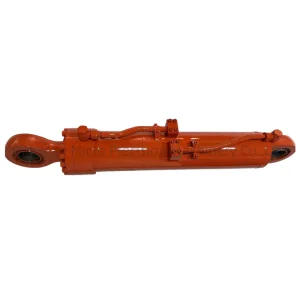
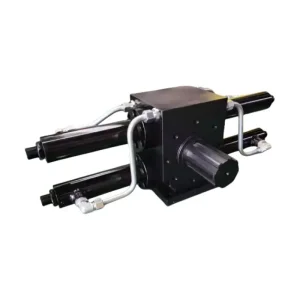
The Global Economics of Telescopic Cylinders: Redefining "Cheap" in Heavy Industry
In modern industrial procurement, low acquisition cost must never compromise duty cycles, mechanical yield strength, or seal longevity. Discover how precision manufacturing rewrites the equation between affordability and extreme operational endurance.
Global Market Dynamics & Structural Pressures
The worldwide heavy vehicle and mobile machinery sectors face intense supply chain realignment. Hydraulic telescopic cylinders—characterized by their nested tubular sleeves that provide an exceptional extended stroke relative to their compact retracted length—are critical across civil construction, municipal transport, mining, and bulk material haulage.
Original Equipment Manufacturers (OEMs) and commercial retrofit fleets face escalating margins squeeze. Escalating energy costs, regional inflation, and extended distributor markups have made standard off-the-shelf European and American telescopic actuators prohibitively expensive. Consequently, corporate procurement officers are shifting directly to source-tier manufacturing partners who deliver equivalent technical metallurgy at 30% to 50% lower total procurement cost.
- Elimination of multi-tier agent and dealer premiums
- Direct factory engineering drawing approvals
- Minimized lifecycle Total Cost of Ownership (TCO)
The Semantic Shift: "Cheap" as Lean Precision Efficiency
In search queries, buyers asking for "cheap hydraulic telescopic cylinder suppliers" do not seek sub-standard products made of unverified cast iron or low-grade scrap steel. In high-pressure hydraulics operating between 16 MPa and 32 MPa, substandard components cause rod buckling, seal extrusion, catastrophic tipper rollover, or fluid injection hazards.
For industrial B2B buyers, "cheap" signifies capital expenditure optimization: securing high-tensile 27SiMn alloy steel barrels, micro-finished hard chrome platings, precision skived-and-roller-burnished bores, and premium sealing packages (such as Hallite or Merkel configurations) at factory-floor pricing direct from the source.
- High yield strength (Re ≥ 520 MPa) raw materials
- Optimized multi-stage wall thickness balancing weight & burst pressure
- Strict quality inspection exceeding ISO 10100 standards
Lifecycle Cost Breakdown: TCO in Hydraulic Actuation
True equipment profitability requires scrutinizing overall cost of ownership across 50,000+ duty cycles. A poorly manufactured telescopic cylinder leads to frequent packing leakage, inter-stage oil bypassing, loss of lifting synchronization, and costly downtime on active job sites.
By investing in tight concentricity controls, automated deep-hole boring, induction-hardened stage tubes, and specialized low-friction wipers, Chinese precision manufacturers like Qingdao Micro Precision Machinery (MPM) drastically lower long-term service intervals, saving operators thousands in hydraulic oil replenishment and maintenance labor.
- Low friction dynamic seals prevent premature rod scoring
- Superior salt-spray corrosion protection (over 200 hours ASTM B117)
- Extended seal life through ultra-fine Ra 0.2 μm surface finishes
Year Established in Qingdao, China
Units Monthly Manufacturing Capacity
Global Heavy Equipment Brands Served
High-Precision CNC Production Facilities
Why Chinese Precision Production Delivers Unbeatable Value
Achieving cost leadership in high-integrity fluid power is a result of advanced metallurgical clustering, vertical CNC integration, and lean manufacturing engineering.
Shandong Metallurgical & Raw Tube Ecosystem
The heavy manufacturing corridor of Shandong Province hosts the world's most concentrated ecosystem for cold-drawn seamless tubing, special alloy round bars, and heavy forgings. Qingdao Micro Precision Machinery secures prime raw tube stock—including 27SiMn, ST52, and 45# carbon steels—at local mill prices, eliminating intermediary freight charges and inventory markups.
Because these alloy tubes are sourced directly with custom inner/outer dimension tolerances, machining waste is decreased by up to 22%, passing tangible savings directly into the client's bill of materials.
In-House CNC Vertical Machining Integration
Unlike trading assemblers who outsource critical components, MPM conducts all core manufacturing under one roof: CNC multi-axis turning, deep-hole skiving, roller burnishing, automated induction hardening, robotic cylindrical grinding, and automated welding.
This closed-loop setup guarantees rigid adherence to ISO 6H thread tolerances for cylinder nuts and head caps, ensures absolute concentricity across nested stages, and cuts cycle times from weeks to days.
Strategic Qingdao Maritime Logistics Hub
Our strategic manufacturing location in Chengyang District, Qingdao, places our plant minutes from Qingdao Port—one of the largest deep-water container shipping ports in the world. Direct ocean shipping links to North America, Rotterdam, Hamburg, Santos, Durban, and Sydney prevent expensive inland transit costs.
Furthermore, export-grade packaging using reinforced anti-corrosion barrier wrapping, internal oil-fill preservation, and heavy wooden crating guarantees zero transit shock or oxidation damage.
| Performance Criteria | Generic Low-Cost Importers | Western OEM Brands (Custom/Hyva/Parker) | Qingdao MPM Factory Direct Value |
|---|---|---|---|
| Raw Material Specification | Unspecified Q235B / welded pipe | St52-3 / 27SiMn Cold-Drawn Alloy | Certified 27SiMn / St52 Seamless Precision Tubing |
| Stage Tube Processing | Rough honed or un-burnished ID | Skived & Roller Burnished (Ra < 0.4 μm) | CNC Skiving & Dual-Roller Burnishing (Ra ≤ 0.2 μm) |
| Hard Chrome Plating Depth | 10 μm - 15 μm (Porous, uneven) | 20 μm - 25 μm Micro-crack chrome | 25 μm - 40 μm Engineered Micro-Cracked Hard Chrome |
| Pressure Rating Capabilities | 14 - 16 MPa (Risk of ballooning) | 16 - 25 MPa Working Pressure | Up to 28 MPa Continuous / 32 MPa Peak Shock Rating |
| Factory Testing Protocol | Batch spot test (Air or low PSI) | 100% Hydrostatic Quality Testing | 100% Hydrostatic Test at 1.5x Max Working Pressure |
| Unit Cost / Pricing Advantage | Lowest, but short service life | High (300% - 400% brand surcharge) | Factory Direct (35% - 55% Cost Savings vs Western OEM) |
Telescopic Cylinder Architecture: Multi-Stage Mechanics & Physics
Understanding the engineering nuances of nested multi-stage fluid actuators is critical for design engineers matching stroke length, tipping angle, and hydraulic oil capacity.
Sequential Extension Mechanics & Pressure Dynamics
A telescopic cylinder (single or double acting) contains a primary outer main barrel and a series of nested sleeves (stages) sliding sequentially. Fluid pressure enters the base port, acting simultaneously on all internal piston faces. Because force equals pressure multiplied by cross-sectional area ($F = P \times A$), the stage with the largest diameter exerts the highest thrust and consistently extends first.
As the largest stage reaches its mechanical travel limit (governed by internal retaining rings), the fluid forces the second-largest stage outward, continuing progressively to the smallest plunger. Understanding this staged transition is crucial: as the effective piston area decreases with each stage, the lifting capacity of the cylinder drops if system pressure remains constant, or the required hydraulic system pressure must increase to maintain payload momentum.
Single-Acting vs. Double-Acting Telescopic Circuits
Single-acting telescopic cylinders are the preferred industry standard for end-dump tipper bodies, dump trailers, and aggregate bulk carriers. The hydraulic pump delivers oil to push the nested stages outward, elevating the tipper box. Retraction occurs via the natural gravitational pull of the empty body pushing the hydraulic fluid back through a proportional lowering valve into the oil reservoir.
In contrast, double-acting telescopic cylinders feature internal oil porting passages within the stage sleeves to direct fluid to both the extension and retraction sides of each stage. While mechanically complex and requiring precision-machined crossover ports, double-acting cylinders provide positive powered retraction. They are mandatory in horizontal push compaction (refuse garbage trucks), tunnel boring shield jacks, and outrigger horizontal extensions.
Buckling Analysis & Column Stability (Euler Limits)
The single greatest operational hazard in long-stroke telescopic actuators is structural column buckling. When extended across four, five, or six stages reaching strokes of 4 to 8 meters, lateral side forces—caused by uneven road incline, shifting cargo in dump bodies, or crosswinds—induce severe bending moments.
MPM engineers every sleeve using non-linear finite element analysis (FEA). By increasing sleeve overlap engagement lengths when fully extended and precision-fitting self-lubricating bronze-infused guide wear rings, lateral deflection is strictly limited. This prevents metal-to-metal galling between stages, maintains uniform seal compression, and avoids sudden catastrophic structural folding.
Heavy-Duty Operating Environments & Application Matrices
Our custom and standard telescopic cylinders are engineered specifically around the unique duty cycles, thermal variances, and contamination challenges of real-world heavy equipment.
Commercial Dump Trucks & Semi-Tippers
Mounted as front-end (trunnion/pin-eye) or underbody hoists for 3-axle to 5-axle commercial tippers. Handles heavy aggregate, asphalt, and earth dumping cycles under high ambient heat and vibration.
Underground Mining Loaders (LHD)
Compact subterranean load-haul-dump machines navigating low-clearance tunnels. High shock-load resistance to endure harsh blasting debris, highly abrasive quartzite dust, and acidic mine water.
Mobile Cranes & Boom Lifts
Multi-stage telescopic boom extension cylinders delivering smooth, jerk-free proportional positioning. High internal locking safety valves ensure absolute zero creep under heavy suspended hook loads.
Agricultural Tippers & Grain Trailers
Tractor-driven multi-stage hoists for bulk harvest trailers, manure spreaders, and silage haulers. Features high contamination-resistant rod scrapers to survive mud, moisture, and long seasonal storage.
Waste Management & Refuse Packers
Double-acting horizontal multi-stage cylinders providing extreme thrust to compress refuse into municipal compaction bodies, followed by powered retraction inside corrosive leachate slurry environments.
Oilfield Rig Mast Hoists & Offshore
Massive multi-stage erection cylinders that elevate drilling derricks from horizontal transport to vertical operational position. Tested for extreme wind shear resistance and marine salt spray.
Emerging Technological Trends in Multi-Stage Fluid Power
The hydraulic cylinder industry is transforming rapidly. From digital IoT stroke telemetry to eco-friendly plasma plating, explore the innovations modernizing heavy machinery actuation.
Smart Telescopic Actuators with Linear Displacement Sensors
Traditional telescopic cylinders operate blindly, relying on operator visual judgment or external limit switches. The next generation of smart telescopic cylinders integrates non-contact magnetostrictive or optical linear stroke transducers directly inside the hollow plunger cavity.
These integrated sensors relay millimeter-precise extension feedback to the vehicle's CAN-bus control unit. This prevents tipping instability on uneven slopes by automatically limiting stroke if chassis pitch or roll exceeds safety thresholds.
HVOF & Eco-Plating Surface Metallurgy
Hexavalent chromium plating, long the industry standard for hard rod wear protection, faces tight environmental scrutiny worldwide. Leading manufacturers are investing heavily in High-Velocity Oxygen-Fuel (HVOF) thermal spray tungsten carbide and plasma-nitrided composite coatings.
These micro-crack-free, non-porous layers provide three times higher abrasive resistance in mining quarries and endure over 500 hours of continuous neutral salt spray testing without pitting or oxidation breakdown.
Advanced Composite Sealing for Biodegradable Oils
With environmental regulations requiring forestry, agricultural, and marine machinery to use biodegradable synthetic ester-based hydraulic fluids (HEES/HETG), standard nitrile rubber (NBR) seals degrade and swell rapidly.
Modern cylinders utilize hydrogenated nitrile (HNBR), high-grade polyurethane (TPU), and virgin PTFE-bronze compounded step seals capable of operating continuously between -35°C and +110°C, delivering zero external weeping and eliminating stick-slip friction during slow telescoping extension.
Enterprise Buyer's Roadmap: 5-Stage Verification Standard
How global purchasing managers and OEM chief engineers verify factory capabilities to guarantee 100% interchangeable, zero-defect delivery.
Drawing & DFM Verification
Engineers review client 2D/3D CAD models, auditing pin-to-pin retracted length, port thread specs (SAE/NPT/BSP), and stage clearances to confirm interchangeability.
Spectrometric Material Testing
Raw tube batches undergo chemical spectroscopy and ultrasonic non-destructive flaw detection (NDT) to verify chemical compositions and eliminate internal seam flaws.
Precision CNC Machining
CNC turning, multi-spindle gun drilling, and roller burnishing hold outer diameter (OD) and inner diameter (ID) tolerances strictly to ISO H8/f7 standards with Ra ≤ 0.2 μm surface finishes.
100% Hydrostatic Pressure Test
Every single manufactured cylinder is hydrostatically pressurized to 150% of nominal working pressure, checking for internal bypass, stage leakage, and gland seal integrity under dwell.
Anti-Corrosion Export Prep
Units are fully cleaned, internally oil-coated with VCI rust-inhibiting fluid, polyurethane finished, and packed in reinforced plywood crates for global sea, air, or rail transport.
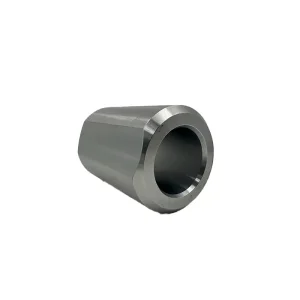
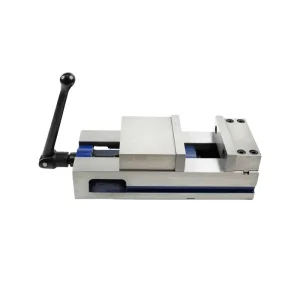
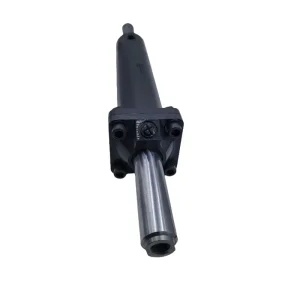
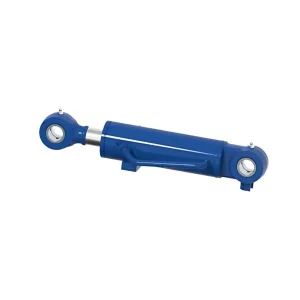
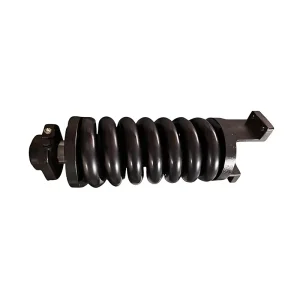
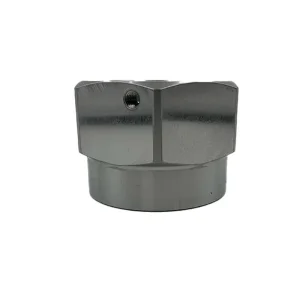
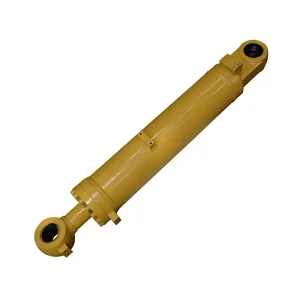
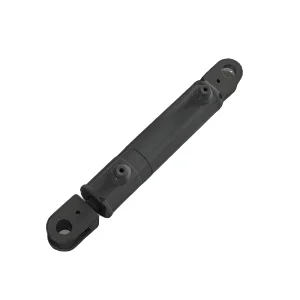
Precision Hydraulic Parts & Equipment Cylinders
Explore our complete catalog of OEM-grade cylinder replacement components, high-precision machining vises, and specialized machinery steering and tightening cylinders.
Frequently Asked Questions: Sourcing Telescopic Cylinders from China
Clear, transparent technical and commercial answers directly addressing engineering feasibility, quality standards, and purchasing workflows.
How does Qingdao MPM achieve low prices ("cheap") without compromising steel quality?
Our cost advantage is rooted in vertical integration, regional raw material proximity in Shandong, and high-efficiency automated CNC lines. We purchase cold-drawn 27SiMn alloy tubes directly from domestic mills at wholesale rates, machine all components (heads, pistons, flanges, nuts) in-house without outsourcing markups, and conduct our own assembly and testing. Clients save 30% to 50% by eliminating trading companies, national distributors, and luxury brand markups.
What critical technical specifications are required for a rapid custom quote?
To provide an accurate technical proposal and pricing within 24 hours, our engineering department needs: 1) Number of telescopic stages; 2) Outer barrel diameter and individual stage sleeve bore/rod diameters; 3) Total stroke and closed retracted pin-to-pin center distance; 4) Working and maximum surge pressure (MPa or PSI); 5) Mounting configuration (top pin-eye, bottom trunnion, cross-tube, or outer flange); 6) Single-acting or double-acting hydraulic circuit; and 7) Target quantity per batch. A PDF drawing or sample accelerates confirmation.
Can you manufacture exact direct replacements for Western brands like Hyva, Parker, or Custom Hoists?
Yes. A substantial portion of our production involves reverse engineering and direct dimensional interchangeability for global OEM fleet replacements. Simply provide the original equipment part number, physical sample, or dimensional diagram. Our engineering team verifies pin diameter, stroke stage progression, oil port threads (NPT/SAE/BSP), and trunnion mounting centers so our cylinder bolts directly onto the vehicle chassis without mechanical modification.
How do you guarantee that multi-stage cylinders do not leak during winter operations?
Sub-zero leakdown is typically caused by substandard seal polymers hardening and contracting away from the cylinder bore. MPM exclusively utilizes high-grade low-temperature polyurethane (TPU), hydrogenated nitrile (HNBR), and bronze-filled PTFE step seals rated down to -40°C. Combined with CNC micro-roller burnished sleeve finishes (Ra ≤ 0.2 μm) and multi-lip wiper rings, our cylinders prevent fluid weepage and seal contraction even in arctic environments.
What is your factory Minimum Order Quantity (MOQ) and sample lead time?
We welcome both prototype evaluation and high-volume containerized orders. For custom engineered or prototype telescopic cylinders, our MOQ is just 1 to 2 pieces to facilitate testing and validation. Sample prototype turnaround typically averages 15 to 25 working days depending on tube sizing availability. Batch container shipments (100 to 500+ units) typically complete production within 30 to 45 calendar days.
Do you supply individual components for telescopic cylinder repair workshops?
Yes. In addition to complete assembled cylinders, we supply bare cylinder barrels, pre-chromed stage sleeves, hydraulic cylinder heads, CNC pistons, high-precision ISO 6H cylinder nuts, mounting flanges, spherical spherical bearings, and complete seal replacement packages to fluid power repair facilities and local rebuilders worldwide.