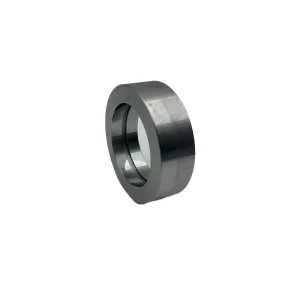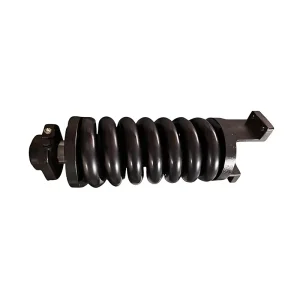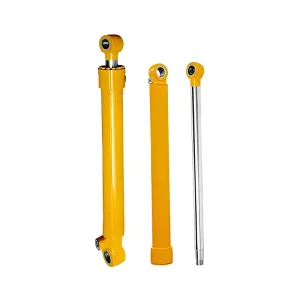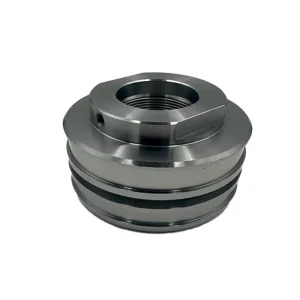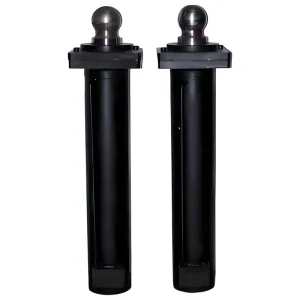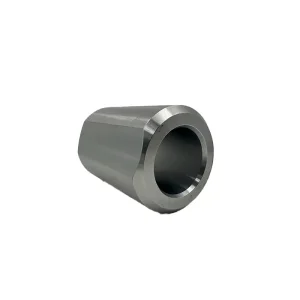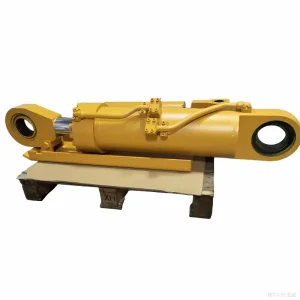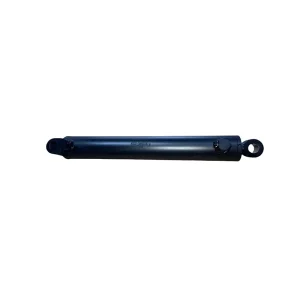
Precision Hydraulic Assemblies & Tooling (Batch A)
OEM-replacement and custom-engineered hydraulic cylinders, actuators, and CNC tooling engineered to ISO and DIN standards with guaranteed interchangeability.
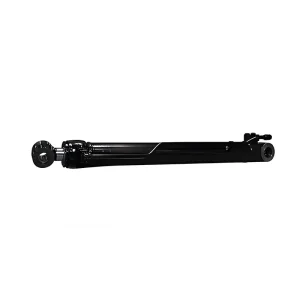
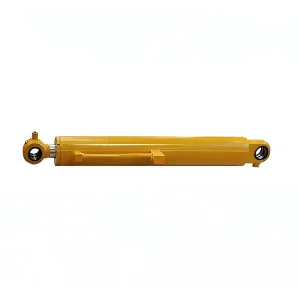
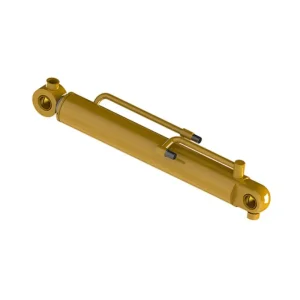
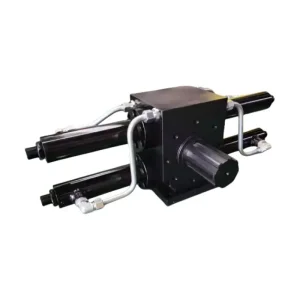
The Commercial Landscape of Global Hydraulic Componentry
Fluid power systems remain the indomitable backbone of heavy capital equipment. In a world balancing rising material costs with aggressive infrastructure deadlines, engineering procurement directors require a nuanced understanding of global supply chain shifts.
TCO Replaces Base Purchase Price
International buyers are dismantling obsolete procurement models that equate "cheap hydraulic parts" with low-grade fabrication. Total Cost of Ownership (TCO) now dictates vendor selection: a hydraulic cylinder that costs 20% less but leaks at 2,000 duty hours incurs tenfold losses in unscheduled downtime, hydraulic fluid remediation, and field warranty claims. True cost efficiency is derived from metallurgical consistency, micron-level concentricity, and advanced rod surface microtopography.
Pressure Towards 350-420 Bar
Global off-highway equipment manufacturers (excavators, wheel loaders, mining haulers) are migrating toward higher operating pressures (upward of 35 MPa / 350 bar) to reduce component mass while maximizing breakout power. This shift renders sub-par casting and porous cold-drawn tubes obsolete. The industry requires strict cold-drawn seamless (CDS) tubes (St52, E355, 4140 alloy) with honing tolerances of ISO H8 or H9 and surface roughness Ra < 0.2 μm to ensure seal longevity under hyperbaric spikes.
Electrification & Hybrid Hydraulics
As battery-electric and hydrogen excavators transition from concept to volume production, energy efficiency in hydraulic circuits is non-negotiable. Manifold valve blocks and proportional controls must feature CFD-optimized galleries that slash fluid friction, laminar boundary separation, and throttling pressure losses. Suppliers must demonstrate the precision multi-axis CNC capability needed to carve complex internal galleries that minimize throttling heat generation.
Why Chinese Hydraulic Manufacturing Achieves Unrivaled Cost-Efficiency
The concept of "cheap" in premier Chinese manufacturing hubs is misunderstood. It is not cost reduction via compromise; it is systemic cost compression engineered through industrial clustering, high-throughput automated machining, and raw material integration.
Cluster Supply Density
In manufacturing hubs like Shandong and Jiangsu, the entire hydraulic ecosystem operates within a 50 km radius. Honed barrel raw stock, chrome-plated induction-hardened bars (Ck45/42CrMo), hydraulic seal packages (PTFE step seals, NBR wipers), and specialized forging dies are sourced with zero inter-provincial freight friction.
In-House CNC Ecosystem
At Qingdao Micro Precision Machinery (MPM), established in 2006, multi-axis horizontal machining centers and live-tooling CNC lathes run 24/7. Tool holders, collets, retention knobs, and hydraulic valve bodies are produced in the same facility, eliminating intermediate vendor margins and eliminating cumulative geometric error stacking.
Automated Friction Welding
Manual stick and gas-shielded fillet welding introduce human variability and slag porosity. Advanced Chinese manufacturing lines utilize automated rotary friction welding and automated submerged arc welding for rod-clevis and barrel-base assemblies, creating molecular-level grain bonding that handles continuous dynamic cyclic shocks.
Continuous Tooling Optimization
Drawing on our deep background in CNC toolholding (ER systems, side-lock arbors, DIN 69872 retention studs), our machine shop achieves 15-20% higher feed rates and twice the insert tool life when carving forged alloy cylinder glands and manifold cavities, directly transferring process savings to procurement partners.
Engineering for Harsh Duty: Application Profiles
A hydraulic cylinder is not a static commodity; it is an active mechanical actuator subject to bending moments, pressure transients, environmental corrosion, and abrasive contaminants. Here is how custom engineering bridges duty requirements.
Excavators & Heavy Earthmoving
Duty Cycle: Boom, stick, and bucket operations face continuous pressure spikes up to 34.3 MPa, alongside rapid multi-axis load reversal and severe airborne silica dust.
Engineering Response: Inclusion of internal floating end-cushioning sleeves to dampen stroke-end deceleration shock. Induction-hardened chromium plating (25-30 μm thickness, surface hardness ≥ 58 HRC) to prevent stone-chip gouging. Dual tandem polyurethane buffer seals with secondary elastomeric wipers.
Underground Mining Loaders (LHD)
Duty Cycle: Confined rock muck-piles, acidic groundwater, extreme ambient humidity, and side-load forces that bend standard piston rods.
Engineering Response: Quenched and tempered 42CrMo4 alloy steel rods with nickel-chromium dual plating (1,000-hour ASTM B117 salt spray resistance). Spherical plain bearings with PTFE maintenance-free self-lubricating composites at the pin connections to eliminate angular misalignment stress.
Agricultural & Forestry Machinery
Duty Cycle: Seasonal duty spikes, prolonged winter downtime exposure, agrochemical spray corrosive exposure, and reversible high-torque turnover shocks on ploughs.
Engineering Response: Specialized dual-pilot check valves integrated into the cylinder barrel or pilot-operated counterbalance manifold blocks (e.g. MPM-HCVB3A). High-pressure polyurethane seals engineered to prevent fluid seepage during extended winter storage periods.
Material Handling & Forklifts
Duty Cycle: Millions of short-stroke high-velocity cycles inside warehouse environments where zero oil misting or leakage is mandatory.
Engineering Response: Precision-turned double-ended steering cylinders (such as HCS139495) with precision balanced rod diameters to equalize hydraulic volume. Low-friction Glyd rings that mitigate stick-slip vibrations, ensuring smooth mast lifting and precise side-shifting.
Aerial Work Platforms (AWP)
Duty Cycle: Life-critical safety mechanisms requiring 100% zero-drift holding stability and smooth rotary actuation under variable wind and mast leverage.
Engineering Response: Zero-leakage PO check valves and compact helical rotary actuators (HCR801 series). Every barrel is subject to ultrasonic non-destructive flaw detection and 1.5x proof pressure testing with mineral oils heated to 60°C.
Municipal Sanitation & Refuse Fleets
Duty Cycle: Compaction rams and body-locking cylinders operate in environments contaminated with leachate, acids, and debris under non-stop start-stop operation.
Engineering Response: Integrated cylinder barrel designs (HCIB11) combining the cylinder tube and base flange into a single solid-forged component, eliminating circumferential welds and catastrophic fatigue failure under continuous trash compaction pressure.
Technical Sourcing Matrix: Commercial vs. Precision Grade
When global equipment builders source cheap hydraulic machinery parts, distinguishing between deceptive bottom-tier workshops and high-efficiency precision factories is vital. Review the technical divergence below.
| Evaluation Parameter | Sub-Standard Low-Cost Fabricators | Micro Precision Machinery (MPM) Quality Standard | Direct Impact on Equipment Life |
|---|---|---|---|
| Cylinder Barrel Stock | Welded commercial tubing; rough skiving; uneven wall thickness. | Seamless cold-drawn steel (ST52, E355, 27SiMn); bore skived & roller burnished to ISO H8/H9, Ra < 0.2 μm. | Zero Seal Scuffing Prevents piston bypass and extends main seal pack life by > 350%. |
| Piston Rod Metallurgy & Plating | Plain carbon steel (Q235/45#); thin flash chrome (< 15 μm); micro-cracks present. | Induction hardened 40Cr / Ck45 / 42CrMo; core depth 1.5-2.5 mm (50-55 HRC); hard chrome layer 25-35 μm; Ra ≤ 0.15 μm. | Superior Impact Resistance Resists rock indentation, rod bending, and salt-induced rust pitting. |
| Welding Integrity | Manual MMAW / MIG by uncertified welders; non-destructive testing neglected. | Automated rotary friction welding & submerged arc welding; 100% ultrasonic weld inspection to ISO 5817 Level B. | Zero End-Cap Rupture Eliminates base tear-off under explosive hydraulic pressure spikes. |
| Internal Sealing System | Low-grade NBR molded seals prone to thermal hardening and extrusion. | Premium high-grade polyurethane (PU) step seals, POM guide rings, and fluoroelastomer (FKM) for high-temp regimes. | Leak-Free Operation Prevents fluid slip across wide temperature ranges (-35°C to +105°C). |
| Thread Precision (ISO/DIN) | Loose thread engagement (7H/8g); susceptible to harmonic vibration loosening. | CNC single-point threaded with strict ISO 6H thread gauge conformance on all cylinder nuts (MPM-HCNT11) and retention knobs. | Permanent Clamp Retention Guarantees zero rod-to-piston decoupling during cyclical peak loading. |
Technological Megatrends Shaping Hydraulic Manufacturing
The hydraulic parts sector is evolving rapidly. Forward-thinking OEMs partner with suppliers capable of incorporating digital, ecological, and micro-machining breakthroughs into everyday production.
Smart Cylinders with Integrated LVDT
Autonomous excavators and telematics-driven farm tractors require real-time actuator telemetry. MPM manufactures custom cylinder heads and hollowed piston rods engineered to house embedded magnetostrictive linear position transducers and inductive sensors. This transforms dumb hydraulic cylinders into smart, sub-millimeter position-feedback nodes for drive-by-wire architectures.
Eco-Fluids & Tribological Coatings
With strict environmental directives in Europe and North America driving the adoption of biodegradable synthetic esters (HEES) and water-glycol fluids, conventional seal compounds and hexavalent chromium plating face accelerated hydrolysis. MPM has deployed HVOF (High-Velocity Oxygen-Fuel) thermal spray tungsten carbide and diamond-like carbon (DLC) coating options for extreme acid/alkaline environments.
Additive Hydrodynamic Manifolding
Traditional drilling of hydraulic manifold blocks introduces right-angle fluid junctions that generate cavitation, vortex turbulence, and localized pressure drops. MPM utilizes multi-axis CNC contour boring combined with specialized porting toolpaths to produce fluid channels with curvature-radius transitions, slashing internal energy losses by up to 18%.
Frequently Asked Technical & Sourcing Questions
Direct answers to the critical engineering, quality validation, and supply-chain logistics questions posed by global procurement managers.
What information do you need to quote a custom hydraulic cylinder?
Can you reproduce an OEM replacement cylinder from a sample?
Which international engineering standards do your parts and tooling follow?
Do you supply hydraulic cylinder components separately?
How are export orders packed to prevent transit oxidation and damage?
How quickly will our technical inquiry receive a response?
How does MPM guarantee zero internal bypass leakage on custom cylinders?
Can you support small-batch trial orders for prototype machine evaluation?
Specialized Hydraulic Sub-Assemblies & Actuators (Batch B)
Explore our full line of internal pistons, spherical bushings, tightening actuators, and sanitation equipment locking cylinders machined to micron tolerances.