
Precision Wholesale Hydraulic Solutions (Batch 01)
Engineered to sub-micron tolerances for high shock resistance, miniature clearances, and extreme duty cycles. Exported directly from our automated CNC facility to worldwide OEMs.
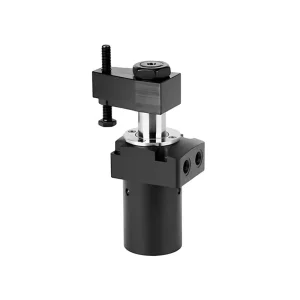
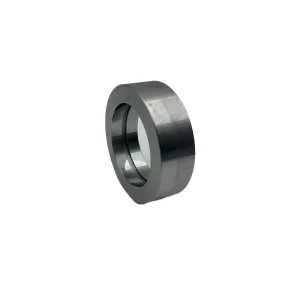
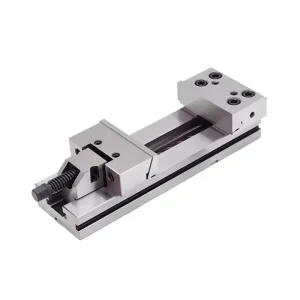
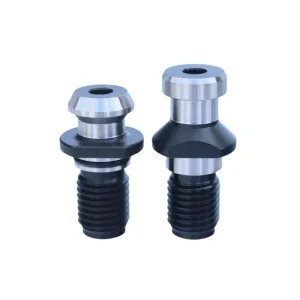
The Mechanics of Micro-Fluid Power: Engineering Principles
Comprehensive metallurgical, tribological, and hydraulic considerations behind high-pressure miniature hydraulic cylinder manufacturing.
Micro-Bore Fluid Dynamics & Pressure Containment
Miniature hydraulic cylinders, typically defined by bore diameters ranging from 6 mm to 32 mm, operate in fluid dynamics regimes drastically distinct from standard industrial actuators. As the effective cross-sectional area drops quadratically ($A = \frac{\pi d^2}{4}$), generating substantial working forces (10 kN to 150 kN) demands working pressures operating regularly between 21 MPa (210 bar) and 70 MPa (700 bar).
At these microscopic dimensions, standard thick-walled cylinder assumptions must be verified via Lamé's equations for radial and hoop stresses. Qingdao Micro Precision Machinery utilizes high-tensile 42CrMo4 alloy steel and cold-drawn seamless ST52-3/E355 precision tubes. Our factory achieves internal bore finishes of $Ra \le 0.1\, \mu\text{m}$ through multi-pass roller burnishing and plateau honing, preventing internal oil bypass and slip-stick phenomena during ultra-slow positioning speeds.
Advanced Micro-Sealing & Friction Dynamics
Sealing miniature hydraulic cylinders represents a complex engineering compromise. Standard elastomeric O-rings cause prohibitive breakout friction in micro-actuators, leading to jerky velocity profiles. Conversely, clearance seals without elastomeric energizers cause catastrophic internal volumetric efficiency drops.
- Step-Cut PTFE Seals with FKM Energizers: Engineered with custom groove geometries compliant with ISO 7425, providing breakout friction below 3% of rated hydraulic force.
- Hard Chrome & DLC Piston Rods: Piston rods precision-machined from 40Cr/38CrMoAl, induction hardened to 58–62 HRC, with 25-micron hard-chrome plating or Diamond-Like Carbon (DLC) coating for harsh subsea and mining environments.
- Contamination Resilient Wipers: Polyurethane-metal bonded double-lip wiper rings eliminate micro-particulate intrusion in quarry, demolition, and agricultural environments.
Miniature Hydraulic Industry Trends & Global Procurement
How next-generation robotics, compact machinery electrification, and strategic vendor consolidation are reshaping micro-hydraulic procurement worldwide.
Electro-Hydraulic Actuation (EHA)
Decentralized micro-hydraulics are replacing centralized hydraulic loops. By integrating brushless DC motors, miniature gear pumps, and compact double-acting cylinders into single self-contained pods, OEMs achieve the force density of hydraulics without hoses, external valves, or massive reservoirs.
70 MPa Extreme Pressure Regimes
Global demand is surging for micro-cylinders capable of sustained 700 bar operation in bolt-tensioning, subsea exploration, and compact rescue equipment. Meeting this standard demands forged alloy cylinder heads, vacuum heat-treated barrels, and zero-defect ISO 6H class thread engagement.
Strategic Total Cost of Ownership (TCO)
Tier-1 procurement managers are shifting away from cheap, non-standard actuators toward certified, serviceable platforms. Eliminating premature seal extrusions, rod-bending under sideloads, and port crackings delivers measurable lifecycle savings exceeding 34% over multi-year machinery deployments.
Cross-Industry Micro-Hydraulic Applications
From underground mining tunnels to automated CNC machining cells, our custom engineered actuators and manifolds operate where standard hardware fails.
Underground Mining & LHD
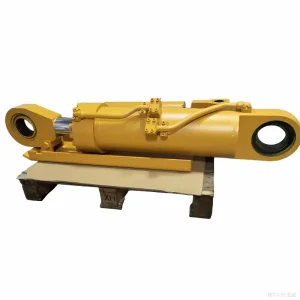
Confined spaces in underground shafts prohibit bulky hydraulic gear. Our specialized LHD lift and tilt cylinders endure sustained abrasive dust, acidic mine drainage, and heavy shock loads without losing pressure hold.
CNC Workholding & Tooling
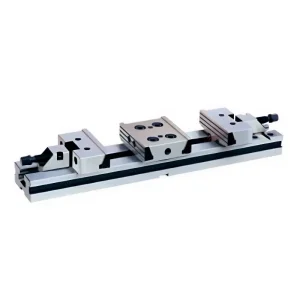
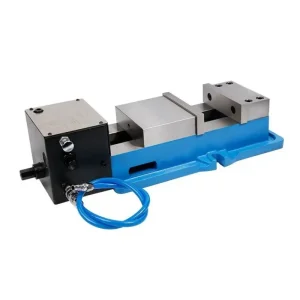
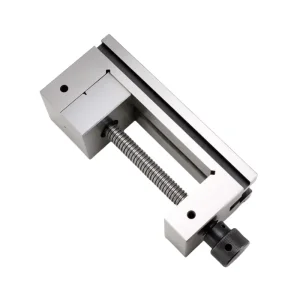
Integrated pneumatic-hydraulic vices, retention knobs (DIN 69872 / JIS B6339), and modular vices deliver instant, ultra-repeatable clamping forces exceeding 40 kN to prevent workpiece chatter during 5-axis milling.
Agricultural Machinery
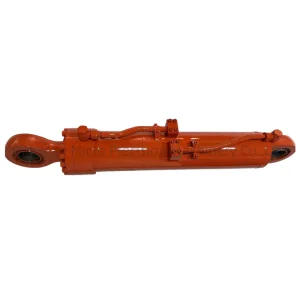
Reversible plough turnover cylinders and stepless furrow width adjusters coordinate fluid dynamics directly with tractor control blocks, ensuring cushioned 180-degree frame rotation without structural whip.
AWP & Mobile Cranes
Rotary actuators and multi-stage telescopic chassis cylinders equipped with T3A counterbalance valve blocks prevent catastrophic load drops in the event of hydraulic line rupture or hose-burst incidents.
Standard vs. Custom High-Pressure Miniature Specifications
Engineered for direct drop-in OEM interchangeability across metric and imperial platforms.
| Engineering Parameter | Micro-Precision Series (Standard) | High-Pressure Compact Series | Underground / Extreme Heavy Duty |
|---|---|---|---|
| Internal Bore Range ($\varnothing$) | 6 mm – 25 mm (0.24" – 1.00") | 16 mm – 40 mm (0.63" – 1.57") | 40 mm – 160 mm (1.57" – 6.30") |
| Piston Rod Diameter ($\varnothing$) | 4 mm – 16 mm (Induction Hardened) | 10 mm – 28 mm (Hard Chrome/DLC) | 25 mm – 110 mm (42CrMo4 Alloy) |
| Rated Working Pressure | 16 – 25 MPa (160 – 250 bar) | 35 – 70 MPa (350 – 700 bar) | 25 – 45 MPa (250 – 450 bar) |
| Internal Bore Surface Finish ($Ra$) | $\le 0.15\, \mu\text{m}$ (Plateau Honed) | $\le 0.08\, \mu\text{m}$ (Roller Burnished) | $\le 0.20\, \mu\text{m}$ (Skived & Burnished) |
| Standard Fluid Cleanliness | ISO 4406 Class 17/15/12 | ISO 4406 Class 15/13/10 | ISO 4406 Class 18/16/13 |
| Thread & Mounting Tolerances | ISO 6H / DIN 13 Metric / Imperial | Aerospace Class 3B / Unified UN | Heavy Mechanical Pivot Pins / Spherical |
| Temperature Operational Envelope | -25°C to +85°C (Standard NBR/PTFE) | -35°C to +150°C (FKM / Fluoroelastomer) | -40°C to +120°C (Heavy Arctic Seals) |
From CAD Blueprint to Hydrostatic Testing in 5 Steps
Total quality control maintained 100% in-house at our Qingdao machining center to ensure batch-to-batch interchangeability.
DFM & Drawing Sign-Off
Complete kinematic and hydraulic design review, FEA stress modeling, port pressure drop calculation, and drawing freeze before raw material allocation.
Multi-Axis CNC Machining
Precision turning, milling, and deep-hole drilling of cylinder barrels, pistons, and manifold blocks utilizing high-accuracy Mazak and Mori Seiki centers.
Thermal & Surface Treatment
Controlled atmosphere induction hardening, precision centerless grinding, hard chrome electroplating, and chemical blackening or anodizing.
Hydrostatic Proof Testing
Every actuator is subjected to 1.5x working pressure hold tests, internal bypass decay monitoring, and ultrasonic particulate wash to ISO 4406 standards.
Export Crating & Traceability
VCI anti-rust barrier wrapping, custom compartmentalized timber crating, dimensional inspection reports, and full mill test certification included.
The Horizon of Smart Micro-Actuation
Anticipating the technological demands of autonomous construction, surgical machinery, and subsea robotics.
Smart Sensor Embedded Micro-Cylinders
The traditional hydraulic cylinder is an unmonitored mechanical actuator. MPM is developing integrated non-contact magnetostrictive and micro-LVDT linear position sensors directly enclosed inside the rear cylinder head cap. By eliminating external sensor brackets, smart micro-cylinders communicate continuous sub-millimeter position data to vehicle CAN-bus architectures, enabling autonomous digging and robotics trajectory compensation.
Additionally, embedded micro-piezoelectric pressure transducers dynamically monitor internal cylinder pressure in both forward and retracted chambers, providing early-warning anomaly alerts for fluid contamination or seal wear before catastrophic field breakdown happens.
Bio-Compatible Fluids & Additive Manifolds
Environmental regulations across the EU and North America increasingly penalize mineral-oil contamination on agricultural and municipal construction sites. MPM's next-generation sealing profiles are specially formulated to endure synthetic polyol ester (HEES) and water-glycol (HFC) fire-resistant fluids without premature hardening or plasticizer leaching.
Concurrently, our Qingdao R&D engineering unit is pioneering direct metal laser sintering (DMLS) 3D printing of titanium and specialized aluminum micro-valve manifolds. Additive fluid passages eliminate dead-zones and sharp 90-degree internal drill turns, reducing fluid cavitation, cutting pressure loss by up to 28%, and reducing manifold block weight by over 45%.
Frequently Asked Questions for Sourcing Directors
Direct answers to the most common engineering, testing, and commercial inquiries received from overseas OEMs.
What specific parameters are mandatory to quote a custom micro hydraulic cylinder?
To provide an accurate engineering proposal and tiered wholesale pricing, our engineering department requires: bore diameter, piston rod diameter, effective stroke length, retracted pin-to-pin closed centers, maximum working pressure, fluid medium (e.g., standard mineral oil ISO VG 46 or specialized biodegradable fluid), mounting interface geometry (clevis, trunnion, spherical eye), port thread standard (BSPP, SAE ORB, Metric), and expected annual production volume.
Can MPM reverse-engineer and manufacture OEM replacement cylinders from a physical sample?
Yes. Our Qingdao engineering facility utilizes multi-axis coordinate measuring machines (CMM), optical profilometers, and material spectrometers. We measure physical samples down to ±0.002 mm, verify metallurgy, formulate a 2D/3D fabrication drawing package, and provide sample approval prototypes before mass batch production begins.
What international manufacturing and threading standards do your parts follow?
All parts are manufactured strictly to confirmed client drawings in both Metric and Imperial standards. Typical thread tolerances include ISO 6H for hydraulic lock nuts, DIN 69872 and JIS B6339 for CNC retention pull studs, and ISO 6149 / SAE J1926 for high-pressure fluid ports. Piston rod surface tolerances adhere to ISO f7/f8.
Do you sell individual hydraulic cylinder spare components separately?
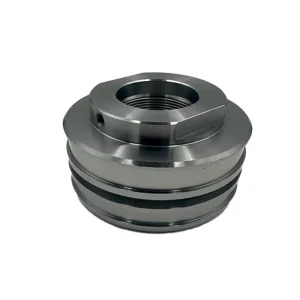
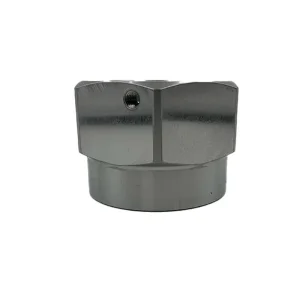
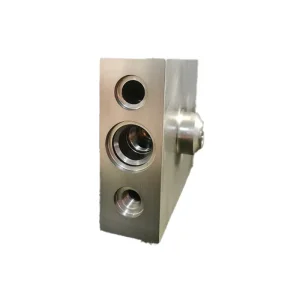
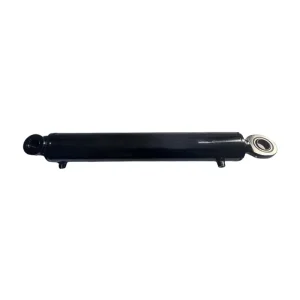
Yes. In addition to complete cylinder assemblies, we wholesale CNC-machined components to cylinder builders and repair shops worldwide: front cylinder heads (glands), pistons, locknuts, spherical bearings (MPM-HCSB11), integrated barrels, valve blocks (MPM-HCVB3A), and CNC tooling components.
How are export orders packaged to ensure zero rust or transit impact damage?
Every cylinder undergoes automated ultrasonic degreasing, internal protective oil flushing, port capping with heavy threaded plugs, and airtight VCI (Volatile Corrosion Inhibitor) poly-bag sealing. Goods are cradled inside custom CNC-routed foam compartments inside heavy-gauge, export-grade plywood crates suitable for transoceanic shipping.
What is your standard production lead time and quotation turnaround?
Our sales engineering team provides full commercial and engineering feedback within 24 hours of receiving your RFQ. Standard prototype production ranges from 15 to 25 calendar days, while recurring wholesale container shipments typically ship within 30 to 45 days ex-factory.
Precision Wholesale Hydraulic Solutions (Batch 02)
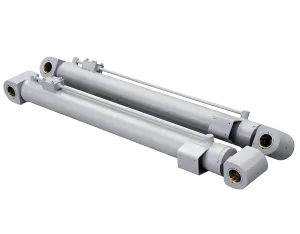
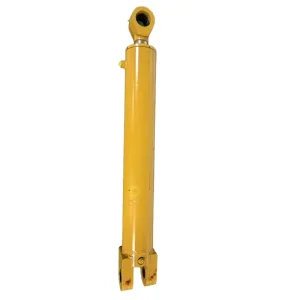
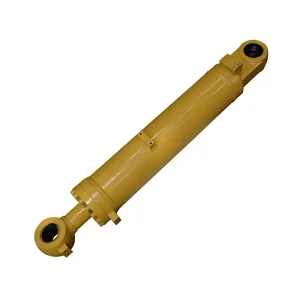
Complete line of end-cushioned cylinders, telescopic cylinders, counterbalance manifolds, and high-precision CNC tool accessories.
Submit Your CAD Blueprints for Direct Engineering Review
Connect directly with Qingdao Micro Precision Machinery's technical team. Whether you require a single custom micro-actuator prototype or high-volume wholesale series manufacturing, we provide comprehensive DFM evaluations and quotations within 24 hours.