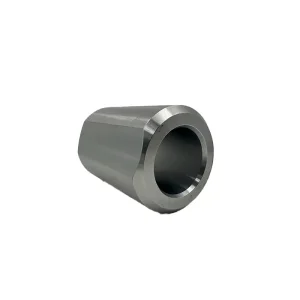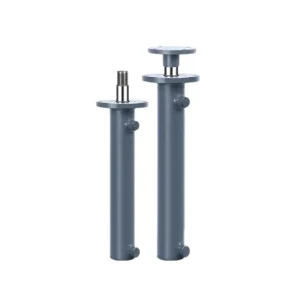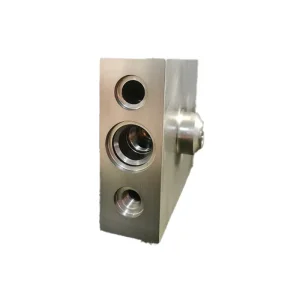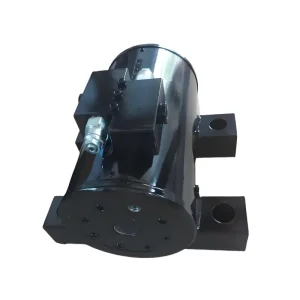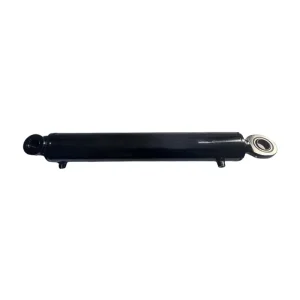
Featured CNC Tooling & Hydraulic Transmission Components
Explore our micron-grade retention knobs, custom milling chuck arbors, and high-pressure hydraulic components manufactured in Qingdao for global machine tool builders and automation facilities.
The Critical Linchpin of Spindle Mechanics: Why Pull Stud Integrity Decides Machining Accuracy
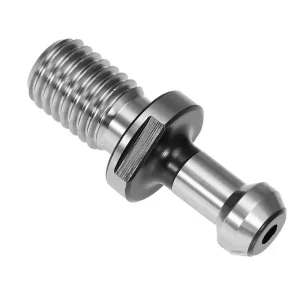
In modern CNC vertical and horizontal machining centers, 5-axis simultaneous gantry mills, and automated production cells, the tool holder retention knob—universally referred to as the pull stud—represents the smallest yet most mechanically stressed interface component. While measuring mere tens of millimeters in length, this safety-critical element directly withstands clamping drawbar forces ranging from 8 kN to upwards of 45 kN under extreme dynamic conditions. As spindle rotational speeds standardly surpass 15,000 to 24,000 RPM in high-speed machining (HSM), the pull stud serves as the sole mechanical link maintaining axial seating between the 7:24 taper (or dual-contact face-and-taper) and the machine spindle socket.
Any micro-deflection, material fatigue, thread eccentricity, or improper surface hardness on a retention knob inevitably causes catastrophic cascade failures. A dimensional variation as negligible as 2 microns on the pull stud contact angle alters the drawbar gripper clamping position, inducing uneven drawbar collet petal loading, fretting corrosion, severe harmonic vibration, chattering during high-feed milling, premature bearing destruction, and in worst-case scenarios, tool ejection at high peripheral velocity. As a seasoned custom tool holder pull stud supplier & manufacturer, Qingdao Micro Precision Machinery (MPM) applies nearly two decades of precision metallurgical control and CNC manufacturing excellence to eliminate these operational liabilities.
Sub-Zero Cryogenic Metallurgy
Standard market pull studs made from unverified 40Cr steels suffer from retained austenite, leading to dimensional drift and brittle fatigue fracture over prolonged thermal cycles. MPM utilizes premium vacuum-melted SNCM420 and 20MnCr5 alloy carburizing steels, subjected to controlled deep cryogenic stabilization at -196°C to eliminate micro-structural residual stresses and transform retained austenite into ultra-stable martensite.
- Core Toughness: HRC 32 - 38 to absorb shock loads
- Case Hardness: HRC 58 - 62 resisting gripper wear
- Zero micro-fissure assurance through Eddy Current NDT
Thread Expansion & Taper Distortion Control
When a retention knob is torqued into the rear thread of a 7:24 steep taper toolholder, standard metric threads act as mechanical wedges that swell the thin-walled small-end taper ("bell-mouthing"). This taper swelling reduces spindle surface contact from the mandated 85% down to less than 40%. MPM manufactures high-precision ground threads conforming strictly to ISO 4h/6g class tolerances with relief geometries that isolate radial expansion stresses.
- Preserves 85%+ AT3 spindle contact pattern
- Eliminates tool runout amplification at tool tip
- Protects spindle taper from expensive fretting damage
Ultra-High Pressure Through-Coolant Integrity
With internal high-pressure coolant (HPC) systems routinely delivering filtered metalworking fluid at 70 to 120 bar (1,000 to 1,750 PSI) for deep-hole drilling and titanium chip evacuation, through-hole retention knobs face relentless cavitation erosion and hydrostatic bursting pressure. MPM engineers mirror-burnished internal coolant orifices with aerospace-grade FKM / Fluorocarbon O-ring seating to eliminate backpressure leaks and coolant contamination within the spindle cartridge.
- Hydrostatic pressure tested up to 150 bar without leakage
- Electroless nickel or black-oxide surface passivation
- Hydrodynamic radii preventing coolant flow vortex cavitation
Engineering Standards Compliance & Precision Metrics
Global tier-1 OEMs and automated CNC machining operations require exact dimensional conformity. Below is our engineering benchmark across international retention knob standards.
| Standard Architecture | Head Clamping Angle | Applicable Machine Spindles | Thread Specification | Core / Surface Hardness | Through-Coolant Option |
|---|---|---|---|---|---|
| JIS B6339 (MAS 403 BT) | 15°, 30°, 45°, 60°, 90° | Mazak, DMG MORI, Fanuc, Okuma, Brother | M12, M16, M24, M30 (Class 4h/6g) | Core HRC 35±3 / Surface HRC 60±2 | Form A (Solid) / Form B (Coolant Bore) |
| DIN 69872 (ISO 7388/2 Form A) | 15° Reverse Flange Angle | Hermle, Chiron, GROB, Mikron, DMG (Euro) | M12 (SK30), M16 (SK40), M24 (SK50) | Core HRC 35±3 / Surface HRC 58-62 | Standard with High-Pressure O-Ring Groove |
| ANSI / ASME B5.50 (CAT / CV) | 45°, 60°, 90° Angular Contact | Haas, Fadal, Hurco, Cincinnati, Makino (US) | 5/8"-11 UNC (CAT40), 1"-8 UNC (CAT50) | Core HRC 34±2 / Surface HRC 60±2 | Available with coolant cross-holes & filters |
| ISO 7388/2 Form B (AFNOR) | 45° Internal Mushroom Head | European Universal Machining Centers | M12, M16, M24 Standard Pitch | Core HRC 36±2 / Surface HRC 59±2 | Precision Central Hydraulic Bore |
| Custom OEM / High-Speed Special | Optimized proprietary profiles | Direct Spindle High-Torque Custom Spindles | Custom Imperial/Metric/Non-standard | Multi-zone induction gradient treated | Micro-orifice laminar flow engineered |
Quality Control Zero-Defect Metrology & Micro-Crack Prevention
At our Qingdao production complex, quality assurance is not an afterthought—it is engineered into every stage of turning, grinding, and heat treatment. Every batch of custom pull studs undergoes continuous 100% optical projector profiling, thread lead angle verification on Zeiss 3D coordinate measuring machines (CMM), and wet fluorescent magnetic particle inspection (MPI) conforming to ASTM E1444. This ensures that grinding heat-checks, surface inclusions, and raw bar stock micro-fractures are intercepted before components ever reach an assembly line.
Total Cost Analysis The Micro-Economics of Premium Retention Knobs
A standard toolholder retention knob accounts for less than 1% of the overall capital expenditure involved in a high-speed milling cutter setup. However, an unexpected retention knob shear or drawbar uncoupling failure routinely generates catastrophic damage: destroyed workpiece raw materials ($5,000+), damaged high-end indexable milling heads ($1,500), broken motorized spindle cartridges ($25,000 - $60,000), and unplanned machine downtime ($300+/hour). Procuring certified high-end pull studs from MPM yields quantifiable insurance for enterprise machining operations.
Engineered Clamping Solutions for High-Stress Industrial Sectors
From demanding aerospace structural components to round-the-clock automotive manufacturing, MPM tool holder retention knobs perform where standard tooling fails.
Aerospace & Defense
Heavy titanium (Ti-6Al-4V) and Inconel aero-structure roughing generates violent radial shock loads. MPM retention knobs offer exceptional fracture toughness ($K_{1C} \ge 85 \text{ MPa}\sqrt{\text{m}}$) preventing brittle shank snapping under chatter conditions.
Automotive & EV
High-speed automated tool changers (ATC) with cycle change times under 1.2 seconds place intense cyclic fatigue on retention knob engagement heads. Our specialized case depth ensures wear-free longevity over 2,500,000 tool changes.
Precision Mold & Die
Deep cavity mirror-finish milling demands tool tip runout under 3μm. By pairing MPM ground pull studs with our ER collet chucks, tool deflection harmonics are eliminated, providing pristine Ra 0.1μm mold cavity surface finishes.
Heavy Machine Tools
Synergizing with our core hydraulic manufacturing heritage—including hydraulic cylinders, valve blocks, and manifolds—our CNC tooling components are engineered for heavy-duty, continuous chip-making in iron casting and forged steel machining.
Worldwide Export Architecture & Regulatory Conformance
Based in Chengyang District, Qingdao, MPM operates in immediate proximity to one of the world's premier deep-water container shipping ports. Our localized engineering support infrastructure bridges overseas procurement friction through rigorous export packaging, customs transparency, and international standard certification.
3.1 Inspection Mill Certificates & Full Traceability
Every production heat lot is stamped with laser-etched matrix tracking codes and accompanied by EN 10204 Type 3.1 material chemical assays and tensile testing data.
EU REACH & RoHS Environmental Directives
All surface finishes, passivation coatings, rust-preventive oils, and FKM seal elastomeric O-rings comply with European environmental and hazardous substance directives.
Expedited Logistics & DDP Fulfillment
Comprehensive maritime, air freight, and global express shipping channels with tailored VMI (Vendor Managed Inventory) agreements for qualified OEM partners.
Technical Blueprint Support & Sample Reverse Engineering
Are you operating non-standard machine spindles, proprietary imported Japanese/German tooling, or custom drawbar geometries where replacement retention knobs are obsolete or prohibitively expensive?
MPM's dedicated CNC CAD/CAM engineering cell offers rapid turnaround on custom pull stud blueprints:
- Precision optical profile coordinate mapping from physical worn samples
- Custom flank angle design matching non-standard drawbar collet petals
- Finite Element Analysis (FEA) simulating drawbar tension vs. taper dilation
- Rapid CNC prototype delivery within 7 business days
Direct Engineering Desk: [email protected]
The Next Horizon of Smart Clamping & Surface Metallurgy
How advanced coatings, digital lifecycle tracking, and smart spindle interfaces are reshaping retention knob engineering.
1. Diamond-Like Carbon (DLC) & PVD Nanocoatings
As automated spindle grippers transition to ceramic ball lock mechanisms, metal-to-metal contact can cause micro-galling. MPM is pioneering low-friction, extremely hard (HV > 3,000) DLC and PVD titanium carbonitride coatings across the retention knob contact angle, reducing friction coefficients to μ < 0.08 while multiplying drawbar gripper lifespan by up to 400%.
2. Embedded RFID & Digital Tool Management
In accordance with Industry 4.0 dark-factory initiatives, MPM is engineering custom retention knob configurations designed to integrate low-frequency RFID chips or laser-etched 2D DPM data matrices directly onto the knob shoulder. This facilitates automatic tracking of toolholder clamping cycles, alerting operators when a pull stud reaches its preventative retirement threshold.
3. Fluidic Vortex CFD Coolant Channels
Next-generation cryogenic CO2 and MQL (Minimum Quantity Lubrication) machining protocols require specialized internal bore aerodynamics. MPM employs Computational Fluid Dynamics (CFD) modeling to create non-turbulent, cavitation-free transitional channels, preventing pressure drops and ensuring supersonic coolant delivery directly to the cutting zone.
Frequently Asked Questions: Retention Knobs & CNC Tooling
Essential technical, metallurgical, and operational answers for CNC machinists, toolroom supervisors, and procurement directors.
Why does over-tightening a tool holder pull stud cause catastrophic tool runout?
What is the functional difference between DIN 69872 Form A and Form B retention knobs?
How often should tool holder retention knobs be replaced in production environments?
Why do MPM retention knobs utilize dual-hardness (case-hardened) metallurgy instead of through-hardening?
Can I interchange JIS B6339 (BT) and ANSI B5.50 (CAT) pull studs?
What technical data is required to order custom or OEM-replacement pull studs?
Integrated Workholding, Hydraulic Cylinders & Actuators
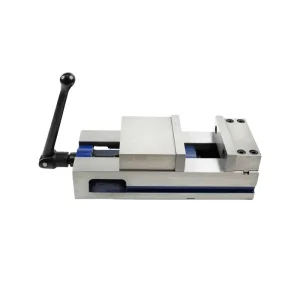
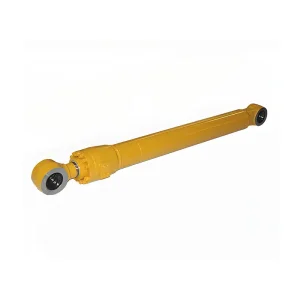
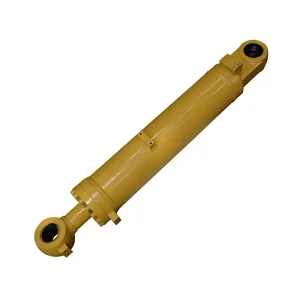
Complimenting our CNC tooling systems, explore MPM's heavy equipment hydraulic cylinders, valve blocks, rotary actuators, and high-precision clamping vises.