
Engineered Actuators & Hydraulic Hydraulic Components
Manufactured with micron-level CNC tolerances, high-yield metallurgical stocks, and advanced sealing architectures designed to withstand extreme compressive luffing cycles.
Engineering Crane Luffing Hydraulics: Force Vectors, Buckling Limits & Kinematics
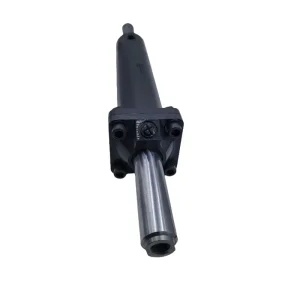
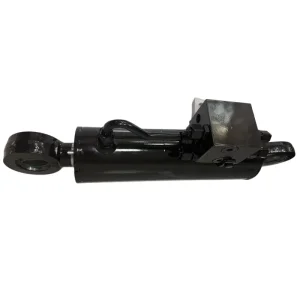
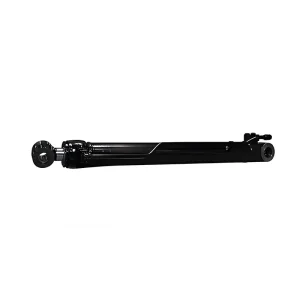
In mobile telescopic cranes, luffing tower cranes, and offshore knuckle-boom systems, the luffing cylinder functions as the primary structural spine. It transforms high-pressure hydraulic fluid into controlled mechanical elevation under intense compressive loads and dynamic overturning moments.
Euler Column Buckling Mitigation
Luffing cylinders operate primarily under severe compression. As boom angles drop toward horizontal, compressive thrust surges while the effective stroke creates a dangerous buckling risk governed by Euler’s critical load formulas.
- Optimized Wall Thickness: Cold-drawn seamless tubes engineered in 27SiMn and St52.3 ensure high section moduli without unnecessary deadweight.
- FEA Stress Analysis: Computer-modeled barrel deflection verifies a minimum 3.0 safety factor against structural buckling under maximum dynamic hoist ratings.
- Guided Piston Lands: Extended bronze-infused PTFE guide rings spread lateral side forces evenly, preventing metal-to-metal galling during angular boom sway.
Zero-Drift Counterbalance Architecture
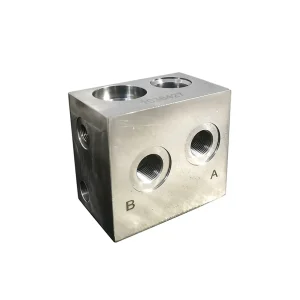
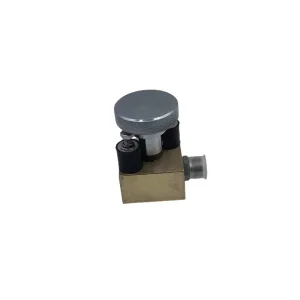
Unintended boom drift poses catastrophic risks in urban construction and precision module placement. Our luffing actuators integrate directly mounted counterbalance manifolds.
- Direct Flange Mounting: Flanged valve blocks eliminate flexible hoses between the cylinder chamber and safety valve, guarding against sudden line-burst collapses.
- Pilot-Assisted Poppets: Hardened 40Cr steel valve seats deliver near-zero internal leakage (<0.5 drops/min at 350 bar), locking boom elevation firmly in position.
- Smooth Proportional Lowering: Multi-stage pilot ratios (from 3:1 to 10:1) dampen hydraulic cavitation and suppress boom bouncing during high-speed descent.
Heavy Metallurgical Treatments
Piston rods exposed to harsh coastal weather, acid mine drainage, and abrasive particulate require extreme surface hardness and corrosion resistance to protect primary seal packages.
- 42CrMo4 Induction Hardening: Core tensile strength >980 MPa combined with surface induction hardening (52–58 HRC) resists physical impact indentations.
- Dual-Layer Plating / Laser Cladding: Micro-crack hard chrome (30–50 µm) or PTA laser-cladded Inconel alloys yield over 1,000 hours of ASTM B117 salt-spray survival.
- Micro-Honed Bore Finish: In-house CNC skiving and burnishing yields an internal surface roughness of Ra < 0.2 µm, prolonging seal lifespan past 1.5 million cycles.
Localized Heavy-Industry Application Scenarios
Luffing cylinder cranes must perform across vastly different environmental stresses. From sub-zero arctic wind turbine installations to sweltering tropical shipyard dry-docks, our custom actuators are purpose-built for their operational reality.
Dense Urban High-Rise Construction
In congested metropolitan zones (London, Singapore, New York), luffing jib tower cranes eliminate oversailing boundaries over adjacent buildings. Cylinders face continuous variable backpressure during sharp luffing accelerations, demanding rapid micro-metering and dampening at stroke limits.
Offshore Marine & Shipyard Cranes
Knuckle-boom deck cranes and offshore barge lifters operate in saline mist and heavy sea states. Actuators require 316L stainless internal fluid lines, DNV-GL certified spherical bearing eye mounts, and ceramic-matrix rod coatings to combat aggressive pitting and crevice corrosion.
Renewable Wind Farm Erection
Towering 150m+ wind turbine nacelles require massive all-terrain and crawler cranes with heavy-duty luffing cylinders. These actuators hold heavy loads steady against gusting side winds, requiring dynamic dampening to suppress dangerous boom oscillations during critical assembly lifts.
Mining Stackers & Heavy Earthmovers
Continuous-duty bucket-wheel stacker-reclaimers and ultra-large mining excavators endure non-stop vibration, shock loadings, and abrasive iron ore dust. Cylinders feature heavy forged trunnions, double-wiper rod seals, and external debris shields for sustained multi-year reliability.
Custom Luffing Cylinder Engineering Parameters
Our Qingdao precision machining facility accommodates tailored client specifications from single prototype builds to full-scale OEM supply agreements.
| Engineering Parameter | Standard Range | Heavy Crane / Offshore Spec | Quality Verification Protocol |
|---|---|---|---|
| Bore Diameter (Ø) | 120 mm – 450 mm | Up to 800 mm | Internal Air Gauge & 3-Point Bore Micrometer (±0.015 mm) |
| Piston Rod Diameter (Ø) | 80 mm – 320 mm | Up to 550 mm (Solid or Hollow) | Laser Micrometry & Ultrasonic Non-Destructive Testing (NDT) |
| Maximum Working Stroke | Up to 6,000 mm | Up to 14,000 mm (Single / Multi-stage) | Optical Laser Alignment & Deflection Measuring Rig |
| Nominal Working Pressure | 25 MPa to 35 MPa (250–350 Bar) | Up to 45 MPa (450 Bar Peak Dynamic) | Hydrostatic Proof Testing to 1.5x Rated Design Pressure |
| Operating Temperature | -25°C to +85°C | -45°C (Arctic) to +120°C (Steel Mill) | Low-temp Charpy V-Notch & Fluorocarbon Seal Packaging |
| Internal Honing Finish | Ra 0.2 – 0.4 µm | Ra ≤ 0.15 µm Roller Burnished | Surface Profilometer Verification along 3 Axis Points |
| Mounting Configurations | Spherical Bearings, Welded Clevis | Forged Intermediate Trunnion, Crosshead | Magnetic Particle Inspection (MPI) of Structural Welds |
| Integrated Safety Valves | Single Counterbalance Manifold | Dual Hose-Burst Valves with Load-Sense | Automated Dynamic Pressure Drop & Seat Leakage Testing |
Chinese Factory Supply Chain Resilience & Production Efficiency
Qingdao Micro Precision Machinery leverages the world’s most comprehensive manufacturing ecosystem in Shandong province, providing international crane builders with distinct technical and economic advantages.
Upstream Metallurgical Integration
Situated within Shandong’s heavy industrial cluster, MPM sources certified steel blooms, seamless tubes, and forged billets directly from Tier-1 Chinese mills. Complete traceability is documented with EN 10204 3.1 Material Test Reports for every production heat.
Raw Material SecurityVertical In-House CNC Machining
From deep-hole drilling and CNC lathe turning to valve block multi-axis machining, our 3,500 m² Qingdao workshop retains full control over all critical operations. Eliminating outside subcontracting preserves dimensional concentricity and shortens OEM lead times by 35% compared to Western counterparts.
35% Faster Lead TimesStrategic Deepwater Port Logistics
Operating near Qingdao Port—one of the globe's premier container and breakbulk shipping hubs—facilitates rapid, cost-effective multimodal export. We provide custom anti-corrosion barrier wrapping, certified timber crating, and direct sea, air, or express freight handling worldwide.
Direct Maritime FreightTechnology Roadmap: The Next Era of Crane Elevation
As modern cranes become digitally integrated autonomous lifting systems, luffing cylinders are evolving from passive hydraulic pistons into intelligent cyber-physical actuators.
Embedded Smart Transducers & IoT
Integration of non-contact magnetostrictive linear position sensors directly into the cylinder bore provides sub-millimeter stroke feedback. Paired with embedded piezoresistive pressure transmitters, our cylinders feed real-time load, velocity, and cycle fatigue data to the crane's CAN-bus or autonomous control unit.
- Real-time boom deflection calculation
- Predictive seal wear & life tracking
- Dynamic load-moment limiting (LML)
Lightweight High-Modulus Composites
To reduce crane upper-works weight and boost maximum lift capacities at extended radiuses, MPM is advancing hybrid carbon-fiber reinforced polymer (CFRP) over-wrapped cylinder barrels. This delivers equivalent 400-bar burst ratings at a 40% weight reduction compared to traditional thick-walled alloy steel barrels.
- Lower machine center of gravity
- Reduced transport axle loads for mobile cranes
- Superior natural harmonic vibration damping
Eco-Friendly & Ultra-Low Friction Fluids
Stricter global ESG regulations require cylinder hydraulic systems capable of operating with rapidly biodegradable synthetic ester and water-glycol fluids without seal degradation or accelerated rod oxidation.
- Fluoropolymer (FKM) and special polyurethane seal matrix
- Dry-lubricating diamond-like carbon (DLC) rod coatings
- Elimination of hazardous hexavalent chromium plating
Certified Testing Protocols: Delivering Flawless Reliability
Because luffing cylinder failure immediately compromises boom stability, every custom actuator leaving our facility undergo rigorous non-destructive and destructive validation tests aligned with ISO 10100 and EN 13001 crane design rules.
Hydrostatic Pressure Proofing
Every completed cylinder is filled with clean test oil and pressurized to 150% of nominal working pressure, held steadily for 10 minutes to verify structural integrity and zero external leakage across head joints and welds.
Internal Piston Bypass Verification
Full stroke is applied under rated pressure while the dry port is monitored with precision flow meters. Internal bypass leakage must remain strictly below 0.1 mL/min to prevent uncommanded boom drift during static suspended lifts.
Ultrasonic & Magnetic Particle NDT
All load-bearing weldments—including base clevis welds, trunnion attachments, and rod eye forgings—are subjected to 100% magnetic particle or ultrasonic flaw detection to ensure no subsurface inclusions or lack of fusion exist.
Particle Cleanliness Counting
Using high-flow flushing rigs with inline laser particle counters, cylinder assemblies are flushed until fluid cleanliness reaches ISO 4406 Class 16/14/11 standards, preventing premature valve spool contamination during site commissioning.
Frequently Asked Questions: Sourcing Custom Crane Cylinders
Key technical and procurement answers addressing structural calculations, counterbalance integration, material certifications, and custom OEM manufacturing.
We employ Euler’s column buckling theory modified by Tetmajer’s empirical formulas for intermediate slenderness ratios, factoring in the cylinder's step-change moment of inertia between the barrel and extended rod. We require a minimum safety factor of 3.0 to 3.5 at maximum stroke, considering dynamic hoist shocks and boom wind forces calculated via Finite Element Analysis (FEA).
Yes. Our engineering department can reverse-engineer worn or damaged cylinders. We perform full Coordinate Measuring Machine (CMM) dimensional mapping, metallurgical composition spectrography, seal profile digitizing, and produce detailed 2D/3D fabrication drawings for your sign-off before manufacturing starts, guaranteeing complete mechanical and hydraulic interchangeability.
For boom elevation cylinders subject to changing over-center gravity loads, we typically recommend a pilot ratio between 4.5:1 and 8:1. Lower ratios (e.g., 3:1) deliver higher hydraulic stability and resist chattering in stiff structures, whereas higher ratios (e.g., 10:1) lower pilot pressure requirements for energy-efficient variable displacement pump systems.
For marine environments, we provide double-layer nickel-chrome plating (30 µm dense nickel + 20 µm micro-cracked chrome) surviving over 1,000 hours of ASTM B117 salt spray testing. For severe splash-zone offshore applications, we supply Plasma Transferred Arc (PTA) laser-cladded Stellite or Inconel 625 coatings that offer superior resistance against pitting and mechanical impact.
We incorporate progressive conical or stepped metering spear cushions into both the cap end and rod head. As the piston approaches stroke limits, hydraulic fluid escape is restricted through calibrated throttling orifices, generating smooth, controlled deceleration that eliminates mechanical impact and hydraulic shock waves.
Our sales engineering team delivers formal quotations and technical cross-sectional drawings within 24 hours of receiving parameters. Prototype builds are typically completed within 3 to 4 weeks, while scheduled OEM volume batch shipments run on standard 4-to-6 week production cycles from drawing sign-off.
Heavy-Duty Actuation Solutions & Machine Tooling
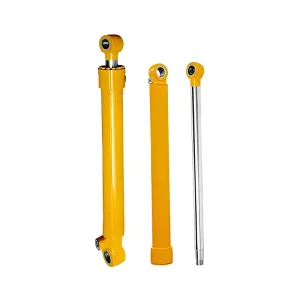
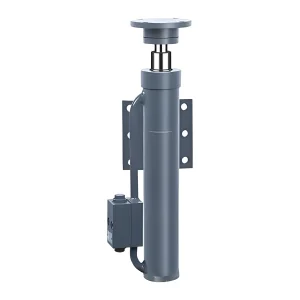
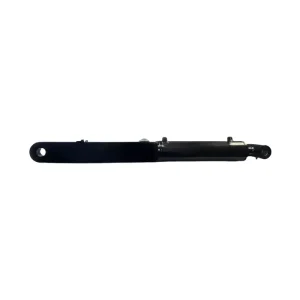
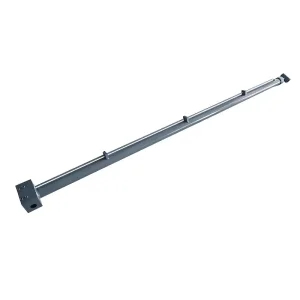
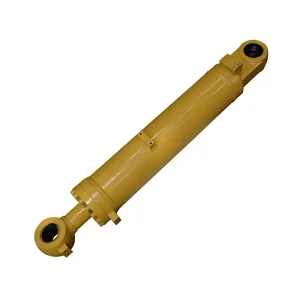
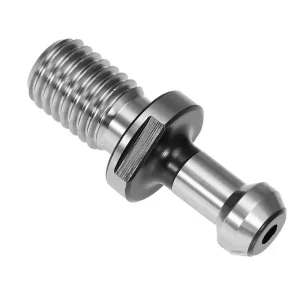
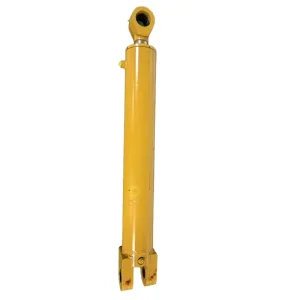
Explore our complete spectrum of multi-stage telescopic cylinders, outrigger expansion units, and precision CNC machine components produced in our Qingdao workshops.
Consult with Our Hydraulic Engineering Team
Whether you require a custom luffing cylinder design review, reverse-engineering from an equipment sample, or a competitive OEM volume production proposal, our senior hydraulic engineers in Qingdao are at your service.
Qingdao Micro Precision Machinery
No. 438, Wangsha Road, Chengyang District, Qingdao, Shandong, China