
Original OEM Precision Actuators & Tooling Units
Explore our core manufacturing lines directly machined in Qingdao, Shandong. Each component integrates micron-tolerance CNC finishing and metallurgical validation.
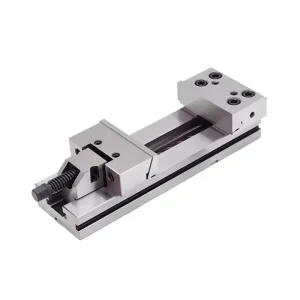
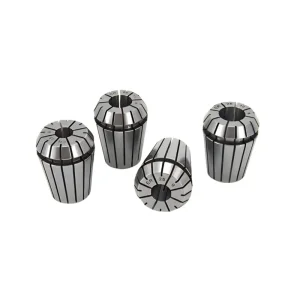
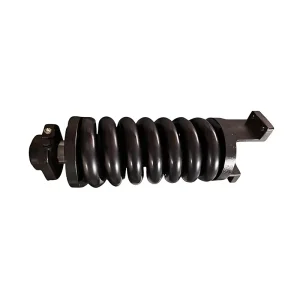
DIN Tool Retention Stud Systems: The Critical Spindle-Tool Interface
An engineering examination of tensile dynamics, case-hardened alloy selections, thread notch stress mitigation, and ISO/DIN compliance in modern machining centers.
In high-speed CNC milling and heavy-duty turning-milling centers, the DIN Tool Retention Stud (commonly designated under DIN 69872 Form A and Form B, or cross-referenced with ISO 7388/2 and JIS B6339) serves as the solitary structural link locking the toolholder taper into the spindle drawbar. While diminutive in physical footprint relative to the overall machine tool architecture, a pull stud operates under immense tensile clamping loads—often ranging between 12 kN to exceeding 45 kN for SK40 and SK50 tapers, coupled with dynamic centrifugal stresses reaching rotational speeds of 24,000 to 40,000 RPM.
At Qingdao Micro Precision Machinery Co., Ltd. (MPM), established in 2006, our engineering teams manufacture tool retention knobs and precision hydraulic hardware under rigorous process control. A metallurgical failure in a retention stud does not merely result in tool runout; it risks catastrophic projectile release of the toolholder assembly, catastrophic spindle drawbar claw destruction, and expensive machine downtime. This industry guide outlines the metallurgy, structural physics, procurement frameworks, and Industry 4.0 production environments defining Chinese manufacturing excellence.
Metallurgical Architecture & Technical Roadmap
Balancing surface wear resistance against core tensile ductility to prevent brittle catastrophic fracture.
Alloy Selection & Carburization
We forge our DIN retention studs exclusively from premium low-carbon alloy structural steels—predominantly 20CrMnTi, 16MnCr5 (1.7131), and Japanese standard SCM435 / SNCM439. Through vacuum carburization and controlled quenching, we produce a dual-zone microstructure:
- Surface Hardness: 58–62 HRC (case depth 0.8–1.2 mm)
- Core Hardness: 32–38 HRC for ultimate impact toughness
- Zero micro-cracking at the neck under cyclic strain
Thread Rolling vs. Thread Cutting
Micro-notch stress concentrations in the retention stud's male connecting thread represent the primary initiation point for shear failure. MPM utilizes thread-rolling processes rather than conventional single-point turning:
- Continuous, uninterrupted metallic grain flow
- High compressive residual surface stress (+35% fatigue life)
- Precision thread tolerance class ISO 6g compliance
Future Roadmap: Smart & Cryogenic Tooling
The next evolution in toolholding systems addresses automated intelligence and extended lifecycle wear:
- Sub-zero deep cryogenic treating (-196°C) eliminates retained austenite
- Black-oxide and PVD DLC coatings to resist high-pressure coolant erosion
- Embedded RFID/NFC cavity designs for tool monitoring cycles
| Standard & Form | Typical Taper Series | Coolant Channel Type | Flange Angle | Core Hardness | Max Clamping Tensile Force |
|---|---|---|---|---|---|
| DIN 69872 Form A | SK30 / SK40 / SK50 | Central Thru-Bore (O-ring sealed) | 15° / 45° | 32–36 HRC | Up to 48 kN |
| DIN 69872 Form B | SK40 / SK50 | Solid (External Coolant Delivery) | 15° / 45° | 32–36 HRC | Up to 55 kN |
| ISO 7388/2 Type A | ISO 40 / ISO 50 | Bore or Solid | 15° | 30–35 HRC | Up to 45 kN |
| JIS B6339 (MAS 403) | BT30 / BT40 / BT50 | With / Without Coolant Hole | 30° / 45° / 60° / 90° | 34–38 HRC | Up to 50 kN |
Macro Industry Solutions: Bridging Hydraulic & Tooling Demands
From heavy off-highway equipment actuation to 5-axis aerospace machining cells, precision retention components safeguard dynamic throughput.
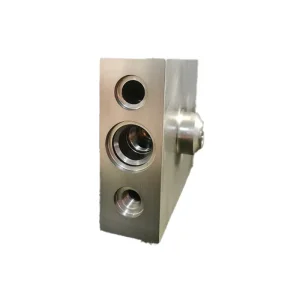
Hydraulic Valve Block & Manifold Machining
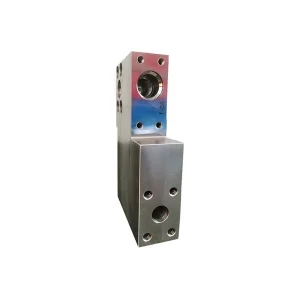
Machining complex cavity galleries in solid ductile iron and forged steel manifolds (such as our T3A Counterbalance Blocks and T2A Relief Valve Blocks) demands intense side-milling forces and deep gun drilling. DIN pull studs must maintain total rigidity under extreme interrupted cutting vibrations to preserve sub-micron bore geometries and seat tolerances.
Automotive Powertrain & Die Stamping
Transfer lines and automotive cylinder head machining operations operate 24/7 with rapid tool changes (ATC cycles < 1.2 seconds). MPM pull studs feature precise chamfers, micro-honed contact shoulders, and controlled O-ring grooves to guarantee consistent clamp engagement without premature mechanical wear on the drawbar collet fingers.
Off-Highway Excavator & Loader Actuators
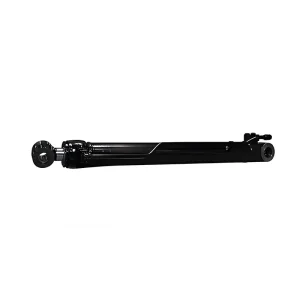
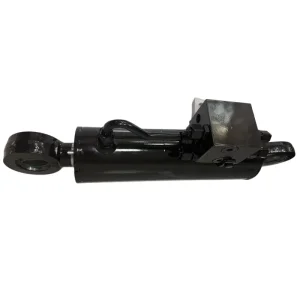
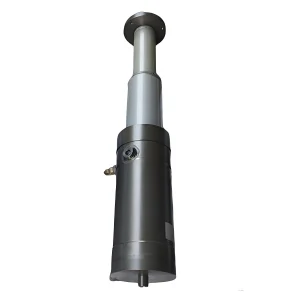
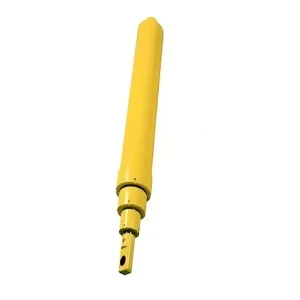
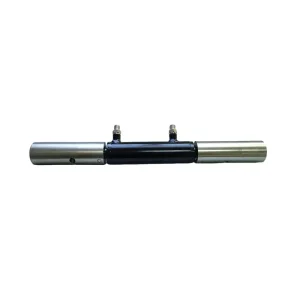
Manufacturing heavy-duty hydraulic cylinders (such as MPM-HCB101 Bucket Cylinders and multi-stage telescopic rams) requires boring and honing long integrated barrels. Our heavy-duty CNC boring arbors leverage rigid DIN retention studs to ensure zero taper deflection across stroke lengths exceeding 3,000 mm.
China Factory 4.0: Supply Chain Resilience & Efficiency
Automated cellular manufacturing, in-line robotic inspection, and digital traceability built on decades of machining excellence in Qingdao.
Multi-Axis Swiss & Turn-Mill Automation
Our 3,500 m² Qingdao manufacturing center houses state-of-the-art multi-axis CNC turn-mill centers and high-precision CNC cylindrical grinding cells. Tool retention studs undergo single-setup machining—turning, thread rolling, drilling of internal high-pressure coolant channels, and profile grinding executed without re-clamping, eliminating concentricity errors to within 0.003 mm.
Poka-Yoke & In-Process Laser Metrology
To eliminate defective units at high volumes, MPM deploys automated in-line laser diameter gauges and 100% automated Magnetic Particle Inspection (MPI) to detect sub-surface micro-fissures in critical neck radii. Hardness profiles are checked across every thermal batch using Vickers and Rockwell testers, backed by computerized material test certificates (EN 10204 3.1).
Integrated Port Logistics & Supply Continuity
Located in Qingdao—one of the world's premier deep-water shipping hubs—MPM provides unmatched supply chain resilience. Our facility maintains extensive raw bar inventories of vacuum-degassed structural alloy steels, allowing standard retention stud dispatches within 48 hours and customized OEM production ramp-ups in under 15 business days.
Global Enterprise Sourcing: TCO & Risk Mitigation
Why progressive global manufacturers analyze Total Cost of Ownership (TCO) rather than unit pricing alone when procuring tooling retention studs.
Purchasing cheap, unverified retention studs introduces severe latent risk into production environments. A single fractured stud under a 30 kN drawbar load releases the cutting tool into the workpiece, typically costing between $15,000 and $45,000 in spindle rebuilding, ruined workpieces, and lost production hours. When tier-1 automotive suppliers, agricultural implement builders, and aerospace contractors partner with MPM, procurement risk is mitigated through comprehensive quality verification:
PPAP Level 3 & Metallurgical Certs
Every OEM production batch is supplied with chemical spectroscopic analysis, Charpy V-notch impact test reports, micro-hardness gradient maps, and full CMM inspection records guaranteeing strict ISO and DIN compliance.
Inventory Buffers & JIT Support
For high-volume distributors across North America, Europe, and Asia-Pacific, MPM provides vendor-managed inventory programs, custom barcoding, blister packaging, and safety buffer stock arrangements to shield against logistics shocks.
Direct Factory Cost Advantages
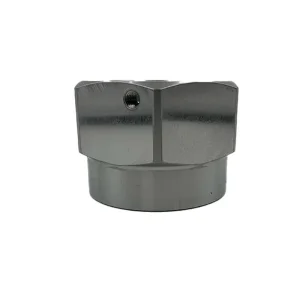
By producing toolholder pull studs, hydraulic cylinder components (heads, pistons, nuts), and manifolds under one roof in Qingdao, customers benefit from optimized raw-material bulk buying and integrated quality overheads.
Localization Support, Standards & Quality Assurances
Flawless interchangeability across international machine tool interfaces: DIN 69872, ISO 7388, ANSI/ASME B5.50, and JIS B6339.
Interchangeability & Drawing Translation
Our bilingual sales engineering department reviews 2D drawings, 3D STEP models, and legacy reverse-engineering samples. Whether your spindles follow DIN standards or proprietary builder requirements (Haas, Mazak, DMG Mori, Okuma, Makino), thread engagements and head profiles are validated in writing prior to tooling setup.
Environmental & Chemical Safety
All surface conversion treatments, black oxide coatings, and anti-corrosion barrier coatings strictly adhere to European REACH and RoHS environmental safety mandates, eliminating banned heavy metals and hexavalent chromium compounds.
Responsive Engineering Channel
MPM guarantees engineering feedback within 24 hours of technical drawing submission. Direct video consultations with our lead tooling designers allow real-time discussion of clearance tolerances, coolant jet velocities, and custom wrench flat designs.
Frequently Asked Technical & Sourcing Questions
Clear, authoritative guidance addressing mechanical installation, torque parameters, and procurement procedures.
What is the difference between DIN 69872 Form A and Form B retention studs?
What tightening torque should be applied when installing a DIN 69872 pull stud?
Can a DIN 69872 retention stud be used on a BT40 or CAT40 tool holder?
What causes fatigue cracking or failure in CNC retention studs?
What is the recommended replacement frequency for retention studs in production environments?
What information does Qingdao Micro Precision Machinery require to produce custom OEM retention studs?
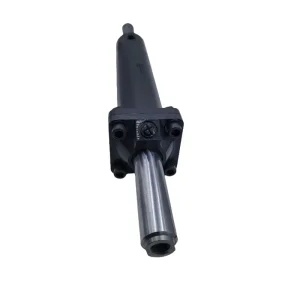
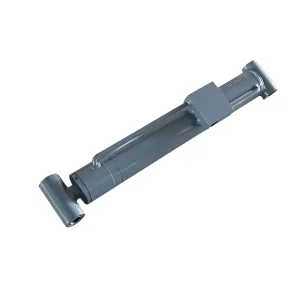
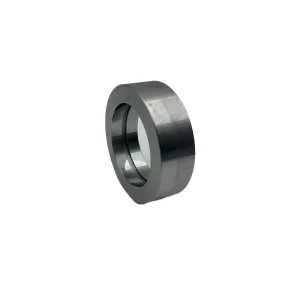
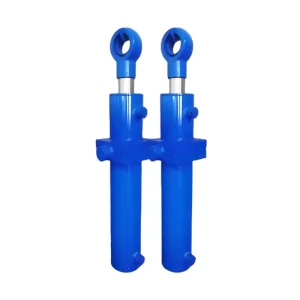
Integrated Precision Cylinders, Manifolds & Machine Components
Machined in Qingdao with identical manufacturing rigor: from high-pressure relief valve blocks to multi-stage tipping cylinders.
Initiate Your Tooling or Hydraulic Engineering RFQ
Send your drawings, sample retention studs, or hydraulic cylinder specifications to our technical team in Qingdao. Receive a detailed engineering review, DFM proposal, and formal quotation within 24 hours.