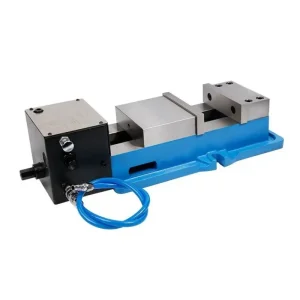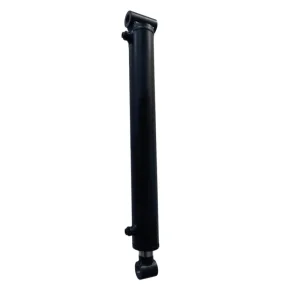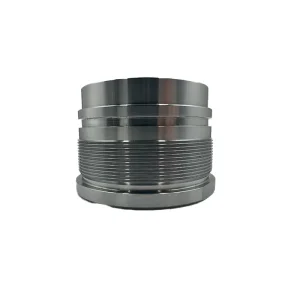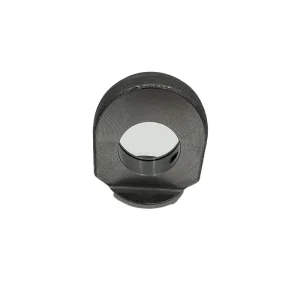
Featured Hydraulic Actuators & Precision Components
Engineered for maximum payload-to-stroke ratios, wear resistance, and absolute system reliability across heavy-duty industrial machinery.
Global Landscape of 4-Stage Telescopic Actuation
The global heavy commercial transport, municipal refuse collection, and heavy construction equipment sectors are demanding extended telescopic stroke lengths without expanding vehicle mounting footprints.
Compact Footprint vs. Extended Stroke
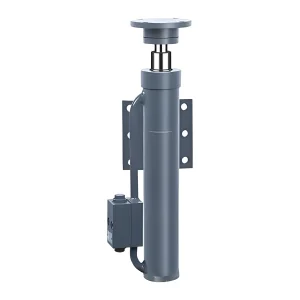
Four-stage telescopic cylinders solve the critical mechanical dilemma of stroke extension versus retracted installation length. When collapsed, nested concentric stages occupy roughly 25-30% of their fully extended stroke length, making them essential for tipper trailers, dump trucks, and mobile agricultural machinery requiring steep discharge angles.
Micro-Toleranced Multi-Sleeve Dynamics
In a 4-stage cylinder, structural integrity drops exponentially as each consecutive sleeve extends. Modern international operations require ultra-precise wall thickness concentricity, precision honed bore surfaces (Ra ≤ 0.2μm), and optimized stage transitions to eliminate pressure spikes and buckling tendencies under 20-30 MPa operating thresholds.
Severe Working Environmental Resilience
Global equipment builders face abrasive dust in mining, dynamic torsional wind loads in agricultural tipping, and saltwater exposure in coastal transport. Industrial users require low-friction polyurethane seals, bi-directional wear bands, and multi-layer hard chrome plating exceeding 96 hours of neutral salt spray testing.
Why China Factory Scale Delivers Unmatched Cylinder Efficiency
A look inside the complete metallurgical, CNC precision, and assembly ecosystems that power China's leading multi-stage cylinder manufacturing hubs.
Integrated Metallurgical Pipelines
China's hydraulic clusters provide direct mill access to cold-drawn seamless steel tubes (27SiMn, ST52, 42CrMo). 27SiMn delivers superior yield strength (≥ 835 MPa) and high-impact toughness, perfectly calibrated for multi-stage tipper stress profiles with zero raw-material lead time delays.
Dedicated Deep-Hole Boring & Honing
Multi-stage telescopic cylinders demand rigorous precision across every sleeve diameter. Qingdao and regional CNC facilities maintain automated deep-hole skiving and roller burnishing lines, producing uniform internal bore finishes with roundness tolerances within 0.02 mm over 3 to 6-meter stroke lengths.
High-Precision Quality Assurance
From magnetic particle testing on raw hollow bars to 100% full-stroke pressure endurance testing at 1.5× design working pressure, Chinese factories apply strict ISO 9001 and IATF 16949 quality protocols to ensure zero internal leakage before containers are loaded.
Mission-Critical Applications for 4-Stage Cylinders
Engineered to handle severe side-load factors, dynamic chassis twisting, and high cyclic duty demands in specialized commercial equipment.
Heavy Semi-Trailer End-Tippers
Front-end trunnion-mounted 4-stage cylinders lift tipper dump trailers carrying up to 60 tons of aggregate or ore. The multi-stage layout guarantees a dumping angle of up to 52 degrees while resisting eccentric forces caused by uneven payload settling during discharge.
Municipal Sanitation & Refuse Packers
Compactor trucks require heavy compaction strokes paired with rapid ejection capability. 4-stage double-acting telescopic cylinders deliver controlled retract pulling force to clear stubborn waste compactors without binding or seal extrusion under continuous urban cycles.
Specialized Mining & Agricultural Rigs
Harvesters, fertilizer spreaders, and underground mucking platforms utilize 4-stage configurations where undercarriage clearances cannot accommodate single-stage or twin-rod geometries. High-strength alloy designs withstand vibration and harsh seasonal duty.
Engineering Evolution: The Future of Telescopic Hydraulics
Driven by vehicle electrification, light-weighting initiatives, and IoT telematics, the next generation of telescopic cylinders is evolving rapidly.
| Trend Domain | Legacy Cylinder Architecture | Advanced Next-Gen Engineering Standards | Strategic OEM Advantage |
|---|---|---|---|
| Materials & Weight | Heavy carbon steels (Q235, 20#); bulky thick walls to prevent buckling. | 27SiMn quenched and tempered alloy tubing with high tensile strength (≥ 980 MPa). | Up to 18-24% deadweight reduction, expanding transport payload margins. |
| Surface Protection | Single-layer hard chrome (15-20 μm); vulnerable to aggressive pitting. | Micro-crack double hard chrome, HVOF supersonic spray, or nitriding options. | Over 250+ hours neutral salt spray resistance in marine and corrosive settings. |
| Sealing Architecture | Standard NBR U-cups; prone to high friction and premature extrusion. | Custom Hallite/Parker polyurethane step seals + PTFE bi-directional bronze guides. | Zero stick-slip operation, low thermal friction, and extended maintenance intervals. |
| Smart Monitoring | Pure mechanical hydraulic feedback; zero remote operational visibility. | Integrated linear displacement sensors and pressure transducer feedback ports. | Real-time stage stroke logging and predictive tip-over hazard alerts for drivers. |
Global Sourcing & Procurement Checklist for OEM Engineers
A rigorous specification framework for supply chain directors sourcing 4-stage telescopic cylinders directly from Chinese manufacturing facilities.
Mechanical & Hydraulic Boundary Definitions
Always specify peak working pressure, transient pressure spike limits (usually 250 bar), retracted length constraints (pin-to-pin or trunnion center), stage-by-stage stroke profiles, and total tipping cycle speed requirements to match pump flow capacity.
Structural Integrity & Material Traceability
Demand EN 10204 3.1 chemical analysis and tensile yield mill certificates for raw cold-drawn tubing. Confirm that the factory uses robotic circumferential welding or CNC inertia friction welding on trunnion brackets and bottom end caps.
Custom OEM Adaptation & Porting Standards
Ensure that factory drawings accommodate regional fitting conventions (SAE O-ring boss, BSPP, NPT) and integrated safety devices, such as hose-burst safety check valves mounted directly onto the cylinder base port.
Frequently Asked Questions on Sourcing 4-Stage Cylinders
Clear, engineering-driven answers covering custom design workflows, metallurgical standards, and export logistics.
What core engineering parameters are required to quote a custom 4-stage cylinder?
Send nominal stage bore diameters (1st to 4th sleeve), overall stroke, collapsed pin-to-pin or trunnion-to-pin height, maximum operating and test pressure, tipping payload tonnage, mounting configuration (cover trunnion, base trunnion, or clevis), hydraulic port specifications, and estimated annual order volumes. Supplying an original equipment drawing, CAD step file, or cross-sectional schematic speeds up engineering feedback.
Can your engineering team reverse-engineer a 4-stage cylinder from a damaged sample?
Yes. Our engineering department can teardown, clean, and measure physical customer samples using CMM coordinate measurement machines, ultrasonic thickness gauges, and optical hardness testers. We formulate a complete 2D/3D manufacturing drawing package, check internal stage clearances, and secure customer sign-off prior to pilot machining.
What international manufacturing and threading standards do your factories follow?
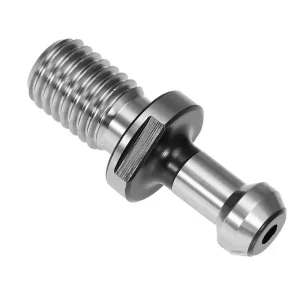
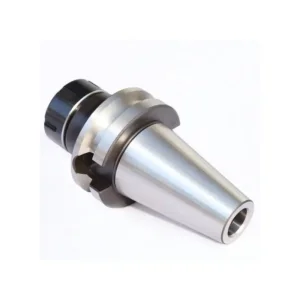
Production runs adhere to customer blueprints across metric and imperial systems. Standard tolerances incorporate ISO 6H thread fitments for cylinder gland nuts and piston retaining nuts, ISO 6020/2 mounting footprints, DIN 69872 / JIS B6339 references for machine tooling components, and SAE J1926 or BSPP hydraulic port threading.
Can global rebuild shops and distributors purchase individual components separately?
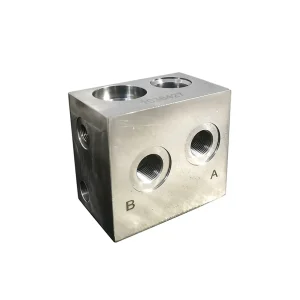
Yes. In addition to complete assembled cylinders, we supply separate telescopic replacement parts including finish-machined cylinder heads, internal piston stages, guide sleeves, bronze bushings, spherical eye bearings, forged steel bases, and custom integrated counterbalance hydraulic valve blocks.
How do Chinese factories prevent sea container rust and transit damage?
Export packaging incorporates internal anti-rust oil immersion, protective polyethylene heat-sealed wrap, heavy plastic thread protector plugs, and fumigated steel-reinforced wooden crates. Multi-stage cylinders are strapped securely to eliminate internal shifting during long intermodal ocean transport.
What is the standard inquiry response timeline and production lead-time?
Our sales engineering division reviews incoming technical specifications and returns engineering feedback and commercial quotes within 24 hours. Prototype sample fabrication typically takes 15 to 25 business days, while volume OEM container shipments require 30 to 45 business days depending on material availability.
Precision Hydraulic Cylinders & Industrial Machining Hardware
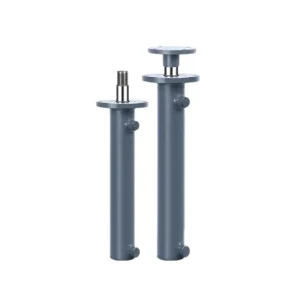
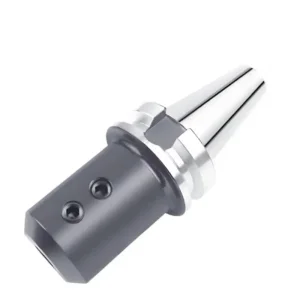
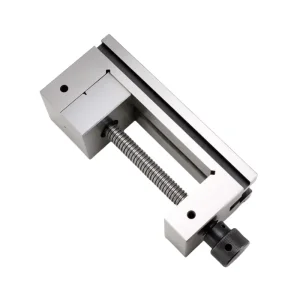
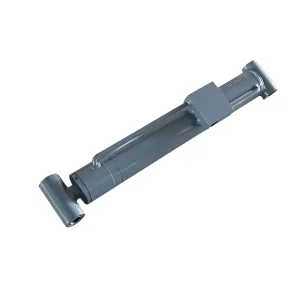
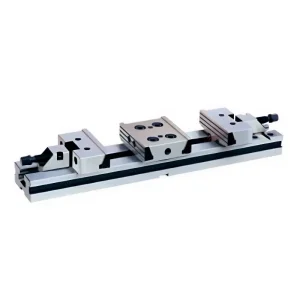
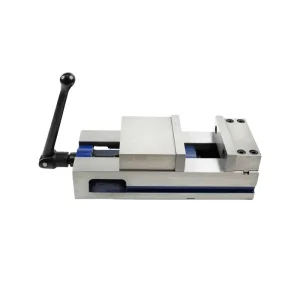
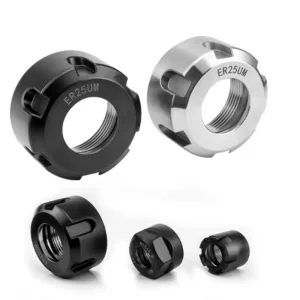
Browse our precision-manufactured multi-stage cylinders, outrigger cylinders, and CNC toolholding fixtures engineered for continuous uptime.