Precision Component Engineering Catalog
Engineered for extreme cyclical tension, high-rigidity clamping interfaces, and high-duty mechanical endurance in 5-axis aerospace and production setups.
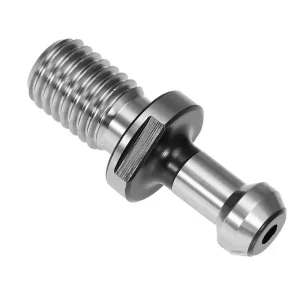
CNC Spindle Pull Stud Metallurgy & Force Dynamic Mechanics
Why the pull stud (retention knob) represents the single most safety-critical tensile link in high-speed CNC metal removal operations.
Alloy Selection & Grain Alignment
Premier CNC pull stud manufacturers utilize vacuum-degassed low-alloy carburizing steels such as SNCM420 (AISI 4320) or SCM415 (AISI 4115). Longitudinal grain continuous forging guarantees fatigue resistance against instantaneous cyclical drawbar snap forces exceeding 25 kN.
- Forged flow line continuous alignment
- Elimination of micro-porosity and inclusions
- Tensile yield threshold > 950 MPa
Differential Heat Treatment
A brittle retention knob causes catastrophic spindle ejection, while an overly soft one deforms under pull-stud gripper pressure. Advanced heat treatment executes deep case hardening with a ductile, shock-absorbing elastic core.
- Surface Hardness: HRC 58 - 62 (Wear resistance)
- Core Toughness: HRC 38 - 42 (Impact mitigation)
- Effective Case Depth: 0.8 mm – 1.2 mm uniform layer
Dynamic Clamping Kinetics
Under 15,000 to 24,000+ RPM spindle operation, drawbar multi-leaf springs apply constant axial loads. Misaligned contact flanks cause tool taper bell-mouthing, toolholder radial expansion, and extreme vibration chatter.
- Elimination of taper-shank swelling phenomena
- Sub-micron concentricity: T.I.R. ≤ 0.003 mm
- Ground relief radiuses mitigating stress concentrations
Global Standards Interoperability: ISO, JIS, DIN, CAT & BT
A technical matrix for procurement teams, machine tool builders, and production engineers ensuring exact tool changer engagement.
| Standard Spec | Common Designation | Flange / Taper Angles | Coolant Channel Type | Recommended Installation Torque | Typical Applications |
|---|---|---|---|---|---|
| JIS B6339 | MAS 403 BT (BT30, BT40, BT50) | 15°, 30°, 45°, 60° Head Angles | Solid or Through-Hole (O-Ring Sealing) | BT40: 60-80 Nm / BT50: 140-160 Nm | Japanese & Asian machining centers (Fanuc, Brother, Mazak) |
| DIN 69872 | ISO 7388/2 Form A (SK40, SK50) | 15° Angular contact head with undercut | Central bored for high-pressure coolant | SK40: 70-85 Nm / SK50: 150-180 Nm | European machining platforms (DMG MORI, Hermle, Chiron) |
| ISO 7388/2 Form B | JIS/European hybrid specification | 45° Clamping ring with O-ring groove | Central coolant with leak prevention | ISO40: 65-80 Nm / ISO50: 150-175 Nm | Universal high-speed 5-axis aerospace machining centers |
| ANSI / ASME CAT | ASME B5.50 (CAT40, CAT50) | 45°, 60°, 90° Retention angles | Solid / Central with high-pressure fluororubber | CAT40: 65-85 Nm / CAT50: 160-190 Nm | North American production environments (Haas, Hurco, Fadal) |
| Custom Anti-Vibration | Patented dampening pull studs | Optimized contact shoulder geometries | Variable flow internal micro-diffuser | Dynamic calibrated to toolholder design | High Feed Milling (HFM), deep cavity mold & die titanium cutting |
Macro Industry Solutions & Strategic Global Sourcing
Addressing supply chain stability, lifecycle ROI, and precision failure prevention across demanding industrial ecosystems.
Aerospace & Inconel Machining
Machining complex engine casings and structural titanium airframes involves sustained lateral cutter forces. Inferior retention studs stretch under multi-axis loads, leading to micro-movements inside the spindle taper.
- Elimination of tool taper fretting corrosion
- Guaranteed clamping security up to 30,000 N tension
- Non-destructive magnetic particle inspection (MPI)
Automotive High-Speed Transfer Lines
Continuous three-shift automotive production lines execute automatic tool changes (ATC) every few minutes. Pull studs must withstand millions of tool-engagement impact cycles without fatigue fractures.
- Controlled chamfer profiles to eliminate gripper wear
- Black oxide and electro-nickel protective corrosion shields
- Precision batch tracking with localized serial identification
Medical Device Micro-Milling
Micro-milling surgical implants and orthopedic joints requires high-speed spindles (24,000 to 60,000 RPM) where any eccentric weight introduces runout chatter that destroys tool coatings.
- Fine dynamic balancing verification (G2.5 @ 25,000 RPM)
- Precision single-point thread grinding with strict pitch tolerances
- Burr-free through-holes eliminating dynamic coolant vortexes
Localized Engineering Support & Compliance Assurance
End-to-end metallurgical verification, material compliance, and global traceability frameworks for tier-1 supply networks.
Full EN 10204 3.1 Traceability
Every production master batch is accompanied by authenticated chemical spectrometry and physical test reports detailing carbon content, tensile yield, and impact resilience.
ISO 9001:2015 Manufacturing
Production follows strict statistical process control (SPC) with automated optical CMM inspections ensuring total dimensional conformity across all thread and taper interfaces.
RoHS & REACH Environmental
All anti-corrosion finishes, surface phosphating treatments, and fluoro-rubber internal coolant seals comply fully with global environmental directives.
On-Site Engineering Audits
Spindle drawbar force diagnostic testing, ultrasonic crack inspection protocols, and custom technical support tailored directly to OEM production lines.
Technology Roadmap & Next-Gen Spindle Interfaces
Advancing retention knob engineering to meet the demands of Industry 4.0, ultra-high-pressure cooling, and smart machining environments.
Integrated RFID & IoT Sensing
Next-generation pull studs incorporate miniature encapsulated RFID chips to record total tool clamp cycles, service fatigue life, and drawbar dynamic clamping force data in real time.
Cryogenic & 15 MPa Through-Cooling
Internal flow geometries optimized using computational fluid dynamics (CFD) withstand 150-bar high-pressure and sub-zero cryogenic CO2/LN2 delivery, extending cutter longevity in hard-metal milling.
Harmonic Vibration Damping Alloys
Novel multi-material composite retention knobs featuring interior elastomeric polymer cores absorb high-frequency regenerative chatter in deep-cavity aerospace milling applications.
CNC Spindle Pull Stud Engineering & Sourcing FAQ
In-depth technical answers addressing installation parameters, dynamic balance thresholds, and failure prevention.
What occurs if a pull stud is tightened beyond the recommended torque?
Over-torquing a retention knob expands the narrow end of the 7:24 toolholder taper shank. This taper expansion prevents 100% surface contact with the spindle taper, concentrating clamping forces on the small end and causing tool runout, dynamic chatter, poor surface finish, and premature spindle bearing failure.
How frequently should CNC spindle pull studs be replaced?
Under heavy production conditions (multi-shift operations running above 12,000 RPM), pull studs should be proactively replaced every 2,000 to 3,000 operating hours or after roughly 500,000 to 1,000,000 tool changes. Pull studs showing visible fretting corrosion, burring, or drawbar gripper scoring should be taken out of service immediately.
What is the difference between JIS B6339 and DIN 69872 pull studs?
While both secure 7:24 steep taper toolholders, their head clamping geometries differ. JIS B6339 (MAS 403) typically features 15°, 30°, or 45° head angles with straight neck transitions. In contrast, DIN 69872 retention knobs feature a distinct 15° angle with an annular retention groove and neck undercut designed for European gripper mechanisms. They are not interchangeable.
Why is differential heat treatment critical for retention knobs?
Through-hardened pull studs are brittle and vulnerable to sudden, catastrophic shear failure under the dynamic shock of high-speed automatic tool changes. Differential heat treatment delivers a high surface hardness (HRC 58-62) to resist gripper wear, combined with a tough, ductile core (HRC 38-42) to absorb repeated axial tensile shocks safely.
What causes through-coolant retention knobs to leak coolant?
Coolant leakage typically stems from degraded internal O-rings, incorrect thread engagement depth, improper torque, or pitting corrosion along sealing faces. Using premium fluororubber (FKM/Viton) O-rings and precision-ground pilot shoulders ensures reliable sealing against coolant pressures up to 7.0 MPa (70 bar).
Can custom pull studs be manufactured to proprietary OEM drawings?
Yes. Specialized manufacturers regularly produce custom retention studs for high-torque or proprietary machine spindles. Provided you furnish detailed engineering drawings or physical samples specifying thread size, internal coolant requirements, head angle, and dynamic balancing targets, custom runs can be engineered to exact specifications.
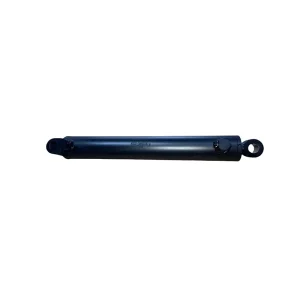
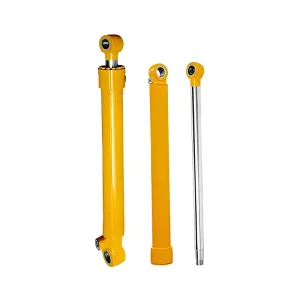
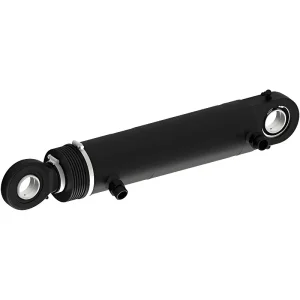
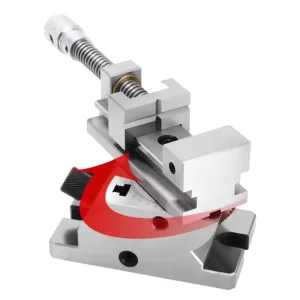
Precision Hydraulic Actuators & Machine Tooling
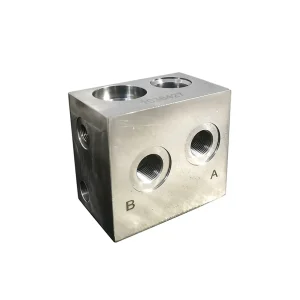
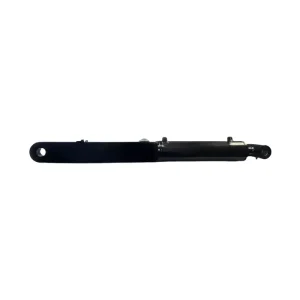
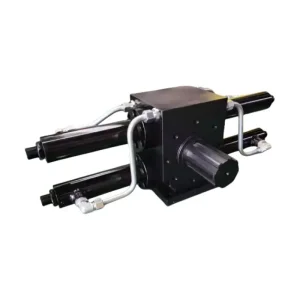
Complete your production setup with heavy-duty cylinders, precision universal vises, and high-pressure manifold blocks.