Direct Factory Precision Components
Heavy-Duty Actuation & Suspension Solutions (Part I)
Engineered to absorb cyclic dynamic shock, deliver micron-tolerance pressure containment, and maximize mean time between failures (MTBF) under relentless field operating conditions.
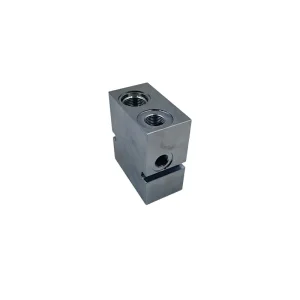
China Lift Cylinder Solenoid Valve MPM-LCSV12 Manufacturers, Factory
View Specifications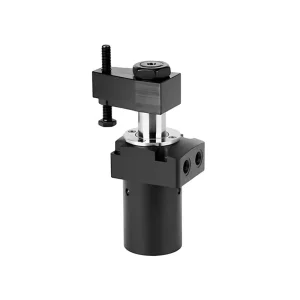
Custom Angle Push Cylinder Supplier, Manufacturers
View Specifications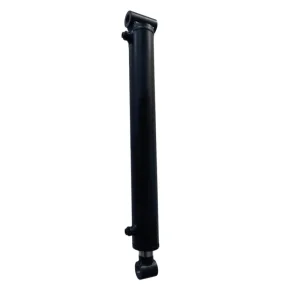
High-Quality Lifting cylinder HCL602 Factories, Factory
View Specifications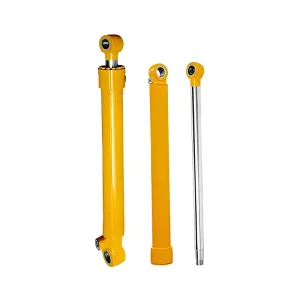
China Small Excavator Stick Cylinder Suppliers, Manufacturers
View Specifications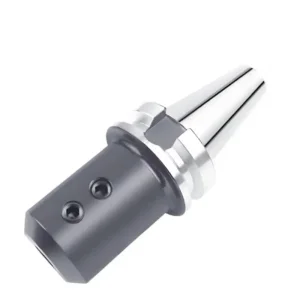
Cheap Side Lock Tool Holder MPM-CTH386 Manufacturers, Factory
View Specifications
Wholesale Hydraulic Cylinder Bush MPM-HCBS11 Manufacturers, Manufacturer
View Specifications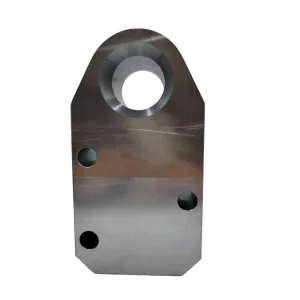
Custom Integrated Cylinder Barrel MPM-HCIB11 Supplier, Manufacturers
View Specifications
Industry Sourcing Intelligence
Global Enterprise Procurement Requirements for Suspension Cylinders
Analyzing procurement drivers, operational constraints, and lifecycle cost parameters across tier-1 heavy vehicle equipment manufacturers.
Ultra-Class Mining Haulers
Payload capacities exceeding 100 to 400 metric tons require suspension cylinders to perform dual structural and dampening functions. Procurement protocols enforce strict ultrasonic non-destructive testing (NDT), zero nitrogen-leak tolerances, and forged spherical bearings capable of sustaining heavy lateral shearing forces on rugged quarry haul roads.
- Front & rear strut dampening
- Operating pressures up to 35-42 MPa
- Sub-zero & extreme heat fluid stability
Multi-Axle Modular Transporters (SPMT)
Super-heavy haulage modules require synchronized hydro-pneumatic suspension units that maintain absolute deck levelness across 48+ axle lines. Sourcing engineers focus on compact stroke envelopes, bidirectional proportional valve integration, and micro-inch bore tolerances to prevent uneven axle load concentration.
- Synchronized height adjustment
- Integral check and anti-rupture safety blocks
- Continuous lateral stability monitoring
Military & Defense Vehicle Platforms
Tactical wheeled armored vehicles (6x6, 8x8) and heavy tracked carriers prioritize run-flat suspension resilience, blast shock mitigation, and minimal thermal signature profiles. Cylinders must endure 1000+ hours of continuous salt-spray testing per ASTM B117 standards and MIL-STD dynamic vibration testing regimes.
- Variable ride-height control (kneeling/transit)
- Ceramic or laser-clad rod coatings
- Armored external hydraulic line routing
Engineering Whitepaper
Macro-Engineering Solutions: Hydropneumatic vs. Mechanical Suspension
Resolving mechanical fatigue, chassis torsional stress, and unmanaged bounce dynamics through gas-over-oil hydropneumatic damping architecture.
In high-tonnage off-highway operations, conventional leaf springs, coil springs, and elastomeric dampers exhibit inherent physical ceilings. Mechanical leaf springs suffer from progressive inter-leaf friction wear, catastrophic stress crack propagation under shock loading, and an inability to provide variable load-adaptive spring rates. For heavy articulated dump trucks, mining loaders, and agricultural tractors operating across shifting payloads, mechanical springs deliver harsh unladen rides and severe body roll when fully loaded.
Hydro-Pneumatic Architecture Principle
By using inert compressible nitrogen gas (N₂) as the springing medium and high-viscosity-index hydraulic fluid as the dampening transmitter, hydropneumatic suspension cylinders achieve a non-linear spring curve. As wheel deflection increases, the gas compression resistance stiffens exponentially, providing plush isolation over low-amplitude terrain undulations and virtually impenetrable bottoming-out resistance across extreme drop-offs.
Critical Metallurgy & Construction Parameters
Our Qingdao Micro Precision production lines utilize continuous cold-drawn seamless alloy tubing (grades including 27SiMn, 30CrMnSi, and high-tensile ST52-3/E355). Barrels undergo deep-hole drilling, precision skiving, and roller burnishing to achieve interior wall roughness below Ra 0.2 µm. This surface finish is vital to prevent microscopic nitrogen escape past the reciprocating polyurethane/PTFE buffer seals.
| Engineering Attribute | Standard Hydraulic Cylinder | Heavy Suspension Cylinder (Strut) | Advantage / System Impact |
|---|---|---|---|
| Primary Media | Hydraulic Mineral Oil | Dual-Chamber Nitrogen (N₂) + Oil | Integral springing without external mechanical springs |
| Side Load Capability | Low (Axial push/pull only) | Extreme (Replaces structural chassis kingpin) | Eliminates independent multi-link suspension linkages |
| Piston Rod Finish | Hard Chrome 20-30 µm (Ra 0.2 µm) | Multi-Layer Nickel-Chrome / HVOF Ceramic | Resistance to stone chipping, acid mine drainage & pitting |
| Damping Regulation | External Flow Restrictors | Internal Multi-Stage Flapper/Poppet Valves | Instant rebound and compression energy dissipation |
| Dynamic Cycle Speed | 0.1 – 0.5 m/s | Up to 1.5 – 2.2 m/s shock velocity | Zero cavitation, specialized anti-foaming aeration valves |
Thermal Dissipation & Gas Separation Mechanisms
A primary failure mode of suspension cylinders in continuous 24/7 quarry operations is internal thermal runaway. Repeated shock dissipation transforms kinetic energy into hydraulic heat, raising localized fluid temperatures beyond 110°C. Standard elastomeric O-rings degrade, harden, and initiate rapid blow-by. We engineer internal floating separator pistons featuring multi-step guide rings or external auxiliary bladder accumulators. This prevents gas-oil emulsification (frothing) and preserves structural damping consistency across multi-shift haul runs.
Technological Roadmap & Future Outlook
Next-Generation Smart Actuation & Condition Monitoring
The integration of IoT telemetry, magnetostrictive stroke sensors, and non-hydraulic green fluids into mission-critical suspension frameworks.
Embedded Position Sensing
Linear variable differential transformers (LVDT) and deep-gun-drilled magnetostrictive wave guides embedded directly inside the high-tensile cylinder rod provide continuous sub-millimeter stroke feedback to the vehicle ECU, enabling active dynamic damping adjustments in under 10 milliseconds.
Predictive Seal Degradation IoT
Micro-piezoelectric pressure transducers and wireless temperature probes mounted within the gland nut detect micro-pressure fluctuations and seal boundary friction anomalies. Data is transmitted via CAN-bus to cloud telematics, warning fleet operators before cataclysmic strut collapse occurs.
Advanced Surface Cladding
Transitioning from traditional electroplated hard chrome to High-Velocity Oxygen-Fuel (HVOF) sprayed WC-Co-Cr (Tungsten Carbide-Cobalt-Chrome) and High-Power Laser Metal Deposition (LMD). This yields 100% pore-free coatings exhibiting over 1200 HV hardness and 5x field life in corrosive bauxite/salt mines.
Eco-Hydraulic Formulations
Full seal system redesign utilizing fluorocarbon (FKM) and specialized polyether urethanes certified for readily biodegradable synthetic esters (HEES) and polyglycols (HEPG), enabling zero-harm compliance across environmentally sensitive forestry, alpine, and arctic extraction zones.
Global Commercial Footprint
Industrial Supply Chain Dynamics Across Primary Markets
How international OEMs and aftermarket maintenance networks optimize their critical hydraulic suspension supply chains.
North America (Mining & Heavy Transit)
Demand in the US and Canada centers on aggregate quarry trucks, severe-duty logging tractors, and specialized defense carriers. Procurement teams require strict material traceability to ASTM standards and high availability of drop-in replacement struts for legacy CAT, Komatsu, and Terex machines to minimize downtime fees reaching $5,000/hour.
Australia (Pilbara & Bowen Basin Mining)
The world's highest wheel-load concentrations operate in Western Australian iron ore corridors. Sourcing directors mandate 100% full-penetration robotic welds, heavy-wall forged rod eyes with spherical bushings, and dual wiper seal arrangements resistant to abrasive red dust penetration.
Europe & Nordic Regions
European OEMs (Germany, Sweden, Italy) lead demand for high-speed multi-axle modular trailers and tunnel boring transport vehicles. Focus areas include full compliance with PED 2014/68/EU pressure codes, lightweight high-yield steel usage, and sub-zero impact toughness certified down to -40°C.
Engineering Assurance
Factory Process Control, Verification & Compliance Standards
Micro Precision's Qingdao manufacturing facility executes comprehensive quality gate verifications from raw billet to container export.
Material Traceability
100% spectrometer verification of alloy compositions for all cylinder barrels and rods. Mill test certificates (EN 10204 3.1) provided with heat numbers stamped on each finished component.
Hydrostatic Proof Pressure
Every unit undergoes high-pressure hydrostatic testing up to 150% of rated working capacity. Real-time digital transducers monitor zero-pressure decay across a 15-minute dwell cycle before signoff.
Cleanliness Level NAS 1638
Final flushing using automated ultrasonic fluid baths achieves fluid cleanliness conforming to ISO 4406 code 16/14/11 (NAS 1638 Class 5-6), guaranteeing immediate valve block compatibility upon commissioning.
Anti-Corrosion Guarantee
Custom paint finishing systems including polyurethane and epoxy zinc-rich coatings delivering over 1000 hours of continuous salt-spray corrosion resistance (ISO 9227 / ASTM B117) for maritime shipment.
Technical FAQs
Frequently Asked Questions by Purchasing & Engineering Teams
Authoritative answers on dimensional tolerances, gas charging procedures, reverse engineering, and export packaging.
What is the standard pre-charge gas used, and how do you ensure zero leakage during transit?
All suspension cylinders utilize pure industrial-grade dry Nitrogen gas (N₂, minimum 99.999% purity) to eliminate internal oxidation and moisture degradation. Cylinders can be shipped in three configurations based on international dangerous goods maritime rules: fully charged with mechanical travel-stops locked, depressurized with a holding nitrogen blanket (0.2 MPa), or completely dry with port seals plug-welded for final site charging using our custom charging adapter kits.
Can Micro Precision reverse engineer an obsolete OEM suspension strut without original blueprints?
Yes. Our engineering division in Qingdao routinely handles complete reverse engineering projects. By shipping a worn or failed sample cylinder to our facility, we conduct full coordinate measuring machine (CMM) dimensional capture, metallurgical spectrometer material grade breakdown, non-destructive hardness mapping, and digital seal groove reconstruction. We provide a comprehensive 3D CAD/SolidWorks design package for client approval prior to machining.
What sealing configurations are used to handle extreme impulse shocks and side loading?
We employ a multi-barrier heavy-duty seal stack. This includes an asymmetric step seal primary ring with elastomer energizer, followed by a tandem secondary PTFE buffer seal with integrated anti-extrusion back-up rings, heavy-wall composite bronze/phenolic guide wear bands to handle side loading without metal-to-metal contact, and double-lip metal-cased polyurethane wiper scrapers to prevent abrasive dirt ingress.
What certifications and quality documentations accompany wholesale export shipments?
Every export batch is accompanied by an inspection docket including ISO 9001:2015 certificate of conformity, EN 10204 3.1 material chemical and mechanical test sheets, ultrasonic weld inspection reports (NDT Level II), dimensional inspection certificates (bore circularity, straightness, rod runout), pressure test chart logs, and surface coating dry film thickness (DFT) reports.
How are high-volume wholesale orders packaged to withstand container ocean freight?
Exposed chrome/ceramic rods are coated with anti-rust VCI wax and wrapped in heavy vapor-phase inhibiting waterproof film. The complete cylinder is secured within custom fumigated solid hardwood timber crates featuring CNC-milled cradles. Internal components are bolted to eliminate transit shock and container movement across rough open-sea voyages.
Direct Factory Precision Components
Heavy-Duty Actuation & Suspension Solutions (Part II)
Expanded catalog featuring leveling cylinders, telescopic systems, precision tool holders, and outrigger actuators for integrated industrial systems.
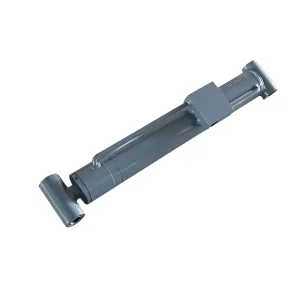
ODM Leveling Cylinder HCL603 Supplier, Manufacturers
View Specifications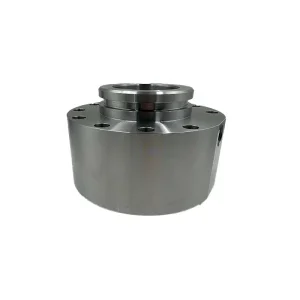
ODM Hydraulic Cylinder Flange MPM-HCFG11 Suppliers, Supplier
View Specifications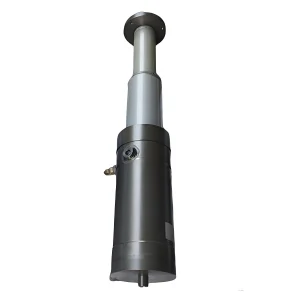
Wholesale 3 stage Telescopic cylinder Suppliers, Supplier
View Specifications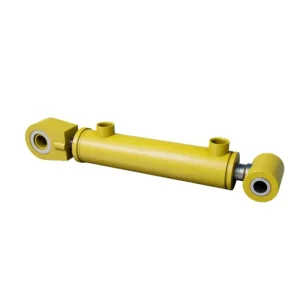
OEM Tilt cylinder MPM-HCT403 Manufacturers, Manufacturer
View Specifications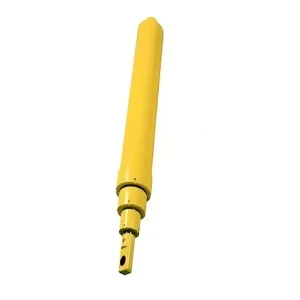
High-Quality 4 stage Telescopic cylinder Suppliers, Manufacturers
View Specifications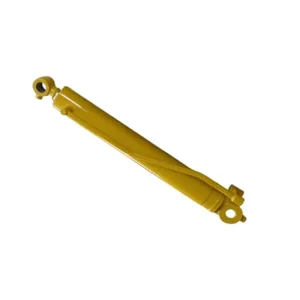
Best Stick Cylinder MPM-HCS301 for Excavator and Loader Manufacturer, Factories
View Specifications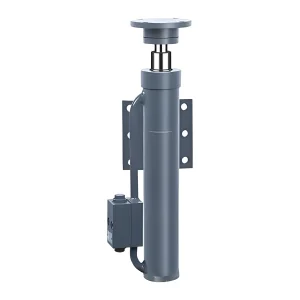
Wholesale Outrigger Expansion Cylinder Suppliers, Factory
View Specifications