Precision Machine Components & Assemblies
Direct OEM/ODM components manufactured with sub-micron radial runout limits, ISO 6H thread fit, and structural metallurgical stability for high-torque manufacturing.
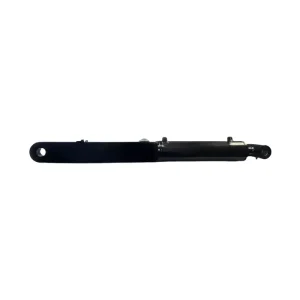
ODM Outrigger Hydraulic Cylinder MPM-OHC12 for Crane Supplier, Factory
View Details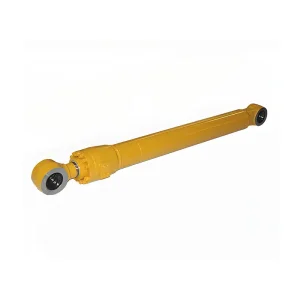
Cheap Boom Cylinder MPM-HCB212 for Excavator and Loader Manufacturer, Factories
View Details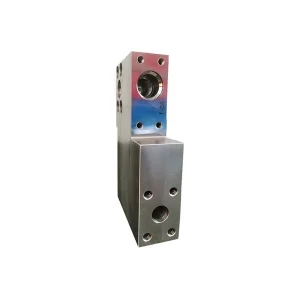
High-Quality T2A Hydraulic Relief Valve Block MPM-HRVB2A Manufacturers, Factory
View Details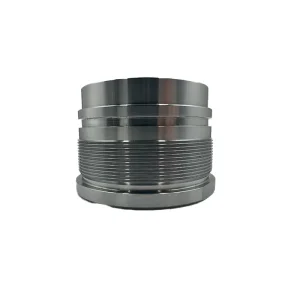
High-Quality Hydraulic Cylinder Head MPM-HCHD11 Suppliers, Manufacturer
View Details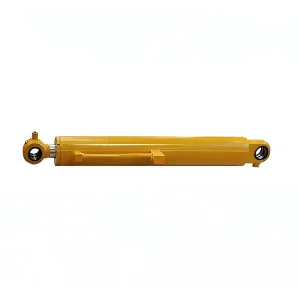
Custom Small Excavator Boom Cylinder Suppliers, Manufacturers
View Details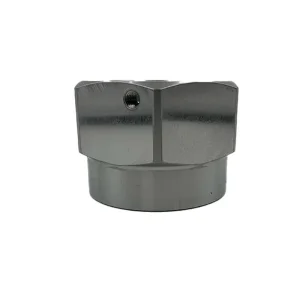
ODM Hydraulic Cylinder Nut MPM-HCNT11 Suppliers, Factory
View Details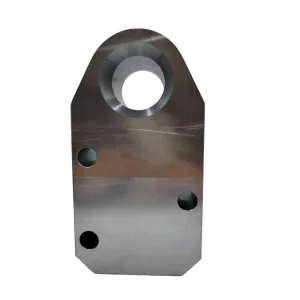
Custom Integrated Cylinder Barrel MPM-HCIB11 Supplier, Manufacturers
View Details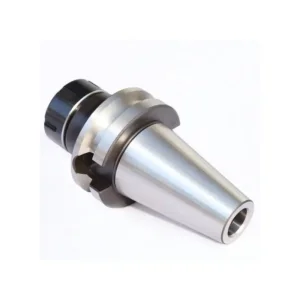
Custom Milling Tool Holder MPM-CTH400 Manufacturers, Manufacturer
View DetailsThe Critical Interface: Machine Tool Holders in Global Manufacturing
Analyzing the metallurgical, mechanical, and logistical realities governing high-precision wholesale supply chains.
Micron-Scale Spindle Dynamics
In modern 5-axis CNC machining centers, tool holders act as the structural bridge between dynamic spindle bearings and carbide cutting edges. Runout errors compound exponentially over cutter projection lengths: a mere 0.005mm deviation at the taper magnifies into severe chattering, thermal buildup, and catastrophic insert chipping. Wholesale suppliers must deliver repeatable taper tolerances conforming to AT3 standards.
Geopolitical Supply Chain Shifting
Global procurement offices across North America, the European Union, and Southeast Asia have transitioned from pure low-cost transactional purchasing to vertically integrated OEM/ODM relationships. Tier-1 machine shops demand certified structural steels (such as carburized 20CrMnTi or SCM415), traceable batch heat treatment records, and cryogenically stabilized microstructures able to resist cyclic fatigue.
Total Cost of Ownership (TCO)
Wholesale procurement errors in tool clamping equipment cause systemic secondary losses. Sub-standard retention knobs cause drawbar fatigue, while inaccurate side-lock screws induce eccentric centrifugal loads. Sustainable manufacturing economics rely on tooling suites that guarantee over 10,000 tool change cycles without taper deformation, fretting corrosion, or dynamic balance degradation.
Comparative Analysis of Spindle Taper Interfaces & Clamping Mechanisms
Comprehensive metallurgical, operational, and kinematic metrics across major global machine tooling formats.
| Interface Standard | Contact Geometry | Radial Clamping System | Max Balanced RPM | Primary Industrial Application | Failure Mitigation Metric |
|---|---|---|---|---|---|
| BT (JIS B6339) | 7:24 Steep Taper (Flange Drive) | ER Collet / Side-Lock / Hydraulic | 12,000 – 15,000 | General Engineering, Die & Mold | Hardness > 58 HRC eliminates taper deformation |
| BBT (Dual Contact) | 7:24 Taper + Simultaneous Face | High-Precision Power Chuck | 18,000 – 24,000 | High-Speed Automotive & Deep Cavity | Zero axial clearance prevents Z-axis displacement |
| HSK (DIN 69893) | 1:10 Hollow Shank + Dual Face | Internal Segment Expansion Collet | 25,000 – 40,000 | Aerospace Turbomachinery & Medical | Centrifugal force locks inner fingers tightly |
| SK / ISO (DIN 69871) | 7:24 Steep Taper (V-Flange) | Thermal Shrink-Fit / Milling Chuck | 12,000 – 18,000 | Heavy Machinery, Structural Mining Frames | Enhanced flange thickness sustains high shear forces |
| Capto / Polygonal | Tapered Polygon (Self-Centering) | Multi-Directional Mechanical Wedge | 15,000 – 20,000 | Multi-Tasking Turn-Mill Centers | Equalized torque distribution eliminates drive key shear |
Material Integrity: 20CrMnTi
Our machine tool holders are forged from premium carburized alloy steel (20CrMnTi / SCM420). Through multi-stage vacuum carburizing and cryogenic cooling (-196°C), we achieve a surface hardness of HRC 58-62 alongside a shock-absorbing ductile core (core toughness > 800 MPa). This structural architecture prevents internal micro-fissures during high-torque side loads.
Dynamic Balance Standards (G2.5)
Unbalanced rotational mass generates harmonic chatter, accelerating spindle spindle bearing degradation. Every wholesale tool arbor is dynamically counter-balanced on precision balancing rigs to G2.5 at 25,000 RPM or G6.3 at 12,000 RPM per ISO 1940-1 specifications, safeguarding surface finishes on finished aerospace parts and complex hydraulic blocks.
Sub-Zero Taper Precision
Taper roundness and taper angle accuracy must satisfy AT3 standards. Our CNC internal cylindrical grinders run clean-room multi-axis operations to yield taper surface contact ratios exceeding 85% verified by air-gage systems. This ensures instantaneous, uniform seating across spindle mating surfaces, resisting cyclic fretting.
Technological Megatrends Shaping Machine Tool Holder Engineering
How Industry 4.0, direct additive manufacturing, and automated high-pressure through-spindle cooling redefine wholesale specifications.
RFID / NFC Smart Tooling
Modern CNC cells utilize embedded RFID chips within tool holder flanges (DIN 69873). These store tool offsets, real-time cutting hours, and vibration profiles, automatically transferring parameters to machine controllers to prevent operator input errors.
3D-Printed Conformal Coolant
Through laser powder bed fusion (LPBF), internal cooling paths are directly grown inside the tool holder body. Curved coolant ducts direct high-pressure coolant (up to 150 bar) straight to the cutting edge, multiplying titanium and Inconel machining feed rates by 35%.
Shrink-Fit Clamping Supremacy
Induction shrink-fit holders achieve 360-degree symmetrical holding without mechanical collets or nuts. This profile reduces interference, allows deep pocket access in 5-axis aerospace dies, and maintains runout tolerances under 0.003mm throughout long batch runs.
Integrated Vibration Dampers
Deep-reach operations exceeding 5xD introduce severe harmonics. Next-generation tool holders integrate tuned mass dampers suspended within oil-filled cavities, eliminating micro-chatter, enhancing ra-values below 0.4, and extending cutting edge lifespan.
Engineering Application Frameworks Across Real Manufacturing Environments
Proven tool holding strategies adapted to operational duty cycles, chip loads, and environmental stressors.
Heavy Construction & Hydraulic Valve Blocks
Machining complex manifolds (e.g., T2A, T13A, and Counterbalance valve blocks) involves deep cavity step-drilling, cavity forming, and precision reaming within solid ductile iron or forged steel. High-rigidity side lock arbors and heavy-duty ER collets withstand immense radial side-thrust without slippage or axial migration.
Aerospace Impellers & Structural Airframes
Titanium alloys (Ti-6Al-4V) and heat-resistant superalloys demand vibration-free dynamics at variable cutting speeds. Utilizing dual-contact HSK63A and BBT40 shrink-fit tooling preserves cutter life, eliminates chatter-induced surface flaws, and maintains accurate wall thicknesses during high-feed pocket milling.
Automotive Powertrain Production Lines
Continuous cycle operations across engine blocks, transmission cases, and wheel hubs require minimum tool change down-times. Standardized BT40 tool chucks matched with DIN 69872 pull studs allow 24/7 automated transfer lines to function without taper sticking, tool slippage, or magazine transfer jams.
Engineering Roadmap: Tool Clamping Systems (2025–2030)
Anticipating the mechanical, sensory, and material developments driving factory transformations over the next decade.
Dual-Contact Standardization
Universal migration toward simultaneous taper and face contact systems (BBT / HSK), lowering runout beneath 0.003mm while boosting overall radial rigidity by 40% across general workshops.
Integrated Sensorized Telemetry
Embedded strain gauges and wireless micro-transceivers inside the tool holder arbor monitor actual cutting resistance, thermal drift, and peak torque overloads at the tool-spindle boundary.
Carbon-Composite Hybrid Arbors
Selective metal-matrix composites and carbon-fiber wrapped sleeves achieve high natural dampening ratios alongside 30% rotational mass reduction, bypassing high-RPM spindle inertia thresholds.
Self-Balancing Dynamic Arbors
Active internal liquid balancing rings or micro-piezo counter-weights adaptively balance rotational axes during operation, mitigating uneven chip-load vibration and cutter edge wear.
Macro Solutions for Global Wholesale Procurement Teams
Overcoming tariff barriers, supplier fragmentation, dimensional variability, and raw material volatility.
Standardized Interchangeability Protocols
Procuring across fragmented supply chains often causes interface discrepancies between tool holders, retention knobs, and pull-stud collets. MPM executes strict cross-standard checking, guaranteeing every BT, SK, or HSK holder interfaces cleanly with standard automatic tool changers (ATC) and carousel pockets without pin jamming.
Unified OEM/ODM Contract Manufacturing
Equipment builders requiring proprietary tool holders or branded accessory kits benefit from complete in-house CAD/CAM prototyping, specialized engraving, customized taper lengths, and batch heat-treatment certs. This unifies external tooling and component sourcing under one verified ISO 9001 quality framework.
Consolidated Sea/Air Freight Consolidation
Industrial tool holders represent concentrated cargo weight prone to moisture corrosion during sea transit. We provide multi-layer rust preventive treatments, VCI sealed vacuum packaging, and reinforced export cartons. Integrated shipping logistics allow combining tool holders with hydraulic cylinders and valve blocks to reduce landed logistics costs.
Frequently Asked Questions: Wholesale Machine Tool Holders
Detailed technical answers addressing tolerances, standards compliance, and high-volume procurement logistics.
How does dynamic balancing to G2.5 at 25,000 RPM impact tool life and spindle bearing health?
Operating an unbalanced tool holder at high rotational velocities generates centrifugal loads that escalate with the square of the spindle speed. A dynamic balance grade of G2.5 (per ISO 1940-1) keeps the center of mass eccentricity under tight limits, suppressing vibrational chatter. This increases carbide insert and end mill life by up to 200%, preserves internal spindle bearings from premature brinelling, and ensures Ra surface roughness below 0.4 microns on finishing passes.
What is the practical difference between standard BT steep tapers and BBT dual-contact holders?
While standard BT tapers (JIS B6339) register contact exclusively on the 7:24 conical flank, BBT systems seat against both the 7:24 taper and the ground spindle face simultaneously. At higher spindle speeds, centrifugal expansion causes the machine spindle taper to expand outward, drawing standard BT holders deeper and shifting the Z-axis datum. BBT face contact blocks this axial movement, providing substantial bending resistance during heavy radial milling cuts.
Which raw steel formulations and metallurgical treatments ensure maximum tool holder longevity?
High-grade machine tool holders rely on carburized low-carbon alloy steels such as 20CrMnTi or SCM420/8620. Controlled vacuum carburizing followed by sub-zero cryogenic quenching achieves a 0.8mm–1.2mm surface case depth hardened to HRC 58-62, providing wear resistance on tapers. Meanwhile, the core remains tempered at HRC 32-38 with high tensile toughness, preventing fractures caused by sudden tool impacts or emergency stops.
What inspection data and quality assurance documentation accompany wholesale OEM/ODM shipments?
Every wholesale manufacturing batch includes full inspection documentation: spectrometer raw-material heat certificates, metallurgical case-hardening charts, coordinate measuring machine (CMM) dimensional data, air-gauge AT3 taper angle verification sheets, dynamic balancing reports, and surface roughness logs. Retention knobs and collet clamping nuts can be laser-etched with custom batch tracking codes for accountability.
Can custom taper profiles, extensions, and specialized clamping geometries be produced from drawings or samples?
Yes. Our engineering division in Qingdao utilizes 5-axis CNC machining, internal/external cylindrical grinding, and reverse-engineering scanning to manufacture customized tool holders, side-lock adapters, and extended-reach arbors directly from customer CAD drawings or operational samples. Technical review and 3D approval prints are verified before production starts.
Comprehensive Wholesale Product Directory
Explore precision machine components, hydraulic cylinders, and specialized machine vises engineered for dependable industrial uptime.
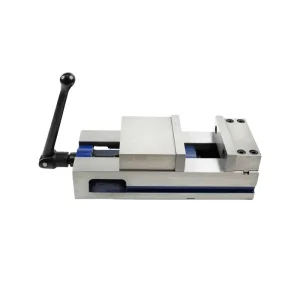
High-Quality ZQ80 Precision Horizontal Vertical Vise Supplier, Factory
View Details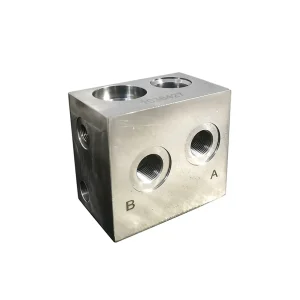
Cheap T13A Hydraulic Flow Control Valve Block MPM-HFCVB13A Supplier, Manufacturers
View Details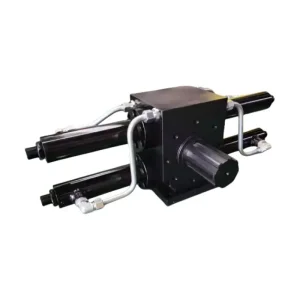
OEM Small Excavator Rotary Actuator Manufacturers, Factories
View Details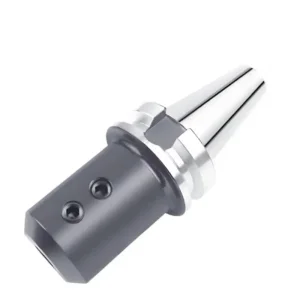
Cheap Side Lock Tool Holder MPM-CTH386 Manufacturers, Factory
View Details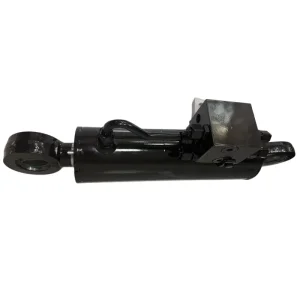
China Reversible Plough Turnover Hydraulic Cylinder Suppliers, Manufacturers
View Details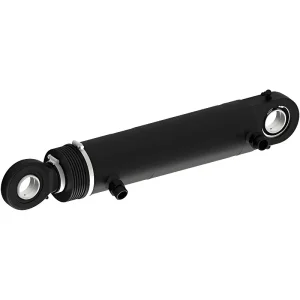
Wholesale Suspension Cylinder Suppliers, Manufacturers
View Details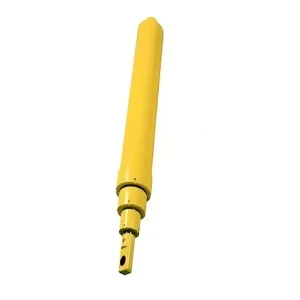
High-Quality 4 stage Telescopic cylinder Suppliers, Manufacturers
View Details