
Industrial Actuation & Heavy Machining Assemblies
Direct OEM & Tier-1 global replacement hydraulic cylinders, hydraulic valve blocks, and CNC machine fixture tooling produced to strict ISO and DIN tolerances.
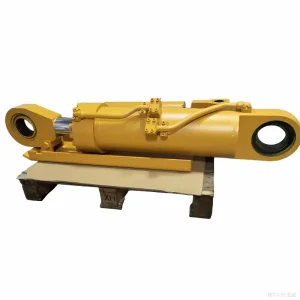
Best Underground LHD Loader Tilt Cylinder Supplier, Manufacturer
Explore Specifications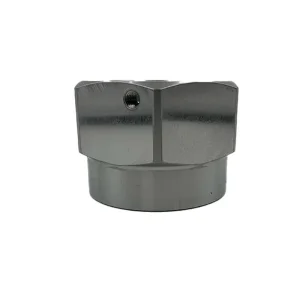
ODM Hydraulic Cylinder Nut MPM-HCNT11 Suppliers, Factory
Explore Specifications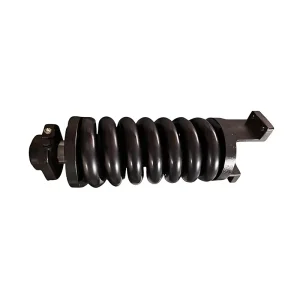
High-Quality Tightening Cylinder MPM-HCT401 for Excavator and Loader Suppliers, Factories
Explore Specifications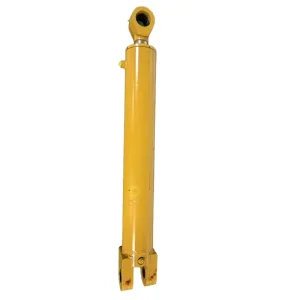
Wholesale Buffer Cylinder for excavator and backhoe loader Supplier, Manufacturer
Explore Specifications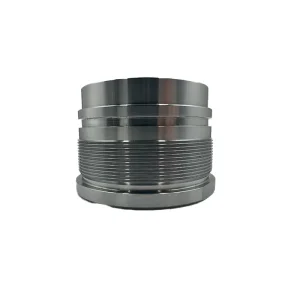
High-Quality Hydraulic Cylinder Head MPM-HCHD11 Suppliers, Manufacturer
Explore Specifications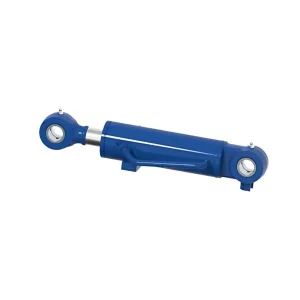
ODM Small Excavator Bulldozing Cylinder Manufacturers, Manufacturer
Explore Specifications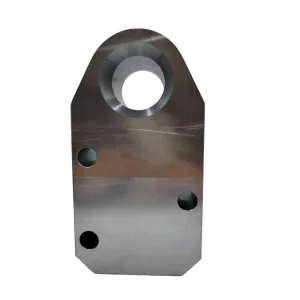
Custom Integrated Cylinder Barrel MPM-HCIB11 Supplier, Manufacturers
Explore Specifications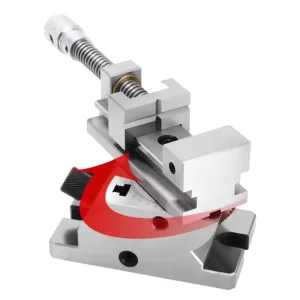
OEM CHM Precision Universal Vise MPM0356 Suppliers, Manufacturers
Explore SpecificationsThe Mechanics of High-Velocity Retention Knobs in Modern CNC Machining
In modern computer numerical control (CNC) machining centers, the tool retention stud—commonly referred to in global machine shops as a pull stud or retention knob—is the single high-stress mechanical link maintaining the physical connection between the machine spindle gripper and the cutting tool assembly.
Dynamic Spindle Retention Physics
During heavy roughing operations or high-speed milling reaching upwards of 24,000 to 30,000 RPM, spindle drawbar systems apply static tensile clamping forces ranging from 8 kN to beyond 28 kN. An inferior retention stud risks plastic deformation or catastrophic shearing under these continuous multi-axial tensile and cyclic harmonic stresses.
- Prevents Spindle Drawbar Fatigue
- Eliminates High-RPM Tool Chattering
- Counteracts Centrifugal Harmonic Resonances
Metallurgical Engineering: SCM435 vs. SNCM439
Our manufacturing facility in Qingdao specifies premium Chromium-Molybdenum (SCM435) and Nickel-Chromium-Molybdenum (SNCM439) structural alloy steels. Through staged controlled induction hardening, we achieve a hard 58-62 HRC exterior case to withstand collet claw indentation, while maintaining a resilient, shock-absorbing 35-40 HRC core.
- Eliminates Brittle Hydrogen Embrittlement
- Sub-Zero Cryogenic Tempering (-196°C)
- High Impact Notch Toughness Resistance
Mitigating Toolholder Taper Dilation
When a pull stud is tightened excessively or machined with out-of-square threads, the thin-walled 7/24 steep taper shank (BT40, CAT40, or ISO30) experiences radial expansion. This taper bell-mouthing reduces surface contact inside the spindle to under 60%, resulting in tool deflection, premature spindle bearing ruin, and catastrophic runout.
- Precision Relief Grooves Behind Threads
- 100% Class 4h/6g Ground Thread Gauge Fit
- Ensures 85%+ Spindle Taper Bluing Contact
Engineering Specifications Across Global Machine Tool Standards
Retention knobs must conform strictly to machine-specific gripper geometry, head angles, and through-coolant specifications. Sourcing wholesale CNC retention studs requires absolute dimensional clarity to guarantee interchangeability with OEM tool changers.
| Standard Specification | Common Taper Sizes | Head Clamping Angle | Through-Hole Coolant | Thread Specification | Core Industrial Application |
|---|---|---|---|---|---|
| DIN 69872 (Form A / B) | SK30, SK40, SK50 | 15° Re-entrant | Form A (Drilled) / Form B (Sealed) | M12, M16, M24 (ISO metric) | European VMC/HMC Machining Centers (DMG Mori, Hermle) |
| JIS B6339 (MAS 403 BT) | BT30, BT40, BT50 | 30°, 45°, 60°, 90° | Available (Central O-ring sealed) | M12, M16, M24 (Fine pitch) | Japanese & East Asian CNC Equipment (Makino, Mazak, Brother) |
| ANSI/ASME B5.50 (CAT) | CAT40, CAT50 | 45°, 60°, 90° Pull Studs | Available (High-pressure verified) | 1/2"-13 UNC, 5/8"-11 UNC, 1"-8 UNC | North American Industrial Automation (Haas, Hurco, Fadal) |
| ISO 7388/2 (Type A / B) | ISO 30, 40, 50 | 15° / 45° Chamfered | Central internal high pressure | M12, M16, M24 Standard | Global ISO Platform Multi-Axis Robotic Tool Changers |
| Specialty Mazak / Okuma | BT40-MZ, CAT40-OK | 45° / Custom Offset | Dual O-Ring Hydro-Lock Options | M16 / Imperial Hybrid | High-Torque Heavy Titanium Aerospace Milling Cells |
Surface Treatment Options
Standard deep-penetration chemical black oxide prevents oxidation in oily environments. Optional electro-less nickel plating (ENP) offers extreme corrosion resilience against water-miscible synthetic coolants.
Black Oxide / Ni-PlatedCoolant Seal Integrity
High-pressure coolant-through machining (up to 70 bar / 1000 PSI) demands precision-machined O-ring retaining grooves with dynamic fluoroelastomer (FKM/Viton) seals to stop fluid ingress into tool shanks.
FKM Viton ≤ 100 BarThread Concentricity
All threads are precision CNC thread-milled and ground post-heat-treatment, guaranteeing thread pitch alignment and perpendicularity to the locating shoulder within 0.005mm.
Runout ≤ 0.003mmDynamic Balancing
Pre-balanced symmetrically to ISO 1940-1 Grade G2.5 at 25,000 RPM. Eliminates centrifugal spindle vibration spikes that compromise micro-milling mirror finishes and cutter life.
G2.5 @ 25,000 RPMSolving Global OEM & Tier-1 Procurement Challenges
Industrial supply chain directors and machining plant operations managers face severe business and safety liabilities if uncertified retention studs fail during production. Here is how our comprehensive manufacturing and supply capabilities mitigate operational risk.
Catastrophic Spindle Fracture Risk
If a pull stud snaps inside a spindle running at 15,000 RPM, the toolholder is ejected by centrifugal force, destroying the multi-axis spindle, smashing the workpiece, and endangering shop-floor operators. Such failure can cost $20,000 to $60,000 in spindle rebuilds plus weeks of catastrophic machine downtime.
MPM In-House Engineering Countermeasure:
Every production batch undergoes 100% Non-Destructive Magnetic Particle Testing (MPI) to catch sub-surface micro-fissures. Tensile destruction pull tests ensure each retention stud exceeds factory proof load by at least 250%.
Batch Variation & Premature Taper Wear
Inconsistent thread heights and unground flange seating shoulders create unrepeatable Z-axis tool offsets in automated tool changers (ATC). Tool change arms jam, and uneven clamping loads cause micro-fretting corrosion on expensive machine tool tapers.
MPM In-House Engineering Countermeasure:
Fully integrated multi-axis CNC turning and Swiss grinding cells hold total length from flange shoulder to pull knob head within ±0.01mm. Strict thread pitch calibration guarantees repeatable tool seated depth.
Supply Chain Delays & Tariff Pressures
Equipment distributors and toolroom managers cannot afford 16-week lead times for consumable tool accessories. Fragmented brokers often supply mixed-origin hardware lacking raw material traceability or heat-lot validation certificates.
MPM In-House Engineering Countermeasure:
Direct factory export from our Qingdao facility with 3,500m² manufacturing footprint, monthly production exceeding 20,000 units, full EN 10204 3.1 Material Test Reports (MTR), and rapid global air/ocean freight dispatch.
Standardized Manufacturing Assurance & Full Process Traceability
At Qingdao Micro Precision Machinery (MPM, est. 2006), our in-house metallurgical and machining workflows eliminate supplier blind spots. Every CNC retention stud is produced, stamped, verified, and certified under rigorous quality systems.
Full Material Certs (MTR 3.1)
Every batch of Chromium-Molybdenum bar stock is accompanied by chemical spectrographic analysis and mechanical tensile test reports matching European DIN EN 10204 3.1 standards.
Coordinate Metrology (CMM)
Precision ZEISS 3D coordinate measuring machines verify pull stud neck angles, head radii, and thread concentricity down to 1 micrometer resolution to guarantee perfect drawbar gripper engagement.
Batch Laser Serialization
All studs carry permanent laser-etched model codes, manufacturing lot numbers, and angle markings. Toolroom operators can confirm correct part numbers instantly, preventing costly toolholder setup errors.
OEM/ODM Drawing Reproduction
From custom high-pressure coolant extensions to specialty non-standard multi-axis grinder studs, our engineers reverse-engineer samples and provide full 2D/3D CAD approval drawings within 24 hours.
The Evolution of Intelligent Spindle Clamping Systems
As machining centers transition toward Industry 4.0 dark factories, lights-out multi-axis production, and higher coolant delivery pressures, retention knob engineering is evolving from passive hardware into advanced high-performance components.
High-Pressure Coolant (140 Bar)
Development of ultra-smooth, hydrodynamically modeled through-holes that eliminate cavitation and turbulent pressure drops in high-velocity deep-hole drilling and aerospace Inconel machining.
Anti-Dilation Engineered Geometry
Integration of patented expansion-relief undercut shoulders and micro-flex thread reliefs that redirect drawbar tensile loads deeper into the toolholder core, completely eliminating taper swell.
Embedded RFID & Stress Sensors
Miniaturized, hardened passive RFID transponders embedded in the retention stud cavity to record accumulated clamping cycles, temperature shifts, and predictive drawbar retention force degradation.
Nano-Composite Damping Cores
Multi-material hybrid studs combining high-tensile alloy exteriors with internal acoustic-damping composite cores that actively suppress harmonic chatter during deep pocket milling.
Frequently Asked Questions for Sourcing & Tooling Engineers
Direct technical clarifications from our chief metallurgical and CNC machining specialists to assist procurement decisions and spindle maintenance protocols.
Why is the hardness specification of a retention stud split between surface and core?
A homogeneous through-hardened retention stud is dangerously brittle. If the entire stud is hardened to 60 HRC, repetitive shock impacts from high-speed tool changes and cyclic cutting vibrations cause rapid micro-cracking and sudden catastrophic shear failure at the thread or neck under heavy tension. Conversely, if through-hardened to only 38 HRC, the gripper collet claws will dent and wear the head radius, resulting in uneven seating and loss of retention force.
Our dual-stage induction heat treatment and controlled sub-zero tempering process deliver a 58-62 HRC surface skin (0.8mm to 1.2mm deep) for maximum wear resistance, supported by a ductile 35-40 HRC core that absorbs dynamic tensile shock loads without cracking.
What causes spindle taper dilation (bell-mouthing) and how do MPM studs prevent it?
Standard retention studs screw straight into the rear of steep taper shanks (such as BT40, CAT40, or ISO30) where the toolholder wall is at its thinnest. When tightened with excessive torque or when threads lack relief geometry, the radial outward expansion forces bulge the taper near the small end. This condition, called taper dilation or bell-mouthing, prevents the toolholder from seating fully in the spindle taper.
The result is severe contact loss near the gauge line (often dropping below 50% bluing contact), chatter, poor surface finish, reduced carbide insert life, and fretting wear inside the machine spindle bore. MPM retention studs feature precision relief diameters behind the thread and strictly controlled thread concentricity that channel tensile clamping forces deeper into the toolholder body where wall thickness is substantial, preserving proper taper geometry.
Can I interchange DIN 69872, ISO 7388/2, and MAS 403 BT retention knobs?
No. Even though thread specifications may appear identical (for example, M16x2.0 on both BT40 and SK40), the head clamping angles, neck diameters, flange shoulder distances, and overall lengths differ significantly:
• DIN 69872 Form A features a 15-degree reverse angle under the head designed for standard European grippers.
• MAS 403 BT studs typically utilize 30°, 45°, 60°, or 90° head angles designed for Japanese style ball-locking or segmented drawbars.
• ANSI CAT studs use imperial threads (such as 5/8"-11 UNC for CAT40) and specific pull-stud lengths that do not seat properly in metric DIN or BT shanks.
Installing an incorrect retention stud can jam the automatic tool changer, fail to clamp the toolholder securely, or cause severe damage to the internal drawbar mechanism. Always match machine builder drawbar manuals or consult our engineering team with your machine model and toolholder taper.
What is the recommended installation torque for CNC retention studs?
Retention studs must never be tightened with impact wrenches or ordinary open-ended spanners without torque monitoring. Proper installation requires a dedicated retention stud socket wrench mounted on a calibrated torque wrench, while the toolholder is held in an ergonomic tightening fixture.
• #30 Taper (M12 thread): Recommended torque is 35 – 45 Nm (25 – 33 ft-lbs).
• #40 Taper (M16 / 5/8"-11 thread): Recommended torque is 70 – 90 Nm (52 – 66 ft-lbs).
• #50 Taper (M24 / 1"-8 thread): Recommended torque is 220 – 250 Nm (162 – 184 ft-lbs).
Applying thread-locking adhesives (like Loctite) is generally not recommended unless explicitly specified by the machine tool builder, as it can affect thread engagement friction and lead to over-torquing and taper dilation.
How frequently should retention studs be inspected and replaced in production shops?
Retention studs are high-stress operational consumables that undergo tens of thousands of dynamic clamping cycles under heavy hydraulic spring tension. We recommend the following inspection intervals:
• Monthly Visual Inspection: Check head clamping surfaces for claw gouging, thread burrs, galling, corrosion, or damaged O-ring seals.
• Drawbar Force Check: Measure spindle drawbar retention force with a hydraulic or electronic pull-force gauge every 500 operating hours.
• Mandatory Replacement Window: Replace retention studs every 2,000 to 3,000 machining hours or after approximately 100,000 tool changes. If a tool collides with a fixture or workpiece during a heavy cut, replace the affected retention stud immediately to avoid hidden tensile stress fractures.
Can MPM supply custom retention studs according to customer drawings or samples?
Yes. Alongside our standard range covering DIN 69872, ISO 7388, MAS 403, and CAT B5.50 standards, our engineering team regularly designs and manufactures custom retention knobs for specialized milling centers, heavy-duty horizontal boring mills, and high-pressure coolant tooling.
Send us your technical CAD drawings, physical samples, or machine model specifications. Our engineering office provides detailed fabrication blueprints, material certifications, and cost quotations within 24 hours.
Precision Tooling & Fluid Control Components
Wholesale direct precision CNC accessories, high-pressure directional control blocks, and heavy machinery hydraulic actuation cylinders built for dependable industrial performance.
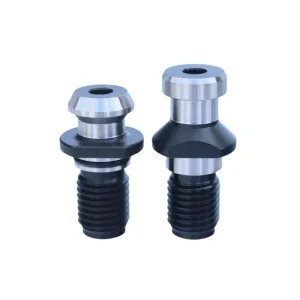
ODM Retention Knob DIN69872 Suppliers, Manufacturers
Explore Specifications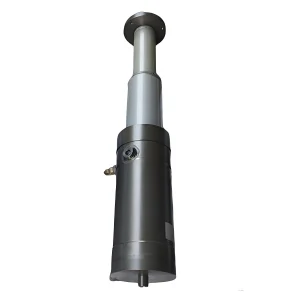
Wholesale 3 stage Telescopic cylinder Suppliers, Supplier
Explore Specifications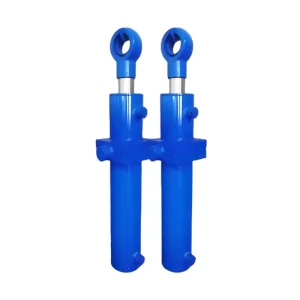
Custom Telescopic Cylinder Supplier, Manufacturer
Explore Specifications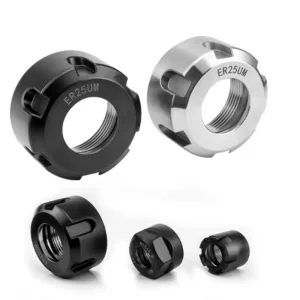
OEM ER Collet MPM-EN0072 Suppliers, Factories
Explore Specifications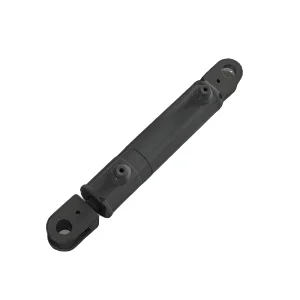
Best Steering cylinder HCS302 Factories, Factory
Explore Specifications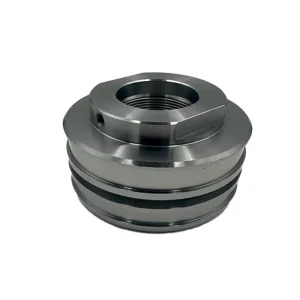
Custom MPM Hydraulic Cylinder Piston MPM-HCPT11 Manufacturers, Factories
Explore Specifications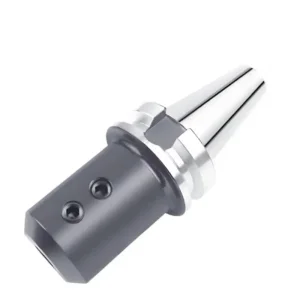
Cheap Side Lock Tool Holder MPM-CTH386 Manufacturers, Factory
Explore Specifications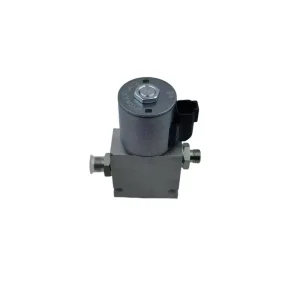
High-Quality Quick Change Solenoid Valve MPM-QCSV12 Suppliers, Factories
Explore SpecificationsRequest Wholesale Retention Stud Engineering Proposals
Contact our engineering sales team with your machine standard (DIN/BT/CAT/ISO), annual volume requirements, or custom tooling blueprints for immediate factory pricing.