High-Precision Machinery Components & Tooling Units
Verified factory-grade tooling solutions engineered for horizontal machining centres, vertical milling equipment, and automated manufacturing lines.
Global Enterprise Procurement Demands in Modern CNC Machining
In modern high-speed milling and deep-cavity turning, cutting tool stability directly determines surface roughness, tool-life predictability, and machine spindle durability.
Spindle Vibration & Runout Mitigation
Global aerospace, defense, and high-precision fluid power builders require tool holding assemblies with total runout ≤ 0.003 mm to 0.005 mm. Excessive radial runout creates unbalanced cutting loads across end-mill flutes, inducing chatter, accelerated micro-chipping, and shortened spindle bearing life.
Our OEM precision tool holders and balanced retention knobs undergo rigorous dynamic balancing protocols (G2.5 at up to 25,000 RPM) to eliminate parasitic resonances.
Tough Alloy & Heat-Resistant Machining
Machining hardened chrome steels, 42CrMo4 alloy blocks, and stainless grades demands cutting interfaces with superior dampening and extreme clamping force. Traditional tool holding systems suffer thermal slippage during heavy dry cuts or aggressive chip ejection paths.
By leveraging cryogenic-treated alloy steels, precision side-lock mechanisms, and ER spring systems, our tooling ensures slip-free performance even under heavy intermittent torque.
Lights-Out Automation & Process Consistency
Unattended pallet-pool production lines require repeatable interchangeability. If retention knobs vary by microns in taper seating or collet tapers possess geometric deviations, tool presetters lose their home offsets, causing dimensional drift or fatal tool collisions.
Micro Precision enforces multi-axis CMM tracking, optical profile scanning, and strict metallurgical testing on every production run to guarantee 100% true drop-in compatibility.
Integrated Engineering: Why Tooling Quality Defines Fluid Component Performance
Unlike standard trading operations, Micro Precision Machinery designs and manufactures CNC tooling because we use them daily to fabricate critical hydraulic cylinders, complex manifold blocks, and tight-tolerance valve bores.
Manifold Valve Cavity Precision
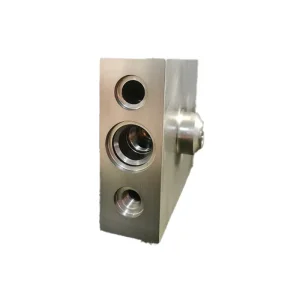
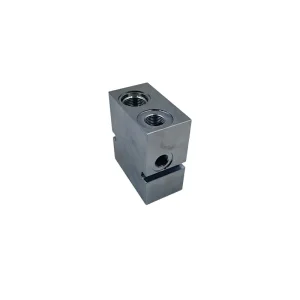
Machining hydraulic manifolds like our T3A Counterbalance and T13A Flow Control blocks demands Sun-style and SAE cavity tolerances with bore roundness below 3 microns. Spindle tool vibration ruins cavity seal land finishes, inducing micro-leakage in load-holding circuits.
Hydraulic Cylinder Seal Concentricity
On components such as cylinder heads (MPM-HCHD11) and pistons (MPM-HCPT11), the concentricity between the rod guide bore, internal step-seal grooves, and barrel spigot thread determines cylinder operational life. A runout of merely 0.02 mm causes severe unilateral seal abrasion under 350 bar pressures.
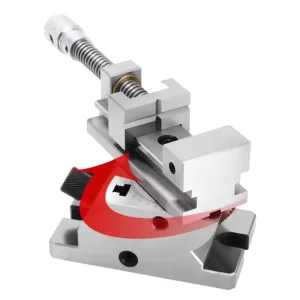
Pneumatic & Hydraulic Vise Clamping Rigidity
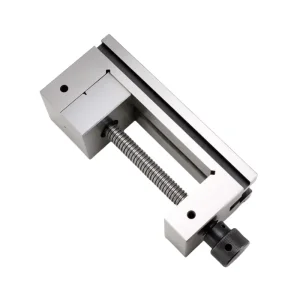
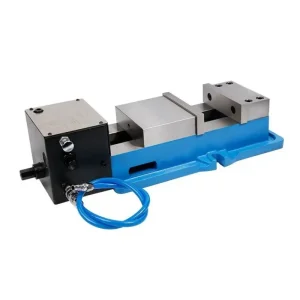
Thin-walled cylinder barrels (MPM-HCIB11) and valve manifolds warp if clamped under uncalibrated vise jaws. Our custom pneumatic-hydraulic clamping units maintain rigid grip without localized component deformation, stabilizing five-axis surface milling paths.
| Tooling / Component Group | Core Standard / Spec | Material & Heat Treatment | Precision & Runout Limit | Key Application Environment |
|---|---|---|---|---|
| ER Milling Tool Holder (MPM-CTH400) | DIN 69871, BT30/40/50, HSK | 20CrMnTi / Carburized 58-62 HRC | ≤ 0.003 mm at 4D overhang | Deep-cavity milling, high-speed end milling, reaming |
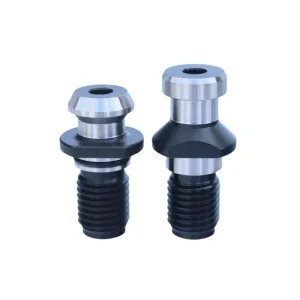
| Retention Knobs (Pull Studs) | DIN 69872, JIS B6339 (MAS 403) | 40Cr / Hardened Core + Magnetic NDT | Surface finish Ra 0.4, thread Class 6g | Spindle-to-holder retention under aggressive cycles |
| Side Lock Holders (MPM-CTH386) | ISO 7388 / Weldon Shank | Alloy Steel 42CrMo / Quenched | Bore tolerance H5, Runout ≤ 0.005 mm | Heavy roughing cuts, large-diameter slotting |
| Pneumatic Hydraulic Vises | Modular Quick-Lock System | Ductile Iron FCD-60 / Flame hardened | Parallelism within 0.01 mm / 100 mm | Multi-axis clamping of hydraulic bodies and valve manifolds |
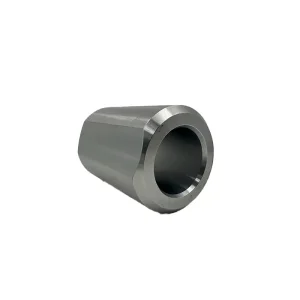
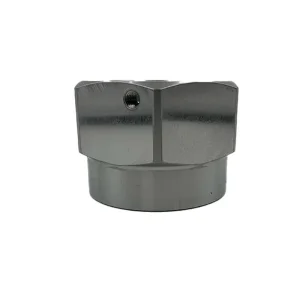
| Hydraulic Cylinder Nuts & Heads | ISO 6H Thread, Custom OEM | Forged Carbon / Alloy Steel (Q345D/45#) | Concentricity ≤ 0.015 mm true position | Excavator boom, mining LHD, and crane cylinders |
Macro Industry Solutions: Engineering Under Extreme Working Envelopes
Every industrial sector poses discrete tribological and mechanical challenges. Our tooling and hydraulic systems are tailored to withstand shock loads, aggressive abrasive ingress, and thermal fluctuations.
Underground Mining & Tunnel Mucking
Underground Load-Haul-Dump (LHD) equipment operates in narrow drifts laden with damp quartz dust and heavy corrosive mine water. Lift actuators sustain punishing dynamic shock loads during bucket penetration.
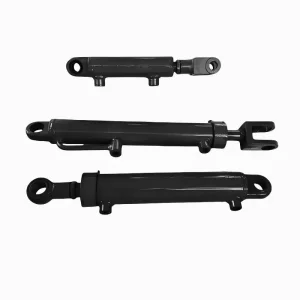
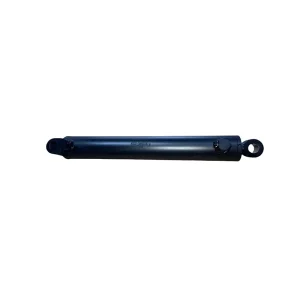
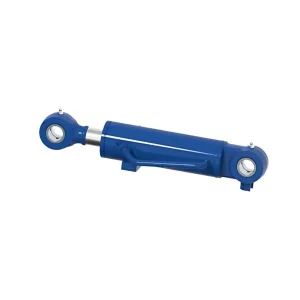
We supply heavy-duty double-acting cylinders with induction-hardened chrome rods, spherical eye bearings, and counterbalance safety valves configured to prevent boom collapse if a feed line ruptures.
Heavy Construction & Earthmoving
From mini-excavators to 50-ton crawlers, cyclical boom and bucket motions demand zero cavitation and rapid end-of-stroke damping. Hydraulic buffer zones machined into the head and base decelerate inertia, dampening acoustic hammer and preventing piston rod deformation.
Matched with our high-torque rotary actuators, machinery OEMs achieve smooth rotation and precise bucket articulation.
Precision Agricultural Machinery
Continuous seasonal harvesting leaves zero window for maintenance failures. Reversible ploughs require synchronized 180° inversion cylinders and stepless furrow width adjustment actuators that maintain pressure integrity across wide thermal swings.
Our agricultural cylinder assemblies incorporate dual pilot-operated check valves and anti-loosening locking nuts to withstand heavy field vibration.
Material Handling & High-Duty Warehousing
Forklift lift masts, steering systems, and aerial work platforms (AWP) handle multi-shift duty cycles with millions of load transitions. High cycle fatigue on rod packings causes micro-seepage in clean distribution facilities.
We deliver ultra-honed micro-finished cylinder barrels (Ra < 0.2 µm) and precision spherical bearings that eliminate eccentric side-loading friction.
Technical Roadmap & Technological Outlook
The manufacturing ecosystem is moving rapidly toward connected tool management, self-sensing fluid actuators, and ultra-sustainable machining. Here is how Micro Precision Machinery drives continuous engineering evolution.
Ultra-Rigid Alloy Metallurgy
Standardizing cryogenically stabilized 20CrMnTi and 42CrMo4 alloys across tool holders, collets, and pull studs, ensuring dimensional stability and thermal resistance during prolonged high-feed milling operations.
Smart Sensor Tooling
Embedding RFID chips and vibration telemetry into precision tool holders to enable real-time runout tracking, automatic life-cycle offset compensation, and integration with automated tool vending matrices.
Integrated Sensor Cylinders
Transitioning linear actuators into smart hydraulic systems featuring internal magnetostrictive position sensors and pressure micro-transducers for automated construction machine steering and crane tilt monitoring.
Additive-Subtractive Hybrids
Utilizing laser powder bed fusion (LPBF) to produce conformal cooling channels within milling tool arbors and lightweight monolithic hydraulic manifolds, followed by ultra-precision CNC 5-axis finish grinding.
Localized Engineering Support & International Compliance Assurance
Purchasing components from abroad requires bulletproof metallurgical verification, rigorous quality documentation, and frictionless customs processing.
Material Traceability & EN 10204 3.1
Every raw alloy bar, forging, and chrome rod receives full batch spectrometry. We provide EN 10204 3.1 Inspection Certificates outlining chemical composition, tensile yield strength, impact toughness, and Rockwell hardness testing with every shipment.
Pressure Proof & NDT Protocol
Hydraulic manifolds and cylinders undergo 100% full hydrostatic proof testing at 1.5x working pressure (up to 500 bar) to ensure zero port seepage. Critical retention knobs and high-stress tie rods undergo magnetic particle and ultrasonic NDT to rule out subsurface micro-fractures.
Global Export Packaging & Fast Support
Tooling and machined parts are coated with vapor corrosion inhibitor (VCI) oils, vacuum sealed, and secured in reinforced fumigated export crates. Our bilingual application engineering department operates across Asian, European, and American business hours to deliver fast DFM engineering reviews.
Frequently Asked Questions for OEM CNC Tooling & Hydraulic Sourcing
In-depth technical answers addressing tolerance standards, material heat treatment, custom manufacturing, and global dispatch protocols.
What parameters are mandatory when commissioning custom CNC tool holders or pull studs?
Please provide the spindle interface standard (BT30/40/50, DIN 69871, CAT, or HSK), clamping mechanism (ER collet type, side lock Weldon, face mill arbor), required dynamic balancing grade (e.g., G2.5 @ 20,000 RPM), internal coolant hole configuration, and projected annual volumes. For retention knobs, specifying the pull angle (15°, 45°, 60°, or 90°) and flange thickness is critical for accurate chuck engagement.
What information do you need to quote a custom hydraulic cylinder or manifold?
Send bore diameter, rod diameter, stroke length, retracted (pin-to-pin) length, operating and peak hydraulic pressures, single- or double-acting specification, end mounting styles (clevis, trunnion, spherical bearing, cross-tube), port thread standard (SAE, BSPP, metric), duty cycle conditions, and annual quantity. Submitting a 2D/3D CAD drawing, physical sample, or nameplate photograph dramatically shortens review time.
Can you reverse-engineer OEM replacement cylinders and machine tool accessories from worn samples?
Yes. Our engineering division leverages precision optical CMM coordinate measurement machines, ultrasonic wall-thickness gauges, and metallurgical spectral analyzers to fully digitize physical parts. We generate a complete 2D/3D manufacturing drawing with clear dimensional and geometric tolerances (GD&T) for client approval prior to metal cutting.
Which international quality and machining standards do your tooling and components follow?
All machining operations adhere strictly to approved drawings in metric or imperial dimensions. Typical referenced standards include ISO 6H class thread fit for hydraulic cylinder nuts and lock rings, DIN 69872 and JIS B6339 (MAS 403) for pull stud retention knobs, DIN 6499 / ISO 15488 for ER collets, and ISO 10762 / NFPA standards for tie-rod cylinder interchangeability.
Do you supply separate hydraulic sub-components for rebuilding and repair workshops?
Yes. We regularly supply individual sub-components including CNC-machined cylinder heads, pistons, lock nuts, integrated mounting flanges, base end-caps, honed barrels, high-wear bronze bushings, and spherical self-aligning bearings, along with custom-drilled hydraulic manifold valve blocks for cylinder rebuild facilities and field service teams.
How are export consignments protected against marine corrosion and physical transit shock?
Machined surfaces, threads, and collet tapers receive anti-rust passivation and high-grade VCI protective oil coating. Products are individually boxed in shock-absorbent cushioning, moisture-sealed with desiccant packs, and packed into heavy-duty fumigated wooden cases built to withstand long ocean transport, air freight, or international courier routing.
Engineered Assemblies & Precision Motion Components
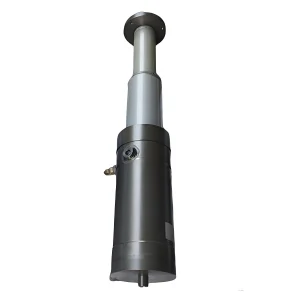
Explore our specialized range of heavy-duty valve blocks, multi-stage telescopic cylinders, universal vises, and replacement components manufactured in-house in Qingdao, China.