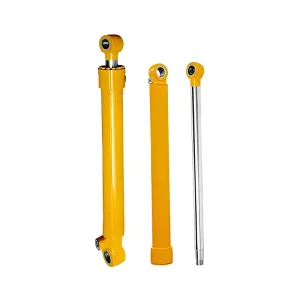
Standard & Custom Hydraulic Actuators & Valve Blocks
Explore our integrated electro-hydraulic manifold blocks and precision cylinders machined in-house for extreme mobile and industrial environments.
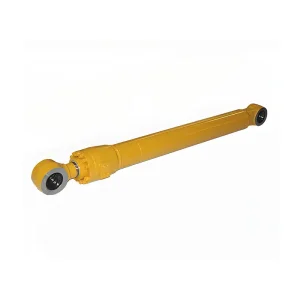
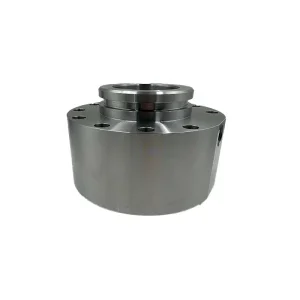
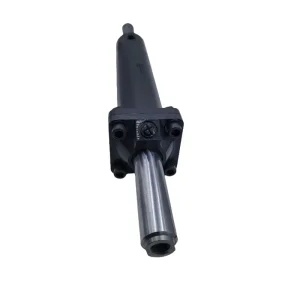
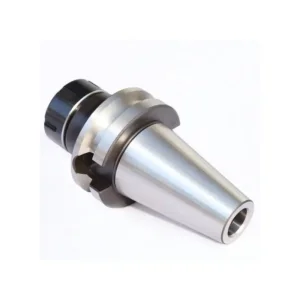
The Evolution of Hydraulic Sequence Valve Blocks in Modern Fluid Automation
In modern industrial hydraulic systems, orchestrating sequential operations across multiple hydraulic cylinders and motors requires strict pressure-governed actuation. A high-quality sequence valve block manufacturer serves as the bridge between raw hydraulic power and coordinated, shock-free automation.
Pressure-Directed Sequential Control
Sequence valve blocks allow fluid power circuits to feed multiple branches in strict chronological order based on predetermined pressure thresholds. By keeping secondary branch flow blocked until the primary cylinder achieves nominal clamping force, the manifold prevents out-of-order execution without needing delicate external electronic sensors.
- Trigger Accuracy: ±1.5% Set Pressure
- Backpressure Tolerance: Independent External Drain
Monoblock vs. Modular Integration
Custom-machined manifold blocks eliminate external high-pressure piping, threaded elbows, and welded joints. Our compact ductile iron (QT500-7/GGG40) or aircraft-grade 6061-T6 aluminum blocks feature internally cross-drilled channels, drastically reducing laminar flow drag, pressure drop (ΔP), and potential leak points.
- Leak Paths: Reduced by up to 85%
- Flow Loss: Optimized Computational CFD
Zero-Leakage Poppet & Spool Design
Whether using direct-acting poppet cartridges for rapid-response clamping or balanced spool designs for high-flow bypass circuits, high-quality manufacturers uphold tight geometric tolerances (under 2 microns) to avoid internal spool drift under sustained holding pressures up to 350 bar.
- Seat Leakage: ≤ 1 drop / min at 210 bar
- Spool Clearance: 0.002 - 0.005 mm
Global Enterprise Sourcing Demands & Macro-Engineering Solutions
Tier-1 equipment builders and plant automation directors face rising structural challenges: system thermal efficiency, mechanical footprint limits, and uncompromised supply continuity.
Heavy Machinery & Mobile Excavators
Excavator booms, arm buffers, and attachment couplers rely on multi-stage sequence valve manifolds to ensure quick-hitch couplers stay firmly pressurized before arm curl pressure activates. This eliminates unintentional releases under severe rock face digging loads.
• Integrated overcenter shock checks
• High vibration and dust resistant
Hydraulic Clamping in CNC Workholding
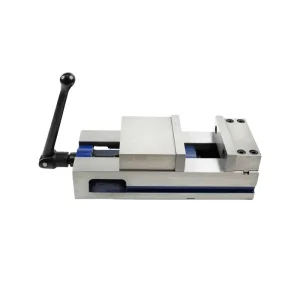
Automated manufacturing cells using horizontal/vertical vises and milling fixtures require multi-piece clamping sequences: locate fixture → clamp part A → clamp part B → initiate spindle cycle. Sequence manifolds maintain clamp order even during sudden power line interruptions.
• Compact subplate mounting
• Zero-drift mechanical seal lock
Agricultural & Refuse Vehicles
Reversible plough turnover cylinders and sanitation rear-tailgate locking cylinders require pressure sequence logic. The tailgate must fully raise before compaction sweep actuators operate, preventing frame twisting and mechanical binding.
• Zinc-nickel anti-corrosion plating
• Wide operating range (-30°C to +100°C)
| Evaluation Parameter | Generic Marketplace Manifolds | Engineered MPM Sequence Valve Blocks | OEM Competitive Advantage |
|---|---|---|---|
| Manifold Raw Material | Porous Gray Iron (HT200) or 6063 Scrap Bar | Ductile Iron (QT500-7) / Forged 6061-T6 Billets | Zero internal fracturing at 350+ bar dynamic fatigue. |
| Cartridge Cavity Finish | Standard reamed (Ra 1.6 μm) | Multi-axis diamond roller burnished (Ra 0.4 μm) | Extends O-ring and backup ring operational life 3x. |
| Internal Oil Gallery Design | Right-angle intersections with burr risks | CFD-curved ports, thermal deburred (TEM) | Reduces turbulence, cavitation, and thermal hydraulic losses. |
| Validation Protocols | Random lot sampling, air leak test only | 100% individual hydrostatic & response logging | Zero-defect installation into automated field equipment. |
Localized Engineering Support, Traceability & Global Compliance
Qingdao Micro Precision Machinery (MPM) operates with strict adherence to global aerospace and heavy industrial fluid conveyance standards.
ISO 4406 Cleanliness
Every manifold block undergoes multi-stage ultrasonic wash and automated thermal deburring to meet stringent ISO 4406 (cleanliness class 16/14/11), preventing spool jams from particulate contamination.
Full Mill Material Traceability
All ductile iron, carbon steel, and alloy billets arrive with 3.1 EN 10204 inspection certificates verifying chemical composition, tensile yield strength, and non-porosity ultrasound checks.
Thread & Cavity Conformity
Machined precisely to global standard cavity profiles including Sun, HydraForce, and Eaton Vickers, alongside metric, SAE J1926, BSPP, and ISO 6149 port threads.
Rapid Global Logistics
Export crating, rust-inhibitive VCI vacuum packaging, and established shipping corridors out of Qingdao Port assure sea freight arrival without surface tarnishing or thread oxidation.
Technological Frontiers: Smart Sensing & Additive Manufacturing
The hydraulic manifold industry is undergoing a generational shift. Our engineering roadmap integrates predictive intelligence and geometry optimization.
Phase 1: CFD Optimization & Generative Design
Moving beyond standard orthogonal drillings, MPM deploys advanced computational fluid dynamics (CFD) to design curved oil conduits. This reduces fluid friction losses, operating oil temperature, and cumulative energy consumption in high-duty industrial power stations.
Phase 2: Direct-Metal Additive Layering (3D Printing)
For aerospace and lightweight electric construction vehicles, additive manufacturing (SLM titanium and maraging steel) eliminates internal drill plug galleries entirely, cutting manifold weight by up to 60% while expanding maximum burst pressure headroom.
Phase 3: Digital Twin & Smart Manifold Blocks
Integration of low-profile IO-Link and CANbus micro-sensors directly within sequence valve bodies. Real-time logging of dynamic port pressure, oil viscosity, seal degradation, and localized thermal shifts enables true predictive plant maintenance.
Phase 4: Eco-Fluids & High-Pressure Water-Glycol Compatibility
Refining specialty coatings (diamond-like carbon DLC and micro-arc oxidation) on valve block bores to handle environmentally acceptable hydraulic fluids (HEES/HEPG) and fire-resistant water-glycol mixes without cavitational erosion.
Custom ODM Technical Consultation
Need a customized sequence manifold configured for demanding cyclic pressures, multi-actuator speed balancing, or compact machine geometries?
Our Qingdao application engineering team can analyze your hydraulic schematic, specify pilot ratios, and deliver verified 3D STEP models within 48 business hours.
Connect with an EngineerFrequently Asked Questions: Sequence Valve Blocks & Manifold Engineering
In-depth technical answers addressing valve selection, internal drainage, pressure setting margins, and OEM manufacturing protocols.
What is the primary operational difference between a relief valve and a sequence valve block?
While both valves use spring-loaded poppets or spools referenced against fluid pressure, their exhaust port destinations differ. A relief valve diverts fluid directly back to the tank to safeguard against overpressure. A sequence valve diverts working flow downstream to an active secondary cylinder or circuit. Consequently, the sequence valve block must handle sustained backpressure on its secondary line without affecting pilot trigger pressure, typically requiring an isolated external pilot drain.
Why is external drain configuration mandatory for sequence valve blocks subjected to backpressure?
In internally drained configurations, pressure in the downstream work line acts directly on the spring pocket behind the spool. This additive backpressure artificially elevates the effective valve opening threshold (Cracking Pressure = Setting + Downstream Backpressure). By isolating the spring cavity through an independent external case drain to reservoir, opening stability is governed purely by primary circuit pilot pressure regardless of downstream load spikes.
How does raw material selection impact the operating life of high-pressure sequence valve blocks?
Hydraulic manifolds subjected to fast-cycling pulse shocks up to 350 bar experience cyclic fatigue. Low-grade cast iron can develop micro-fissures along internal drilled cross-sections. MPM machines heavy-duty valve blocks from high-tensile ductile iron (QT500-7) or solid-forged 6061-T6 aluminum. Ductile iron provides graphite nodules that dampen acoustic resonance and absorb shock loads, preventing gallery rupture over millions of duty cycles.
What safety margin should be factored into sequential clamping pressure settings?
We recommend setting the sequence valve opening threshold at least 15% to 20% higher than the maximum pressure needed to advance the primary actuator through its full stroke. This delta prevents the valve from triggering prematurely due to dynamic seal drag, cold fluid viscosity peaks, or temporary line resistance before mechanical clamp positioning is fully achieved.
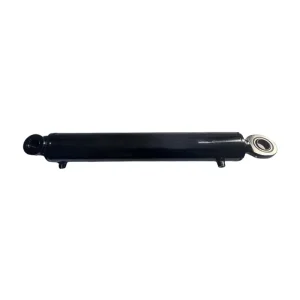
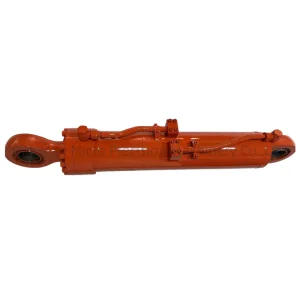
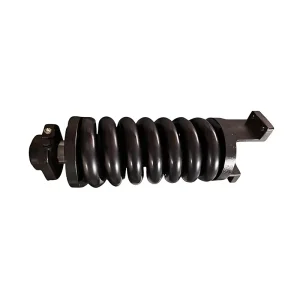
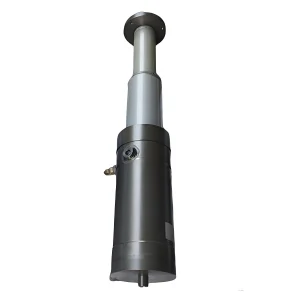
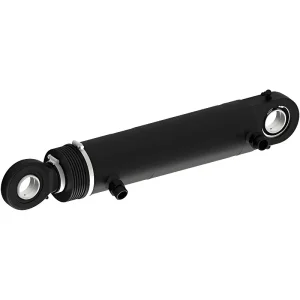
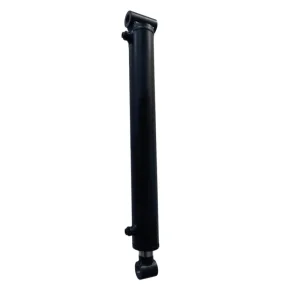
Heavy-Duty OEM Replacement Cylinders & Components
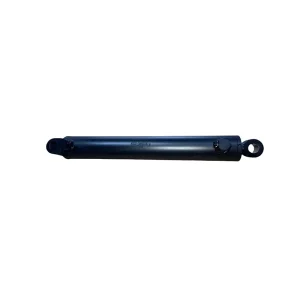
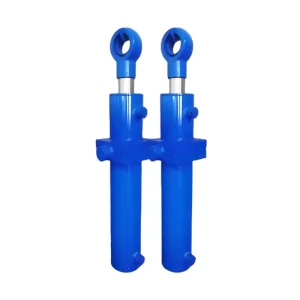
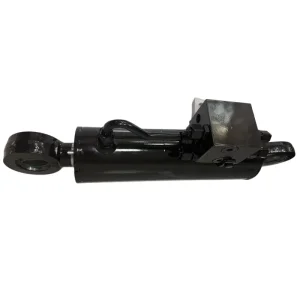
Integrate our precision hydraulic cylinders and structural components directly with custom sequence and control manifolds.