Precision Tooling & Hydraulic Actuators Portfolio (Part I)
Direct from our precision manufacturing facility in Qingdao: high-integrity machine vices, hydraulic manifolds, and custom motion assemblies engineered for heavy mechanical duty cycles.
Precision Workholding Dynamics: The Foundation of Modern CNC Milling
Analyzing clamping force propagation, thermal deformation mitigation, and geometric stability in tight-tolerance multi-axis CNC machining ecosystems.
Eliminating Workpiece Lift & Micro-Chatter
Modern high-speed CNC milling subjects parts to complex multi-directional cutting vectors. In conventional vice structures, tangential milling forces cause dynamic jaw tilting, causing elastic workpiece displacement and rapid tool chipping.
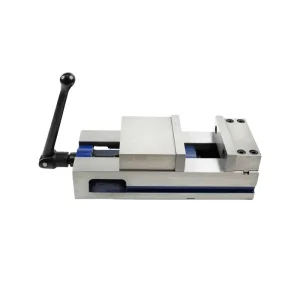
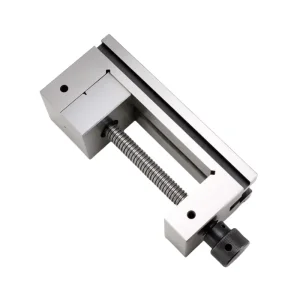
Our custom CNC Machine Vices utilize angled downward clamping mechanics and pull-down ground jaws. This transfers lateral clamp loads into an axial seating vector, neutralizing the upward wedge effect and guaranteeing true zero-lift machining across intensive roughing passes.
Metallurgical Integrity: Ductile Iron vs. Alloy Steel
Structural body deformation under hydraulic or manual torquing degrades machine-tool table flatness. We cast our vice bodies from graded FCD-60 / QT600 ductile iron with a tensile rating surpassing 600 MPa, backed by stress-relief cryogenic annealing.
For high-abrasion stamping and graphite electrodes, our tooling series leverages fully hardened 20CrMnTi and premium tool steel carburized to 58–62 HRC, preserving absolute bed-to-jaw perpendicularity throughout millions of cyclical loading cycles.
Integrated 5-Axis Workholding Accessibility
5-axis continuous milling requires comprehensive spindle clearance for small-radius end mills. Standard oversized machine vices create interference envelopes that force engineers into using extended, vibration-prone arbor designs.
Our specialized self-centering and compact multi-station modular vices minimize overall footprint while providing direct 5-sided workpiece accessibility. Symmetrical dovetail grips and serrated jaw inserts maintain dependable torque transmission under heavy cutting feeds.
The Competitive Advantage of Sourcing CNC Vices from China
How our Qingdao manufacturing ecosystem integrates deep metallurgical clusters, automated grinding lines, and precision quality engineering to minimize landed acquisition costs for global distributors.
Clustered Raw Material Integration
Positioned within Shandong's foundational casting and forging corridors, we source pre-certified nodular iron castings and forged structural steels with zero logistical lag. Direct foundry partnerships allow us to enforce spectrographic chemical analysis before rough turning begins.
Advanced Grinding Automation
Guide-way surfaces undergo continuous induction hardening followed by sub-micron pass grinding on high-precision Okamoto surface grinders. This dual-track approach keeps critical flatness and parallelism within 0.005mm/100mm on high-volume production schedules.
Agile OEM / ODM Adaptability
Global machine builders require distinct base slot pitches, custom air/hydraulic manifold ports, and private label finishes. Our internal design desk delivers certified 3D CAD/CAM models within 48 hours, accommodating unique mounting patterns without imposing high setup fees.
Maritime Port Consolidation
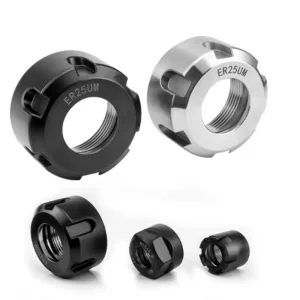
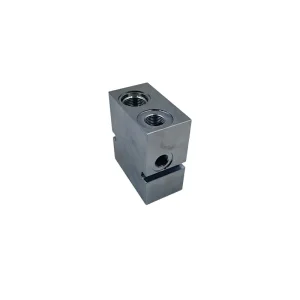
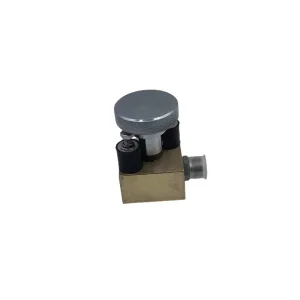
Located in Qingdao, our factory is minutes away from one of the world's premier deep-water shipping terminals. We provide consolidated container loads featuring machine vices alongside collets, hydraulic pull-studs, and valves to minimize client freight expenditures.
Emerging Technology Trends in CNC Workholding & Automation
The transition toward lights-out machining requires smart hydraulic vices, automated pallet pools, and integrated sensor nodes.
| Technological Vector | Legacy Mechanical Baseline | Next-Generation Smart Engineering (MPM Matrix) | Machining Productivity ROI |
|---|---|---|---|
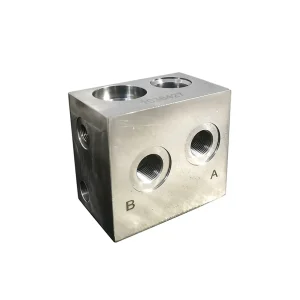
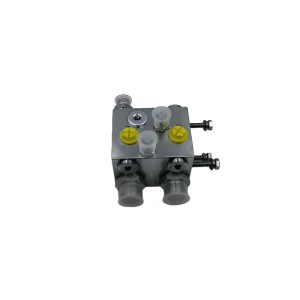
| Hydraulic & Pneumatic Actuation | Manual lead-screw tightening requiring continuous operator torque intervention. | Integrated manifold valve blocks for synchronized, programmable multi-part hydraulic clamping. | Reduces clamping changeover time by up to 78% in cellular production lines. |
| In-Situ Clamping Telemetry | Unmonitored holding force; parts subject to variable human wrench feel and slips. | Embedded piezoelectric load cells transmitting live clamping force analytics directly to CNC controllers. | Eliminates thin-walled part distortion and reduces scrap during deep hogging passes. |
| Zero-Point Pallet Integration | Direct table t-nut slotting demanding tedious dial-indicator alignment per job. | Hardened base pull-stud receivers engineered for modular pneumatic zero-point sub-plates. | Enables workpiece changeovers under 60 seconds with repeatable sub-5μm repositioning. |
| Surface Metallurgy & Coating | Uncoated blackened cast surfaces prone to coolant pit corrosion and galling. | Plasma nitriding combined with manganese phosphating on all non-ground precision slide faces. | Extended service life under continuous synthetic high-pressure flood coolant conditions. |
Localized Industry Scenarios & Mechanical Workholding Requirements
Deploying specialized workholding across high-demand industrial sectors where tolerances are non-negotiable.
Aerospace Structural Rib Machining
Milling complex aluminum 7075 and titanium airframe spars involves heavy material removal that triggers severe internal stress-relief deformation. Tooling engineers require ultra-stable dual-station vices equipped with floating serrated jaws to isolate structural bow without losing datum alignment.
Automotive Transmission & Engine Castings
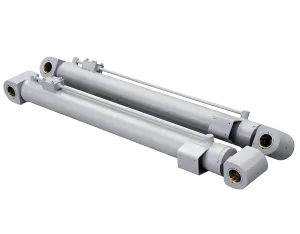
High-volume automotive powertrain parts require rapid hydraulic clamping solutions integrated into CNC tombstone fixtures on horizontal machining centers (HMCs). Our custom hydraulic vice systems link directly with centralized machine hydraulics to guarantee synchronized sub-second clamping.
Die, Mold & Precision Cavity Tooling
Plastic injection molds and stamping dies demand long semi-finishing and finishing cycle times on vertical machining centers. Our QGG toolmaker vices and horizontal-vertical units maintain tight parallelism across deep cavity 3D surface tracing passes under aggressive ball-nose tool dynamics.
Fulfilling Global Tier-1 B2B Procurement Standards
Addressing the critical risk metrics, interchangeability criteria, and logistics documentation prioritized by international buyers.
Full Geometric Metrology Reports
Every custom vice batch ships with an individual coordinate measuring machine (CMM) inspection certificate documenting bed parallelism, jaw squareness, guide key alignment, and hard lead-screw axial pitch tolerances.
Interchangeability & Component Availability
All vice jaws, master carriers, hydraulic booster cartridges, and lead screws are machined to international standardized drawings. This ensures spare components directly retrofit popular global workholding footprints without factory remachining.
Heavy-Duty Export Packaging
Machined surfaces receive rust-inhibiting vacuum-sealed micro-film coatings, secondary vapor-corrosion packaging (VCI), and impact-reinforced fumigated wooden casework designed to endure long intermodal ocean journeys.
Frequently Asked Questions (FAQ)
In-depth responses covering engineering tolerances, custom fixture lead times, and hydraulic workholding options.
How does your factory prevent workpiece lifting during high-feed milling operations?
Can you manufacture custom CNC vices matching proprietary pallet and mounting slots?
What surface hardening and metallurgical treatments are used on the slideways?
What is the standard production lead time for custom and prototype CNC vice units?
Do you supply automated hydraulic booster units and auxiliary valving for machine vices?
Precision Tooling & Hydraulic Actuators Portfolio (Part II)
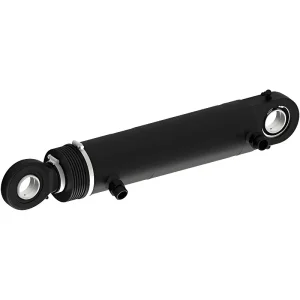
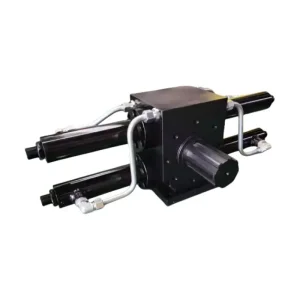
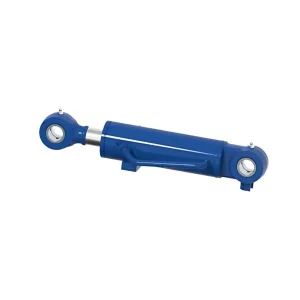
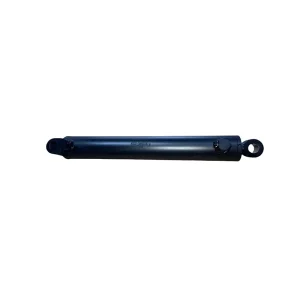
Explore our extended industrial manufacturing range, covering heavy-equipment fluid power, specialized hydraulic control blocks, and precision machine-tool fixtures.