
Precision Hydraulic Actuator Components & Tooling
Direct OEM-grade replacements and core actuation assemblies machined with micron-level tolerance in Qingdao, China.
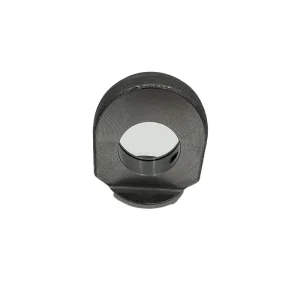
China Hydraulic Cylinder Base MPM-HCBS11
View Product Details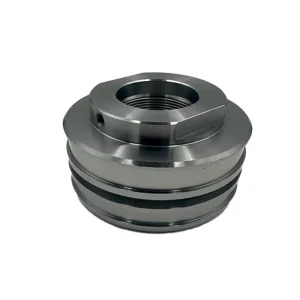
Custom MPM Hydraulic Cylinder Piston MPM-HCPT11
View Product Details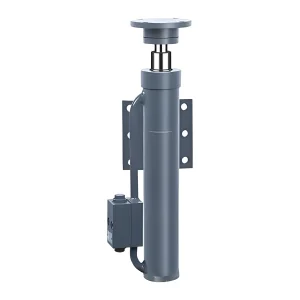
Wholesale Outrigger Expansion Cylinder
View Product Details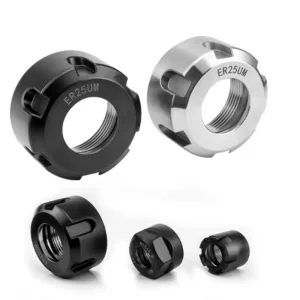
OEM ER Collet MPM-EN0072 Suppliers, Factories
View Product Details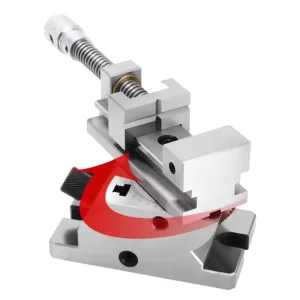
OEM CHM Precision Universal Vise MPM0356
View Product Details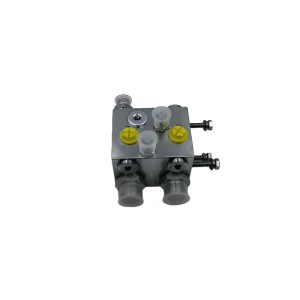
China Differential Lock Solenoid Valve MPM-DLSV12
View Product Details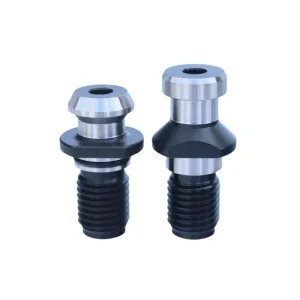
ODM Retention Knob DIN69872 Pull Stud
View Product Details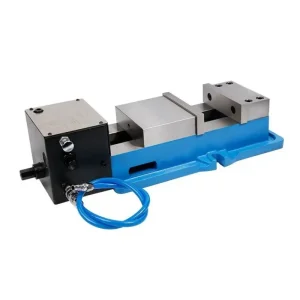
Custom Pneumatic Hydraulic Workholding Vise
View Product DetailsThe Global Telescopic Actuator Landscape: Engineering Demands & Market Realities
How compact structural envelopes, escalating hydraulic pressures, and multi-stage kinematics drive the demand for Chinese manufacturing precision.
In mechanical design, the telescopic actuator—operating primarily through multi-stage nested hydraulic cylinder sleeves or integrated multi-section electro-mechanical screws—presents an indispensable engineering solution. Its primary thermodynamic and kinematic advantage is simple yet mathematically demanding: delivering an extended working stroke that is three to six times its fully retracted mounting length. Today, industrial equipment builders in mobile construction, underground mining, municipal infrastructure, renewable energy solar-tracking arrays, and logistics material handling operate under tight spatial envelopes that render single-stage linear actuators physically obsolete.
However, telescopic actuators represent the most mechanically sensitive class of fluid power actuators. Unlike single-rod cylinders, telescopic systems exhibit a stepwise decrease in effective piston area as consecutive stages (sleeves) extend. This results in progressive changes in extension velocity and instantaneous thrust under constant pump flow and system pressure. Furthermore, every additional stage introduces another dynamic interface involving high-pressure rod seals, wiper rings, guide bands, internal hydraulic ports, and critical buckling risks governed by Euler's column formulas under full extension. For tier-1 equipment OEMs in North America, Western Europe, and the Asia-Pacific, selecting a validated manufacturer in China is not merely an exercise in procurement cost-reduction; it is a critical strategy to secure high-durability alloy metallurgy, precision CNC turning tolerances, and stringent hydraulic pressure hold stability.
Severe Packaging Constraints
Modern mobile machinery—such as low-profile underground LHD mining loaders, dump trucks, and telehandlers—demands maximum payload ratios. Actuators must nest into ultra-compact chassis configurations while offering maximum outreach without structural deflection.
Staged Pressure Transients
As sleeves extend in sequence from the largest bore outer sleeve to the smallest inner rod, internal hydraulic pressures jump suddenly when loads remain constant. Engineering custom counterbalance manifolds and cushion valves avoids catastrophic pressure spikes.
Harsh Environment Contamination
Exposed telescopic chrome-plated sleeves collect abrasive road mud, iron-ore slurry, silica, and corrosive salt air. Multitier wiping systems and advanced micro-crack chrome or nickel-chrome platings prevent particulate intrusion and inner gland leakage.
Why Leading Global OEMs Partner with China Telescopic Actuator Manufacturers
Combining heavy raw metallurgy integration, multi-axis CNC skiving and roller burnishing, and ISO-certified dimensional control under one manufacturing roof.
Integrated Supply Chain Clusters & Raw Material Quality
The manufacturing footprint of Qingdao Micro Precision Machinery Co., Ltd. sits at the heart of Shandong province's premier industrial machinery ecosystem. Sourcing seamless precision cold-drawn alloy steel tubes (predominantly 27SiMn, ST52, and 42CrMo4) directly from domestic metallurgical producers eliminates intermediate distribution markups and long logistical lead times. High-strength seamless steel provides the critical yield strength (up to 850 MPa after controlled quenching and tempering) needed to prevent plastic deformation under severe bending moments when a four-stage or five-stage telescopic cylinder is fully racked under lateral wind loads or eccentric dumping stresses.
In-House Machining Discipline: From Skiving to CNC Tool Holders
A telescopic actuator's operational lifespan depends entirely on the concentricity between the outer barrel bore, intermediate sleeve outer/inner diameters, and the piston rod guide rings. Qingdao Micro Precision utilizes advanced high-speed CNC skiving and roller burnishing equipment to process internal cylinder barrels, achieving inside diameter tolerances of ISO H8 to H9 and surface finishes of Ra 0.1 to 0.2 μm. This mirror-like surface eliminates premature lip seal wear and minimizes break-away friction (reducing stick-slip oscillations during slow boom extension).
Uniquely, our facility manufactures both the hydraulic cylinders and the CNC tooling infrastructure itself—including ISO 6H thread-tolerance cylinder nuts, DIN 69872 retention pull studs, and high-precision ER chuck tool arbors. This internal precision culture guarantees that every internal seal groove, retainer circlip slot, and flange port is milled with repeatable sub-micron runout.
Engineered for Heavy Duty Cycles: Localized Operating Environments
From underground tunnels in Australia to sub-zero municipal routes in Northern Europe, our telescopic actuators are specified against genuine mechanical stress vectors.
Multi-Stage Tippers & Sanitation Dump Trucks
Tipping trailers require massive initial lifting forces to overcome sticky clay or asphalt payload inertia, followed by swift telescopic extension. Single-acting and double-acting multi-stage actuators are configured with hardened bronze wear rings, integrated bleeder screws, and internal displacement limiters to avoid over-stroke body dislodgement on uneven ground.
Underground LHD Loaders & Tunnel Mucking
Confined underground mine stopes punish vulnerable hydraulic mechanisms. Telescopic boom crowd actuators face massive impact loads when the bucket hammers rock faces. Hard chrome-plated rods (minimum 25-30 μm layer thickness) with induction surface hardening (HRC 55-60) resist gouging and premature abrasive seal blowout.
Aerial Work Platforms (AWP) & Boom Lifts
Boom positioning actuators demand zero internal bypass leakage to prevent uncommanded platform drift. We integrate custom cartridge-style pilot-operated counterbalance check valves directly into the actuator head block, delivering safety lock mechanisms that withstand hydraulic line rupture in compliance with ANSI/SIA A92 and EN 280.
Mobile Crane Outrigger & Boom Expansion
Outrigger expansion requires actuators that extend horizonal arms before extending vertical leveling cylinders. Telescopic sequencing actuators utilize internal oil porting channels through dual-wall rods, eliminating external flexible hoses that snag on structural steel frames during extension cycles.
Agricultural Implements & Reversible Ploughs
Tractor hitch geometry allows minimal room for long-stroke single rods. Double-acting telescopic cylinders provide smooth 180-degree rotation of plough frames followed by precise furrow width adjustments. Engineered with corrosion-inhibiting rod platings that resist aggressive agrochemicals and nitrogen fertilizers.
Harbor Container Spreaders & Material Handling
Marine environments require salt-spray resistance exceeding 500 hours (ASTM B117). Actuators deployed on container twistlock expanders utilize composite polymer bearing rings that avoid galvanic corrosion between dissimilar metals, backed by multi-stage dual polyurethane wipers.
Engineering Benchmarks: Single-Stage vs. Multi-Stage Telescopic Actuators
A comprehensive side-by-side technical evaluation for mechanical engineering managers and fluid power system integrators.
| Design Parameter | Standard Welded Cylinder | Single-Acting Telescopic Actuator | Double-Acting Telescopic Actuator | MPM Precision Standard |
|---|---|---|---|---|
| Stroke-to-Closed Ratio | ≈ 1.0 : 1.25 | ≈ 2.5 - 4.5 : 1.0 | ≈ 2.5 - 4.0 : 1.0 | Engineered per customer space envelope |
| Retraction Method | Hydraulic differential pressure | External gravity / payload weight | Forced internal hydraulic fluid return | Dual-acting internal oil porting |
| Operating Pressure | 16 to 35 MPa (160 - 350 bar) | 16 to 22 MPa (160 - 220 bar) | 21 to 32 MPa (210 - 320 bar) | Hydrostatic proof-tested to 150% rating |
| Stage Sequencing | Single linear translation | Large-to-small on push stroke | Sequenced push & forced return | Precision tolerance friction matching |
| Internal Surface Finish | Ra 0.2 - 0.4 μm | Ra 0.3 - 0.6 μm | Ra 0.15 - 0.25 μm | Roller burnished Ra ≤ 0.20 μm |
| Lateral Buckling Resistance | High (single thick-walled rod) | Moderate (requires external guide) | Reinforced by dual wear bands | Finite Element Analysis (FEA) verified |
| Standard Rod Metallurgy | CK45 / 40Cr | 27SiMn / ST52-3 | 27SiMn Quenched & Tempered | Mill Test Certificate (EN 10204 3.1) |
Enterprise Sourcing: How We Fulfill Global OEM Quality Protocols
Eliminating overseas sourcing risks through strict material traceability, standardized CMM reporting, and standardized hydrostatic impulse validation.
Material Traceability
Every forging heat code, cold-drawn tube bundle, and seal compound lot is logged. We provide EN 10204 Type 3.1 inspection certificates verifying yield strength, tensile strength, Charpy impact toughness, and chemical composition.
Corrosion Qualification
Electroplated sleeves and chrome piston rods undergo accelerated neutral salt spray testing in accordance with ASTM B117 / ISO 9227. Standard configurations yield rating 9/10 after 240 hours; premium offshore plating options exceed 500+ hours.
100% Hydrostatic Proof Testing
No telescopic cylinder leaves the Qingdao facility without automated bench testing. Every actuator undergoes step-wise cyclic stroke testing, internal bypass pressure hold tests, and over-pressure burst verification at 1.5 times nominal operating pressure.
Maritime Packaging & Desiccation
Overseas container transit requires moisture protection. Actuator bores are flushed with VCI (Vapor Corrosion Inhibitor) preservation oil, ports are steel-plugged, rods are wrapped in poly-stretch film, and assemblies are secured in reinforced ISPM-15 fumigated timber crates.
Emerging Trends Shaping Next-Generation Telescopic Actuators
How electro-hydraulic integration, smart telemetry sensors, and lightweight alloy metallurgy are redefining linear displacement systems.
Embedded Smart Stroke Sensor Integration
Traditional external cable draw sensors are prone to job-site impact damage. Next-generation telescopic actuators feature integrated magnetostrictive or linear optical sensors embedded directly down the center gun-drilled core of the primary rod, giving real-time millimeter-precise positioning to vehicle CAN bus systems.
Electrification & Hybrid Telescopic Actuators
As battery-electric construction equipment replaces conventional diesel engines, the demand for high-efficiency electro-mechanical ball screw and roller screw telescopic actuators is surging. Eliminating centralized hydraulic power units (HPUs) cuts standby energy consumption while maintaining long stroke displacement.
Environmentally Safe Bio-Fluid Compatibility
Stringent environmental protection directives in European forestry and maritime operations necessitate compatibility with HEES synthetic ester and bio-degradable hydraulic fluids. We specify bespoke fluorocarbon (FKM) and specialized thermoplastic polyurethane seals to avoid premature chemical degradation.
Custom Actuators, Valves & High-Tolerance CNC Workholding
Engineered for full interchangeability with major OEM systems. Explore the rest of our standard production line below.
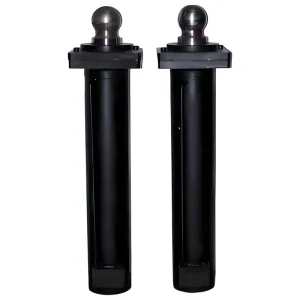
Counterweight Cylinder Supplier, Manufacturer
View Product Details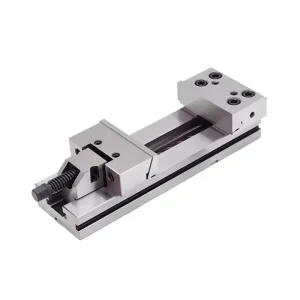
Custom Precision Modular Vice MPM003360
View Product Details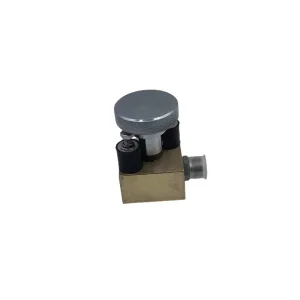
Manual Speed Control Copper Valve Block MPM-MSCCVB12
View Product Details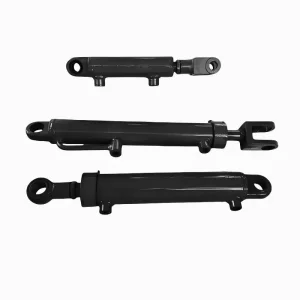
Refuse Truck Lifting Actuator Cylinder
View Product Details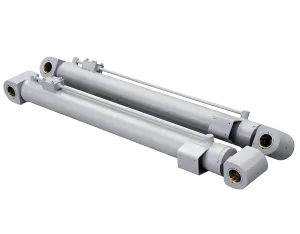
High-Quality Crane Luffing Cylinder
View Product Details
Wheel Loader Tilt Cylinder MPM-HCT402
View Product Details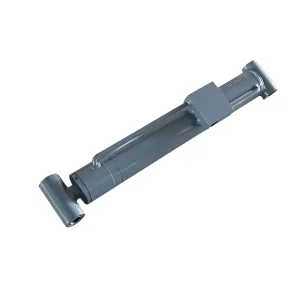
ODM Heavy Equipment Leveling Cylinder HCL603
View Product Details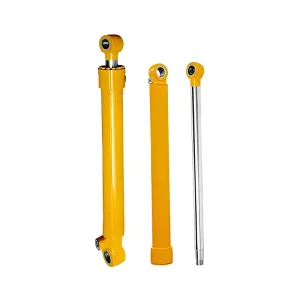
Small Compact Excavator Stick Cylinder
View Product DetailsFrequently Asked Questions: Sourcing Telescopic Actuators from China
Direct technical answers addressing engineering validation, production lead times, minimum order quantities, and custom reverse engineering.
What engineering parameters are required to calculate and quote a custom telescopic actuator?
To provide an accurate technical drawing and binding commercial quotation, we require: extended and retracted pin-to-pin length, required stroke, number of stages (or maximum outer diameter envelope), maximum working and peak hydraulic pressure, single-acting (gravity return) or double-acting requirement, pin-eye or trunnion mount specifications, operating temperature range, fluid type, and estimated annual procurement quantity.
How does Qingdao Micro Precision prevent stage mis-sequencing in multi-stage telescopic cylinders?
In single-acting systems, stage extension sequence naturally follows effective cross-sectional piston area (largest stage moves first). For double-acting retraction or complex load conditions where pressure fluctuation can trigger stick-slip or reverse-sequencing, we implement precision internal hydraulic bypass metering, calibrated mechanical stop rings, and controlled internal friction guide rings to ensure predictable, smooth stage transitions.
Can you reverse-engineer a damaged or discontinued OEM telescopic actuator from a physical sample?
Yes. Our engineering division in Qingdao utilizes portable 3D coordinate measuring arms, optical profile projectors, and ultrasonic thickness gauges to thoroughly map the geometry of worn or obsolete actuators. We analyze raw material metallurgy via spectrometer, recreate complete CAD 3D models and 2D manufacturing drawings, and submit them for your formal sign-off before manufacturing.
What are your standard machining tolerances for telescopic actuator barrels and piston rods?
Internal sleeve bores are skived and roller burnished to ISO H8 or H9 diameter tolerances, maintaining straightness within 0.5 mm per meter. Outer diameter chrome rods are centerless ground and hard chrome-plated to ISO f7 or h7 tolerances, with layer depth between 25 and 40 μm and micro-hardness exceeding 900 HV (Vickers), ensuring optimal seal retention and wear resistance.
Do you sell individual cylinder sub-components such as heads, bases, and pistons separately?
Yes. Many global cylinder rebuilders, fleet maintenance workshops, and domestic cylinder assembly plants purchase bare CNC-machined components from us. We regularly supply forged cylinder heads (MPM-HCHD11), precision turned pistons (MPM-HCPT11), cast or welded cylinder bases (MPM-HCBS11), ISO 6H cylinder lock nuts, and custom integrated manifold valve blocks.
What is the typical production lead time and minimum order quantity (MOQ) for international orders?
For standard catalogue components and custom prototypes, design review and first-article prototype production typically require 2 to 3 weeks. Full production batch runs are completed within 30 to 45 calendar days depending on raw material stock. Our flexible production lines support low MOQs for high-value industrial cylinders (often starting from 2 to 5 units for custom engineered models).