High-Precision Industrial Cylinders & CNC Clamping Components
Explore our export-certified CNC tool retention knobs, hydraulic actuators, and precision valve blocks manufactured to strict international tolerances.
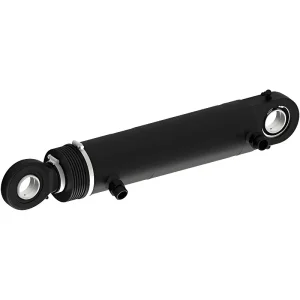
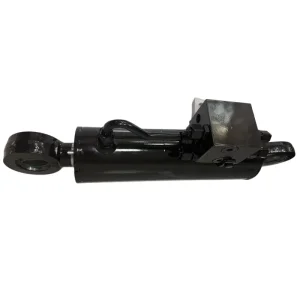
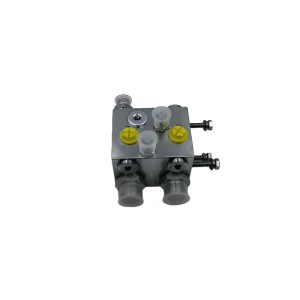
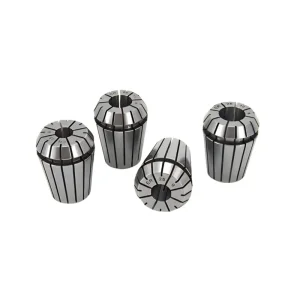
≤ 0.003mm
Total Radial Runout (T.I.R)
58 ± 2 HRC
Controlled Case Hardness
25,000+ RPM
Dynamic High-Speed Balance
100% CMM
Optical Profile Verification
Spindle Pull Stud Dynamics & Modern Tool Holding Mechanics
In high-speed CNC milling and multi-axis turning centers, the spindle pull stud (also designated as a retention knob) constitutes the single critical mechanical bridge between the machine tool drawbar mechanism and the 7:24 taper tool holder.
Axial Clamping Rigidity
Under continuous spindle rotations exceeding 15,000 to 24,000 RPM, centrifugal force and thermal elongation threaten taper seating. Precision-machined pull studs ensure maximum contact along the 7:24 taper cone, preventing axial displacement and micro-fretting corrosion under high-feed milling loads.
- Eliminates chatter marks on Ra 0.4 finishing passes
- Suppresses radial spindle vibration and axial runout
- Maintains uniform retention force across 1,000+ tool changes
Metallurgical Fatigue Resistance
Manufactured from premium vacuum-degassed 20CrMnTi or high-tensile 40Cr alloy carburizing steel, our retention knobs undergo multi-stage deep cryogenic and sub-zero heat treatment to optimize core toughness and surface hardness without micro-cracking.
- Surface Hardness: 58-62 HRC for anti-wear ball grip
- Core Ductility: 32-38 HRC preventing catastrophic shank shear
- Black oxide and nickel-plated anti-corrosion barrier
Through-Coolant Hydrodynamics
Modern metal removal requires High-Pressure Coolant (HPC) delivered directly through the spindle core up to 70 bar. Our pull studs incorporate precision-drilled, chamfered, and mirror-polished internal channels with dual O-ring grooves to prevent catastrophic fluid bypass.
- Internal flow micro-honed to eliminate hydraulic cavitation
- High-integrity fluorocarbon (FKM) O-ring sealing
- Compatible with DIN 69872 Form A & JIS B6339 Type I/II
| Standard Specification | Applicable Machine Spindle | Thread Metric/Imperial | Collet Gripper Angle | Internal Coolant Hole |
|---|---|---|---|---|
| DIN 69872 Form A | SK30 / SK40 / SK50 Spindles | M12 / M16 / M24 | 15° Taper Undercut | Central High-Pressure Bore |
| DIN 69872 Form B | Hermle, DMG MORI, Mikron Centers | M12 / M16 / M24 | 15° Outer Sealing Ring | Solid (Without Center Bore) |
| JIS B6339 (MAS 403 BT) | BT30 / BT40 / BT50 Japanese Spindles | M12 / M16 / M24 | 30°, 45°, 60°, 90° Flange | Optional HPC Bore + O-Ring |
| ISO 7388/2 (CAT/ANSI) | CAT40 / CAT50 Haas, Mazak, Fadal | 5/8"-11 / 1"-8 UNC / Metric | 45° Gripper Retention | Standard Dual Channel Sealing |
China Smart Factory 4.0: Supply Chain Resilience & Global Procurement
In response to volatile raw material costs, tightening lead times, and rigorous ISO quality mandates, Tier-1 manufacturing enterprises in North America, Europe, and the Asia-Pacific are restructuring their component supply chains around certified Chinese smart factories.
Global Enterprise Procurement Trends
Machining conglomerates are transitioning from ad-hoc spare parts purchasing to integrated Vendor-Managed Inventory (VMI) frameworks. High-durability consumables such as pull studs, hydraulic sealing nuts, and ER collet arbors demand 100% interchangeability across disparate CNC fleets.
- Multi-machine fleet standardization (CAT, BT, ISO, HSK)
- Guaranteed batch-to-batch thread tolerance repeatability
- Full traceability with laser-etched serial heat numbers
Factory 4.0 Digitalized Manufacturing
Our Qingdao machining hub operates multi-axis automated CNC turning-grinding centers linked with automated coordinate measuring machines (CMM). By digitizing the complete production pipeline from bar feeding to cryogenic hardening, dimensional drift is eradicated.
- In-process laser micrometer verification (±0.001mm)
- Automated magnetic particle flaw inspection
- Automated ultrasonic deburring and anti-rust passivation
Risk Mitigation & Cost Efficiency
By coupling localized Shandong raw alloy steel sourcing with in-house vacuum heat treatment, we reduce supply volatility. International procurement departments gain up to 40% cost efficiency over domestic European and American tool distributors while securing OEM performance parity.
- Buffer stock agreements for recurring OEM customers
- Custom prototype turnaround within 5-7 business days
- Direct seaport multimodal shipping from Qingdao Port
High-Stress Application Environments for Retention Knobs
From high-speed aerospace 5-axis machining to heavy-duty earthmoving equipment fabrication, pull studs operate in extreme mechanical regimes where failure is not an option.
Aerospace Multi-Axis Titanium Milling
Milling complex airframe bulkheads and turbine disks from Ti-6Al-4V titanium and Inconel 718 generates massive axial vibration forces. Our retention knobs maintain stable clamping tension, preventing spindle taper scoring and catastrophic cutter disengagement.
Hydraulic Cylinder & Heavy Machining
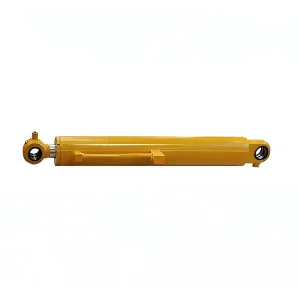
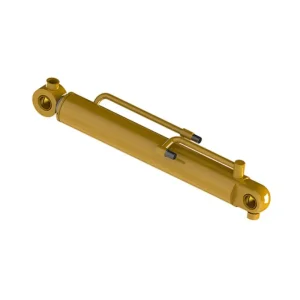
Manufacturing heavy-duty excavator boom cylinders, telescopic crane barrels, and large ductile iron valve manifolds requires deep-hole boring and high-torque face milling. Precision pull studs absorb extreme side-loads without tensile yield.
High-Precision Die & Mold Machining
Micro-milling automotive injection molds with hardened steels (HRC 50+) requires high spindle RPM (20,000+ RPM) with zero tolerance for thermal taper expansion. Dynamic balancing of each knob protects spindle bearings from premature failure.
Frequently Asked Questions: Sourcing & Engineering Pull Studs
Authoritative technical guidance compiled by our senior tooling design engineers to resolve operational, metallurgical, and procurement queries.
What causes catastrophic pull stud breakage during CNC milling operations?
Pull stud failure typically results from three factors: improper torque tightening, metallurgical hydrogen embrittlement, or fatigue stress concentrations at the undercut radius. Overtightening induces excessive tensile stress, causing the taper to swell and fail. MPM pull studs utilize cold-forged alloy steel, rolled threads, and precision-controlled CNC torque installation tables to eliminate micro-cracking.
How do I correctly identify whether my CNC spindle needs DIN 69872 or JIS B6339 (MAS 403)?
Check the machine drawbar gripper angle and flange geometry. DIN 69872 Form A features a 15-degree shoulder angle with an undercut neck, commonly specified on European machine tools (DMG MORI, Hermle, Mikron). JIS B6339 (MAS 403 BT) typically utilizes 30°, 45°, or 60° gripper heads common to Japanese and Asian CNC centers (Fanuc, Makino, Doosan). Always cross-reference the machine manufacturer drawbar manual before procurement.
What are the benefits of rolled threads versus cut threads on retention knobs?
Thread rolling is a cold-forming process that preserves the continuous grain flow of the alloy steel, whereas thread cutting severs the metallurgical fibers. Rolled threads deliver up to 30% higher tensile strength, superior fatigue resistance under cyclic drawbar shock loads, and a mirror surface finish that guarantees accurate ISO 6H thread fit without galling in the toolholder shank.
Can Qingdao Micro Precision Machinery manufacture custom retention knobs to drawing?
Yes. In addition to standard DIN, JIS, ANSI/CAT, and ISO sizes, our engineering department provides complete custom reverse-engineering and ODM manufacturing. Simply supply your physical sample, 2D blueprint, or 3D CAD step file. We provide full drawing confirmation, material test reports (MTR), and heat-treatment certificates prior to dispatch.
What surface treatment is best suited for coolant-through CNC milling?
For coolant-through high-pressure operations, we recommend our proprietary multi-layer black oxide finish or electroless nickel coating. This provides robust corrosion protection against semi-synthetic and synthetic coolant fluids, preventing rust pitting inside the coolant bore that could initiate fatigue cracking under cyclic hydraulic pulses.
Engineered Hydraulic Solutions & Machine Tooling Lineup
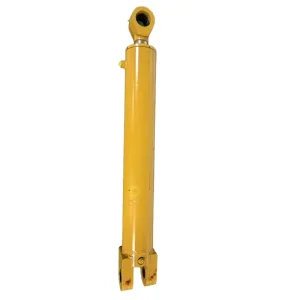
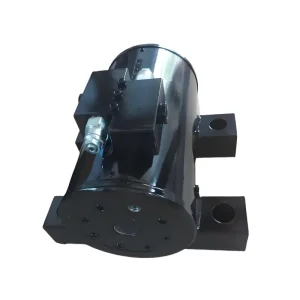
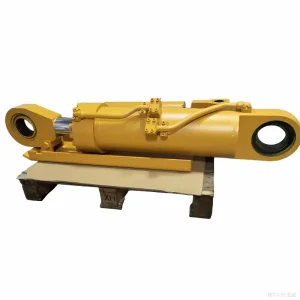
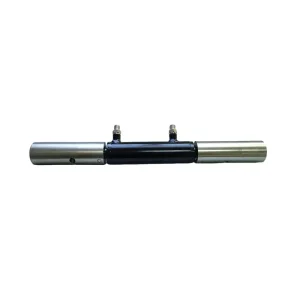
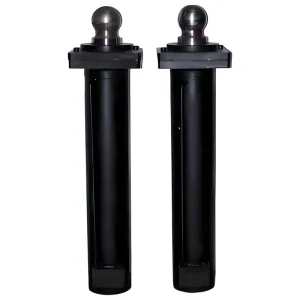
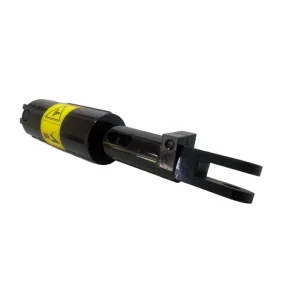
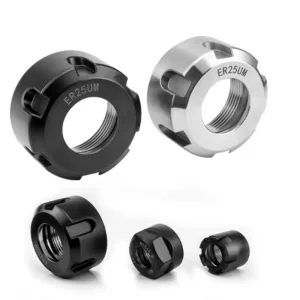
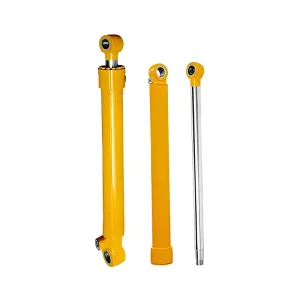
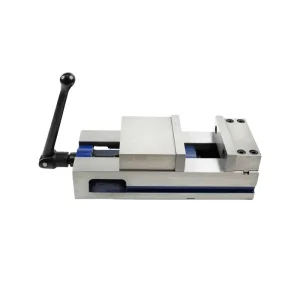
Integrate our precision hydraulic cylinders, rotary actuators, and ER clamping tooling into your industrial machines for maximum operational uptime.