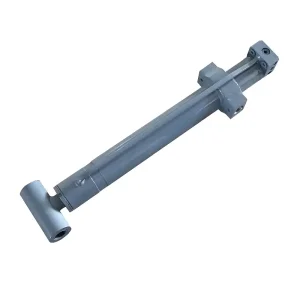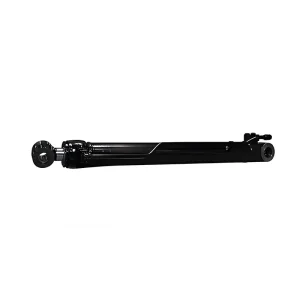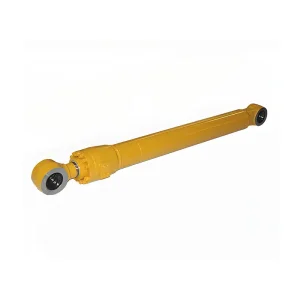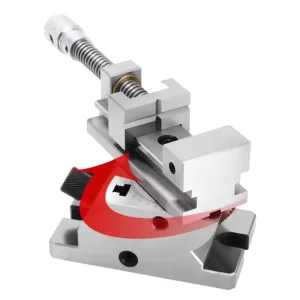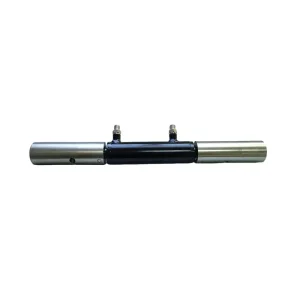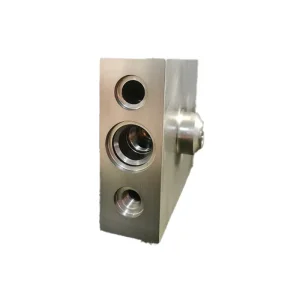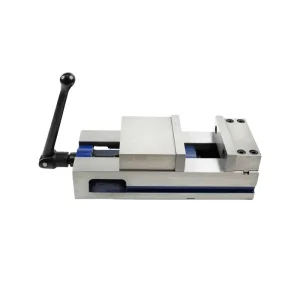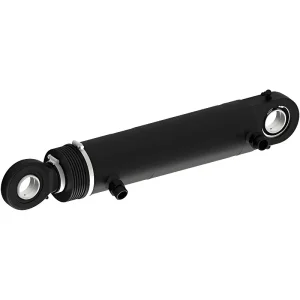
Featured Industrial Actuators & Control Valve Blocks
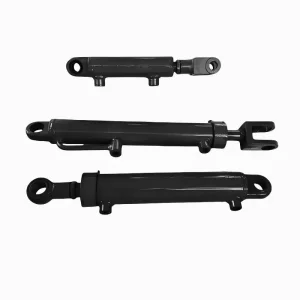
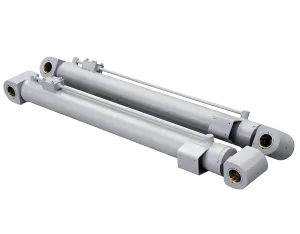
Explore our precision-machined hydraulic solutions engineered for severe heavy-duty cycles, high pressure ratings, and continuous mobile operational longevity.
Global Fluid Power Dynamics & The Architecture of Quick Valve Blocks
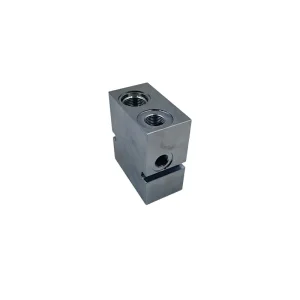
In modern industrial and mobile fluid power transmission, the quick valve block (rapid response integrated hydraulic manifold) has evolved from a passive conduit array into the mission-critical epicenter of electro-hydraulic motion control.
Engineering Paradigm Shift: As construction machinery, mining excavators, automated agricultural implements, and precision machine tools migrate toward high-pressure, electro-proportional load-sensing systems (420 bar / 6000 psi), legacy multi-point external piping architectures fail due to thermal fatigue, fluid vibration harmonics, and elevated leakage risks. The integrated Quick Valve Block resolves these challenges by consolidating directional, flow, counterbalance, and anti-cavitation logic within a monolithic CNC-machined alloy block.
High-Response Valve Actuation
Quick valve blocks minimize fluid transit capacitance between valve cavities and actuator ports. By reducing internal dead volume, system response times drop below 12 milliseconds, eliminating control hysteresis in critical safety circuits like boom lock and rapid quick-coupler release.
Zero Leakage Integrity
By substituting threaded hard lines with internally intersecting cross-drilled passages and standardized SAE/ISO cartridge cavities, quick manifolds eliminate up to 85% of potential leakage points, ensuring environmental compliance under rigorous tier-4 and stage-V norms.
Micro-Turbulence CFD Optimization
Contemporary fluid simulation allows Chinese advanced manufacturers like Qingdao Micro Precision Machinery (MPM) to design sweeping radii and optimized transition junctions, minimizing pressure drop (ΔP), fluid shearing, and localized oil overheating.
Materials Science, Gun Drilling & Cavity Precision Benchmarks
The operational lifecycle of a quick valve block depends entirely on base metal grain structures, deep-hole drilling perpendicularity, thermal deburring thoroughness, and micron-level cartridge valve pocket tolerancing.
| Alloy Grade / Specification | Yield Strength (MPa) | Burst Pressure Rating | Primary Industrial Use-Case | Surface Treatment Standard |
|---|---|---|---|---|
| 6061-T6 / 7075-T651 (Billet Aerospace Aluminum) | 276 – 503 MPa | Up to 250 bar (3,625 psi) | Aerial work platforms, mobile robotics, lightweight AGV attachments | Hard Anodized MIL-A-8625 Type III (50 μm) |
| Ductile Iron GGG40 / QT450-10 (Continuous Cast) | 310 – 450 MPa | Up to 350 bar (5,075 psi) | Excavators, medium wheel loaders, agricultural hydraulic consoles | Black Oxide / Electroless Nickel Plating |
| Carbon Steel 1045 / 40Cr (Normalized Forgings) | 530 – 620 MPa | Up to 420 bar (6,090 psi) | Mining LHD loaders, metallurgical presses, extreme shock-load cylinders | Zinc-Nickel Coated ISO 10683 (720h Salt Spray) |
| 316L Stainless Steel (Austenitic) | 220 – 300 MPa | Custom High-Pressure Spec | Subsea exploration, offshore cranes, chemical fluid processing | Electropolished & Passivated ASTM A967 |
Multiaxis CNC Gun Drilling
Deep intersecting oil galleys are drilled using dedicated deep-hole gundrilling machines with high-pressure internal cooling (80 bar). This achieves drilling runout within 0.05 mm per 300 mm depth, preventing internal wall rupture between high-pressure and tank return circuits.
Cartridge Cavity Standards
All cavity profiles conform strictly to global interchangeability standards: Sun Hydraulics (T-2A, T-11A, T-17A, T-10A), HydraForce common cavity sizes (VC08-2, VC10-2, VC12-3), and ISO 7368 two-way slip-in cartridge dimensions. Runout and concentricity are held under 0.008 mm.
Thermal & ECM Deburring
Internal burrs from intersecting cross-holes represent the #1 failure mode in field hydraulics. MPM utilizes Thermal Energy Deburring (TEM) and Electrochemical Machining (ECM) to vaporize internal particulate, followed by microscopic borescope inspection to guarantee ISO 4406 cleanliness.
Qingdao Micro Precision Machinery: Rigorous Quality Safeguards
Established in 2006 in Chengyang District, Qingdao, China, MPM manufactures hydraulic cylinders, integrated manifolds, and CNC accessories across a state-of-the-art 3,500 m² production complex with monthly output surpassing 20,000 units.
Zeiss 3D CMM Coordinate Inspection
Every complex quick manifold prototype and production batch undergoes computerized geometric coordinate dimension verification. Form tolerances, true hole positions, valve seat chamfers, and thread alignments are recorded in certified inspection documentation.
High-Pressure Cyclic Pulse Testing
Blocks are subjected to 1.5x maximum working pressure hydraulic proof tests. Customized test rigs cycle dynamic pressures up to 500 bar to assess fatigue limits, manifold wall breathing, thread strain under load, and zero cross-circuit bypass leakage.
ISO 4406 Cleanliness Lab
Manifolds are flushed inside ultrasonic baths with solvent circulation. Gravimetric analysis and automatic optical particle counters confirm absolute fluid cleanliness conforming to ISO 4406 Class 16/14/11, protecting sensitive proportional solenoid valves.
Global Localization, Tariff Compliance & Supply Resilience
International OEMs in North America, Western Europe, Southeast Asia, and Australia require predictable lead times, transparent material traceability, and seamless customs integration.
Material Traceability & EN 10204 3.1
All cast iron billets, forged round steels, and aerospace aluminum blocks are accompanied by authentic mill test certificates (MTC) documenting chemical composition (spectrographic analysis) and mechanical yield, elongation, and Charpy V-notch impact toughness.
Regulatory Compliance Safeguards
Manufactured products comply with European Machinery Directive 2006/42/EC, RoHS, and REACH non-hazardous substances standards. Threaded ports are precision-cut to unified metric (ISO 6149), BSPP (ISO 1179), or SAE J1926 straight thread O-ring boss standards.
Bonded Warehousing & Export Packaging
Manifolds are protected with non-evaporating VCI corrosion inhibitors, custom internal port plugs, vacuum-sealed polyethylene wrappers, and boxed within ISPM-15 compliant fumigated wooden crates designed to withstand transatlantic and transpacific sea freight.
Seamless CAD/CAM Integration: Our engineering office processes native 3D formats including STEP (.stp), Parasolid (.x_t), IGES, and SolidWorks files. Engineering change orders (ECOs) are cross-checked within 24 hours, guaranteeing zero tool crash errors and absolute geometrical conformity before spindle operation.
Mission-Critical Deployment Scenarios
Where standard threaded pipe fittings crack under continuous cyclic loading, MPM custom quick valve blocks deliver structural rigidity and responsive hydraulic performance.
Excavator Quick Hitch & Coupler Systems
Application: Fast tool changeover between digging buckets, hydraulic breakers, and sorting grabs.
Block Function: Integrates a pilot-operated check valve, safety relief valve, and high-pressure solenoid in a compact block. Ensures the hydraulic locking pin remains pressurized even upon complete electrical failure or main pump stall.
Mining Underground LHD Tilt & Steering
Application: Heavy underground haulage vehicles operating in tight mine drifts.
Block Function: High-tensile forged steel manifold block absorbs extreme shock loads when muck piles resist bucket penetration. Dual counterbalance valves prevent load run-away while dynamic anti-cavitation spools protect cylinder seals.
Aerial Boom Platforms & Mobile Cranes
Application: Personnel lifting baskets and long-reach crane luffing booms.
Block Function: T3A counterbalance valve block directly flange-mounted to cylinder ports. Provides emergency manual descent metering, hose-burst instantaneous lock, and smooth creep-speed positioning without stick-slip vibration.
Agricultural Reversible Turning Ploughs
Application: Modern high-acreage tractor hydraulic implement turnover systems.
Block Function: Automatic sequence turnover block MPM-HCVB. Automatically shifts fluid direction when cylinder stroke reaches dead-center limit, producing a cushioned 180° rollover without operator manual intervention.
Refuse & Sanitation Garbage Compactor Trucks
Application: Continuous refuse packing and container tipping mechanisms.
Block Function: Compact high-flow directional manifold block designed for extreme contamination tolerance. Resists particulate abrasive erosion in continuous municipal outdoor duty.
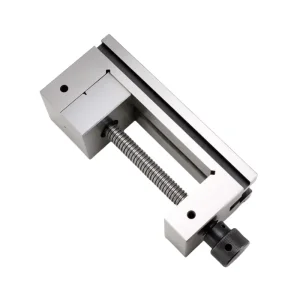
High-Torque CNC Clamping Stations
Application: Multi-station pneumatic-hydraulic modular vise and fixture circuits.
Block Function: Aluminum hard-anodized manifold block with zero-leakage poppet valves, maintaining constant fixture holding pressure throughout high-speed milling cycles.
Comparative Engineering: Manifold Configurations
Evaluate physical property differences and performance trade-offs across common quick valve block manufacturing specifications.
| Performance Parameter | Monolithic Custom Quick Block | Subplate Sandwich (D03/D05) Stack | Traditional Line-Mounted Piping |
|---|---|---|---|
| Hydraulic Response Speed | Immediate (< 12 ms) — Minimal internal capacitance | Moderate (30 – 60 ms) — Inter-plate port transitions | Sluggish (> 120 ms) — Hose elasticity & line length |
| Leakage Points Potential | Zero external body joint lines | Multiple O-ring inter-face seals under tie-rod stretch | Numerous NPT/JIC/BSPP threaded fittings |
| Max Operating Pressure | Up to 420 bar (Forged Alloy Steel) | Typically 210 – 315 bar depending on subplate bolts | Vibration-limited (frequent fitting torque decay) |
| Space Envelope / Weight | Up to 60% volume reduction | Tall stack footprint, potential machine interference | Large, disordered routing footprint |
| Diagnostic Accessibility | Centralized test points with minimal sensor cabling | Subplate level tap points required | Dispersed plumbing gauges, high maintenance time |
Technology Roadmap: Next-Generation Quick Manifolds (2025–2030)
As industry embraces digitalization and decarbonization, hydraulic manifold manufacturing is undergoing transformative technological evolutions.
Additive Manufacturing & 3D DMLS
Direct Metal Laser Sintering (DMLS) in titanium and maraging steel enables smooth curved internal flow galleries impossible with traditional drills. This reduces flow separation turbulence by 40% and overall manifold block weight by up to 65% for aerospace and performance mobile hydraulics.
Embedded IoT Pressure & Temp Sensing
Integration of miniature micro-electro-mechanical system (MEMS) sensors inside auxiliary manifold cross-ports. Real-time dynamic monitoring of localized pressure spikes, fluid temperature degradation, and early predictive cavitation warnings broadcast directly across CAN-bus / SAE J1939 networks.
Decarbonization Through Energy Recovery
Next-gen quick valve blocks incorporate electro-hydraulic regeneration pathways. During cylinder lowering or braking decelerations, oil flow is directed through integrated micro-hydraulic recuperation units, reducing overall battery consumption on electric construction excavators.
Engineering Workflow: 5 Controlled Steps to Production
From preliminary circuit diagram evaluation to final global shipment, MPM enforces structured milestone validation ensuring zero dimensional discrepancies.
Circuit Analysis
Review customer hydraulic schematics, valve models, flow rates, operating pressures, and envelope physical restrictions.
CFD & Solid Modeling
Optimization of internal galleys in 3D CAD to maximize wall thicknesses and eliminate cross-channel flow bottlenecks.
Drawing Approval
Comprehensive 2D engineering drawings detailing port threads, cavity codes, and mounting planes signed off by the customer.
Machining & Deburring
Multiaxis CNC machining, precision gun-drilling, thermal deburring, surface treatment, and ultrasonic cleanliness wash.
Testing & Dispatch
100% CMM coordinate verification, hydraulic pressure pulse testing, VCI export packaging, and traceable global delivery.
Frequently Asked Engineering Questions
Clear answers to critical procurement, manufacturing tolerances, valve interchangeability, and logistics inquiries.
What specific details are required to quote and engineer a custom quick valve block?
Can MPM reverse-engineer or replace obsolete valve manifolds from an existing physical sample?
How does MPM guarantee that intersecting internal oil channels are 100% free of machining chips and burrs?
What surface treatments do you offer for harsh offshore, coastal, or underground environments?
What are standard lead times for custom manifold prototypes and serial production?
Industrial Tooling, Specialty Cylinders & Valve Blocks
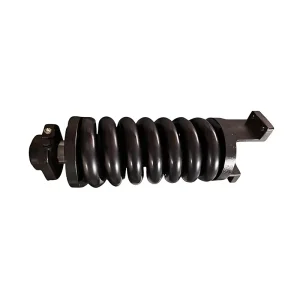
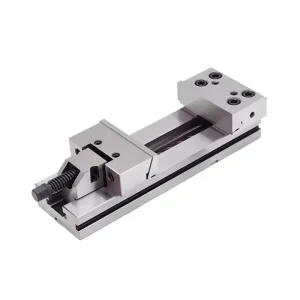
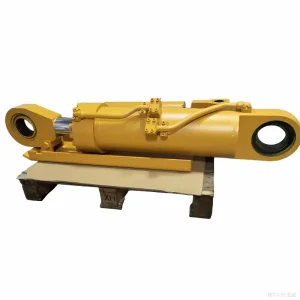
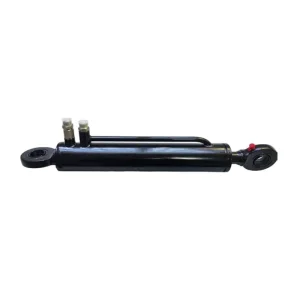
Explore the rest of our factory-machined product range, including heavy excavator boom actuators, modular CNC tooling, and counterbalance valve blocks.