
Primary Heavy Machinery Hydraulic Actuation Portfolio
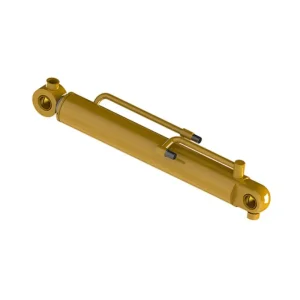
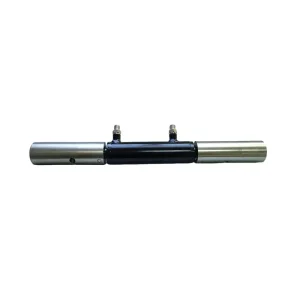
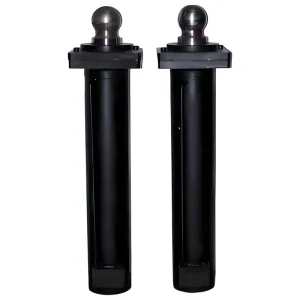
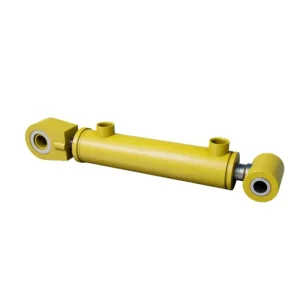
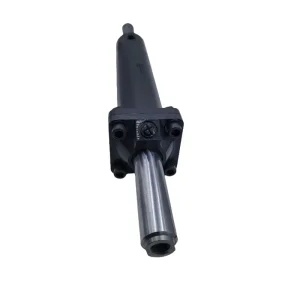
Direct manufacturer supply for boom articulation, outrigger chassis stabilization, steering linkage, and machine tool clamping systems machined in Qingdao, China.
Deconstructing "Cheap": Why Low Initial Price Differs from Low Total Cost of Ownership
In global fluid power procurement, sourcing cheap hydraulic jack steering cylinders must not mean compromising on metallurgy, linear tolerances, or sealing integrity.
Direct Factory Cost Arbitrage
By eliminating 3-tier distribution markups and non-asset trading intermediaries, direct buyers achieve a 30% to 45% unit invoice reduction while dealing straight with the machining floor.
- Zero broker commission overhead
- Direct raw bar & tube mill pricing
- High-volume batch forging discounts
Metallurgical Failure Mitigation
The actual cost of a failed steering cylinder is measured in field recalls and catastrophic downtime. We utilize high-yield 27SiMn or 4140 quenched and tempered alloys over porous cast stock.
- Hard chrome plating ≥ 30µm (HV 900)
- Skiving & roller burnishing (Ra ≤ 0.2µm)
- 100% Ultrasonic non-destructive testing
Lifecycle Duty Optimization
Real economy is determined by 10,000 continuous hours without fluid bypass. We implement Parker, Hallite, and Merkel step-seal packings engineered for severe impulse cycle conditions.
- Low friction PTFE bronze guide rings
- Dual-lip polyurethane rod wiper seals
- Zero external weepage past rod glands
Hydraulic Steering Cylinder & Jack Design Architecture
Comprehensive technical benchmarks for double-acting, equal-displacement steering systems and integrated stabilizer jacks operating under extreme dynamic stresses.
| Subsystem Component | Material Grade & Specification | Machining & Surface Treatment | Critical Tolerance / Inspection Standard |
|---|---|---|---|
| Cylinder Barrel (Tube) | 27SiMn / ST52 / E355 Cold Drawn Seamless (CDS) | Skived & Roller Burnished (SRB), Honed finish | Internal Roughness Ra ≤ 0.2 µm, Straightness 1:1000, ISO H8 Bore Tolerance |
| Piston Rod | 40Cr / 42CrMo4 / AISI 4140 Quenched & Tempered | Induction hardened 52-58 HRC, Hard Chrome Plated | Chrome layer 30–50 µm, Corrosion resistance 200h NSS Rating 10, f7/f8 tolerance |
| Cylinder Gland & Head | Ductile Iron QT500-7 / GGG50 or C45 Forged Steel | Multi-axis CNC Turning & Milling | Concentricity ≤ 0.02 mm, ISO 6H thread tolerance, High pressure relief groove |
| Piston Core | Ductile Iron GGG40 / Steel 1045 with Wear Bands | Single-setup CNC profiling with radius relief | Runout ≤ 0.015 mm relative to rod thread, Phenolic/Bronze guide band fit |
| Sealing System | PTFE + Bronze / Polyurethane (PU) / FKM (Viton) | Pre-compressed high-pressure multi-stage packs | -35°C to +110°C working range, Pressure spikes up to 40 MPa, Leakage zero class |
| Mounting Clevis / Bushings | 42CrMo Forged Eye Ends / Heavy Duty Spherical Bearings | Robotic submerged arc welding (SAW) / GMAW | Full weld penetration ultrasonically checked; self-lubricating PTFE/bronze sphericals |
Why Shandong, China Dominates Heavy Fluid Power Production
A regional industrial cluster combining heavy metallurgical foundries, automated precision machining, seal fabrication, and world-class maritime logistical ports.
Seamless Metallurgical Supply
Direct proximity to domestic mega-steel mills (such as Baosteel and Shandong Iron & Steel) provides uninterrupted allocations of certified alloy tubes, cast ingots, and specialized bar stock at mill-run baseline tariffs.
Vertical In-House Integration
Micro Precision executes barrel cutting, deep-hole skiving, CNC turning, robotic welding, induction hardening, chrome bath plating, assembly, and 100% testing on an integrated, self-owned footprint in Qingdao.
Immediate Maritime Export Gateways
Our Chengyang District workshops are located under 45 minutes from Qingdao Port—one of the planet's busiest container gateways—slashing inland drayage rates, customs turnaround, and domestic transit vulnerabilities.
Enterprise Sourcing: How Global OEMs Audit Our Facilities
Enterprise procurement teams from North America, Europe, Australia, and ASEAN demand rigorous documentation and physical verification to de-risk high-volume supplier transitions.
PPAP Level III Capability
Full Production Part Approval Process deliverables including Design FMEA, Process Control Plans, Gauge R&R, and initial sample inspection reports (ISIR).
Material Traceability
Full EN 10204 3.1 Mill Test Certificates verifying chemical spectrometry, Charpy V-notch impact toughness, and tensile yield across every steel heat-number batch.
100% FAT Static Pressure Testing
Every single cylinder experiences 1.5x nominal operating pressure holding tests for 5 continuous minutes to confirm zero internal bypass or weld weepage prior to crating.
Standardized Packing & VCI Protection
Volatile Corrosion Inhibitor (VCI) shrink barrier with nitrogen cavity purge and custom-bracketed fumigated wooden crates tailored for rough intermodal transits.
Technological Frontiers in Hydraulic Steering & Jacking
Adapting steering and stabilizing cylinders to match next-generation autonomous fleets, electrification, and zero-emission operational targets.
Electro-Hydraulic Steer-by-Wire
Elimination of hydraulic orbital valves in operator cabins in favor of CAN-bus commanded electro-proportional manifold valve blocks mounted directly onto the steering cylinder barrel for instant, sub-millisecond dynamic tracking.
Laser Cladding & HVOF Coatings
Transitioning from hexavalent hard chrome baths to high-velocity oxy-fuel (HVOF) and laser-clad nickel-chromium superalloys, yielding extreme microhardness (>1100 HV) and zero microcracking under aggressive salt spray environments.
Smart Sensor Integrated Cylinders
Embedded linear variable differential transformers (LVDT) or magnetostrictive stroke sensors machined directly into the hollow piston rod, feeding precise real-time steering angle telemetry to autonomous navigation algorithms.
Extreme Application Arenas for Steering & Jack Actuators
Specific field scenarios where stroke cushioning, bending resistance, and contamination-sealing determine machine uptime.
Underground LHD & Mining Haulers
Articulated steering cylinders face extreme high-frequency oscillating shock loads and acidic slurry water. Thick-walled barrels and spheroidal spherical eye bearings absorb twisting forces without ovalizing the rod guide glands.
High-Capacity Rough-Terrain Forklifts
Double-ended, equal-volume balanced steering cylinders mounted across the rear drive-steer axle. Guarantees identical left-to-right wheel swing velocity and zero drift when handling off-center heavy structural cargo.
Mobile Hydraulic Cranes & Jack Stabilizers
Outrigger jack cylinders responsible for levelling multi-ton chassis. Feature integral pilot-operated dual check valves (counterbalance blocks) that mechanically lock hydraulic oil to prevent creep if line ruptures occur.
From CAD Blueprint to Packaged Consignment: 5-Step Control
A rigorous, document-driven OEM manufacturing path ensuring micron-level compliance before steel cutting commences.
Engineering Review
CAD drawing analysis, FEA stress verification, seal material compatibility checks for fluid types, and mounting geometry review.
Raw Steel Prep
27SiMn/4140 hollow tube cutting, spectral chemical analysis, ultrasonic flaw inspection, and batch heat treatment.
CNC Machining
Multi-axis turning, deep-hole skiving & burnishing (Ra ≤ 0.2µm), precision thread turning, and robotic clevis welding.
Clean-Room Assembly
ISO Class 8 clean room seal installation, computer-controlled torque tightening, and dual-direction rod insertion.
100% FAT & Crated
1.5x working pressure hydraulic testing, oil contamination checks, VCI anti-rust wrap, and fumigated export palletizing.
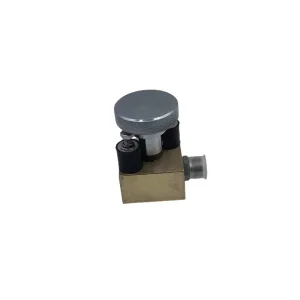
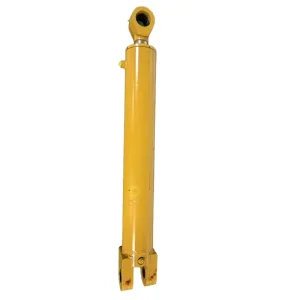
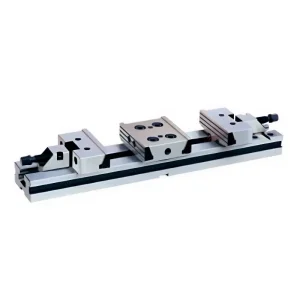
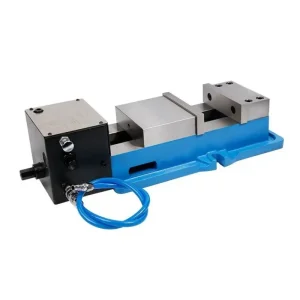
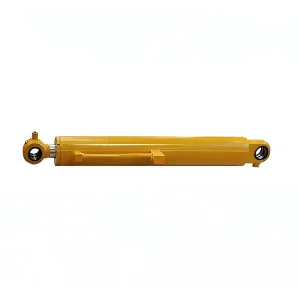
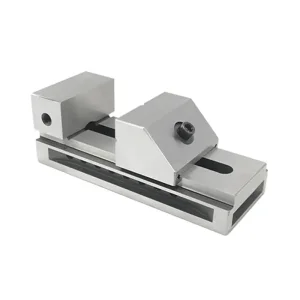
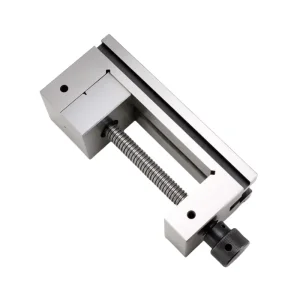
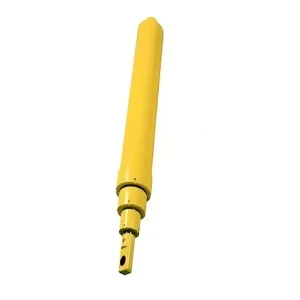
Auxiliary Actuation, Integrated Manifolds & CNC Tooling
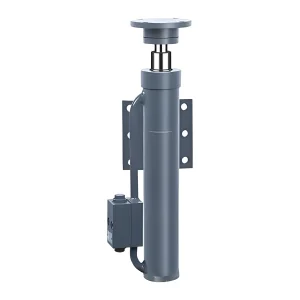
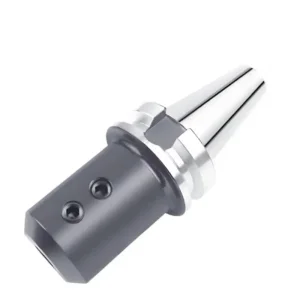
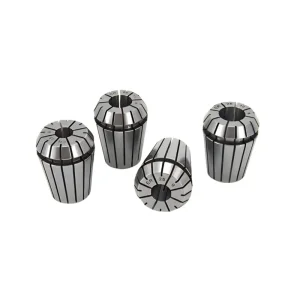
Complete fluid control blocks, buffering cylinders, and rigid machine holding vises engineered in our Qingdao precision machining facility.
Frequently Asked Questions for Hydraulic Jack Steering Cylinders
Detailed engineering, purchasing, and logistics answers direct from our senior fluid power production team.
How can a Chinese factory offer cheap hydraulic jack steering cylinders without cutting quality?
Our cost competitiveness stems entirely from structural supply-chain optimization rather than material downgrades. First, our Qingdao factory sits adjacent to the world's most concentrated steel refining and cold-drawn tubing hubs in Shandong, lowering steel procurement tariffs. Second, we integrate all core processes—skiving, CNC turning, welding, chrome plating, and assembly—under one roof, eliminating sub-tier machining markups. Finally, direct exporting through Qingdao Port bypasses export brokers, passing on a direct 30-45% cost savings straight to OEMs.
What are the key technical differences between a hydraulic steering cylinder and a standard lifting jack cylinder?
While hydraulic jack cylinders prioritize sustained unidirectional load holding (often utilizing integrated pilot-operated check valves to prevent chassis drop), steering cylinders operate under rapid, alternating bidirectional cycles with high dynamic side-loading. Steering actuators must feature equal fluid displacement (double-rod balanced design) or precisely balanced cross-port relief valving to ensure matched left/right turning resistance. Furthermore, steering cylinders employ low-friction PTFE-bronze wear rings to prevent stick-slip chatter during minute steering corrections.
Can you manufacture custom replacement steering cylinders from a physical sample or worn unit?
Yes. Our engineering department operates complete 3D coordinate measuring machines (CMM) and laser scanning systems. When an international customer sends a physical sample or a damaged OEM part, we conduct non-destructive material spectroscopy to identify exact metallurgy, measure all internal gland grooves, determine thread standards (metric ISO, SAE, BSPP, or NPT), and output a production-grade 2D/3D CAD drawing for mutual sign-off before any chip is cut.
What specific chrome plating thickness and surface roughness do you maintain on steering rods?
Our induction-hardened piston rods (quenched and tempered 40Cr / 42CrMo4) receive a minimum hard chrome layer of 30 to 50 microns with a surface hardness of HV 850–1000. Cylinder barrel inner diameters are skived and roller burnished to an internal roughness of Ra ≤ 0.2 µm, while piston rods are precision ground and polished to Ra ≤ 0.15 µm. This micro-finish ensures complete hydrodynamic oil film retention while eliminating abrasive wear against high-performance polyurethane rod wipers.
What documentation is supplied with mass-production OEM cylinder shipments?
Every commercial batch is accompanied by a full traceability portfolio: EN 10204 3.1 chemical and mechanical mill test certificates for tube and rod stock, ultrasonic non-destructive weld testing reports, heat-treatment hardness certification, dimensional CMM inspection sheets, 100% factory hydrostatic pressure holding records (1.5x nominal pressure), and salt spray corrosion test logs. For automotive or mining OEMs, PPAP Level III dossiers are provided upon request.
What are your minimum order quantities (MOQ) and production lead times for custom cylinders?
For custom engineered OEM prototypes and initial sample validation, we support batch sizes down to 1–5 units. For standard production runs, our optimal MOQ begins at 20–50 units depending on bore size and dimensional complexity. Rapid prototype turnaround averages 15 to 20 business days from signed drawing approval, while high-volume scheduled container production cycles range between 30 and 40 days, coordinated for maritime departure via Qingdao Port.
Initiate Your Direct Factory Sourcing Request
Submit your CAD files, hydraulic fluid parameters, operating pressure, and pin-to-pin dimensions. Our application engineers provide formal pricing, DFM analysis, and lead-time schedules within 24 hours.