Precision Engineering Portfolio
Featured Hydraulic Actuators & Valve Control Assemblies
Explore our precision-machined cylinders, dynamic valve blocks, and heavy-duty structural linkages built strictly in accordance with ISO 9001:2015 and international quality specifications.
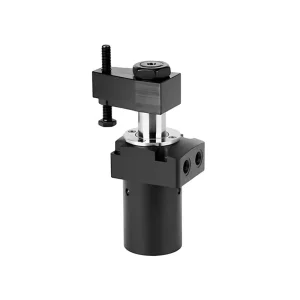
Custom Angle Push Cylinder Actuator
Custom Angle Push Cylinder Supplier, Manufacturers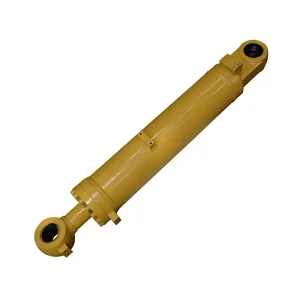
Heavy-Duty Chassis Telescopic Cylinder
China Chassis Telescopic Cylinder Manufacturer, Factory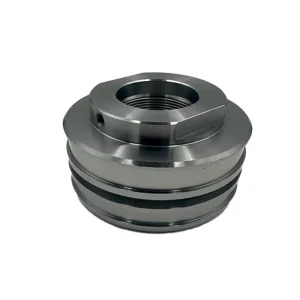
Custom Cylinder Piston MPM-HCPT11
Custom MPM Hydraulic Cylinder Piston MPM-HCPT11 Manufacturers, Factories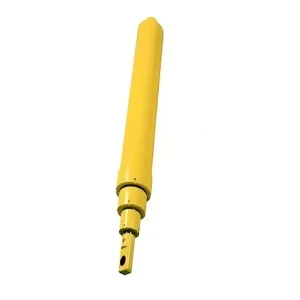
High-Quality 4-Stage Telescopic Cylinder
High-Quality 4 stage Telescopic cylinder Suppliers, Manufacturers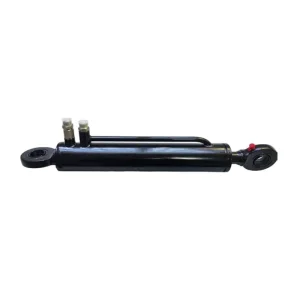
Single Rod Double Acting Steering Cylinder
Cheap Single Rod Double Acting Steering Cylinder Manufacturer, Factory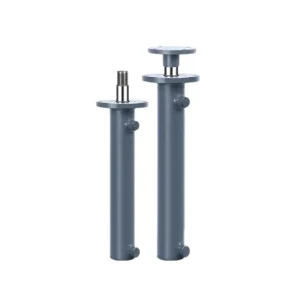
Crane Outrigger Cylinder MPM-OHC12
ODM Outrigger Hydraulic Cylinder MPM-OHC12 for Crane Supplier, Factory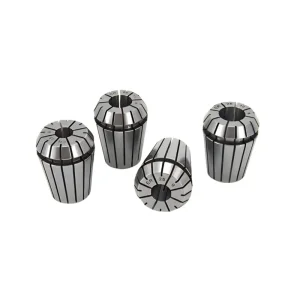
High Precision ER Collet MPM-EC0070
Cheap ER Collet MPM-EC0070 Supplier, Manufacturer
Industry Macro Intelligence
Global Procurement Dynamics & Evolution in Hydraulic Steering
Global Tier-1 OEMs in agricultural, material handling, and heavy civil construction are overhauling steering kinematics. From electro-hydraulic steer-by-wire (SbW) integration to zero-leakage mandates under extreme cyclic pressure spikes, the demands on hydraulic cylinder manufacturers have intensified significantly.
Steer-by-Wire & Sensor Fusion
Modern steering cylinders are no longer purely passive hydrostatic actuators. The global migration toward autonomous guidance in farming and robotics demands steering cylinders integrated with contactless LVDT or magnetostrictive position transducers to deliver real-time sub-millimeter stroke feedback directly to machine ECUs.
High-Frequency Micro-Oscillation Resistance
Off-highway vehicles operating on irregular terrains subject steering cylinders to continuous micro-vibrations and side-load deflections. This requires upgraded composite phenolic wear bands and engineered step-cut polyurethane seals that mitigate stick-slip effects without accelerated seal degradation.
Eco-Friendly Leak Prevention
Under stringent ESG benchmarks and EU Stage V / EPA Tier 4 environmental compliance, steering systems must prevent any trace hydraulic fluid egress. Manufacturers must transition to ultra-smooth chrome-plated, laser-cladded, or nitrided rods exhibiting Ra < 0.2 µm surface finish coupled with tandem sealing arrangements.
Engineering Evaluation Matrix
Architectural Analysis: Balanced Double-Rod vs. Differential Single-Rod
Precision steering stability depends heavily on the mechanical geometry and hydraulic kinematics selected during OEM vehicle chassis conception.
| Evaluation Parameter | Equal-Displacement Balanced Cylinders | Differential Single-Rod Cylinders | Micro Precision Dual-Synchronized Systems |
|---|---|---|---|
| Displacement Symmetry | 1:1 ratio (Identical steering turns lock-to-lock) | Asymmetrical (Unequal oil volume bore vs. rod end) | Hydraulically counterbalanced via integrated manifold |
| Chassis Footprint | Requires central mounting clearance across axle | Compact; suited for outboard steering linkages | Optimized pin-to-pin packaging for compact axle spans |
| Working Pressure Range | Up to 250 bar (3,625 psi) continuous | Up to 210 bar (3,045 psi) standard | Tested to 350 bar (5,075 psi) shock test limits |
| Thermal Stability | Balanced dissipation across reciprocal chambers | Risk of localized fluid overheating in high-cycle steering | Manifold-integrated anti-cavitation flushing ports |
| Primary Target Application | Forklifts, underground mining loaders, AGVs | Agricultural tractors, utility backhoes | Heavy wheel loaders, articulated haulers, dock cranes |
Holistic OEM Solutions
Turnkey Steering Systems Across Critical Industrial Segments
We deliver customized hydraulic cylinder assemblies adapted to rigorous operating envelopes—from zero-visibility mine shafts to corrosive coastal container yards.
Heavy Construction & Earthmoving
Engineered for wheel loaders and articulated dump trucks where high torque steering and shock dampening are imperative. Our cylinders incorporate integrated cushion spears and inductive proximity switches to safeguard steering linkages from violent metal-to-metal impact at extreme stroke endpoints.
Agricultural Machinery & Tractors
Designed to interface directly with auto-guidance GPS controllers. Featuring micro-honed cold-drawn steel barrels (EN 10305-1 E355) and multi-lip nitrile-PTFE seal packs that resist seasonal downtime, organic fertilizer exposure, high humidity, and continuous abrasive particulate bombardment.
Industrial Material Handling & Forklifts
Balanced double-rod cylinders engineered specifically for tight-turning electric and internal combustion forklifts. Our precision-ground spherical plain bearings (GE series) ensure zero play, eliminating erratic wandering and reducing tire scrubbing during multi-shift warehouse stacking cycles.
Global Quality Standard & Verification
Worldwide Engineering Support & Rigorous Compliance
Since 2006, Qingdao Micro Precision Machinery has adhered to strict metallurgical traceability and metrological verification, providing comprehensive assurance for international OEM supply chains.
Traceability
Mill Certificate EN 10204 3.1
Every batch of 40Cr, 42CrMo, and St52 alloy bars undergoes optical emission spectroscopy and ultrasonic non-destructive testing prior to machining.
Corrosion Life
ASTM B117 NSS > 960 Hours
Piston rods receive precision induction hardening (52-58 HRC) and multi-layer hard chrome plating (25-35 µm) to withstand harsh coastal and mining environments.
Testing Scope
100% End-of-Line Testing
Every finished steering cylinder is verified on automated hydraulic test benches for break-away friction, full stroke proof pressure, and internal zero-bypass leakage.
Interchangeability
Metric & Imperial Readiness
Full engineering compatibility with ISO 6149, SAE J1926, and BSPP port threads; ISO 6H thread gauging executed on all cylinder caps and locking nuts.
2006
Year Founded
50+
Global OEM Partners
3,500m²
CNC Machining Facility
20,000
Units Monthly Capacity
Future-Proof Hydraulics
Technology Roadmap: Next-Generation Steering Actuation
As industrial equipment electrification accelerates, steering actuation is moving beyond conventional fluid conduits. Micro Precision Machinery is actively innovating across four distinct technological horizons.
Phase 1: Smart Sensing Integration
Embedding contactless stroke transducers inside the hollowed cylinder rod, eliminating exterior sensor linkages vulnerable to rock impacts and debris in quarry and off-road work.
Phase 2: Additive Internal Manifolds
Direct 3D printing and precision drilling of cross-drilled internal flow circuits directly inside the cylinder base, drastically decreasing leak points by eliminating external hydraulic piping.
Phase 3: High-Torque Electro-Hydrostatic (EHA)
Self-contained electro-hydrostatic steering actuators combining an integrated brushless DC motor, reversible micropump, and hydraulic cylinder for full Steer-by-Wire electrification.
Phase 4: Predictive Tribology & AI Telematics
Integrating micro-temperature and differential pressure sensors within the cylinder gland to broadcast seal-wear alerts to fleet monitoring portals before mechanical failure occurs.
Engineering Knowledgebase
Frequently Asked Questions on Hydraulic Steering Cylinders
Authoritative insights addressing critical engineering questions raised by mechanical design teams, maintenance engineers, and global procurement managers.
What distinguishes a dedicated hydraulic steering cylinder from a standard utility cylinder?
Dedicated hydraulic steering cylinders operate under significantly higher continuous duty cycles and are subject to dynamic lateral bending forces (side-loading) from steering axles. Unlike standard utility cylinders that only see axial loads during occasional lifting or dumping, steering cylinders must maintain zero internal bypass leakage to prevent dangerous steering drift or "ghosting". They utilize reinforced bronze or phenolic guide bushings, tighter bore tolerances (H8 to H7), precision spherical rod-end bearings with high-misalignment angles, and specialized seal geometries engineered to prevent slip-stick movement during fine micro-corrections.
How do you eliminate steering "drift" or uncommanded wheel turning in hydrostatic steering circuits?
Steering drift is primarily caused by internal fluid bypass across the piston seals, thermal expansion of oil within locked lines, or leakage across the steering control unit (orbitrol) spool valves. Micro Precision addresses this at the cylinder level by employing dual-acting step seals with energized elastomeric O-rings rather than standard cast-iron piston rings. Furthermore, we can integrate pilot-operated dual check valves or counterbalance manifolds directly onto the cylinder barrel, mechanically locking the fluid chambers until a positive pilot pressure command is initiated from the operator's steering valve.
What technical data must buyers specify when requesting a quote for a custom steering cylinder?
To provide a fully verified engineering design and quotation within 24 hours, our technical sales team requires:
- Bore Diameter & Rod Diameter: Determines output push/pull force and column buckling safety margins under max relief pressure.
- Working Stroke & Retracted (Pin-to-Pin) Length: Dictates vehicle turning radius and kinematic clearance boundaries.
- Operating System Pressure & Surge Peaks: Typically 160-250 bar continuous, with peak surge limits up to 350 bar.
- Mounting Configuration: Spherical eye bearings, clevis, trunnion, or cross-tube mounts including pin diameter and bushing tolerances.
- Port Specifications: SAE ORB, ISO metric, or BSPP port positions and angular clocking relative to mounting eyes.
- Environmental Conditions: Temperature range (-30°C to +100°C), saline/dust exposure, and requirement for internal stroke sensors.
Can Micro Precision reverse-engineer and manufacture obsolete OEM steering cylinders from physical samples?
Yes. Our in-house engineering and metrology laboratory regularly reverse-engineers legacy and obsolete cylinders for global fleet rebuilders and distributors. Upon receiving a physical sample or damaged core, our engineers employ coordinate measuring machines (CMM), optical profilometers, and material spectrometers to determine exact geometrical dimensions, metallurgical compositions, surface finishes, and seal pocket tolerances. A detailed manufacturing CAD drawing is returned for customer sign-off prior to CNC milling, turning, and assembly.
How does Micro Precision handle quality control, weld inspection, and export logistics?
All welded joints (cylinder head glands, base clevises, and oil ports) undergo robotic MIG/TIG welding certified under EN ISO 15614 specifications, followed by regular dye-penetrant and ultrasonic inspection. Every unit is pressure-tested at 1.5 times working pressure on automated benches. Export orders receive complete VCI rust-inhibiting wrapping, robust end-plug caps on oil ports, and are packed inside custom IPPC-certified solid fumigation-free wooden crates for sea or air logistics via Qingdao Port.
Precision Engineering Solutions
Custom Hydraulic Cylinders, Steering Components & Tooling
Discover our comprehensive lineup of replacement steering cylinders, outrigger expansion units, precision vices, and heavy machinery buffer solutions.
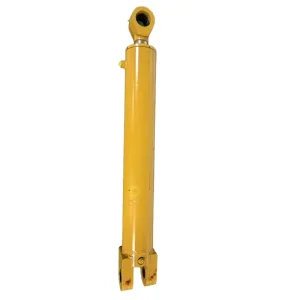
Buffer Cylinder for Excavator & Backhoe
Wholesale Buffer Cylinder for excavator and backhoe loader Supplier, Manufacturer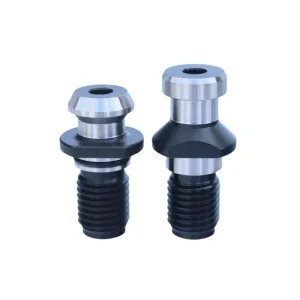
Precision Retention Knob DIN69872
ODM Retention Knob DIN69872 Suppliers, Manufacturers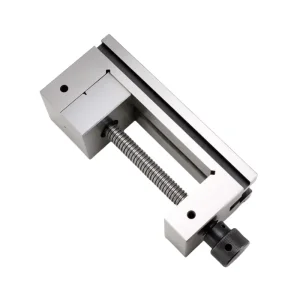
QGG Precision Tool Vice MPM00330
Best QGG Precision Tool Vice MPM00330 Suppliers, Manufacturers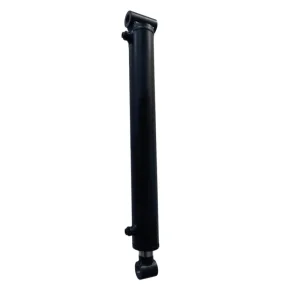
High-Quality Lifting Cylinder HCL602
High-Quality Lifting cylinder HCL602 Factories, Factory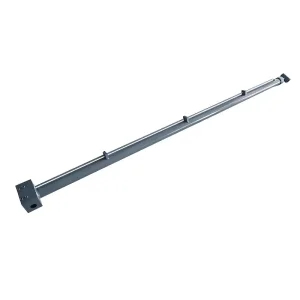
Custom Telescopic Cylinder HCT403
Custom Telescopic Cylinder HCT403 Manufacturer, Factories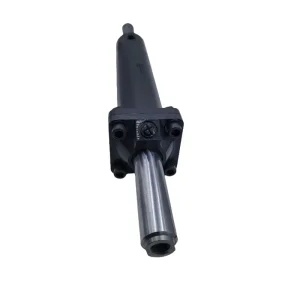
High-Quality Steering Cylinder HCS139495
High-Quality Steering cylinder HCS139495 Suppliers, Manufacturer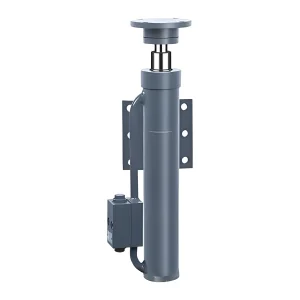
Wholesale Outrigger Expansion Cylinder
Wholesale Outrigger Expansion Cylinder Suppliers, Factory