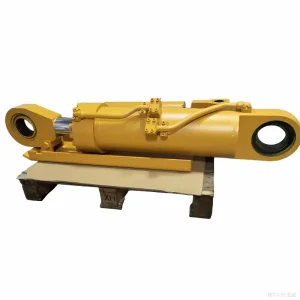
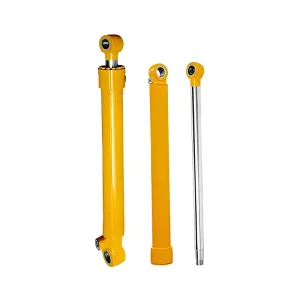
Engineered Actuators & Hydraulic Station Manifold Assemblies
Direct factory supply of precision-machined hydraulic manifolds, proportional blocks, and heavy-duty actuators engineered to withstand up to 420 bar working pressures.
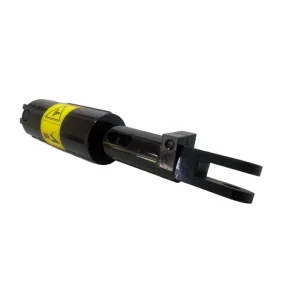
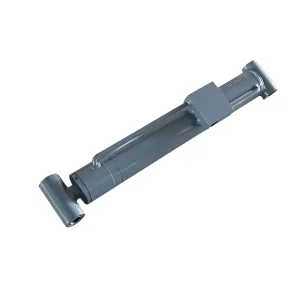
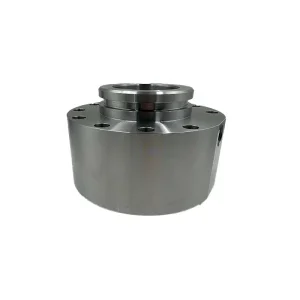
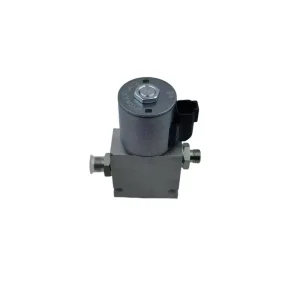
The Architectural Evolution of Hydraulic Station Valve Blocks
From segmented line assemblies to integrated, monolithic, multi-axis machined manifolds: How precision fluid mechanics are reshaping hydraulic power station performance.
The Shift Toward Monolithic Fluid Architecture
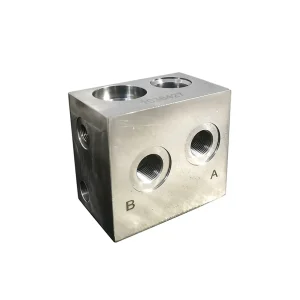
In modern fluid transmission engineering, the hydraulic station valve block (hydraulic manifold) serves as the central nervous system of any hydraulic power unit (HPU). Historically, hydraulic systems relied on complex webs of hard lines, flexible hoses, and discrete in-line valves. This obsolete methodology introduced severe frictional head loss, elevated failure vectors at every fitting interface, and unmanageable maintenance footprints.
Today, premier global equipment manufacturers demand integrated monolithic manifold blocks. By consolidating directional spools, proportional cartridges, counterbalance valves, and pressure-limiting mechanisms into a single engineered alloy block, OEMs eliminate up to 85% of potential external leakage pathways while achieving response times under 12 milliseconds.
Furthermore, the integration of computational fluid dynamics (CFD) in internal gallery design has revolutionized flow velocity distribution. By replacing abrupt 90-degree orthogonal boring with radius-blended gallery intersections, internal turbulence is suppressed, reducing heat dissipation requirements and lowering operational energy consumption by up to 18% across industrial duty cycles.
Key Engineering Thresholds
- Nominal Operating Pressure 250 to 420 bar (3,625 to 6,090 PSI)
- Peak Proof Pressure Rating Up to 650 bar (Burst Margin 2.5×)
- Maximum Internal Gallery Velocity ≤ 4.5 m/s (Pressure) | ≤ 1.5 m/s (Return)
- Fluid Cleanliness Certification ISO 4406 Class 16/14/11 (NAS 1638 Class 5)
- Thread Standard Compliance ISO 6149, SAE J1926-1, BSPP G-Series
CFD Gallery Hydrodynamics
Orthogonal sharp corners inside internal oil galleries generate severe vena contracta zones, inducing localized cavitation, fluid erosion, and high fluid noise.
- Elimination of dead-oil stagnation cavities
- Optimized intersection flow geometry
- Substantial minimization of internal pressure drop ($\Delta P$)
Cavity Precision & Standards
Cartridge valve performance relies directly on micrometer-level cavity geometry, shoulder perpendicularity, and seal entry chamfers.
- Standard SUN, HydraForce, & Rexroth cavity tooling
- Cavity finish tolerance held to $Ra\ 0.4\ \mu m$
- Concentricity between threads and guide bores $< 0.015$ mm
Cross-Port Integrity & Sealing
Thin inter-channel wall breaches constitute catastrophic failures in hydraulic station manifolds under high-frequency hydraulic shock.
- Minimum wall thickness guaranteed $> 4.0$ mm
- Expanded pressure sealing plugs (Lee Plug / EXP)
- Zero-leakage ball-expansion threadless port plugging
Strategic Sourcing Criteria & Total Cost of Ownership (TCO)
Why top-tier equipment builders evaluate hydraulic station valve block suppliers far beyond piece-part unit pricing.
Internal Deburring Failures
The single most pervasive failure in imported valve blocks is the presence of micro-burrs and machining swarf at gallery cross-intersections. When oil temperatures reach 65°C, residual burrs detach, instantly scoring proportional spool lands or seizing cartridge check valves.
Supplier Solution: Dual-stage Thermal Energy Method (TEM) deburring followed by 50 MPa high-pressure fluid flushing.
Metallurgical Porosity & Pinholes
Inferior ductile iron or sand-cast grey iron often contains microscopic shrinkage voids. Under continuous 315 bar duty cycles, these microscopic cavities open into inter-channel micro-cracks, causing unresolvable internal bypass leakage across high- and low-pressure channels.
Supplier Solution: 100% continuous casting ductile iron (QT500-7 / 65-45-12) or forged high-tensile 45# carbon steel billets.
Prototype-to-Mass Scale Agility
Heavy equipment developers suffer when design revisions take 12 weeks to arrive from overseas machine shops. OEM R&D requires rapid DFM engineering feedback and delivery of first-article prototypes within tight project milestones.
Supplier Solution: In-house CAD/CAM automation producing first-article machined manifolds in 7 to 10 business days.
China Factory 4.0: Supply Chain Resilience & Multi-Axis Precision
How modernized Chinese manufacturing clusters like Qingdao integrate deep metallurgy, multi-axis machining, and automated quality loops to deliver unmatched cost-efficiency.
Automated 5-Axis Horizontal Machining Centers (HMC)
At our Qingdao manufacturing facility, hydraulic station valve blocks are produced on high-rigidity Horizontal Machining Centers equipped with twin pallet changers and Renishaw high-precision optical workpiece inspection probes. A single clamping setup allows complete machining of 5 exterior faces, complex compound angled oil drillings, and fine-pitch cavity threading.
This single-setup paradigm eliminates cumulative refixturing runout errors, ensuring absolute perpendicularity between the subplate mounting interfaces (ISO 4401 standards) and the primary internal pressure delivery conduits.
The Qingdao Industrial Supply Cluster Advantage
Global procurement resilience requires more than just machine tools; it demands an integrated, localized industrial supply chain. Qingdao serves as a world-class manufacturing hub offering unparalleled advantages:
- Raw Material Continuity: Instant access to premier certified ductile iron foundries (QT450-10, QT500-7) and aerospace-grade forged aluminum plate (6061-T6 / 7075-T651).
- Integrated Surface Finishing: Environmentally compliant in-house and partner facilities providing Zinc-Nickel (Zn-Ni) electroplating exceeding 720 hours salt spray resistance, electroless nickel plating, and hard anodizing.
- Deep Maritime Port Access: Direct container loading out of Qingdao Port provides uninterrupted, highly economical sea freight to European, North American, and Southeast Asian distribution hubs.
Thermal Deburring (TEM)
Methane-oxygen explosive flash vaporizes every microscopic burr inside internal intersecting drillings without damaging sealing seats.
Ultrasonic Flushing
Multi-stage heated ultrasonic wash baths flush residual particulate out of deep-hole blind intersections to achieve NAS 1638 Class 5 standards.
Zeiss 3D CMM Audits
Automated coordinate measuring probes trace cartridge cavity depths, thread pitch accuracy, and port positional true position within $\pm 0.003$ mm.
Complete OEM Traceability
Laser-etched QR identifiers provide instantaneous traceability linking every manifold block directly to raw heat certificates and CMM inspection records.
The Global Hydraulic Power Unit (HPU) Valve Block Landscape
Analyzing regional standards, macroeconomic transitions, and technical compliance trends across key worldwide markets.
North America: Heavy Industrial & Infrastructure
The North American market remains dominated by SAE J1926 O-ring boss ports and SUN Hydraulics cavity configurations. Driven by federal infrastructure programs and agricultural electrification, OEMs are migrating rapidly from cast open-circuit valves to high-pressure custom manifolds capable of running synthetic, fire-resistant fluids (HFDU).
Key Demands: 5,000 PSI continuous pressure rating, Zinc-Nickel corrosion barrier coatings, and 100% domestic interchangeability.
Europe: Compactness & EcoDesign Directives
European machine builders face rigorous EU Machinery Regulations and carbon footprint disclosure laws. Fluid energy conservation has become an engineering mandate. System designers require CFD-optimized internal pathways to lower mechanical friction, accompanied by ISO 4401 Cetop 03/05/07/08 subplate interfaces and BSPP or metric port standards.
Key Demands: Reduced manifold mass, integrated proportional flow regeneration circuits, and functional safety PLd/e compliance.
Asia-Pacific: High Volume & Electric Integration
The APAC territory represents the largest growth engine for construction equipment, injection molding, and electric mining machinery. With major electric excavators and battery-powered loaders moving into series production, hydraulic station valve blocks must seamlessly interface with variable-speed electric servomotors to provide on-demand flow control.
Key Demands: Ultra-competitive batch economics, compact hybrid electro-hydraulic manifolds, and rapid production scalability.
Mission-Critical Field Application Scenarios
Engineered to excel under severe pressure spikes, abrasive ambient contamination, and round-the-clock cyclic duty.
1. Forging & Metal Stamping Presses
Heavy stamping presses execute rapid decompression and catastrophic cyclic shock loads that tear apart ordinary manifold blocks. Our forged steel valve blocks incorporate two-stage pilot-operated cartridge decompression valves that neutralize shock waves prior to main cylinder retraction.
- Operating Pressures: 350 to 420 bar
- Zero inter-gallery micro-fracture under shock
- Maintains press positioning repeatability within 0.02 mm
2. Injection Molding & Die-Casting
Plastics injection units demand ultra-responsive proportional pressure and flow governing to prevent plastic flash and part warping. Our custom station manifolds combine high-frequency response proportional cartridge throttles with integrated multi-station accumulator safety shut-off blocks.
- Step response times under 15 ms
- Drastically reduces thermal buildup in hydraulic reservoir
- Supports cycle times running 24/7/365 without leakage
3. Underground Mining & Tunnel Boring
Tunnel boring machines (TBMs) and underground LHD vehicles operate in confined, highly corrosive, dust-saturated environments where line bursts present severe flash-fire and safety hazards. Monolithic manifold blocks consolidate all boom and propel circuits into compact ductile iron blocks.
- Hose-burst safety check integration inside block
- Corrosion-resistant chemical nickel coating
- Direct bolt-on mounting to hydraulic pump stations
Metallurgical Comparison & Coating Standards Matrix
Selecting the ideal substrate and surface passivation technology based on operating pressures, weight constraints, and fluid chemistry.
| Material Grade | Tensile Strength (MPa) | Yield Strength (MPa) | Max Working Pressure | Common Surface Treatment | Primary Industrial Sector |
|---|---|---|---|---|---|
| Ductile Iron QT500-7 (GGG50 / 65-45-12) | ≥ 500 MPa | ≥ 320 MPa | Up to 350 bar (5,075 PSI) | Black Oxide / Phosphate / Zinc-Nickel | Industrial HPUs, Machine Tools, Presses |
| Forged Carbon Steel C45 (AISI 1045) | ≥ 600 MPa | ≥ 355 MPa | Up to 420 bar (6,090 PSI) | Electroless Nickel / Chemical Manganese | Heavy Forging, Mining, High-Shock Loads |
| Alloy Steel 42CrMo4 (AISI 4140) | ≥ 1,000 MPa | ≥ 750 MPa | Up to 650 bar (Ultra-High) | Gas Nitriding / Nickel Plating | Offshore Rigs, Hydroelectric Dam Gates |
| Aerospace Aluminum 6061-T6 | ≥ 310 MPa | ≥ 275 MPa | Up to 210 bar (3,000 PSI) | Hard Anodized (Type III) 50 μm | Mobile Robotics, Aerial Platforms, Defense |
| High-Yield Aluminum 7075-T651 | ≥ 570 MPa | ≥ 500 MPa | Up to 280 bar (4,000 PSI) | Hard Anodized + PTFE Impregnation | Aerospace Ground Support, Racing Test Benches |
| Stainless Steel 316L (1.4404) | ≥ 520 MPa | ≥ 220 MPa | Up to 350 bar (Corrosive) | Electro-polished / Passivated | Marine Subsea, Chemical & Food Processing |
Frequently Asked Engineering & Sourcing Questions
In-depth technical answers addressing cavity compatibility, pressure drops, deburring protocols, and testing validations.
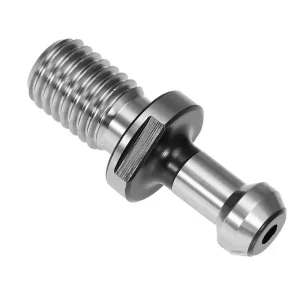
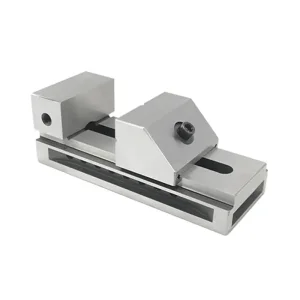
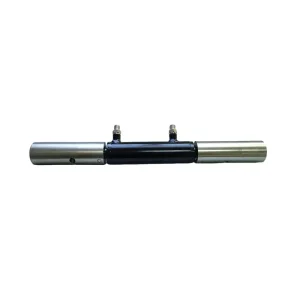
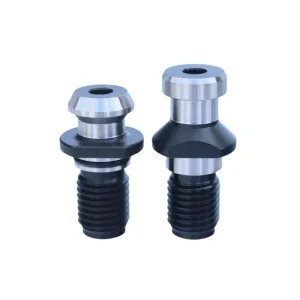
Precision Tooling, Actuators & Hydraulic Accessories
Expanding fluid power reliability through synchronized CNC machining fixtures, high-load linkages, and certified retention hardware.