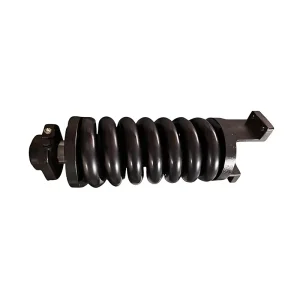
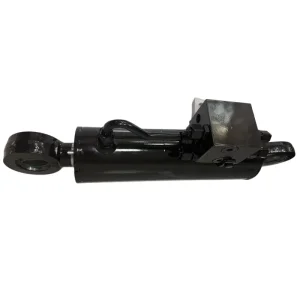
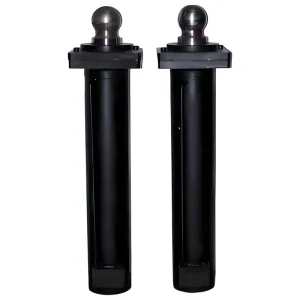
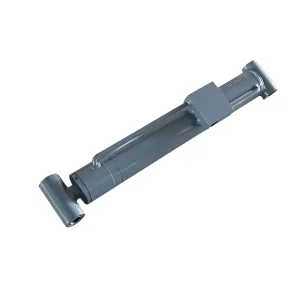
High-Performance Hydraulic Valve Blocks & Primary Actuators
Explore our export-grade fluid control valve blocks, electro-hydraulic solenoid modules, and high-tolerance universal vices manufactured to micron-level tolerances.
Hydrodynamic Fluid Throttling & Pressure-Compensated Regulation
A rigorous examination of fluid dynamics, laminar-to-turbulent transition thresholds, and mechanical design considerations across high-pressure hydraulic flow control systems.
Pressure-Compensated Spool Architecture
Traditional needle valves suffer from acute flow-rate drift when system resistance fluctuates. Our pressure-compensated flow control valve blocks integrate a hydro-mechanical compensator spool ahead of the variable throttling orifice. By maintaining an unyielding pressure differential (ΔP) across the measuring orifice, fluid velocity remains strictly independent of load pressure fluctuations.
- Hydro-mechanical balance under variable load resistance
- Zero creeping during micro-inch positioning cycles
- Integrated reverse-flow check valve bypass available
Viscosity-Independent Sharp-Edged Orifices
Viscosity shifts caused by ambient cold starts (-30°C) or peak thermal saturation (+85°C) destabilize actuator cycle times. Our factory implements precision diamond-tooled sharp-edged thin-plate orifice geometries where fluid shear stress is concentrated over an ultra-short travel length, ensuring Reynolds number stability and consistent volumetric delivery.
- Minimal flow deviation across 15 cSt to 380 cSt oil viscosity
- Cavitational erosion immunity via multi-stage pressure step-down
- Cryogenic thermal stability for extreme sub-zero operation
Cavitation Suppression & Aeration Control
Severe throttling induces local fluid velocity spikes, precipitating localized pressure collapses below the dissolved air saturation boundary. Our hydraulic manifold channel designs feature CFD-optimized transitional radii, counteracting vapor cavity collapse, micro-jet pitting, and hydraulic valve acoustic chatter under continuous heavy duty.
- Computational Fluid Dynamics (CFD) modeled internal paths
- Sub-surface hardened spools exceeding HRC 60
- Extended seal life for fluorocarbon and PTFE compounds
Strategic China Factory Capabilities & Vertical Metallurgical Control
How Qingdao Micro Precision Machinery leverages integrated steel forging, state-of-the-art CNC multi-axis milling, and direct maritime logistics to deliver unmatched value to international OEMs.
Vertical Metallurgical Sourcing
Situated in Shandong Province—the core hub of Chinese heavy engineering and specialty metallurgical casting—our raw stock encompasses certified continuous-cast QT500-7 ductile iron, 20CrNiMo alloy structural steel, and high-tensile 6061-T6511 aluminum alloy. Every raw billet undergoes ultrasonic flaw detection before chip-making commences.
- Spectrometric batch verification with EN 10204 3.1 chemical certs
- Complete porosity-free cast iron ensuring hydraulic zero-leakage
- In-house stress relief annealing preventing distortion under pressure
5-Axis CNC & Micro-Honing Machinery
Equipped with high-precision horizontal machining centers, sub-micron CNC cylindrical grinders, and automated thermal deburring chambers. Spool-to-bore clearances are maintained within 0.003 mm to 0.007 mm to guarantee minimal internal bypass while completely eliminating spool sticking across operating temperatures.
- Thermal energy deburring (TEM) eliminating hidden loose particulate
- Coordinate Measuring Machine (CMM) multi-point geometric scanning
- Automated sun-and-planet micro-honing of spool sleeve bores
Direct Deep-Water Port Logistics
Our Chengyang, Qingdao factory is located under 45 minutes from Qingdao Port (one of the world's top five container terminals). This eliminates domestic freight transit delays, allows rapid ocean-container staging, and offers flexible FOB, CIF, or DDP direct-to-door delivery with seamless customs documentation.
- Daily container vessel sailings to Rotterdam, Long Beach, Singapore
- Vapor Corrosion Inhibitor (VCI) nitrogen-sealed seaworthy packaging
- Direct rail intermodal routes connecting Central Asia and Europe
Enterprise Sourcing Matrix: Tolerances, Metallurgy & Verification
Global procurement teams demand verifiable physical parameters over generic marketing claims. The following engineering matrix outlines the technical benchmarks met by our valve blocks and components.
| Evaluation Parameter | Industry Standard Practice | Micro Precision Machinery Standard | Operational Significance for OEM |
|---|---|---|---|
| Spool Bore Roundness | ±0.005 mm | ≤ 0.0015 mm (Diamond-honed) | Eliminates spool bind under thermal expansion; minimizes cross-port leakage. |
| Cavity Cleanliness Level | ISO 4406 18/16/13 | ISO 4406 15/13/10 (NAS 1638 Class 4) | Prevents premature silt-lock of pilot stages and reduces initial pump wear. |
| Interface Surface Flatness | 0.02 mm over 100 mm | 0.008 mm over 100 mm (Ra 0.8 μm) | Direct subplate mounting without risk of O-ring extrusion under 350 bar peaks. |
| Burst Pressure Factor | 2.5 × Working Pressure | ≥ 3.5 × Working Pressure (1,225 Bar test) | Protects against instantaneous water-hammer shock when valves shift abruptly. |
| Thread Profile Accuracy | Commercial 6H / Class 2B | ISO 6H & Class 3A Ground Gage Checked | Maintains cartridge torque retention against continuous severe vibrational shock. |
| Surface Corrosion Defense | Black oxide / Zinc plating (96h) | Nickel-Zinc alloy plating / Anodized (500h NSS) | Resists salt mist and coastal marine weathering in offshore and coastal builds. |
Emerging Technology Trends: Digital Electro-Hydraulics & IoT Valves
The fluid power sector is migrating from passive mechanical control toward sensor-integrated, software-orchestrated electro-hydraulic architectures.
CANbus / J1939 Proportional Control
Mechanical manual lever linkages are rapidly giving way to PWM-driven solenoid cartridges and CANbus microcontrollers. We manufacture custom manifold blocks engineered for proportional flow control cartridges, enabling real-time velocity ramping, automated work-cycles, and remote telematics integration on heavy agricultural and construction platforms.
- Sub-millivolt command resolution with integrated spool feedback
- On-board digital electronics resistant to IP69K high-pressure washdown
- Programmable soft-stop cushioning damping mechanical shock
Additive Manufacturing & Bio-Mimetic Flow
Traditional multi-axis cross-drilling results in dead-end oil pockets, eddy vortices, and parasitic energy losses. Our research center is deploying 3D selective laser melting (SLM) for titanium and alloy manifold cores, designing curved flow conduits that mimic natural vascular systems to slash flow turbulence by 28% and block weight by 45%.
- Curvilinear fluid paths without abrupt 90-degree intersection corners
- Significant reduction in manifold footprint and weight
- Drastic reduction in parasitic heat generation inside the reservoir
Integrated Predictive Health Sensors
Unscheduled machine downtime costs thousands of dollars per hour. Next-generation flow control assemblies incorporate embedded miniaturized piezoresistive pressure transducers, oil dielectric permittivity probes, and Hall-effect spool position indicators to detect contamination build-up and seal leakage before catastrophic component failure occurs.
- Early warning telemetry predicting valve contamination silting
- Continuous monitoring of fluid degradation and water contamination
- Plug-and-play connection to edge computing platforms
Specialized Hydraulic Flow Control Deployment Scenarios
Engineered to overcome environmental degradation across global mining tunnels, agricultural fields, maritime ports, and automated production floors.
Underground Mining & Tunnel Mucking
Underground Load-Haul-Dump (LHD) loaders operate in punishing environments laden with abrasive silica dust, high humidity, and crushing impact loads. Our flow control manifolds ensure synchronized bucket boom lifting and smooth dampening when dropping ore into haulers, preventing structural chassis micro-fractures from hydraulic line pressure spikes.
- Shock-resistant spool dampeners tested to 50G accelerations
- Dust-impervious double-wipe rod sealing systems
- Corrosion-resistant nitro-carburized hydraulic block surfaces
Precision Agriculture & Reversible Ploughs
Tractor hitch systems and reversible ploughs demand exact, smooth 180-degree frame inversions regardless of ambient soil resistance. Our specialized turnover valve blocks combine directional control, pilot-operated check valves, and speed metering in a single monolithic casting, ensuring smooth inversion without agricultural implement whipping.
- Stepless width adjustment throttling for variable soil furrowing
- Zero-leakage load holding for implement highway transport safety
- Standardized ISO 5675 quick-connect port options
High-Speed CNC Machine Tool Workholding
Automated manufacturing systems require consistent, milli-second pneumatic-hydraulic vice clamping. Our manifold valve solutions provide stable, micro-regulated pressure clamping to prevent workpiece deformation on thin-walled aerospace alloys while maintaining full holding force during heavy roughing passes.
- Fine-pitch metering screws with mechanical position lock rings
- Integrated pressure switch ports for machine safety interlocking
- Ultra-compact modular subplate designs for tight robotic enclosures
Global Regulatory Compliance & Engineering Field Support
Ensuring complete legal, environmental, and mechanical compatibility across the European Union, North American, and Asia-Pacific markets.
Pressure Equipment Directive (PED 2014/68/EU)
All pressure-retaining valve bodies and hydraulic manifolds exported to the European economic area conform strictly to the European Union's Pressure Equipment Directive. Sound Engineering Practice (SEP) and Category I/II module verification guarantee structural wall thickness integrity under intense continuous hydraulic fatigue.
- Hydrostatic pressure proof testing certified at 1.5× design pressure
- Full traceability with permanently laser-etched heat lot numbers
- Full conformity with RoHS and REACH chemical substances lists
North American NFPA & SAE Standard Porting
To eliminate cross-border re-threading headaches, we machine standard SAE J1926-1 straight-thread O-ring boss ports, NPTF dryseal threads, and NFPA / ISO 4401 subplate footprints (D03, D05, D07, D08). Our North American aftermarket distributors receive valve blocks ready for immediate drop-in replacement on domestic fleets.
- Zero thread mismatch: 100% thread gaged with Go/No-Go calibrated plugs
- Unified inch threads (UNF/UN) and BSPP British parallel port options
- Color-coded zinc anodizing for intuitive field port identification
Dedicated OEM Technical & FAE Support
We do not operate as an impersonal broker. Our bilingual Senior Hydraulic Applications Engineers review client schematic diagrams (DWG/STEP/PDF) within 24 hours. From initial schematic circuit optimization and prototype sample 3D printing to batch production pilot runs, you interface directly with the factory floor engineers.
- Pre-production 3D CAD modeling and manifold flow simulation
- Warranty backed up to 24 months with rapid core exchange
- Consignment buffer stocking agreements for high-volume OEMs
Engineering Inquiries & Valve Selection Knowledge Base
Authoritative technical answers to common design, sizing, testing, and procurement inquiries from global equipment manufacturers and distributors.
A basic needle or throttle valve maintains a fixed physical orifice size. According to Bernoulli's equation, the flow rate (Q) through the orifice is directly proportional to the square root of the pressure drop across it: Q = Cd · A · √(2ΔP/ρ). Therefore, if the machine's external load increases, system pressure rises, ΔP drops, and actuator speed slows down. A pressure-compensated flow control valve integrates a hydro-mechanical compensator spool in series with the adjustable orifice. This internal spool automatically shifts to absorb pressure variations, holding ΔP across the metering edge constant. Actuator speed remains stable regardless of machine load variations.
Internal fluid leakage is prevented through a three-tier quality methodology. First, our raw manifold blocks are forged from continuous-cast QT500-7 ductile iron or aircraft 6061-T6511 aluminum alloy with zero internal porosity, micro-cracking, or slag pockets. Second, precision CNC diamond boring achieves spool-to-body diametrical clearances within 0.003 mm to 0.006 mm, combined with precision honing that delivers a surface roughness of Ra ≤ 0.2 μm. Third, all manifold blocks undergo 100% helium mass-spectrometry leak detection and hydrostatic test runs at 1.5 times working pressure before anti-corrosion sealing.
Yes. We specialize in reverse-engineering legacy and proprietary hydraulic components. If original CAD models or schematics are unavailable, clients send a physical sample to our Qingdao facility. Our metrology laboratory utilizes 3D optical scanning, multi-axis CMM probing, and metallurgical spectrometry to map exact internal passage geometries, cartridge cavity depths (such as Sun, HydraForce, or Rexroth standard cavities), thread pitch tolerances, and base material hardness. A complete 3D STEP design package is submitted to your engineering team for formal confirmation before manufacturing starts.
We offer targeted surface protective treatments matched to client environmental specifications. For ductile iron and carbon steel blocks, we provide environmental zinc-nickel electroplating (capable of exceeding 720 hours of Neutral Salt Spray testing without red rust formation according to ASTM B117), black chemical nitriding, or phosphating. For aluminum manifolds, we provide clear or black sulfuric acid hard-anodizing (MIL-A-8625 Type III) delivering an abrasion-resistant oxide layer of 25–50 μm thickness, ideal for marine deck hardware, refuse vehicles, and corrosive mining environments.
Particulate contamination is the root cause of over 75% of hydraulic valve failures. Following CNC machining, our valve blocks undergo automated Thermal Energy Deburring (TEM) to vaporize internal micro-burrs within cross-drilled oil conduits. Parts then enter multi-stage ultrasonic agitation cleaning tanks utilizing hydrocarbon solvent degreasers. Assembly and calibration take place in climate-controlled, positive-pressure cleanroom areas. Hydraulic test benches utilize dedicated offline filtration keeping test oil at ISO 4406 Cleanliness Code 15/13/10 (NAS Class 4) or better.
Standard prototype samples and reverse-engineered pilot units are typically produced, inspected, and dispatched within 12 to 18 business days. Scaled serial production orders generally ship within 25 to 35 calendar days depending on cavity quantity and casting complexity. Strategically based in Qingdao, we arrange direct FCL and LCL container bookings from Qingdao Port. For critical replacement emergencies, our logistics department coordinates air cargo flights to global hubs via Qingdao Jiaodong International Airport (TAO), providing end-to-end customs support.
Custom Hydraulic Cylinders, Telescopic Units & Precision CNC Tooling
Complete your hydraulic circuit with our OEM-replacement hydraulic cylinders, agricultural turnover rams, and precision tool holding accessories.