
Precision Engineering Portfolio
High-Integrity Actuators & Valve Solutions for Japan
Featured hydraulic assemblies configured for low internal bypass, robust impact damping, and strict Japanese Industrial Standards (JIS) mechanical conformity.
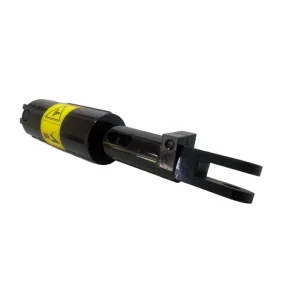
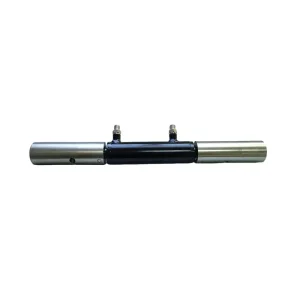
Width Adjustment Cylinder for Reversible Plough (Hokkaido Spec)
View Product Detail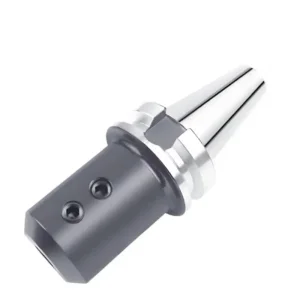
Side Lock Tool Holder MPM-CTH386 (JIS B6339 Spindle Fit)
View Product Detail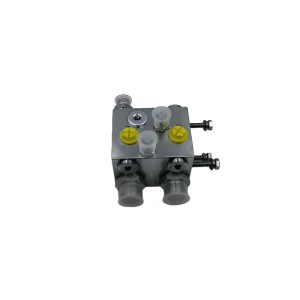
Differential Lock Solenoid Valve MPM-DLSV12 (Japanese Fleet Series)
View Product Detail
Regional Context & Market Realities
The Japanese Heavy Machinery Landscape: Demanding Micron Precision
Understanding the rigorous operational demands of Japan's construction, urban revitalization, and seismic disaster mitigation sectors.
Ultra-Compact Urban Excavation
Japanese urban construction across metropolitan hubs like Tokyo and Osaka operates within strict spatial boundaries. Zero tail-swing mini excavators demand specialized boom-swing and offset cylinders that withstand extreme radial side-load forces while eliminating pressure flutter within tightly packed engine and hydraulic compartments.
i-Construction & Digital ICT Integration
Under Japan's Ministry of Land, Infrastructure, Transport and Tourism (MLIT) "i-Construction" initiative, hydraulic actuators must seamlessly integrate with sensor feedback. Low-hysteresis cylinder movements, absolute stroke position measurement integration, and friction-controlled sealing systems are paramount for autonomous excavation machines.
Harsh Coastal & Volcanic Terrains
Operating environments in coastal sea walls, mountainous tunnel works, and volcanic ash management require enhanced metallurgical resilience. Rod plating must offer high resistance to micro-pitting caused by salt spray, abrasive silica, and acidic groundwater, necessitating multi-layer nickel-chromium microcrack plating.
Strategic Supply Chain Architecture
Cross-Border Agility: Bridging Qingdao's Manufacturing Depth with Japan
Combining world-class raw material processing, robotic precision welding, and direct maritime logistics between Qingdao and Japanese core ports (Tokyo, Yokohama, Kobe, Osaka, Hakata).
Raw Material Metallurgy & Traceability
We source cold-drawn DOM seamless steel tubes (grade 27SiMn / ST52 / E355) and high-yield quench-and-tempered 42CrMo/40Cr alloy rods. Full material heat traceability is maintained down to individual production batches, matching the stringent material quality requirements expected by Japanese OEMs.
In-House CNC & Sub-Micron Finishing
Deep-hole skiving, roller burnishing, and double-sided multi-axis CNC lathe operations are conducted under climate-controlled conditions in Qingdao. Surface finish on piston rods achieves Ra < 0.2 µm, ensuring minimal seal drag, zero micro-leakage, and prolonged seal lifecycle under 35-40 MPa shock loads.
Direct Coastal Logistics Route
Located in the port city of Qingdao, our manufacturing hub provides high-frequency ocean freight departures directly to western and eastern Japanese ports. With regular 48-to-72 hour transit times across the Yellow Sea, supply chain vulnerabilities are minimized compared to inland manufacturing clusters.
Require OEM-Replacement Excavator Cylinders in Japan?
Send our hydraulic engineers your CAD drawings (STP, DWG, PDF) or sample specifications. We return complete quotation proposals and lead-time commitments within 24 hours.
Engineering White Paper
Technical Roadmap: Next-Generation Excavator Actuation
Addressing the shifting paradigms of electrification, reduced hydraulic flow losses, and real-time condition monitoring across smart machinery.
Low-Friction Cushioning Geometries
Traditional end-cushioning often induces severe pressure spikes at the end of boom or arm travel. Our computational fluid dynamics (CFD) optimized floating cushion sleeves feature progressive throttle slots, dissipating peak deceleration energy progressively to prevent operator fatigue and protect pins from cracking.
Electrified Excavator Compatibility
As battery-electric and hybrid excavators expand across Japanese municipal projects, energy regeneration is critical. Our low internal friction sealing packages and optimized port geometries minimize thermal hydraulic losses, directly prolonging battery shift life by up to 14%.
Environmental Bio-Hydraulic Fluids
In accordance with Japan's Eco Mark and green procurement guidelines for construction equipment, our sealing configurations are designed to withstand high-ester synthetic biodegradable oils (HEES/HEPR) without elastomer swelling, hardening, or catastrophic premature breakdown.
Full OEM Component Range
Precision Hydraulic Cylinders & Machined Sub-Assemblies
Engineered to exact dimensional tolerances, compatible with global excavator brands and aftermarket repair specifications.
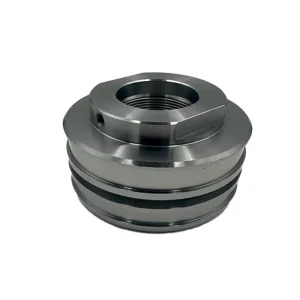
Custom Hydraulic Cylinder Piston MPM-HCPT11 (JIS Precision Class)
View Product Detail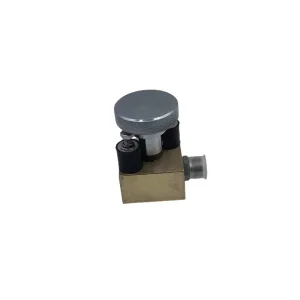
Manual Speed Control Copper Valve Block MPM-MSCCVB12
View Product Detail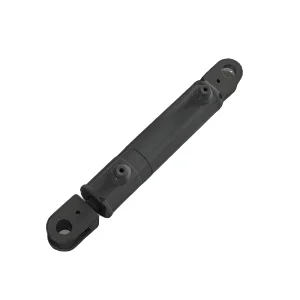
Steering Cylinder HCS302 (Japanese Material Handling Series)
View Product Detail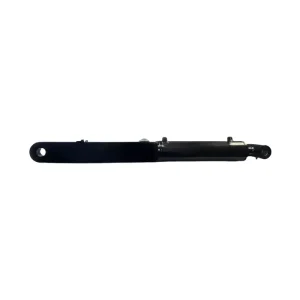
Loader Tilt Cylinder MPM-HCT402 (Japanese Wheel Loader Fit)
View Product Detail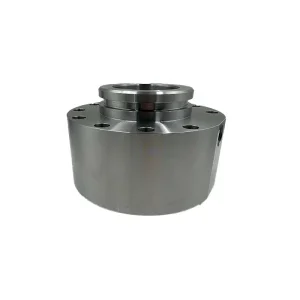
Hydraulic Cylinder Flange MPM-HCFG11 (Heavy Excavator Mount)
View Product Detail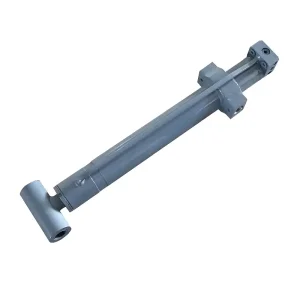
Luffing Cylinder HCL604 (Japanese Crane & Derrick Spec)
View Product Detail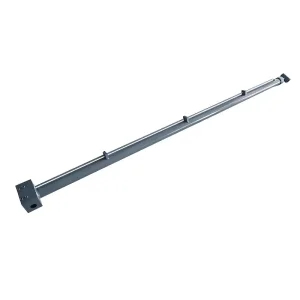
Custom Telescopic Cylinder HCT403 (Multi-Stage Compact Lift)
View Product Detail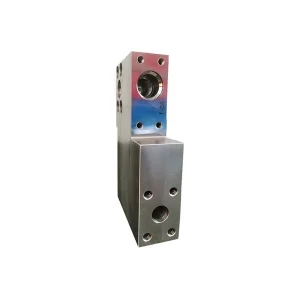
T2A Hydraulic Relief Valve Block MPM-HRVB2A (Pressure Limiter)
View Product Detail
Technical Clarifications
Frequently Asked Questions: Sourcing Hydraulic Actuators for Japan
Expert answers addressing interchangeability, JIS standards, raw material traceability, and export logistics.
How do you ensure compatibility with Japanese excavator brands (Komatsu, Hitachi, Kobelco, Yanmar, Kubota)?
Interchangeability is guaranteed through complete geometric replication and rigorous dimensional verification. We verify mounting eye-to-eye pin centers, spherical bushing tolerances, port thread geometries (such as JIS B8363 split flange or JIS G/PF female threads with 30-degree cone seats), and rated relief pressure constraints. Before metal cutting begins, full assembly approval drawings are shared for engineering confirmation.
What steel alloys and rod surface finishes are applied for harsh marine and winter operating environments in Japan?
For cylinder barrels, we standardly employ 27SiMn or cold-drawn ST52/E355 normalized seamless tubing with cold-drawn inner finishes honed to Ra < 0.25 µm. Piston rods utilize 42CrMo4 or 40Cr steel, induction hardened to 50-55 HRC to a minimum depth of 1.5-2.5 mm, followed by double hard chrome plating (30-50 µm) or optional nickel-chromium cladding capable of surpassing 500+ hours in ASTM B117 neutral salt spray testing.
Can you supply complete cylinder assemblies with integrated lock valves or load-holding counterbalance manifolds?
Yes. We machine integrated manifold blocks directly onto the cylinder barrel or rear head flange. This design prevents hose-burst drop conditions, complies with international earthmoving safety directives (ISO 8643), and minimizes external piping, which is especially beneficial for zero-tail excavators operating in cramped Japanese inner-city construction works.
What documentation and quality control inspection records accompany every export batch shipped to Japan?
Every shipment is accompanied by a comprehensive Quality Dossier, including 3.1 Mill Test Certificates for raw steel, heat treatment hardness logs, full coordinate measuring machine (CMM) dimensional reports, chrome thickness readings, and 100% pressure-holding test certificates (tested at 1.5 times the maximum rated working pressure with zero measurable drop over 5 minutes).
What is the typical production lead time and ocean shipping transit time to major Japanese ports?
Standard OEM replacement batches average 30 to 45 calendar days for precision manufacturing. For expedited sample verification or repair workshops, rapid-turnaround prototypes can be dispatched in 15 to 20 days. Thanks to direct container routes between the Port of Qingdao and Tokyo, Osaka, Nagoya, and Hakata, maritime transit typically requires only 2 to 4 days.