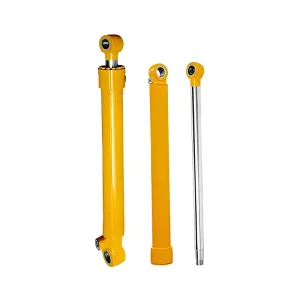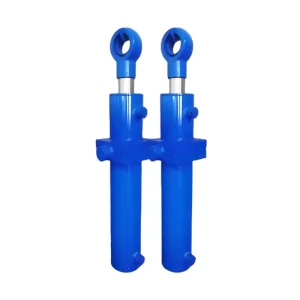
OEM Production Lineups
Precision Hydraulic Cylinders & Core Assemblies
Engineered for extreme structural fatigue strength, tight bore concentricity, and seamless base-end integration across diverse mobile and industrial duty cycles.
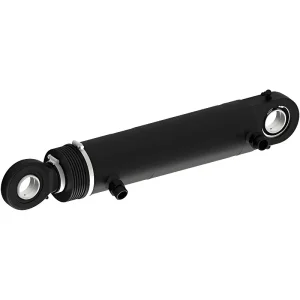
Wholesale Suspension Cylinder
Wholesale Suspension Cylinder Suppliers, Manufacturers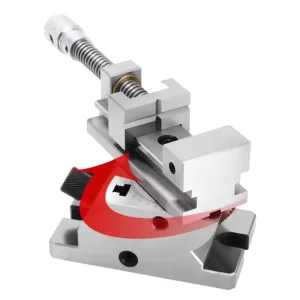
OEM CHM Precision Universal Vise MPM0356
OEM CHM Precision Universal Vise MPM0356 Suppliers, Manufacturers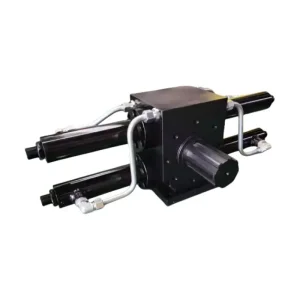
OEM Small Excavator Rotary Actuator
OEM Small Excavator Rotary Actuator Manufacturers, Factories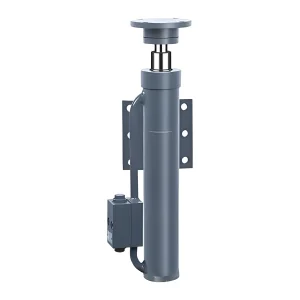
Outrigger Expansion Cylinder
Wholesale Outrigger Expansion Cylinder Suppliers, Factory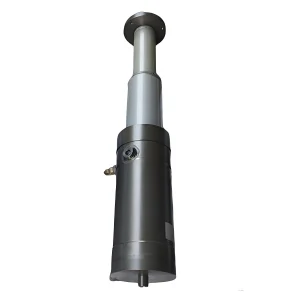
3-Stage Telescopic Cylinder
Wholesale 3 stage Telescopic cylinder Suppliers, Supplier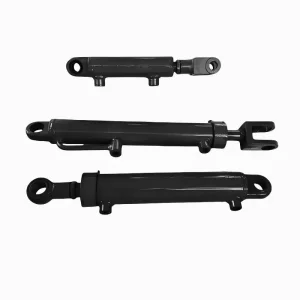
Garbage Truck Lifting Cylinder
Best Garbage Truck Lifting Cylinder Manufacturer, Factory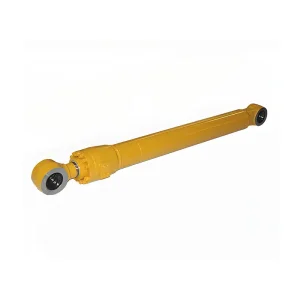
Boom Cylinder MPM-HCB212 (Excavator/Loader)
Cheap Boom Cylinder MPM-HCB212 for Excavator and Loader Manufacturer, Factories
Engineering Deep Dive
Engineering Architecture of Welded Cylinder Base Ends
Comprehensive metallurgical selection, finite element stress routing, and precision robotic welding joint dynamics underpinning high-cycle hydraulic longevity.
Forged vs. Cast Metallurgical Integrity
Our welded cylinder base ends are predominantly forged from high-density normalized AISI 1045, 4140, or 27SiMn alloy steel rather than brittle gray cast stock. The hot forging workflow realigns granular molecular grain structures along the principal stress pathways. This eliminates internal micro-porosities, shrinkage cavities, and structural laminations, delivering unmatched dynamic impact toughness down to -40°C in arctic applications.
Robotic Narrow-Gap Tandem GMAW & SAW
Joining the rear base cap to the cold-drawn seamless cylinder tube (ASTM A519 / St52 / E355) demands absolute control over heat-affected zones (HAZ). We utilize automated robotic gas metal arc welding (GMAW) and submerged arc welding (SAW) cells featuring synchronized rotary positioners. Narrow-gap joint profiling ensures 100% full-penetration ultrasonic soundness while strictly avoiding thermal distortion within the honed bore.
Cushion Pocket Integration & Fluid Dynamics
The cylinder base end is never merely a mechanical closure; it functions as an active fluid control zone. Our CNC machining incorporates precision stepped spear cushioning cavities, high-pressure port galleries (SAE, BSPP, Code 61/62), and integrated cartridge counterbalance valve cavities. Optimized CFD fluid channels minimize turbulence and cavitation during high-velocity piston retraction under heavy gravitational inertia.
| Base End Profile Type | Material Specification | Recommended Pressure Class | Welding Process & Validation | Primary Industrial Field |
|---|---|---|---|---|
| Forged Clevis / Pivot Lug | AISI 1045 / 42CrMo4 Forged | 210 - 350 Bar (3000-5000 PSI) | Multi-pass Robotic GMAW + Ultrasonic NDT | Excavator Boom, Bucket & Loader Implements |
| Spherical Bearing Eye End | 40Cr Normalized / 27SiMn | 250 - 420 Bar (3600-6000 PSI) | Friction Welding / Pre-heated SAW + MPI | Mining Dumpers, Articulated Haulers, Heavy Forestry |
| Trunnion Base Mount | Forged Q345D / AISI 4140 | 160 - 280 Bar (2300-4000 PSI) | Submerged Arc Welding + Stress Relief Anneal | Telescopic Refuse Packers, Multi-stage Cranes |
| Square Flange / Flat Bottom | St52.3 / ASTM A105 Carbon Steel | 140 - 250 Bar (2000-3600 PSI) | Automated Circumferential GMAW + Radiography | Industrial Stamping Presses, Waste Compactors |
| Integrated Manifold Base Block | Continuously Cast Ductile 65-45-12 / 1045 | 210 - 380 Bar (3000-5500 PSI) | Deep-Groove Full Penetration + Hydrostatic 1.5x | Aerial Booms, Mobile Crane Outriggers, Defense Systems |
Industry 4.0 Vision
Technology Roadmap & Future Outlook (2025–2030)
Pioneering the convergence of structural metallurgy, smart digital telemetry, and green additive manufacturing across modern hydraulic cylinder base architecture.
Rotary Inertia Friction Welding
Eliminating the requirement for filler metals and eliminating porosity risks entirely. Inertia friction welding bonds solid forged cylinder bases to seamless tubes via mechanical friction heat at atomic lattices, generating 100% parent-metal joint strengths, reduced cycle times, and zero slag inclusion.
Embedded IoT Sensor Ports
The transformation toward autonomous construction demands embedded digital instrumentation. Our next-generation base ends incorporate precision pre-drilled micro-chambers to accommodate Hall-effect stroke transducers, linear magnetostrictive sensors, and pressure/temperature fiber sensors without compromising pressure boundary ratings.
Robotic Laser Powder Cladding
Targeting extreme corrosive offshore, marine, and subsea mining equipment, our laser cladding lines deposit specialized nickel-chromium and Stellite coatings onto base end pivot eyes and seal wear collars. This establishes non-porous metallurgical bonds with zero delamination and 1,000+ hours salt-spray resistance.
Topology Optimization & DFM
Utilizing advanced AI-driven finite element analysis (FEA), we systematically excise non-critical mass from base forgings while stiffening load-transfer ribs. The resulting lightweight topology lowers equipment gross vehicle weight (GVW), improving machine payload capabilities and cutting carbon footprints during long-haul operation.
Sectors & Deployments
Macro Industry Solutions & Application Profiles
Targeted engineering configurations designed to counteract unique field stressors across specialized heavy industries globally.
Heavy Construction & Earthmoving
Excavators, backhoe loaders, and wheel dozers subject base ends to severe torsional racking and abrupt multi-axis shock impacts during rock breakout operations. We supply hardened spherical bearing eye ends equipped with dual grease purge channels and high-tensile bronze bushings that dissipate peak cyclical stresses without joint fatigue.
Underground Mining & Tunnelling
Underground load-haul-dump (LHD) equipment and continuous miners operate in confined, highly acidic, and moisture-saturated environments. Our mining-grade base mounts feature ductile spheroidal graphite alloys, corrosion-resistant passivated fluid galleries, and heavy weld fillets tested to resist dynamic pulse spikes exceeding 450 Bar.
Agricultural & Forestry Machinery
Harvesters, large-frame reversible ploughs, and forestry skidders require cost-effective, high-reliability welded base assemblies capable of enduring millions of small amplitude vibration cycles. We deliver standardized, high-speed robotically manufactured cross-tube and clevis base ends offering perfect dimensional interchangeability.
Marine, Harbor & Offshore Cranes
Harbor portal cranes, container reach stackers, and offshore knuckle-boom lifters are exposed to corrosive marine atmospheres. Base ends feature DNV-GL certified alloy compositions, integrated stainless steel hydraulic piping ports, and multi-layer zinc-nickel electroplating capable of surviving decades of open-sea deployment.
Waste Management & Compaction
Garbage compactor trucks and industrial scrap bailers operate on continuous high-tonnage compaction cycles with contaminated refuse fluids. MPM’s reinforced trunnion and rear foot-mount base designs withstand constant asymmetrical loads and high friction wear while safeguarding against hazardous seal-extrusion failures.
Material Handling & Access Platforms
Forklift masts and boom-lift articulating arms demand ultra-compact base-end designs with tight retracted lengths (pin-to-pin). Our integrated low-profile base manifold designs incorporate direct cartridge overcenter valves, radically reducing installation footprints and eliminating external tubing runs.
Smart Manufacturing
China Factory 4.0: Supply Chain Resilience & Efficiency
Operating from our modern 3,500m² manufacturing complex in Qingdao, China, MPM integrates automated robotic cells, domestic raw-material supply chains, and Lean flow controls.
Vertical Supply Chain Integration
Located adjacent to Shandong's premier steel mills and forging hubs, we control the procurement of special forging billets directly. This shortens raw material lead times by up to 40% compared to Western counterparts, insulating international buyers from global supply shocks and raw commodity price volatility.
Multi-Axis CNC Machining Accuracy
Equipped with DMG MORI and Mazak horizontal machining centers, 5-axis indexing heads, and heavy-duty CNC turning lathes. Base pin holes are precision line-bored in the same clamping setup as the tube locating spigot, achieving true position tolerances within ±0.015 mm and zero angular misalignments.
Lean High-Mix Production Agility
We reject the notion that cost-effective manufacturing requires rigid mass-production runs. MPM’s modular tooling fixtures and quick-change chuck architectures allow rapid changeovers, effortlessly accommodating small batch trial prototypes (MOQ 5-10 units) up to high-volume OEM blanket contracts of 20,000+ units monthly.
2006
Established in Qingdao
50+
Global Brands Served
3,500m²
Dedicated Factory Floor
20,000
Monthly Cylinder Unit Output
Procurement Whitepaper
What Global Enterprise Buyers Require: Technical Due Diligence
Navigating high-reliability procurement: how OEM supply chain managers and lead design engineers de-risk welded cylinder base sourcing.
Dimensional & Concentricity Tolerances
A welded base end that induces even 0.05 mm of bore distortion after welding will quickly destroy piston seals and cause cylinder scoring. Global buyers evaluate suppliers based on post-weld internal barrel roundness checks, bore runout under 0.03 mm, and pin bore perpendicularity held within strict limits under ASME Y14.5 standards.
NDT Weld Integrity & Verification
Visual inspection is inadequate for structural safety components. Tier-1 buyers demand non-destructive testing (NDT), including Magnetic Particle Inspection (MPI) for root and toe passes, ultrasonic phased-array testing (UT) for deep weld-joint fusion, and real-time macro-etch weld cross-section validations.
Complete Material Traceability
Eliminating the threat of counterfeit or under-spec alloys. OEMs require individual melt heat numbers stamped on every batch of forged base ends, accompanied by authentic EN 10204 Type 3.1 material test certificates showing actual spectrometer chemistry, yield/tensile strength, and Charpy V-notch impact test values.
Supply Chain Assurance & JIT Delivery
Overseas inventory risk requires agile shipping execution. MPM works through comprehensive DDP, CIF, and FOB terms, supporting safety consignment stock and Just-In-Time (JIT) releases. Every crate is vacuum-sealed in anti-corrosion VCI barrier film and secured inside ISPM-15 compliant timber cases for seamless transoceanic transit.
Global Compliance
Localized Support, Engineering Standards & Quality Assurances
Harmonizing international fluid power standards with seamless bilingual technical support from sample verification to serial assembly.
Metric & Imperial Design Standards
Whether your technical drawings are drafted to ISO 6020/2, DIN 24554, NFPA, or SAE J514 standards, our engineering team executes full DFM (Design for Manufacturability) analysis in native CAD environments (SolidWorks, Pro/E, AutoCAD), reconciling thread forms (UNF, NPT, BSPP, Metric) and clearance fits without ambiguity.
Rigorous 100% Pressure Testing
Before any welded cylinder leaves our assembly bays, it is subjected to automated hydrostatic proof-pressure testing at 1.5x nominal working pressure on computerized test benches. Data logging records hold times, zero-pressure drop thresholds, and micro-leak integrity through our high-accuracy oil cleanliness monitors (ISO 4406 17/15/12).
Dedicated 24-Hour Engineering Desk
Cross-border collaboration is friction-free. Our technical sales engineers in Qingdao provide live technical updates, comprehensive first-article inspection reports (FAIR), PPAP Level 3 documentation, and direct WhatsApp / email engineering consultation within 24 hours across all Western time zones.
Knowledge Center
Frequently Asked Questions for Sourcing Directors
In-depth answers addressing structural durability, material compliance, customized geometries, and procurement logistics.
Q1: How does MPM prevent thermal distortion of the cylinder tube during base welding?
Thermal bore distortion is eliminated through a multi-tiered engineering protocol: First, base caps feature a self-centering, tight-tolerance pilot spigot that supports the barrel interior. Second, automated pulsed GMAW or rotary SAW controls heat input precisely. Third, the tube end features adequate machining margins where required, or welding is performed before final micro-honing of the barrel, guaranteeing cylindrical runout below 0.02 mm.
Q2: Can you manufacture custom base ends directly from our 2D/3D CAD files or reverse engineer from a physical worn sample?
Yes. We regularly intake customer models in STEP, IGES, DXF, or native SolidWorks files. If only an existing damaged or legacy OEM cylinder base is available, our metrology lab performs coordinate measuring machine (CMM) mapping, optical profilometry, and portable spectrometer chemical verification to reconstruct complete manufacturing drawings for customer sign-off prior to production.
Q3: What steel grades are recommended for sub-zero impact resistance in heavy mining and forestry?
For ambient environments operating down to -40°C, standard AISI 1045 is replaced with normalized 27SiMn, 42CrMo4 (AISI 4140), or specialized low-carbon micro-alloyed structural steels (e.g., Q345D/E). These alloys retain exceptional Charpy V-notch impact toughness (>27 Joules at -40°C), protecting against catastrophic cold-temperature brittle fracture under violent hydraulic shock loads.
Q4: How do integrated valve cavity base ends compare to external manifold mounting?
Integrated base manifold blocks machine the cavity for sun-style or standard cartridge counterbalance and check valves directly into the solid rear forging. This eliminates costly external hydraulic tubing, banishes potential hose rupture hazards, drops assembly labor times on the OEM vehicle line, and provides tamper-proof, zero-leak load holding.
Q5: What non-destructive testing (NDT) documentation is provided with wholesale orders?
Every production run includes standard EN 10204 3.1 chemical & mechanical certs, 100% hydrostatic pressure test charts, and dimensional inspection reports. On request, we provide Level II ASNT/ISO 9712 certified Magnetic Particle Inspection (MPI) reports, Ultrasonic Testing (UT) shear-wave reports, and full weld procedure specification (WPS/PQR) records.
Q6: What is the standard sample prototype lead time and minimum order quantity (MOQ)?
For custom engineered welded cylinder base assemblies, sample turnaround typically requires 15 to 25 business days, including engineering CAD approval and raw forging allocation. Our flexible manufacturing setup accommodates low pilot volumes (MOQ 5 to 10 units) to assist OEMs through rig testing and field trials before transitioning to high-volume commercial production.
Integrated Motion Components
Specialized Actuators, Valve Blocks & Cylinder Parts
Precision-machined sub-assemblies engineered in-house to match the structural robustness of our welded base designs.
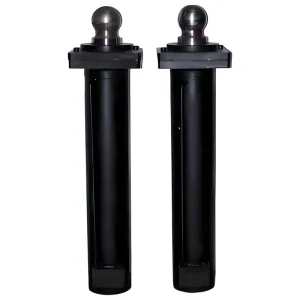
Counterweight Cylinder
Cheap Counterweight Cylinder Supplier, Manufacturer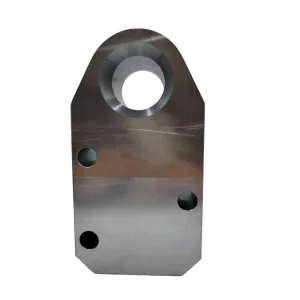
Integrated Cylinder Barrel MPM-HCIB11
Custom Integrated Cylinder Barrel MPM-HCIB11 Supplier, Manufacturers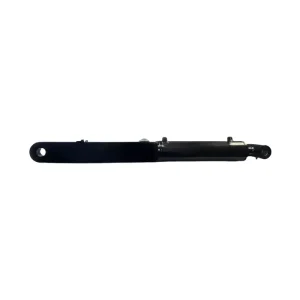
Loader Tilt Cylinder MPM-HCT402
Cheap Loader Tilt Cylinder MPM-HCT402 Suppliers, Supplier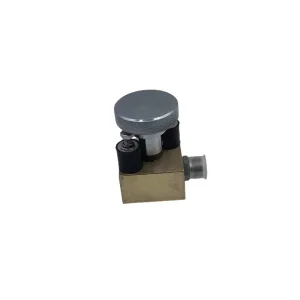
Manual Speed Control Copper Valve Block
Wholesale Manual Speed Control Copper Valve Block MPM-MSCCVB12 Supplier, Factories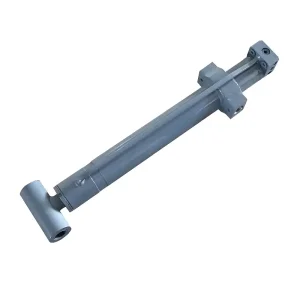
ODM Luffing Cylinder HCL604
ODM Luffing Cylinder HCL604 Supplier, Manufacturer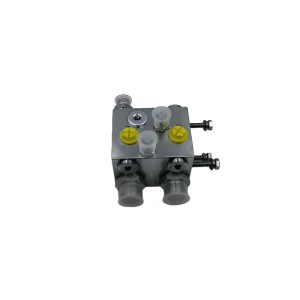
Differential Lock Solenoid Valve MPM-DLSV12
China Differential Lock Solenoid Valve MPM-DLSV12 Manufacturer, Factory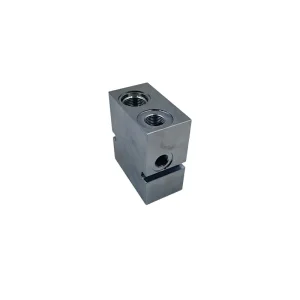
Lift Cylinder Solenoid Valve MPM-LCSV12
China Lift Cylinder Solenoid Valve MPM-LCSV12 Manufacturers, Factory