
Primary Heavy Equipment Actuators & Components
Direct from our CNC manufacturing facility in Qingdao: Engineered for demanding duty cycles, lateral pressure resistance, and zero-defect interchangeability.
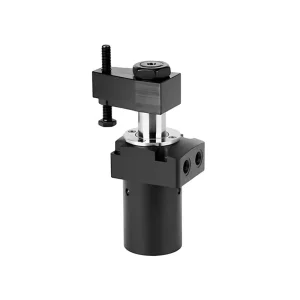
Custom Angle Push Cylinder Supplier, Manufacturers
Configure & Inquire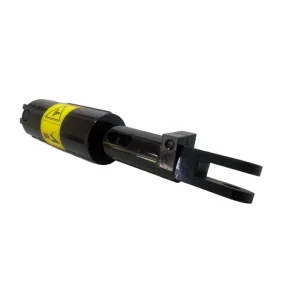
High-Quality Width Adjustment Cylinder for Reversible Plough Supplier, Factories
Configure & Inquire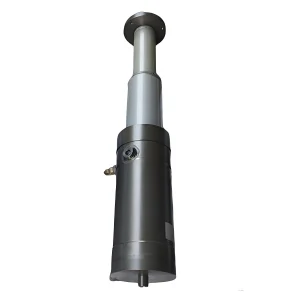
Wholesale 3 stage Telescopic cylinder Suppliers, Supplier
Configure & Inquire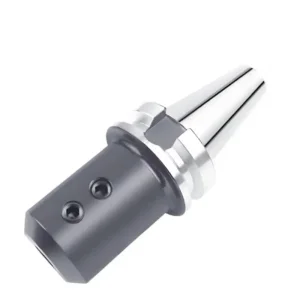
Cheap Side Lock Tool Holder MPM-CTH386 Manufacturers, Factory
Configure & Inquire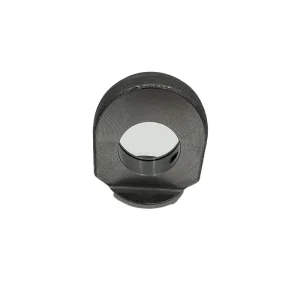
China Hydraulic Cylinder Base MPM-HCBS11 Manufacturers, Manufacturer
Configure & Inquire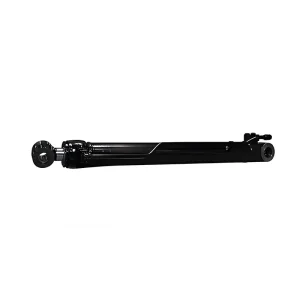
ODM Bucket Cylinder MPM-HCB101 for Excavator and Loader Supplier, Manufacturer
Configure & Inquire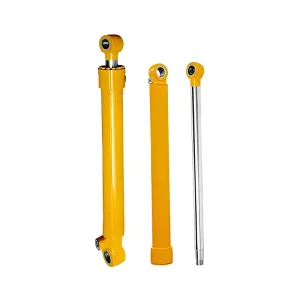
China Small Excavator Stick Cylinder Suppliers, Manufacturers
Configure & Inquire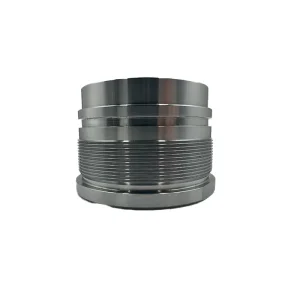
High-Quality Hydraulic Cylinder Head MPM-HCHD11 Suppliers, Manufacturer
Configure & InquireEngineering Superiority: China's Smart Manufacturing Advantage for Loader Cylinders
How specialized material science, localized precision machining clusters, and strict metrological testing redefine hydraulic actuator sourcing for worldwide distributors and OEMs.
Metallurgical & Micro-Finishing Precision
Loader cylinders endure brutal mechanical abuse: impulse pressure spikes above 35 MPa (5000+ PSI), side load deflection during bucket corner penetration, and abrasive silica attack.
Our Qingdao facility utilizes cold-drawn, stress-relieved St52-3 / E355 structural steel barrels honed internally to an ultra-smooth finish (Ra < 0.2 µm). Piston rods are machined from 40Cr/42CrMo medium alloy quenched steel, induction hardened to 50–55 HRC, and electro-plated with double-layer micro-crack chrome (25–30 µm depth) to ensure a minimum 200-hour ASTM B117 salt spray neutral corrosion barrier.
End-to-End Supply Chain Integration
The manufacturing cluster located in the Shandong industrial belt allows us to co-locate casting, precision CNC forging, barrel skiving-roller burnishing, heat treatment, and precision sealing systems under unified inspection standards.
By maintaining internal CNC production of vital components—including cylinder gland heads (MPM-HCHD11), forged pistons (MPM-HCPT11), spherical trunnions, and anti-loosening lock nuts (ISO 6H class)—we eradicate tolerance stack-up errors that cause early rod seal extrusion in off-the-shelf assemblies.
Predictive Quality & Defect Mitigation
Field failure data in earthmoving machinery identifies external rod weeping, piston bypass, and eyelet fatigue fractures as the primary causes of unbudgeted site downtime.
Every production batch undergoes 100% automated pressure decay and hydrostatic holding testing up to 1.5× working pressure. Polyurethane step-seals, PTFE guide rings, and double-lip metal-cased scrapers are selected to preserve elasticity and sealing force across harsh ambient temperature variations ranging from -40°C to +110°C.
The Future of Hydraulic Actuation in Heavy Earthmoving
The transition toward electric excavators, automated loading equipment, and decarbonized worksites is pushing structural cylinder design into high-efficiency territory.
Electrification & Ultra-Low Friction Dynamics
As battery-electric wheel loaders and mini-loaders displace internal combustion engines, minimizing parasitic hydraulic drag becomes critical to extending battery cycle runtime. We incorporate advanced low-friction tandem rod seals, diamond-like carbon (DLC) coatings, and optimized flow-entry porting that reduces energy-wasting internal fluid friction by up to 14%.
Smart Sensors & IoT Real-Time Telemetry
Autonomous mining and machine-guided grade control require immediate, millimetric actuator positional feedback. We engineer smart cylinders with integrated linear magnetostrictive displacement transducers, wireless temperature sensors, and internal stress monitors embedded safely within the dead-end cylinder head, protected from external rock impact.
Lightweight High-Tensile Structural Metallurgy
Demands for increased tipping payloads without gross vehicle weight penalties have accelerated the adoption of thin-walled, high-yield alloy steels (e.g., Weldox/Domex grade equivalents). Utilizing cold-flow forming techniques, we construct welded cylinders with a 15–20% weight reduction while preserving proof ratings against extreme bending moments.
Engineered for Demanding Real-World Machine Duties
Wheel loaders, telehandlers, and LHD mining trucks rely on dedicated lift, tilt, and articulation steering actuators designed for unique mechanical stress vectors.
Quarry & Aggregate Bulk Handling
Wheel loader bucket tilt cylinders in rock quarries encounter severe shock vectors when forcing into blasted limestone piles. Integrated head cushions and high-tensile spherical eye bearings absorb peak breakout forces, preventing hydraulic line hammering and valve seat distortion.
Underground LHD Mining Muckers
Low-profile Load-Haul-Dump (LHD) vehicles operate inside confined, moist, acidic mine galleries. Our nickel-chrome plated, explosion-proof, and corrosion-resistant heavy lift cylinders resist chemical degradation and continuous high-temperature hydraulic fluid degradation.
Agricultural Front Loaders & Silage
Tractor-mounted front-end loader arms experience rapid cycling and continuous ambient fertilizer and dust exposure. Self-lubricating composite bushings, specialized dust scrapers, and compact flange designs provide long service life across seasonal harvesting spikes.
Municipal Infrastructure & Backhoes
Backhoe loaders operate across mixed digging, ditching, and trench-filling roles within restricted public spaces. Double-acting cushioned cylinders prevent chassis shudder, enhancing operator control while extending pin and bushing service intervals.
Global Sourcing Criteria for High-Reliability Hydraulic Cylinders
A structured evaluation framework for procurement managers, plant directors, and heavy equipment parts distributors.
1. Dimensional Interchangeability & Drawing Fidelity
Procurement failures often stem from imperial-to-metric thread conversions (UNF, BSPP, metric ORB) and incorrect center-to-center closed lengths. We run complete engineering reviews of client 2D CAD prints and physical donor samples, issuing full verification blueprints prior to CNC cutting to guarantee 100% mechanical interchangeability.
2. Quality Audits, Material Traceability & Testing
Every load-bearing component requires verified 3.1 material test certificates (MTC) detailing chemical composition and yield strengths. We verify raw bar stock through ultrasonic crack detection, inspect welded gland joints using non-destructive testing (NDT), and document 100% individual hydrostatic pressure decay before packaging.
3. Total Cost of Ownership (TCO) & Supply Reliability
True procurement efficiency balances factory-gate piece prices against working lifespan, warranty rate overhead, and transit resilience. Our location adjacent to the Port of Qingdao simplifies multi-container ocean transport, consolidates customs clearance, and provides durable anti-corrosion VCI barrier packaging for ocean voyages.
Auxiliary Actuators, Valve Manifolds & Tooling Units
Complete your supply chain requirements with matching flow-control manifolds, excavator cylinders, and precision CNC toolholding systems manufactured in-house.
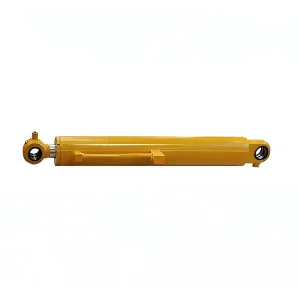
Custom Small Excavator Boom Cylinder Suppliers, Manufacturers
Configure & Inquire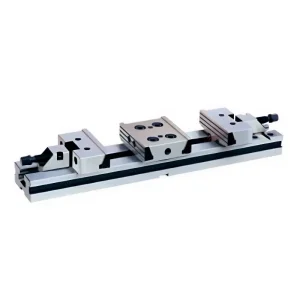
Wholesale ZQ83 Single & Double Action Vise Factories, Factory
Configure & Inquire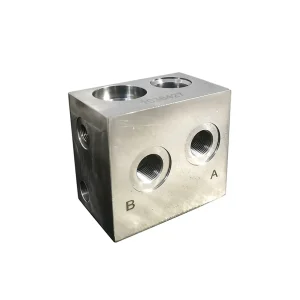
Cheap T13A Hydraulic Flow Control Valve Block MPM-HFCVB13A Supplier, Manufacturers
Configure & Inquire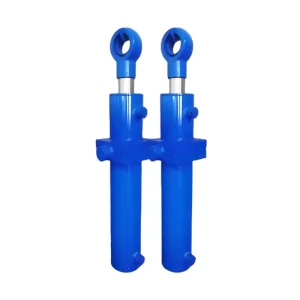
Custom Telescopic Cylinder Supplier, Manufacturer
Configure & Inquire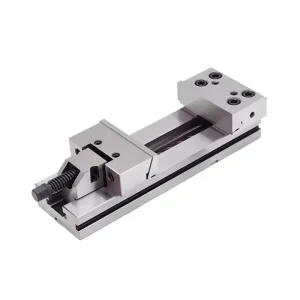
Custom Precision Modular Vice MPM003360 Manufacturers, Factories
Configure & Inquire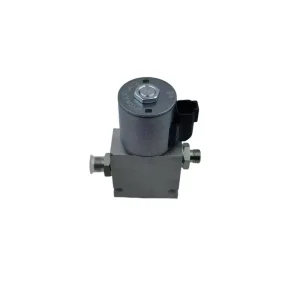
High-Quality Quick Change Solenoid Valve MPM-QCSV12 Suppliers, Factories
Configure & Inquire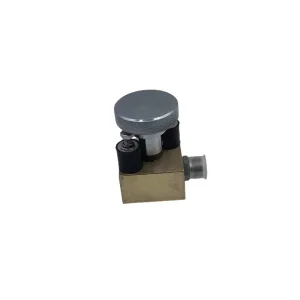
Wholesale Manual Speed Control Copper Valve Block MPM-MSCCVB12 Supplier, Factories
Configure & Inquire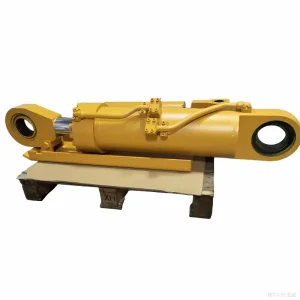
Best Underground LHD Loader Tilt Cylinder Supplier, Manufacturer
Configure & InquireFrequently Asked Questions on Loader Cylinder Engineering & Sourcing
Direct answers from our senior hydraulic design engineers addressing bore tolerances, seal selection, custom OEM reverse engineering, and factory warranties.
What information do you need to quote a custom hydraulic cylinder?
To provide an accurate engineering quote, we require: bore diameter, rod diameter, total stroke length, retracted (pin-to-pin) length, rated working pressure and peak relief pressure, single- or double-acting preference, mounting configuration on both barrel base and rod eyelet (such as spherical bearing, clevis, or trunnion), hydraulic port standard (e.g., SAE, BSPP, metric ORB), anticipated duty environment (ambient operating temperature range, abrasive dust exposure), and estimated order batches. Providing an OEM schematic drawing, 3D STEP CAD file, or physical sample significantly speeds up quotation delivery.
Can you reproduce an OEM replacement cylinder from a physical sample?
Yes. Our in-house metrology and reverse-engineering lab measures the sample using coordinate measuring machines (CMM), surface roughness profilometers, and hardness testers. We draft a full manufacturing blueprint covering internal tolerances, seal cavity depths, and material designations. This detailed technical drawing is shared for your written engineering approval prior to cutting raw steel, ensuring drop-in dimensional accuracy.
Which industrial standards do your parts, threads, and tooling adhere to?
All parts are machined in strict conformance to client-supplied drawings in either metric or imperial units. Typical specifications include ISO 6H thread tolerances for internal cylinder nuts, DIN 69872 and JIS B6339 references for CNC retention knobs, ISO 6020/2 interchangeability guidelines for fluid power cylinders, and international standards for ER collet tooling systems. Sealing channels are cut to match standard global seal brands (such as Hallite, Parker, and Trelleborg).
Do you supply individual hydraulic cylinder replacement parts separately?
Yes. In addition to complete assembled and tested cylinders, we regularly supply heavy equipment cylinder rebuilders, fleet workshops, and regional hydraulic distributors with CNC-machined components: cylinder gland heads, forged pistons, retaining nuts, mounting flanges, base end plugs, pre-honed integrated barrels, self-lubricating spherical plain bearings, and modular hydraulic manifold valve blocks.
How are international wholesale orders packaged and prepared for shipping?
All finished cylinders and components undergo rust-inhibiting fluid washing and are sealed with heavy-duty VCI (Vapor Corrosion Inhibitor) poly-wrap. Rod chrome surfaces are guarded by corrugated sleeves or plastic impact sheaths. The assemblies are then packed inside export-grade, fumigated solid wooden crates lined with internal foam blocks to prevent displacement during long ocean freight routes, rail journeys, or intermodal transfers.
How fast can we expect technical feedback and quotation processing?
Our sales engineering team operates with dedicated bilingual engineers who review inquiries and reply within 24 business hours. If you submit standard dimensions or reference part numbers, preliminary quotes and lead-time schedules are usually prepared within 1 business day. Direct technical communication via phone and WhatsApp is available for rapid project discussions.