
High-Performance Hydraulic Actuators & Control Hardware
Explore our core OEM precision-machined hydraulic solutions, verified across harsh operating environments ranging from sub-zero agricultural fields to high-tonnage mining haulers.
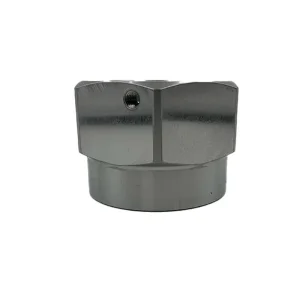
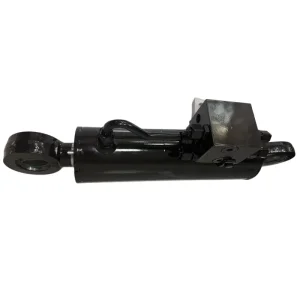
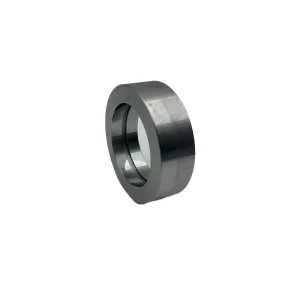
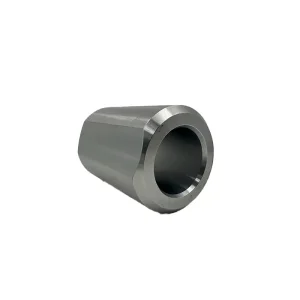
The Global Directional Control Valve Market: Industrial Dynamics & Engineering Demands
Directional Control Valves (DCVs) represent the fundamental logic layer of mobile and industrial fluid power architectures, determining fluid routing, flow acceleration, pressure retention, and multi-axis coordination.
In modern industrial automation, mobile construction equipment, and precision agricultural machinery, directional control valves (DCVs) have shifted from simple binary fluid switches into complex, highly integrated mechatronic control centers. As global infrastructure investments push mobile equipment operating pressures above 350 bar (5,076 psi) and industrial presses toward 420 bar, OEM machine builders require DCVs capable of handling aggressive duty cycles without internal spool binding, excessive port-to-port cross-leakage, or thermal degradation.
$14.8B Global Valuation
Driven by infrastructure renewal, mechanized agriculture, and smart factory hydraulic retrofits, with a projected CAGR of 5.8% through 2032.
- High demand for proportional multi-spool valves
- Surging requirement for low-leakage poppet logic
Load-Sensing Migration
Post-compensated (LUDV) load-sensing architectures now dominate mobile machinery, ensuring flow distribution independent of load pressure variations.
- Eliminates inter-circuit hunting phenomena
- Reduces parasitic throttling losses by up to 32%
Digitalization & CAN-Bus
Integration of direct onboard digital electronics (OBE), IO-Link, and SAE J1939 protocols replaces analog 0-10V or pilot hydraulic control lines.
- Real-time spool position LVDT monitoring
- Predictive telemetry for contamination wear
Historically, European and North American tier-1 hydraulic brands held monopolistic positions over complex valve architectures. However, continuous supply chain bottlenecks, extended OEM lead times stretching past 40 weeks, and prohibitive pricing structures have compelled multinational original equipment manufacturers to seek verified, high-precision manufacturing partners in East Asia. Qingdao Micro Precision Machinery (MPM) bridges this gap by combining state-of-the-art multi-axis CNC manufacturing centers, diamond-grade honing technology, and ISO-certified metallurgical controls to supply world-class directional control valve blocks and custom manifolds with guaranteed interchangeability.
Technical Authority Insight: Directional control valve reliability is governed by three non-negotiable physical parameters: radial spool clearance (strictly held between 0.003 mm and 0.008 mm), casting core morphology to prevent laminar separation under high Reynolds numbers, and thermal stability of ductile iron valve blocks (QT500-7 / GGG50) under severe cyclic shock loading.
Engineering Architecture & Standardized Specifications
A rigorous examination of valve spool geometry, port flow metering, mounting standards, and metallurgical specifications implemented across MPM OEM production lines.
Spool Notch Profiling & Flow Metering
The precision of fluid metering is governed directly by the geometric profile of the spool notches. MPM employs multi-axis wire EDM and CNC grinding to manufacture custom triangular (V-notch), progressive rectangular, and circular parabolic throttling notches.
- Elimination of Flow Forces: Compensating chambers reduce steady-state axial Bernoulli force.
- Hysteresis Suppression: Optimized electromagnetic armature plating ensures total hysteresis under 1.8%.
- Deadband Optimization: Symmetric overlap tolerances maintained within ±0.005 mm.
Block Metallurgy & Tribological Hardening
Directional valve bodies withstand immense cyclic hydraulic fatigue. MPM utilizes premium shell-mold continuous cast ductile irons (QT500-7 and QT600-3) and forged aviation-grade 6061-T6 aluminum alloys for specialized manifold blocks.
- Deep Nitriding Treatment: Spool surface hardness reaches HRC 58-62 with 15-micron case depth.
- Manganese Phosphating: Inner galleries treated to resist cavitation and fluid scouring.
- Zero-Burr Thermal Deburring (TEM): Eliminates internal particulate release down to 100%.
| Valve Platform / Standard | Nominal Size (CETOP / ISO) | Max Flow Rate (L/min) | Max Pressure (Bar) | Spool Leakage (cm³/min @ 100 bar) | Typical OEM Application |
|---|---|---|---|---|---|
| MPM-DCV02 Series | NG4 / CETOP 2 / ISO 4401-02 | 35 L/min | 315 Bar | ≤ 8 cm³ | Pilot stage control, compact machine tools, robotics |
| MPM-DCV03 Series | NG6 / CETOP 3 / ISO 4401-03 | 80 L/min | 350 Bar | ≤ 12 cm³ | Forklift steering, boom extension, CNC workholding |
| MPM-DCV05 Series | NG10 / CETOP 5 / ISO 4401-05 | 160 L/min | 350 Bar | ≤ 18 cm³ | Excavator bucket tilt, loader arm lift, combine harvesters |
| MPM-DCV07 Series | NG16 / CETOP 7 / ISO 4401-07 | 300 L/min | 350 Bar | ≤ 25 cm³ | High-tonnage mobile cranes, crawler drill rigs, waste compactors |
| MPM-DCV08/10 Series | NG25/32 / CETOP 8/10 | 650 - 1100 L/min | 420 Bar | ≤ 40 cm³ | Heavy mining excavators, heavy forge presses, marine winches |
Technology Roadmap: The Convergence of Fluid Mechanics & AI Edge Telemetry
How Qingdao Micro Precision Machinery aligns its OEM manufacturing capabilities with the next decade of digital fluid power developments.
Independent Metering (IMC)
Decoupling meter-in and meter-out spool controls to eliminate parasitic counter-pressures, unlocking energy savings of 15% to 30% in high-inertia hydraulic excavators.
High-Frequency Switching
Replacing traditional throttling spools with pulse-width modulated (PWM) digital poppet valves capable of millisecond open-close cycles with zero static cross-leakage.
Eco-Fluid Compatibility
Specialized FKM, FFKM, and polyurethane seal matrices matched with corrosion-resistant PVD coatings to handle synthetic esters, HEES, and water-glycol fluids.
Edge Diagnostic Sensors
Miniature piezoresistive pressure transducers and thermocouple channels embedded directly inside custom valve manifolds for real-time edge processing and anomaly alerts.
Localized Industry Scenarios: Field-Proven Fluid Control Engineering
MPM directional control valves, manifold valve blocks, and companion hydraulic cylinders are optimized for specific industrial challenges across the globe.
Underground Mining & Tunneling
Operating in corrosive underground salt mines and coal seams demands explosion-proof directional control solenoids and zero-fail counterbalance valves. Our LHD lift circuits integrate shock-attenuating relief valves directly into the directional manifold, eliminating peak pressure spikes during bucket mucking.
- Shock pressure absorption up to 480 bar
- Explosion-proof ATEX/IECEx coils
Heavy Agricultural Machinery
Reversible plough turnover cylinders and high-capacity combine harvesters require precise 180° rotation without chassis whip. MPM designs custom turnover sequence valves and directional control blocks featuring integrated pilot-operated check valves that lock position instantly when flow ceases.
- Zero drift over continuous 24-hr tillage
- Rapid inversion cycle under 2.5 seconds
Material Handling & Forklifts
Forklift mast operations dictate smooth, featherable proportional lowering speeds to prevent cargo slippage. MPM’s monoblock directional valves integrate electro-proportional spool heads with mechanical override options, delivering flawless micro-metering under full-capacity lift conditions.
- Ultra-low metering start band (<5% input)
- Integrated hydraulic differential locks
Macro Hydraulic Solutions: Co-Designing Control Valves & Actuators
Standalone directional valves often suffer from line capacitance and delayed response when plumbed through long flexible hoses. MPM pioneers integrated valve-on-cylinder architecture.
The Limitation of Dispersed Circuits
Traditional hydraulic setups position the directional control valve bank on the vehicle chassis, connecting it to boom or tipping cylinders via meters of hydraulic hose. Under extreme load acceleration, fluid compressibility inside the hose and mechanical volumetric expansion produce noticeable pressure bounce, actuator shudder, and increased risk of catastrophically burst lines.
A hose burst on a conventional lifting crane drops system pressure to atmospheric levels instantly, requiring external counterweights or redundant mechanical stops to prevent load drop.
The MPM Integrated Manifold Solution
By engineering custom valve blocks (such as the MPM-HRVB2A and MPM-HCVB3A) that bolt directly onto the integrated cylinder barrel or end cap, our engineering team eliminates hydraulic hose runs between the directional control logic and the actuator chamber. The benefits are transformative:
- Immediate Hydraulic Rigidity: System response latency reduced from 120 ms to below 15 ms.
- Inherent Hose-Burst Protection: If an external line is severed, the valve locks the load directly at the cylinder port.
- Compact Installation Envelope: Reduces vehicle assembly labor hours by up to 40%.
How Micro Precision Machinery Governs Valve & Component Quality
Inside our 3,500 m² Qingdao manufacturing facility, every OEM directional control valve component passes through five stringent quality gates before leaving the dock.
Stage 1: Metallurgical Verification
Every casting batch of ductile iron or forged alloy steel undergoes spectral analysis to verify graphite nodularity (>85%), tensile strength (≥500 MPa), and absence of internal porosity or shrink voids.
Stage 2: Micron Bore Honing
Valve bores and spool diameters are matched using multi-spindle diamond honing systems. Cylinder bore roundness and straightness are checked via computerized air-gauging with sub-micron precision.
Stage 3: 100% Full-Pressure Dynamic Testing
No valve or cylinder ships without automated bench testing. Every unit is audited for internal spool leakage, external seal containment up to 1.5x working pressure, cracking pressure, and hysteresis curves.
Frequently Asked Questions for OEM Buyers & Hydraulic Engineers
Direct technical answers to questions commonly raised by procurement directors and lead hydraulic engineers sourcing custom directional control valves and manifold blocks from China.
What is the typical radial spool clearance held on MPM directional valves?
Our standard manufacturing process controls spool-to-bore radial clearance within 0.003 mm to 0.007 mm (3 to 7 microns), depending on the working pressure and oil viscosity requirements. This tight window prevents spool sticking under thermal expansion while keeping internal cross-port leakage below international ISO 4401 standards.
Can MPM manufacture custom directional valve manifolds directly from hydraulic schematics?
Yes. Our engineering R&D team can develop 3D manifold blocks and complete OEM subplate assemblies directly from your hydraulic circuit schematic (hydraulic ISO symbols), working envelope constraints, and port thread preferences (SAE, BSPP, or Metric). We provide comprehensive CAD drawings for your sign-off prior to CNC milling.
How does MPM ensure cross-port leakage does not exceed allowable levels?
Every cast manifold block undergoes specialized thermal deburring (TEM) and ultrasonic washing to eliminate microscopic particles that cause spool scoring. Furthermore, 100% of finished directional control blocks undergo automated hydraulic bench testing measuring exact leakage in cm³/min at 100 bar, 200 bar, and rated peak pressure using ISO VG 46 mineral oil at 50°C.
What valve mounting interfaces and port configurations can you produce?
We machine subplates and integrated manifold blocks conforming to ISO 4401 (Sizes 02, 03, 05, 07, 08, 10) and NFPA / CETOP standards. For cartridge-style directional logic, we machine standard cavities compatible with Sun Hydraulics, HydraForce, and Parker screw-in cartridge specifications.
Can you supply custom directional valves with special coil voltages or CAN bus interfaces?
Yes. Our solenoid-actuated directional valves are available in standard 12VDC and 24VDC options, as well as 110VAC and 220VAC configurations. For intelligent mobile machinery, we supply proportional pilot heads equipped with integrated electronics (OBE) supporting PWM, 0-10V, 4-20mA, or CAN-bus (SAE J1939 / CANopen) communications.
What is your typical prototyping and production lead time?
For custom OEM directional valve blocks and prototype hydraulic manifolds, design review and 3D modeling take 3 to 5 business days. Prototype sample machining is completed in 3 to 4 weeks. Following sample approval, mass production batches typically ship within 30 to 45 calendar days, significantly faster than European market averages.
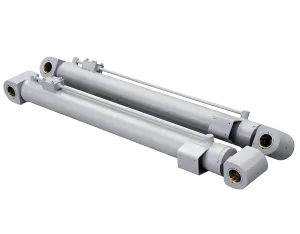
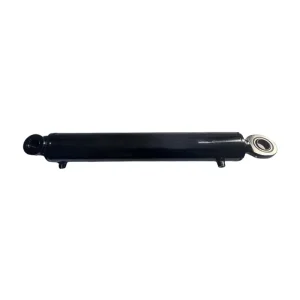
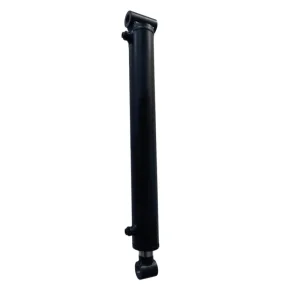
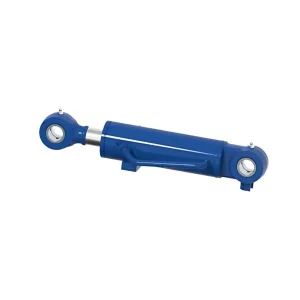
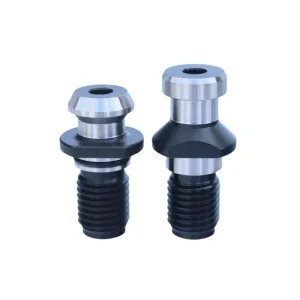
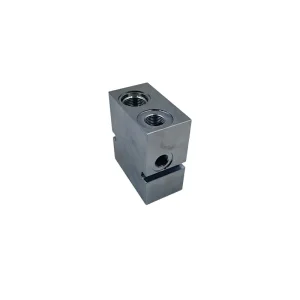
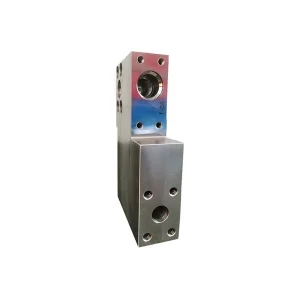
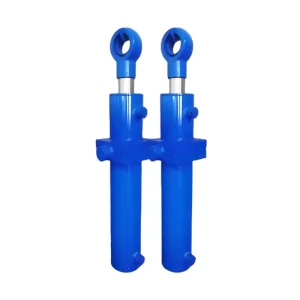
Precision Hydraulic Manifolds, Cylinders & Tooling Components
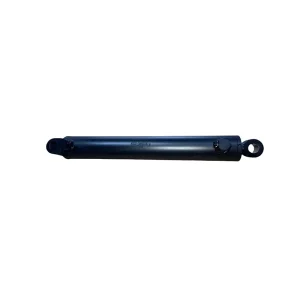
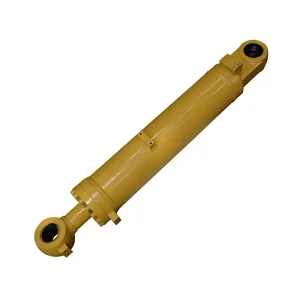
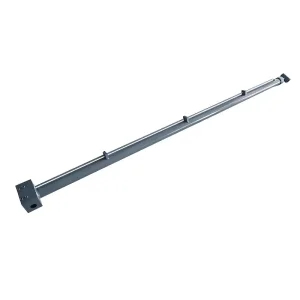
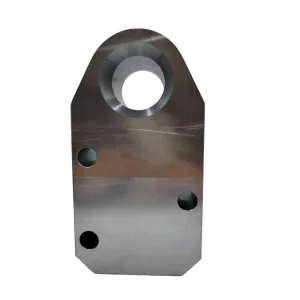
Complementary OEM hydraulic valves, heavy-duty lifting cylinders, relief manifolds, and CNC accessories manufactured in-house by Qingdao Micro Precision Machinery.
Request Engineering Feedback & Custom Valve Block Quotation
Send us your circuit schematic, spool requirements, working pressure envelope, or sample parts. Our fluid power design engineers in Qingdao will review your specifications and provide a full DFM analysis, 3D CAD proposal, and production timeline.