
Precision Actuators & Hydraulic Components
Direct from our Qingdao manufacturing center: ISO/TS validated hydraulic cylinders, integrated fluid manifold blocks, and CNC precision tool interfaces engineered to eliminate mechanical downtime.
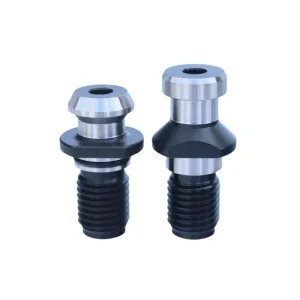
ODM Retention Knob DIN69872 Suppliers, Manufacturers
View Specification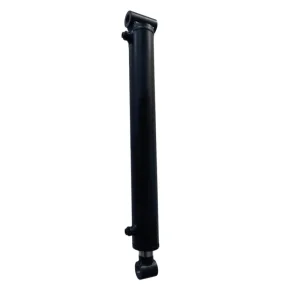
High-Quality Lifting cylinder HCL602 Factories, Factory
View Specification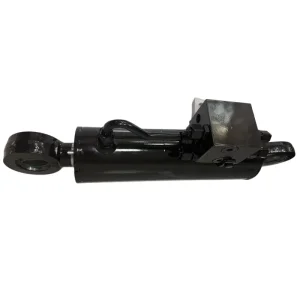
China Reversible Plough Turnover Hydraulic Cylinder Suppliers, Manufacturers
View Specification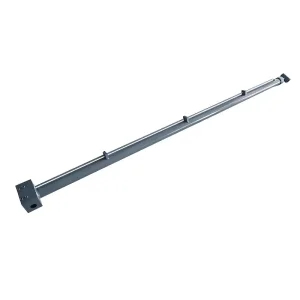
Custom Telescopic Cylinder HCT403 Manufacturer, Factories
View Specification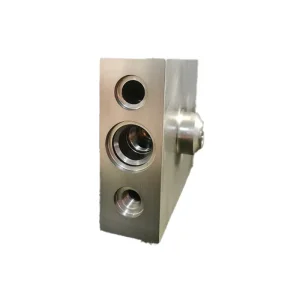
High-Quality T3A Hydraulic Counterbalance Valve Block MPM-HCVB3A Manufacturers, Factories
View Specification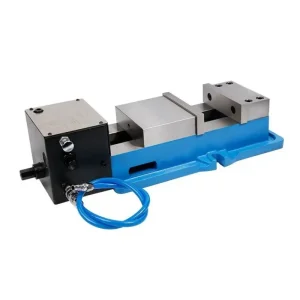
Custom Pneumatic Hydraulic Vise Suppliers, Manufacturer
View Specification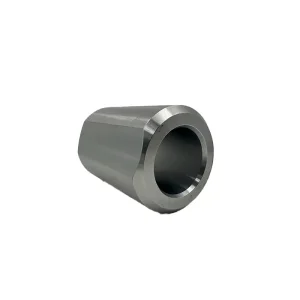
Wholesale Hydraulic Cylinder Bush MPM-HCBS11 Manufacturers, Manufacturer
View Specification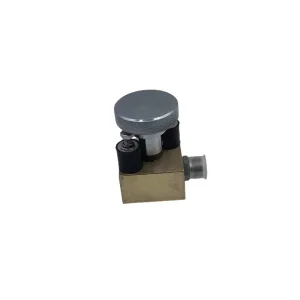
Wholesale Manual Speed Control Copper Valve Block MPM-MSCCVB12 Supplier, Factories
View SpecificationMacro Industry Solutions: Grain Storage & Bulk Silo Dynamics
Grain storage facilities operate under demanding environmental conditions where particulate contamination, chemical exposure from fumigation, sustained cyclic loads, and catastrophic dust explosion hazards converge.
Particulate Exclusion Seals
Microscopic grain husk fragments and cornstarch particulates cause accelerated seal degradation. Our silo cylinders utilize stepped polyurethane wipers paired with tandem primary rod seals and secondary PTFE buffer rings, completely sealing the cylinder rod against micro-abrasive ingress.
Corrosion & Phosphine Resistance
Grain storage facilities routinely introduce phosphine gas (PH3) and other fumigants to protect grain stores. These gases corrode standard chrome plating. We implement multi-layer nickel-chromium electroplating or QPQ (Quench-Polish-Quench) nitriding, delivering more than 1,000 hours of ASTM B117 salt spray endurance.
Zero-Drift Integrated Locking
When operating bottom discharge gates or roof-venting louvers, creep in the stroke position can cause material spillage or bin collapse. By mounting our T3A integrated counterbalance and check valve blocks directly on the cylinder barrel, we prevent unintended movement even during catastrophic hydraulic line ruptures.
China Factory 4.0: Supply Chain Resilience & Process Control
Operating out of our 3,500 m² high-precision facility established in 2006, we combine automated CNC machining lines with rigorous mechanical validation to ensure reliable supply lines for OEM partners worldwide.
Integrated CNC Turning
Multi-axis CNC turning and milling centers machine cylinder heads, gland nuts, and pistons in one chucking. This eliminates cumulative runout and ensures concentricity below 0.015 mm.
Precision Skiving & Burnishing
Barrels are processed via roller skiving and burnishing rather than traditional honing. This produces internal surface finishes of Ra 0.1–0.2 μm with work-hardened bore surfaces that reduce friction.
Automated Pulse GTAW/GMAW
Cylinder trunnions, clevis brackets, and end flanges are joined using automated rotational welding stations. Ultrasonic testing checks penetration to avoid internal void formation.
Fluid Contamination Auditing
Every completed cylinder goes through automated flushing and clean-room assembly. Fluid samples are analyzed to ISO 4406 cleanliness standards (Class 17/15/12 minimum) prior to delivery.
Engineering Roadmap & Global Procurement Requirements
Procurement teams require comprehensive design verification before initiating volume manufacturing. We align with global standards to simplify technical evaluations.
Technical Documentation
We supply complete material test reports (EN 10204 3.1 certification), finite element analysis (FEA) reports for pin eyes, seal compatibility matrices, and 3D STEP models with custom interface geometries.
ATEX & Explosion-Proof Directives
Grain elevators are classified as combustible dust atmospheres (ATEX Zone 20/21/22 or NEC 500 Class II, Division 1). Our designs incorporate copper alloy bushings, anti-static grounding connections, and explosion-proof solenoid integration.
Lifecycle IoT Ready Sensors
Integrated linear displacement transducers (magnetostrictive or Hall-effect) embedded directly into the cylinder's hollow piston rod deliver real-time gate position data back to SCADA control centers.
| Performance Parameter | Standard Agriculture Duty | Grain Silo Heavy Duty (MPM Standard) | Industrial High-Cycle Port Terminal |
|---|---|---|---|
| Operating Working Pressure | 160 – 210 bar (2320 – 3045 psi) | 210 – 350 bar (3045 – 5075 psi) | 350 – 420 bar (5075 – 6090 psi) |
| Barrel Material Grade | ST52 / E355 Cold Drawn Welded | 27SiMn / St52.3 Quenched & Tempered | 42CrMo4 Forged Alloy Steel |
| Piston Rod Surface Coating | Hard Chrome >20 μm (Rating 8) | Double Chrome / Laser Cladded Stainless | HVOF Ceramic / Thermal Spray Alloy |
| Operating Fluid Temp Range | -20°C to +80°C | -40°C to +110°C (Food Safe Fluid Ready) | -45°C to +130°C |
| Threaded Geometry Standards | ISO 6H / Imperial Standard UNC | ISO 6H Precision / DIN 3852 Ports | SAE J1926 O-ring Boss / Code 62 Flange |
Precision Assemblies & Specialized Cylinder Hardware
Expand your manufacturing capabilities with our certified cylinder heads, spherical bearings, heavy machinery hydraulic rams, and fluid manifold accessories.
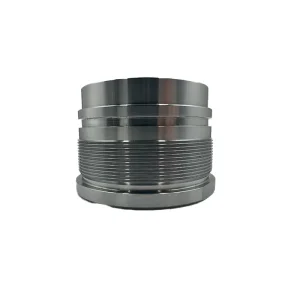
High-Quality Hydraulic Cylinder Head MPM-HCHD11 Suppliers, Manufacturer
View Specification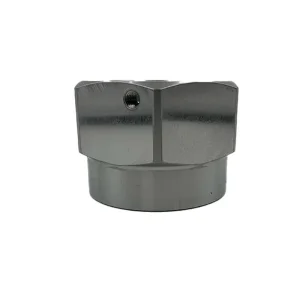
ODM Hydraulic Cylinder Nut MPM-HCNT11 Suppliers, Factory
View Specification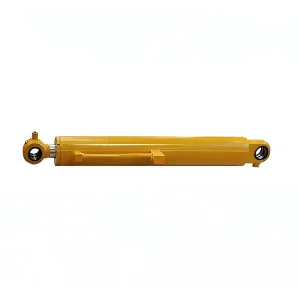
Custom Small Excavator Boom Cylinder Suppliers, Manufacturers
View Specification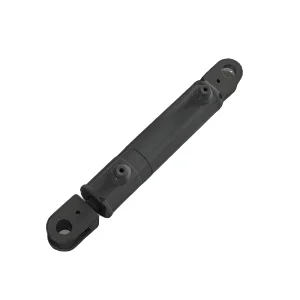
Best Steering cylinder HCS302 Factories, Factory
View Specification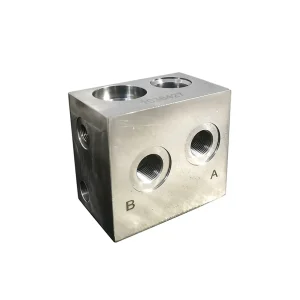
Cheap T13A Hydraulic Flow Control Valve Block MPM-HFCVB13A Supplier, Manufacturers
View Specification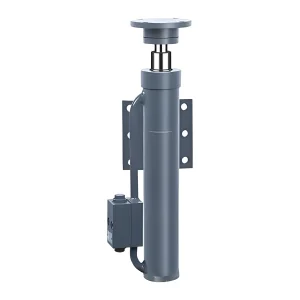
Wholesale Outrigger Expansion Cylinder Suppliers, Factory
View Specification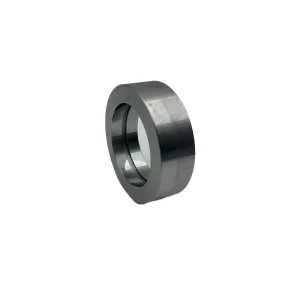
Custom Hydraulic Spherical Bearing MPM-HCSB11 Supplier, Factories
View Specification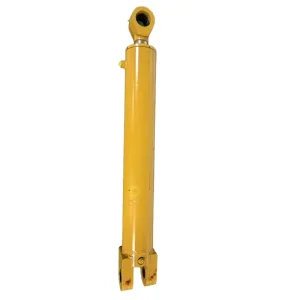
Wholesale Buffer Cylinder for excavator and backhoe loader Supplier, Manufacturer
View SpecificationFrequently Asked Questions for Grain Silo Cylinder Buyers
Detailed technical answers for procurement directors and mechanical systems engineers.