
High-Tolerance Machine Components & Hydraulic Systems
Direct OEM & aftermarket manufacturing engineered to DIN, ISO, and JIS standards. Browse our premier mechanical and hydraulic actuation solutions.
The Global Machine Universal Vice Market in High-Precision CNC Environments
Evaluating structural engineering demands, global manufacturing supply chain realignment, and multi-axis kinematic requirements.
Kinematic Freedom & Complex Geometries
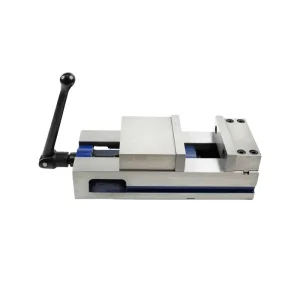
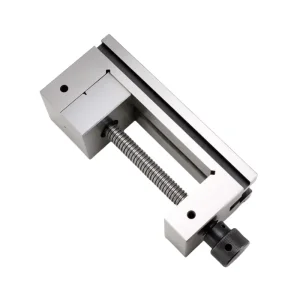
A machine universal vice (often recognized as a 3-way tilting or compound universal vise) serves as the primary mechanical interface in toolrooms, die & mold manufacturing, and precision aerospace fabrication. Unlike conventional single-axis vises, universal workholding implements a calibrated 360-degree rotational horizontal base combined with a 0-to-90-degree vertical inclination mechanism.
This multi-axis articulation enables exact spatial presentation of prismatic workpieces to rotating tool spindles without requiring dedicated, custom angle plates or fixture jigs.
Supply Chain Structural Realignment
Tier-1 automotive and defense manufacturers have transitioned toward hardened alloy workholding devices that minimize harmonic resonance under aggressive feeds and speeds. Qingdao Micro Precision Machinery (MPM) engineers universal clamping components leveraging close-grained Meehanite cast iron (FC30 to FCD60) and vacuum-carburized 20CrMnTi tool steels.
By consolidating in-house precision horizontal turning, bridge milling, and sub-micron slideway grinding, industrial suppliers eliminate geometric stacking deviations.
Total Cost of Ownership & Scrap Mitigation
In aerospace turbine blisk machining or medical micro-component fabrication, part deflection of mere microns precipitates scrap. Industrial buyers globally prioritize universal machine vices that incorporate downwards-pull angle clamping mechanisms to mitigate workpiece lift. The total return on investment (ROI) is governed by fixture stability over tens of thousands of cycles, corrosion resistance against aggressive semi-synthetic coolants, and quick-change modular integration.
Next-Generation Workholding: The Shift to Smart, 5-Axis Clamping
Examining the engineering shift from manual acme-screw clamping toward sensor-integrated, low-interference universal clamping fixtures.
Zero-Point Clamping & Automation
Traditional universal machine vises required manual alignment using magnetic indicators and t-slot keys. Modern industrial machine shops demand zero-point clamping studs integrated directly into universal vice sub-plates. This shift enables automatic pallet shuttling via collaborative robots (cobots), shrinking job setup changeovers from 45 minutes to sub-60 seconds across high-mix, low-volume (HMLV) cells.
IoT-Enabled Clamping Force Feedback
Thin-walled aerospace aluminum and titanium castings risk severe plastic deformation under uncontrolled manual vice torque. Next-generation universal vises integrate piezoresistive load cells into the stationary and dynamic jaw bodies. Communicating via IO-Link or wireless telemetry, the vice alerts the CNC machine controller if cutting vibrations trigger clamping pressure decay.
5-Axis Clearance & Dovetail Engineering
As 5-axis simultaneous machining centers proliferate, envelope interference becomes the major operational constraint. Traditional blocky vices block spindle access during 3D undercut milling. Modern universal vices leverage tapered jaws, modular dovetail prep clamps, and elevated pyramid bases to achieve 5-sided workpiece accessibility with minimal cutter extension.
Workholding Architectures: Universal vs. Traditional Milling Clamps
A side-by-side engineering evaluation for production managers, tooling buyers, and machine shop superintendents.
| Evaluation Parameter | High-Precision Machine Universal Vice | Standard Mechanical Milling Vise | Custom Multi-Cavity Fixturing |
|---|---|---|---|
| Angular Articulation | 3-Axis (360° Swivel Base, 0-90° Elevation, ±45° Tilt) | 1-Axis (Stationary or Optional 360° Rotational Base) | Zero (Dedicated Static Clamping Matrix) |
| Initial Capital Outlay | Moderate ($450 – $2,800 depending on actuation) | Low ($150 – $800) | Very High ($3,500 – $25,000+ per SKU) |
| Setup Flexibility | Extremely High; Rapid compound angle positioning | Limited; Requires external angle blocks or sine plates | Zero; Dedicated strictly to single workpiece profile |
| Damping & Dynamic Rigidity | High (When constructed of Meehanite FC30 Cast Iron) | High (Simple low-center-of-gravity cast body) | Exceptional (Contoured specifically to part profile) |
| Jaw Lift Prevention | Semi-Spherical Segment Segmented Down-Pull Action | Flat wedge thrust plates (Prone to upward lift over time) | Direct hydraulic toggle or hydraulic downward clamp |
| Ideal Production Regime | Prototyping, Aerospace, Mold & Die, Repair Toolrooms | Standard Prismatic 3-Axis Volume Milling | Automotive High-Volume Dedicated Transfer Lines |
Macro-Sector Solutions: Real-World Field Implementations
How specialized manufacturing plants eliminate non-productive setup overhead via precision universal workholding.
Aerospace Multi-Angle Bracket Fabrication
Titanium Airframe Structural Hinge Nodes
A European aerospace subcontractor faced 4-hour setup times setting compound angles for turbine access brackets. Deploying a Qingdao Micro Precision universal vice with micro-graduated 1-minute vernier scales enabled direct spatial indexing. Machine spindle runtime increased by 38% while geometric tolerance stack-up was reduced to within ±0.008 mm across complex 3D profiles.
Injection Mold Core EDM & Electrode Prep
Automotive Lens Core Micro-Cavities
Molding cores require precise angular relief to guarantee clean part ejection. By using high-grade universal vices (like the ZQ80 and precision QGG series), moldmakers grind and sink EDM electrodes at precise 3.5-degree draft angles without dismounting the workpiece between toolroom surface grinders and sinker EDM tanks, maintaining exact reference datums.
Hydraulic Manifold Port Angled Boring
Custom Mobile Valve Blocks & Cartridges
Complex hydraulic manifolds require cross-drilled internal relief channels intersecting at compound angles. Rigid universal vices provide the necessary clamping force (up to 45 kN) to withstand heavy carbide drilling thrust without inducing chatter or axial slippage, preserving bore concentricity for high-pressure counterbalance and solenoid cartridges.
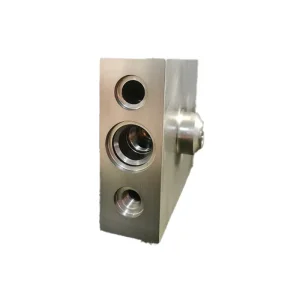
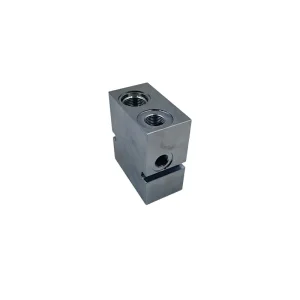
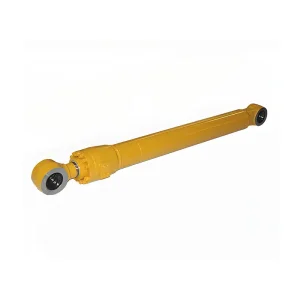
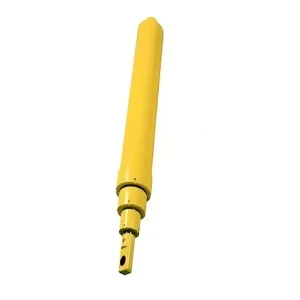
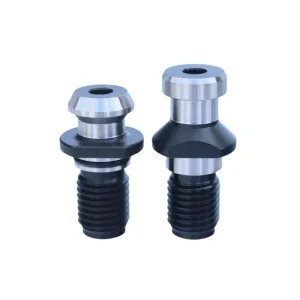
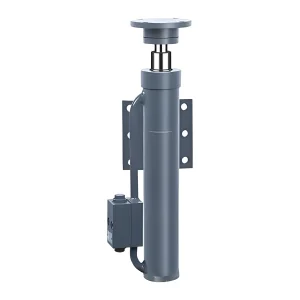
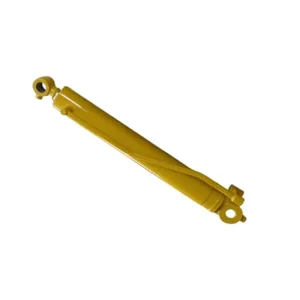
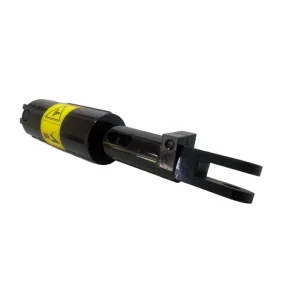
Standard & Custom Actuation and Workholding Solutions
Explore our integrated hydraulic valve blocks, industrial duty cylinders, and precision CNC machine tooling accessories.
Qingdao Micro Precision Machinery: Quality Assurance Benchmarks
In-house manufacturing protocols, material traceability, and metallurgical standards implemented across every production run.
Cryogenic & Thermal Stress Relief
Dimensional instability in universal machine vices arises when casting stresses release during milling operations. MPM applies thermal aging and sub-zero cryogenic treatments to all cast iron vise bodies and forged alloy jaws. This process stabilizes the austenitic matrix, ensuring that ground slideway tolerances of ≤0.005 mm remain true under extreme temperature fluctuations.
CMM Laser Interferometer Calibration
Every universal angular swivel assembly is inspected using Zeiss 3D coordinate measuring machines (CMM) and Renishaw laser interferometers. We verify angular resolution across both tilt planes, jaw face perpendicularity against the ground datum bed, and dynamic deflection under maximum rated screw torque, supplying full inspection certificates with each export shipment.
Enclosed Hydro-Mechanical Lead Screws
A leading failure mode in industrial milling vices is the ingress of swarf and abrasive sludge into the drive thread. Our high-precision vices incorporate fully sealed lead screw enclosures with internal hydraulic force boosters. Operators achieve consistent, effortless 45 kN clamping forces with zero risk of thread galling or premature backlash accumulation.
Frequently Asked Questions: Sourcing & Operating Machine Universal Vices
Clear, engineering-driven answers for procurement teams, machine tool dealers, and lead mechanical engineers.
A standard machine vise operates along a single linear clamping axis on a fixed horizontal plane. A machine universal vice incorporates three independent degrees of freedom: a 360-degree graduated rotating horizontal base, a 90-degree vertical elevation quadrant, and an auxiliary ±45-degree tilting axis. This allows complex compound angles to be dialed in without requiring custom sine plates or bespoke angled fixture blocks.
Workpiece lift occurs when clamping pressure induces deflection in the movable jaw slide. Our precision universal vices (such as the ZQ80 series) incorporate an angle-lock semi-spherical segment design. When tightening the acme or hydro-mechanical screw, a 45-degree downward vector is exerted on the movable jaw, pulling the workpiece down onto the ground bed datums to hold lift under 0.005 mm.
The vise bed and compound swivel bodies are cast from premium Meehanite FC30 or nodular ductile iron FCD60 to maximize vibration absorption. Guide ways and jaw plates are machined from 20CrMnTi or high-carbon alloy steel, vacuum carburized or case-hardened to HRC 58-62, and precision ground to deliver lasting resistance to chip abrasion and coolant corrosion.
Yes. By mounting universal vises onto standardized zero-point receiver plates (compatible with 52 mm or 96 mm pull-stud grids), robots can shuttle vices between 5-axis CNC machines, CMM inspection stations, and wash cells. Pneumatic or hydraulic power modules can replace manual handles for fully programmatic automated clamping.
To quote custom or OEM-spec universal machine vices or hydraulic cylinders, please share jaw width, maximum opening stroke, bed height, required clamping force, mounting slot dimensions, and preferred finish. Providing an engineering 2D/3D drawing (STEP/DWG) or physical sample significantly accelerates our design freeze and quotation cycle.
All precision-ground surfaces receive industrial-grade VCI rust-inhibiting compound coatings and vapor-barrier poly wraps. Assemblies are packed in custom-fitted, fumigated plywood cases designed to endure long maritime shipping cycles, moisture exposure, and multi-stage container handling without geometric shifting or corrosion.