
High-Performance Hydraulic Actuation & Machine Tooling
Explore our industrial-grade hydraulic cylinders, custom bushings, high-pressure pistons, and precision CNC components manufactured with micron-level tolerance in Qingdao.
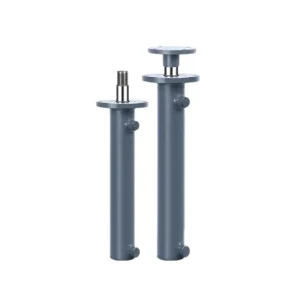
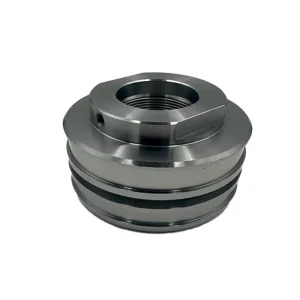
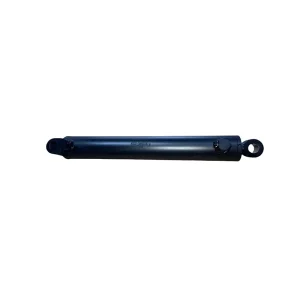
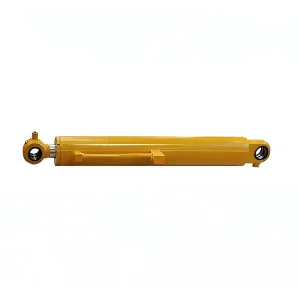
The Engineering Dynamics of Hydraulic Outrigger Systems
Outrigger stabilization cylinders constitute the primary safety barrier against machine rollover in mobile heavy equipment, requiring sophisticated fluid circuit dynamics and ultra-resilient mechanical design.
Zero-Drift Dynamic Load Holding
Unlike standard linear actuators subjected to continuous cycling, outrigger cylinders support static multi-ton payloads under asymmetric environmental vectors like high wind shear and uneven ground deflection. Our integrated dual pilot-operated check valves and hard-seat counterbalance assemblies ensure internal fluid leakage does not exceed 1 drop per 10 minutes at 350 bar test pressures.
Euler Column Buckling Resistance
When stabilizers extend to their stroke limits, piston rods act as slender columns vulnerable to transverse buckling loads. Micro Precision calculates stroke-to-rod diameter ratios using non-linear finite element structural analysis (FEA), utilizing high-yield Quenched and Tempered (Q&T) 42CrMo4 steel to raise the critical buckling safety factor over 3.2:1 under maximum permissible overload.
Environmental Abrasion & Corrosion Defense
Outrigger footings operate directly within aggressive jobsite contaminants, slurry, bitumen, and marine salt fog. Our hard chrome plating (minimum 30–50 µm with micro-crack network density > 1000 cracks/cm) combined with optional High-Velocity Oxygen Fuel (HVOF) thermal spray tungsten carbide coatings guarantees neutral salt spray resistance exceeding ISO 9227 NSS 1000 hours.
OEM Engineering Benchmark: Sourcing industrial-grade outrigger hydraulic cylinders requires rigorous verification of material grain structures, heat-treatment depth, and integral valve circuit isolation. Qingdao Micro Precision Machinery enforces automated ultrasonic inspection on every forged cylinder base and eye bracket to eliminate metallurgical void defects before CNC turning commences.
Mission-Critical Applications for Outrigger Hydraulics
From downtown high-rise building projects in Munich to remote deep-mine operations in Western Australia, our outrigger cylinders stabilize the world’s most demanding mobile machinery fleets.
All-Terrain & Rough-Terrain Mobile Cranes
Telescopic boom cranes impose huge torsional forces on stabilizer beams when swinging heavy loads over the cab corners. Our outrigger cylinders feature internal spherical plain bearings (such as our MPM-HCSB11) and heavy-duty wear rings that absorb angular misalignment up to ±3° without scoring the piston rod or binding the gland nut. Standard configurations integrate direct-flange counterbalance valves, eliminating high-pressure flexible hoses between the valve and cylinder chamber to prevent catastrophic collapse in case of external hose puncture.
Concrete Boom Pumps & Telehandlers
Concrete pump trucks subject outrigger cylinders to continuous high-frequency hydraulic pulsation created by concrete piston stroke reversals. Our cylinders utilize fatigue-resistant alloy seamless tubes (E355 / St52.3) combined with specialized Parker / Trelleborg polyurethane and nitrile elastomer seal matrix packages. The seal geometry features an asymmetrical primary lip design that resists hydrodynamic extrusion under 420-bar surge spikes while maintaining zero rod weeping.
Aerial Work Platforms (AWP) & Fire Rescue Ladders
Personnel lift machinery operates under the strictest safety directives globally, including ANSI/SAIA A92.2 and EN 280. A loss of even 0.5 mm in outrigger cylinder stroke due to thermal oil shrinkage or internal seal seepage can cause dangerous platform basket sway at 60-meter working heights. Micro Precision equips vertical jack cylinders with mechanical screw locks or secondary hydraulic piloted lock valves that isolate fluid volumes hermetically for continuous multi-hour crew security.
Geotechnical Rigs & Horizontal Directional Drilling
Piling and rotary drilling rigs require outrigger cylinders that withstand relentless cyclic vibration and harsh soil conditions. Piston rods are induction-hardened to 58–62 HRC at depths of 2.0 to 3.5 mm to resist stone chips, aggregate abrasion, and heavy side loads. Our outrigger foot assemblies incorporate self-aligning ball joints and replaceable polyurethane ground pads to disperse localized bearing stress across soft or fractured strata.
Engineering Standards, Metallurgy & Compliance Protocol
We build our hydraulic cylinders to the world’s most exacting design frameworks, ensuring seamless compatibility with metric and imperial machine architectures across Europe, North America, and the Asia-Pacific.
| Engineering Parameter | Micro Precision Standard Specification | International Standard Referenced | Customer Benefit |
|---|---|---|---|
| Cylinder Barrel Material | DOM St52.3, E355, 27SiMn Seamless Honed Tube | DIN 2391 / EN 10305-1 | High yield strength > 520 MPa prevents swelling under peak pressure spikes |
| Internal Surface Finish | Skiving & Roller Burnished Ra ≤ 0.2 µm (8 µin) | ISO 1302 / ISO 4287 | Minimizes seal friction, prevents micro-pitting, triples seal operational lifespan |
| Piston Rod Metallurgy | 42CrMo4 / AISI 4140, Induction Hardened 58-62 HRC | ASTM A304 / EN 10083 | Extreme dent and scratch resistance against abrasive jobsite stones and debris |
| Hard Chrome Plating | 30 – 50 µm thickness; 1000+ hrs Neutral Salt Spray | ISO 9227 NSS / ASTM B117 | Complete rust immunity in offshore, maritime, and winter de-icing environments |
| Integral Valve Security | Cartridge or Surface-Mount Dual Counterbalance Valves | ISO 6020-2 / EN 13000 | Immediate hydraulic lock upon hose failure; zero operational load settling |
| Thread & Port Machining | SAE, BSPP, Metric O-Ring Boss (ORB), Flange Code 61/62 | ISO 6149 / SAE J1926-1 | Guaranteed leak-free zero clearance port seating compatible with global hoses |
| Factory Testing Protocol | 100% 1.5x Working Pressure Hydrostatic & Bypass Proofing | ISO 10100 Testing Standard | Zero defect tolerance before dispatch; fully documented quality certification |
European Machinery Compliance
Conforming fully to EN 13000 (Mobile Cranes) and European Machinery Directive 2006/42/EC. We deliver CE technical documentation, raw material mill test certificates (EN 10204 3.1), and third-party Lloyd's or TÜV pressure test verifications upon request.
North American Compliance
Engineered to meet ASME B30.5 standards for mobile and locomotive cranes and OSHA 1926 Subpart CC requirements. Porting and bolt holes are available in unified imperial threads (UNF/UNC) and SAE J518 4-bolt code 62 hydraulic connections.
Custom OEM Prototyping Support
Our Qingdao engineering office works directly from your 3D STEP/SolidWorks CAD models or physical legacy samples. We produce fully validated outrigger cylinder prototypes with rapid DFM (Design for Manufacturability) analysis within 15–20 working days.
Next-Generation Technologies in Outrigger Cylinder Engineering
The transition toward autonomous mobile platforms, electrified drive hydraulics, and predictive telematics is reshaping stabilizer cylinder engineering. Here is how Micro Precision is driving the industry forward.
Smart Sensors & CANbus Telemetry
We now integrate non-contact linear magnetostrictive and LVDT displacement position transducers directly inside the gun-drilled piston rods. Combined with pressure sensors in the cylinder cap, our cylinders feed real-time stroke position and dynamic ground reaction loads over CANopen / J1939 protocols to crane stability computers, calculating automatic tipping moments.
Bio-Hydraulic & Fire-Resistant Fluids
Global environmental mandates in forestry and municipal projects demand biodegradable synthetic ester (HEES) or water-glycol fluids (HFC). We install specialized fluorocarbon (FKM), HNBR, and ultra-high-molecular-weight polyethylene (UHMW-PE) seal configurations engineered to resist polymer degradation and chemical swelling under harsh bio-fluids up to 120°C.
Lightweight High-Strength Metallurgy
To reduce overall gross vehicle weight (GVW) on multi-axle truck cranes, Micro Precision uses Strenx 700 / 960 extra-high-yield alloys to thin cylinder wall cross-sections while preserving structural burst safety factors. This yields a 20% to 32% weight savings per outrigger assembly without compromising structural stiffness or critical buckling capacity.
Integrated Hydraulic Solutions, Valve Blocks & Accessories
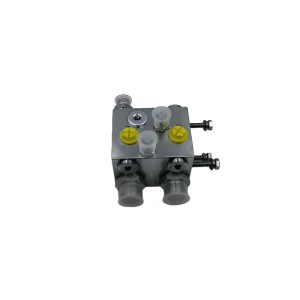
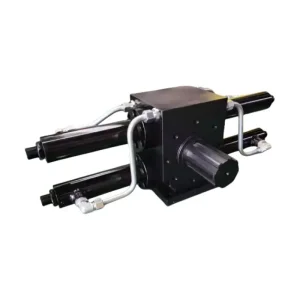
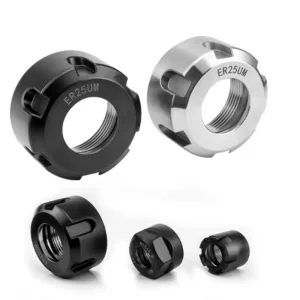
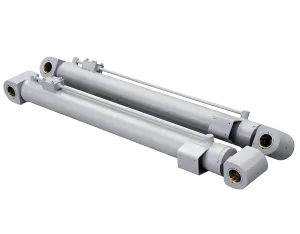
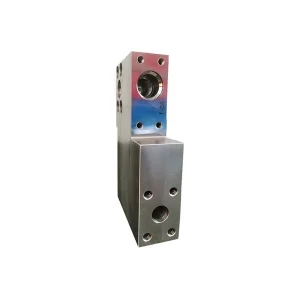
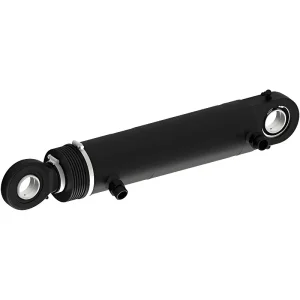
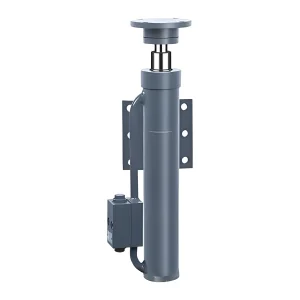
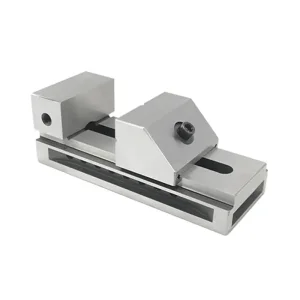
Explore our complete manufacturing lineup of expansion actuators, suspension cylinders, luffing units, manifold blocks, and precision CNC machine tooling.
Frequently Asked Questions: Sourcing Outrigger Cylinders
Authoritative technical guidance for hydraulic system designers, fleet maintenance directors, and overseas procurement executives.
What causes an outrigger cylinder to slowly creep or drift downward under load?
Hydraulic outrigger creep under heavy load is caused by one of two failure modes: internal piston seal bypass or load-holding counterbalance valve seat leakage. When the piston seal fails, high-pressure fluid bleeds from the cap side to the rod side, permitting cylinder retraction under external ground reaction forces. However, in cylinders equipped with integrated pilot-operated check valves, creep is predominantly caused by particulate contamination (exceeding ISO 4406 19/17/14) lodging on the poppet seat of the counterbalance valve. At Micro Precision, every valve cavity is diamond-burnished and ultrasonically cleaned, and our double-acting cylinders utilize stepped bronze-PTFE piston seals with low cold-flow properties to guarantee zero drift.
How does Micro Precision calculate the safety factor against rod buckling on long-stroke outrigger cylinders?
We evaluate rod column stability based on the Euler and Rankine-Gordon formulas using the pin-to-pin extended stroke length, mounting boundary conditions (clevis, trunnion, or spherical eye), and maximum applied vertical force. For outriggers operating at extensions beyond 750 mm, we perform non-linear finite element buckling simulations (FEA). We enforce a minimum mechanical safety factor of 3.0 to 3.5 under 1.5x design pressure, choosing cold-drawn high-tensile alloy rods (such as 42CrMo4 or 38MnVS6) to resist off-center lateral loads caused by uneven ground contact.
Why is it critical to mount counterbalance valves directly onto outrigger cylinders rather than in the chassis manifold?
Mounting load-holding valves directly to the cylinder barrel port via a flanged or manifold block eliminates high-pressure hydraulic hoses between the valve lock and the fluid chamber. If a flexible chassis hose bursts under load, a chassis-mounted valve cannot prevent total fluid evacuation, leading to instantaneous outrigger collapse and equipment tipping. Directly bolted or cartridge-integrated counterbalance valves lock the oil volume inside the cylinder immediately, ensuring that hose severance does not affect machine stability.
What parameters are required to generate an accurate quotation and custom CAD drawing?
To produce an engineering design package and firm quotation within 24 hours, our engineering department requires: (1) Bore diameter and rod diameter; (2) Maximum stroke and pin-to-pin closed retracted length; (3) Nominal working pressure and maximum relief peak pressure; (4) Mounting geometry at both ends (spherical bearing, cross-tube, clevis, or flat foot swivel); (5) Valve configuration requirements (dual counterbalance or pilot check); (6) Environmental parameters (ambient temperature range, bio-oil usage, marine environment); and (7) Estimated prototype and annual batch quantities.
Can Micro Precision replicate discontinued OEM outrigger cylinders from old machines?
Yes. Our Qingdao manufacturing facility regularly reverse-engineers legacy OEM cylinders for cranes, aerial booms, and drilling equipment. Clients ship an original worn sample or detailed dimensional drawing. Our engineers perform 3D coordinate-measuring machine (CMM) mapping of all mounting dimensions, bore geometry, and port threads, verify original metallurgy via optical emission spectrometry, and generate modern production drawings. Interchangeability and pressure ratings are agreed upon in writing before machining begins.
What surface treatments are available for extreme corrosion environments (coastal or mining)?
For high-corrosion applications, we offer three surface protection levels: (1) Heavy industrial hard chrome plating (40–50 µm) with double micro-cracking to reach 500 hours neutral salt spray rating (ISO 9227); (2) Nickel-chromium duplex plating consisting of a 30 µm nickel base coat beneath a 20 µm hard chrome outer layer, achieving 1,000+ hours NSS; and (3) High-Velocity Oxygen Fuel (HVOF) thermal spray tungsten carbide coatings for coastal, chemical, or mining environments, delivering corrosion resistance and superior micro-hardness up to 1200 HV.
How does Qingdao Micro Precision package outrigger cylinders for sea freight and moisture protection?
All finished cylinders undergo complete internal drainage, are flushed with VCI (Vapor Corrosion Inhibitor) preservation oil, and have their oil ports hermetically sealed with threaded steel or heavy polyethylene plugs. Piston rods are treated with wax-based anti-corrosion grease and wrapped in heavy VCI barrier paper and polyethylene stretch film. The units are secured inside ISPM-15 compliant heat-treated plywood crates with internal timber cradles to eliminate axial shifting, moisture damage, and impact shock during long sea voyages.