
Engineered Actuation & Machining Solutions
Precision-machined hydraulic assemblies, custom high-pressure cylinders, and CNC tool holding systems engineered under micron-level tolerance controls for global original equipment manufacturers.
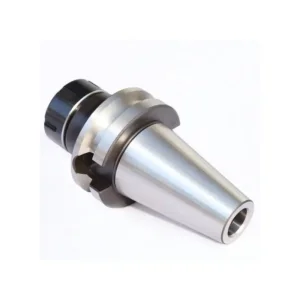
Custom Milling Tool Holder MPM-CTH400 Manufacturers, Manufacturer
View Technical Specs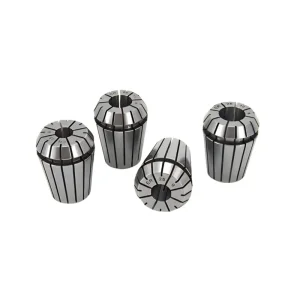
Cheap ER Collet MPM-EC0070 Supplier, Manufacturer
View Technical Specs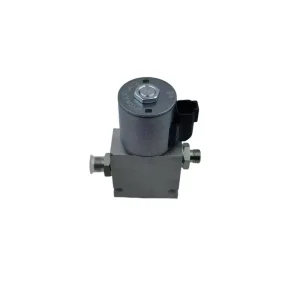
High-Quality Quick Change Solenoid Valve MPM-QCSV12 Suppliers, Factories
View Technical Specs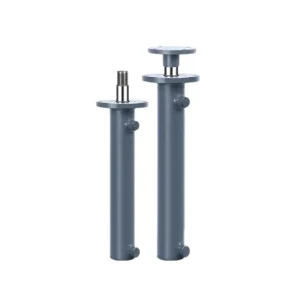
ODM Outrigger Hydraulic Cylinder MPM-OHC12 for Crane Supplier, Factory
View Technical Specs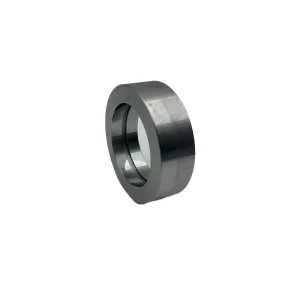
Custom Hydraulic Spherical Bearing MPM-HCSB11 Supplier, Factories
View Technical Specs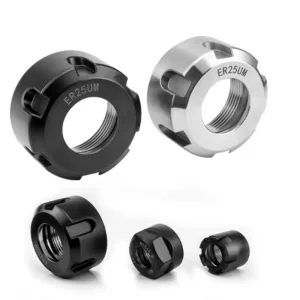
OEM ER Collet MPM-EN0072 Suppliers, Factories
View Technical Specs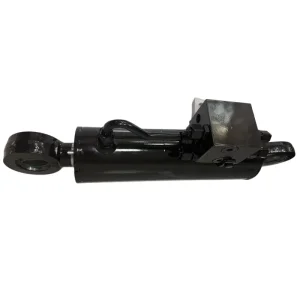
China Reversible Plough Turnover Hydraulic Cylinder Suppliers, Manufacturers
View Technical Specs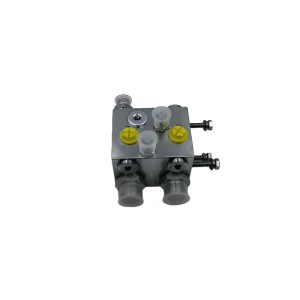
China Differential Lock Solenoid Valve MPM-DLSV12 Manufacturer, Factory
View Technical SpecsThe Global Double Acting Telescopic Cylinder Landscape
Double-acting telescopic hydraulic cylinders represent the pinnacle of fluid power power-to-envelope ratios. By providing pressurized hydraulic force during both extension and retraction strokes, these complex linear actuators overcome the fundamental limitation of gravity-dependent single-acting cylinders.
Global Market Valuation & CAGR
The global specialized hydraulic cylinder sector is projected to surpass USD 18.4 billion by 2030, registering a Compound Annual Growth Rate (CAGR) of 5.8%. Double-acting telescopic cylinders represent the highest-margin and technically most demanding sub-tier within this domain. Demand is heavily accelerated by infrastructure renewal projects across North America and Western Europe, aggressive resource mining in Australasia, and massive mechanized municipal utility upgrades throughout Southeast Asia.
Unlike conventional single-stage tie-rod or welded cylinders, multi-stage double-acting cylinders require proprietary multi-passage fluid channels and specialized concentric sealing envelopes capable of sustaining dynamic pressures exceeding 25 MPa to 35 MPa (3,625 to 5,076 PSI) through 2 to 6 stages of stroke progression.
Supply Chain Realignment & Sourcing
Original Equipment Manufacturers (OEMs) of heavy dump trucks, mobile refuse compactors, multi-terrain telehandlers, and mining utility rigs are pivoting toward high-precision consolidated manufacturers. The historical model of sourcing rough tubes, raw chrome-plated bars, custom seal glands, and separate counterbalance blocks from disjointed vendors is being superseded by turnkey hydraulic partner models.
Facilities possessing unified end-to-end capabilities—including deep-hole gun drilling, internal skiving and roller burnishing, automated induction hardening, sub-micron CNC thread turning, and robotic assembly with automated pressure cycle verification—have become critical strategic partners for multinational brand survival.
The Double-Acting Operational Imperative
Why do advanced industrial applications demand double-acting configurations instead of simpler single-acting mechanisms? In heavy horizontal ejector bodies, tunnel boring advance jacks, offshore drilling rigs, and specialized fire-fighting aerial platforms, gravitational force is either non-existent, perpendicular to the axis of movement, or insufficient to overcome seal friction and mechanical stiction during retraction.
Double-acting fluid circuits guarantee rapid, predictable, and fully synchronized retract velocity. Furthermore, they prevent "pneumatic cavitation" and vacuum voids that otherwise draw moisture, airborne road grit, and fine abrasive silica past outer wiper seals when operating in negative-angle conditions.
Fluid Dynamics, Staging Mechanics & Annular Fluid Paths
Double acting telescopic cylinders resolve one of fluid power's greatest geometric challenges: routing high-pressure fluid through nested concentric sleeves without external flexible hoses that would tangle, fatigue, or fail during long-stroke strokes.
Concentric Internal Fluid Porting Architecture
The central technical difficulty in double acting telescopics is providing oil return passages to the rod-end annular area of each moving sleeve. Quality factories achieve this through either central internal telescopic transfer tubes or precision-drilled longitudinal rifle fluid ports inside the piston bodies.
During the extension phase, pressurized oil enters the primary base port, acting against the full cross-sectional piston area of Stage 1 ($A_1 = \pi D_1^2 / 4$). As Stage 1 fully strokes out, internal transition ports sequentially energize the bore of Stage 2 ($A_2 = \pi D_2^2 / 4$), systematically generating decreasing thrust force and increasing linear speed under a constant volumetric flow rate ($Q$).
Conversely, during pressurized retraction, fluid is routed into the secondary retract port. It travels via internal transfer paths into the annular differential volumes ($A_{retract} = \frac{\pi}{4}(D_{sleeve}^2 - d_{inner}^2)$). Proper sequence valving or geometric differential balance guarantees that sleeves retract in precise mechanical order, eliminating sudden hydraulic pressure spikes and acoustic water-hammer shock.
Tribology, Surface Honing & Micro-Finishing
Every moving sleeve in a telescopic stack serves dual functions: it acts as a smooth external rod for the preceding larger sleeve, and as an internally honed cylinder barrel for the succeeding smaller stage. This imposes exceptionally rigorous tribological and dimensional tolerances.
At Qingdao Micro Precision Machinery, high-tensile cold-drawn seamless alloy steel tubing (grades such as 27SiMn, ST52-3, or 42CrMo4) undergoes skiving and roller burnishing. Internal bores are finished to a surface roughness of $Ra \le 0.2\ \mu m$, with circularity held within 0.015 mm.
Outer sleeve surfaces are precision induction hardened, ground, and electroplated with micro-crack hard chrome to a minimum layer of 25 to 40 microns, achieving a surface hardness of HV 850–1050. The resulting cross-hatch micro-texture retains crucial boundary lubrication film even during high-load low-velocity tipping operations, eliminating seal scoring, stick-slip friction, and micro-welding.
Sealing Envelope & Dynamic Side-Load Mitigation
Because telescopic cylinders possess an extended stroke-to-retracted-length ratio reaching up to 4:1 or 5:1, column buckling resistance and deflection under lateral side loads are severe engineering bottlenecks. Multi-stage double acting configurations introduce extra dynamic seal junctions exposed to high working pressures.
Our sealing topology incorporates dual bronze-filled PTFE step seals backed by high-resilience fluoroelastomer (FKM) or nitrile (NBR) O-ring energizers, supported by wide heavy-duty polyoxymethylene (POM) or fabric-reinforced phenolic guide wear rings.
The specialized guide rings isolate metal-to-metal contact even when structural tipping bodies twist on uneven terrain, absorbing bending moments and preserving concentricity. Customized double-lip polyurethane (PU) scrapers with metal cages ensure frozen mud, road salts, scale, and particulate dust cannot penetrate the internal fluid matrix.
Industrial Megatrends & Technology Roadmap
The convergence of electrification, industrial IoT telemetry, and stringent environmental decarbonization is transforming hydraulic actuation. Double acting telescopic cylinders are transitioning from passive mechanical actuators into intelligent, digitalized motion units.
Sensorized Telemetry & In-Cylinder Displacement
Modern autonomous construction vehicles, smart waste management trucks, and automated tunnel equipment require real-time millimeter-level positioning feedback across all stages. Historically, external string pots or laser sensors failed rapidly under debris and washdowns.
The frontier of double acting telescopic manufacturing integrates embedded non-contact magnetostrictive or optical linear position sensors bored through the core base rod. By tracking magnetic markers embedded within each successive stage piston, the vehicle’s ECU accurately computes stage position, extension velocity, and impending end-of-stroke deceleration, enabling algorithmic cushioned braking without physical impact.
Laser Cladding (HVOF) & Green Metallurgy
Environmental regulations across Europe (REACH directive) and North America are systematically phasing out hexavalent chromium plating due to toxic emissions. In response, High-Velocity Oxygen Fuel (HVOF) thermal spraying and continuous-wave diode Laser Cladding are being adopted for telescopic stages.
Applying nickel-chromium-boron-silicon (NiCrBSi) or tungsten carbide alloys creates a fully metallurgical bond free from micro-pores, increasing salt-spray ASTM B117 corrosion resistance from 200 hours to well over 1,000 hours. This metallurgical envelope extends seal life by 300% in harsh salt-spreader vehicles, coastal ports, and acidic mine drainage.
Hydraulic-Electric Synergies (EHR Integration)
As battery electric vehicles (BEVs) dominate utility and logistics chassis, hydraulic power supplies are changing from continuous engine-driven PTO gear pumps to on-demand variable-speed electric motor pumps (Electro-Hydraulic Ready).
Because double acting cylinders consume power during retraction, our engineering team optimizes volumetric hydraulic efficiency through low-friction co-polymer seal geometry, low-restriction valve blocks (such as our T2A and T3A manifold designs), and oversized fluid channels, minimizing parasitic thermal dissipation and saving precious kilowatt-hours from the traction battery.
Internal Porting Evolution
Elimination of external cross-over hydraulic pipes via gun-drilled nested sleeve passages for compact, damage-proof envelopes.
Laser Cladding & HVOF
Eliminating chromium plating with zero-porosity nano-composite alloys providing 1,000+ hour ASTM B117 salt spray endurance.
Integrated CANbus Telemetry
In-cylinder non-contact absolute positioning sensors with real-time pressure, temperature, and cycle degradation reporting.
Self-Compensating Actuation
Electro-hydraulic intelligent manifold integration with automated internal leakage compensation and load-sensing balance.
Qingdao Micro Precision Machinery (Since 2006)
Rooted in Qingdao, China, Micro Precision Machinery Co., Ltd. has spent nearly two decades mastering high-pressure fluid power actuators, integrated hydraulic valve manifolds, and micron-tolerance CNC tool holders.
Full In-House Machining Under One Roof
When overseas buyers procure multi-stage double acting cylinders, the greatest risks stem from outsourced sub-component variances: mismatched thread tolerances, eccentric rod guiding, unaligned port blocks, and inconsistent internal bore finishes.
Micro Precision Machinery maintains vertical sovereignty over the entire production cycle. Across our 3,500 m² clean workshop, we operate heavy 4-axis and 5-axis horizontal CNC machining centers, high-rigidity CNC slant-bed turning lathes, deep-hole boring rigs, and internal CNC cylindrical grinding cells.
We machine our own cylinder heads (MPM-HCHD11), heavy pistons (MPM-HCPT11), forged alloy nuts (MPM-HCNT11 with ISO 6H pitch precision), and self-lubricating spherical plain bearings (MPM-HCSB11). By manufacturing our own ER milling chucks (MPM-CTH400) and tooling collets, we apply the exact same micron-level spindle discipline to our hydraulic component fabrication.
Total Quality Assurance & Testing Rigor
Every single double acting telescopic cylinder leaves our factory only after passing an automated full-stroke multi-cycle test on our hydraulic test stands. Testing protocols verify:
1. Hydrostatic Proof Pressure: Pressurized at 150% of nominal working pressure (up to 45 MPa / 6,525 PSI) to verify raw weld penetration, integrated barrel stability, and threaded cap tensile retention.
2. Internal Bypass Leakage Test: Verifying zero drop-across-stage seal leakage over sustained 10-minute hold periods.
3. Staging Sequence & Retract Friction: Automated pressure-transducer monitoring ensures smooth transition without sticking, chatter, or stage hesitations.
4. Particle Fluid Cleanliness: Certified to ISO 4406 standards (17/15/12 cleanliness code) before protective capping and ocean packaging.
OEM/ODM Reverse Engineering & Rapid Prototyping
We bridge the gap between legacy machinery and modern performance. For equipment rebuilders, fleet operators, and global distributors, our engineering office executes rapid 3D CAD/CAM reverse engineering directly from worn physical samples, legacy 2D blueprints, or damaged equipment nameplates.
Whether matching imperial SAE J514 O-ring boss ports, European DIN metric threads, or specialized BSPP ports, our engineering team supplies complete dimensional validation drawings and FEA stress reports before cutting raw bar stock. We accommodate customized batch production from low-volume prototype builds to container-load production schedules.
Localized Application Scenarios & Engineering Parameters
Double acting telescopic cylinders solve precise operational challenges across varied industrial sectors. The engineering matrix below details real-world design specifications across core heavy machinery categories.
| Application Sector | Operating Pressure | Stage Count | Thrust / Retract Dynamics | Seal Chemistry | Core Engineering Value |
|---|---|---|---|---|---|
| Heavy Underground Mining (LHD Loaders) | 28 – 35 MPa (4,060–5,076 PSI) | 2 to 3 Stages | High Push Force / Fast Eject Retract | Polyurethane + Bronze PTFE + FKM | Resists severe abrasive quartz dust, high shock surges, and confined tunnel envelopes. |
| Municipal Refuse Compaction Vehicles | 16 – 21 MPa (2,320–3,045 PSI) | 3 to 5 Stages | High Horizontal Thrust & Retraction | Reinforced NBR + POM Wear Guides | Zero gravity-assist; requires 100% powered retract force to withdraw heavy ejector plates. |
| Mobile Truck Cranes & Outriggers | 25 – 32 MPa (3,625–4,640 PSI) | 2 to 4 Stages | Balanced Extension & Zero Drift Hold | Step Seals + Dual PO Check Integration | Extreme bending-moment stiffness; zero hydraulic drift under suspended suspended loads. |
| Agricultural Reversible Implements | 16 – 20 MPa (2,320–2,900 PSI) | 2 to 3 Stages | Precision Synchronized Turnover | Heavy-duty NBR + Cast Iron Bushings | Coordinates with tractor flow dividers for smooth 180° inversion without tipping shock. |
| Aerospace Cargo & Ground Support (GSE) | 14 – 18 MPa (2,030–2,610 PSI) | 3 to 4 Stages | Constant-Velocity Smooth Movement | Low-Friction PTFE + Cryo-Rings (-40°C) | Smooth linear speed across stages without micro-stutters during aircraft cargo loading. |
Macro Industry Solutions: Integrated Manifolds & Motion Control
A superior telescopic cylinder is only as effective as the hydraulic circuit governing it. As an integrated manufacturer of both cylinders and custom valve blocks, Micro Precision Machinery delivers complete fluid control ecosystems.
Overcenter & Counterbalance Valve Integration
When double acting telescopic cylinders push loads past a center of gravity—such as during three-way tipper tipping or aerial boom lifting—the load shifts from resistive to overrunning. Without immediate hydraulic counter-pressure, gravitational pull can induce cavitation inside the cylinder barrel, causing free-fall accidents or catastrophic sleeve buckling.
We machine custom modular manifold blocks (such as our T3A Counterbalance Valve Block MPM-HCVB3A) that bolt directly to the cylinder port face. Featuring pilot ratios of 3:1, 4.5:1, or 10:1 with response times under 15 milliseconds, these blocks hold loads securely even if a hydraulic supply hose ruptures, metering return oil proportionally to pilot command.
Systemic Overpressure & Relief Architecture
Because effective piston areas drop dramatically between Stage 1 and Stage 4, oil displacement during retraction changes proportionally. If an operator sends full pump flow into a small stage annular volume without relief control, thermal expansion and intensification can spike internal pressures to double the pump relief setting.
Our T2A Hydraulic Relief Valve Block (MPM-HRVB2A) and T13A Flow Control Valve Blocks (MPM-HFCVB13A) protect double-acting systems from pressure intensification damage. CNC-machined from solid ductile iron or aerospace 7075-T6 aluminum, these blocks ensure flow rates stay balanced across all extension and retraction transitions.
Thermal Dispersion & Cavitation Defense
Continuous-cycle double acting telescopic cylinders in industrial presses or refuse balers generate significant fluid friction through internal sleeve transfer ports. This thermal load can degrade standard seal elastomers if fluid pathways are too narrow.
Our engineering team uses computational fluid dynamics (CFD) modeling to analyze internal flow velocities and eliminate sharp 90-degree internal port turns. By utilizing radiused port transitions and optimized annular gap cross-sections, we reduce fluid turbulence, lower operating temperatures by 8°C to 12°C, and prevent cavitation pitting on honed sleeve surfaces.
Frequently Asked Questions for Engineers & Sourcing Directors
Direct engineering answers to the critical technical, dimensional, and manufacturing questions raised by heavy equipment buyers.
What parameters are required to quote a custom double acting telescopic cylinder?
- Target Stroke & Stage Count: Total working extension length and preferred number of sleeves (2, 3, 4, or 5 stages).
- Retracted (Pin-to-Pin) Closed Center: The maximum allowable space envelope when fully retracted.
- Load & Operating Pressure: Nominal push thrust (kN or tons), pull/retract load, and maximum system working pressure (e.g., 21 MPa / 3,000 PSI).
- Mounting Configuration: Base and rod end mounting styles (cross tubes, spherical eyes, trunnions, or clevis mounts).
- Porting & Thread Standards: SAE O-ring boss (ORB), JIC 37°, metric ISO 6149, or BSPP port preferences.
- Operating Environment: Ambient temperature ranges, exposure to marine salt spray, abrasive mining dust, or specialized fire-resistant fluids.
How does internal porting prevent external cross-over hoses in double acting designs?
Why do telescopic cylinders experience pressure intensification, and how is it managed?
What steel grades and surface treatments ensure multi-stage column stability?
Can Qingdao Micro Precision reverse engineer OEM replacements from worn samples?
Do you provide individual cylinder replacement components for overhaul shops?
Complementary Actuation & Pressure Control Systems
Complete OEM and aftermarket solutions: heavy earthmoving cylinders, outrigger stabilizers, steering cylinders, and manifold valve blocks machined in Qingdao, China.
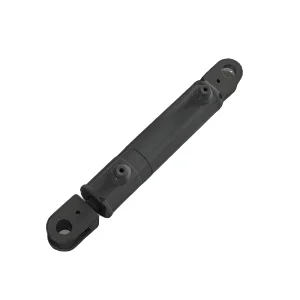
Best Steering cylinder HCS302 Factories, Factory
View Technical Specs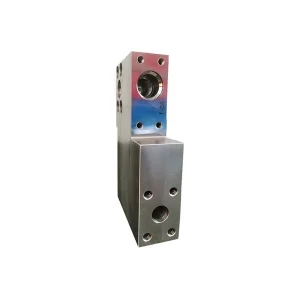
High-Quality T2A Hydraulic Relief Valve Block MPM-HRVB2A Manufacturers, Factory
View Technical Specs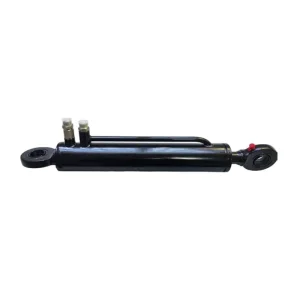
Cheap Single Rod Double Acting Steering Cylinder Manufacturer, Factory
View Technical Specs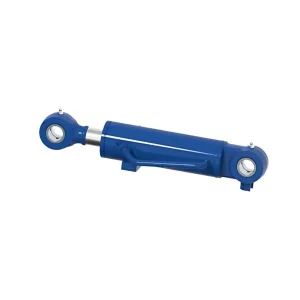
ODM Small Excavator Bulldozing Cylinder Manufacturers, Manufacturer
View Technical Specs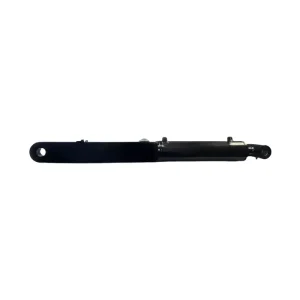
Cheap Loader Tilt Cylinder MPM-HCT402 Suppliers, Supplier
View Technical Specs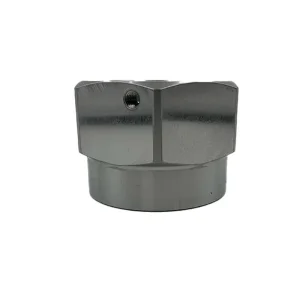
ODM Hydraulic Cylinder Nut MPM-HCNT11 Suppliers, Factory
View Technical Specs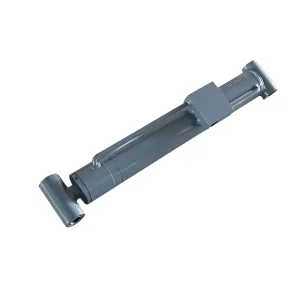
ODM Leveling Cylinder HCL603 Supplier, Manufacturers
View Technical Specs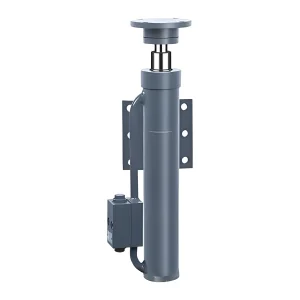
Wholesale Outrigger Expansion Cylinder Suppliers, Factory
View Technical SpecsSubmit Your Technical Drawing for Direct Engineering Review
Send bore, rod, stroke, working pressure, and mounting specifications—or a photo of your existing equipment nameplate. Our sales engineers reply within 24 hours with CAD dimensional confirmation, material analyses, and comprehensive volume pricing.