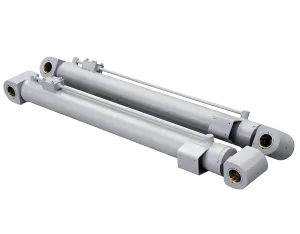
Original OEM Actuators, Valves & Machined Castings
Directly integrated with certified cylinder rod flange interfaces and high-pressure fluid manifolds. Fully interchangeable with international mobile and industrial equipment architectures.
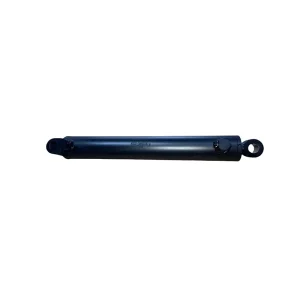
ODM Sanitation Vehicle Locking Cylinder
View Product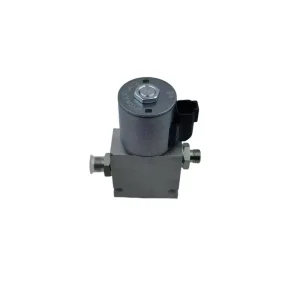
Quick Change Solenoid Valve MPM-QCSV12
View Product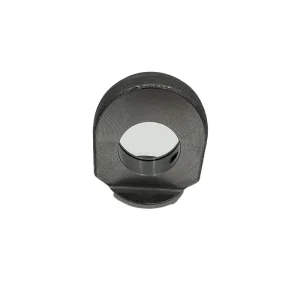
China Hydraulic Cylinder Base MPM-HCBS11
View Product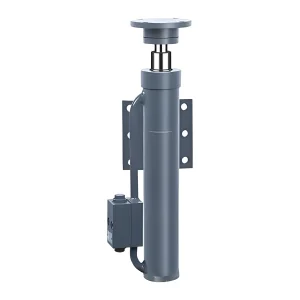
Wholesale Outrigger Expansion Cylinder
View Product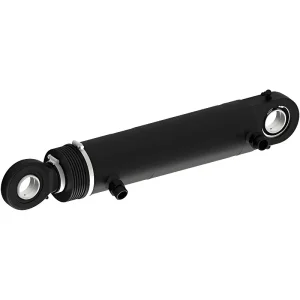
Wholesale Suspension Cylinder
View Product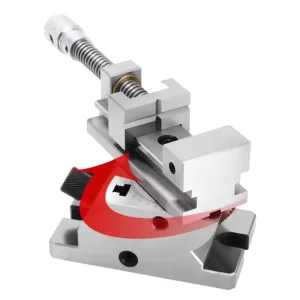
OEM CHM Precision Universal Vise MPM0356
View Product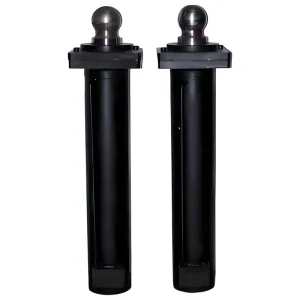
Counterweight Heavy Hydraulic Cylinder
View Product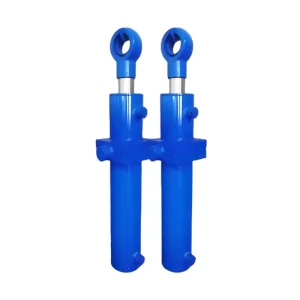
Custom Telescopic Multi-Stage Cylinder
View ProductThe Commercial Landscape of Hydraulic Cylinder Rod Flanges
In high-tonnage fluid power systems, mechanical mounting interfaces govern operational longevity. A cylinder rod flange (commonly designated as front flange mount, head flange MF3 circular, or MF4 rectangular) sustains the highest cyclic tensile and bending loads encountered during high-pressure actuation.
Standardization vs Custom OEM Geometries
Global procurement demands strict adherence to ISO 6020-2 (compact series) and NFPA T3.6.7 R2 fluid power mounting geometries. However, tier-one manufacturers increasingly utilize custom offset bolt circles, dowel pin registrations, and integrated counterbore seals to handle aggressive thrust loads and prevent fastener fatigue shearing in heavy mining and structural excavators.
Metallurgical Integrity & Fatigue Limits
Cast iron or low-grade carbon steel flanges routinely fail under pulse fatigue exceeding 25 MPa. Premium factories deploy normalized 42CrMo4 alloy forgings or high-tensile S355J2 structural steel. High structural yield strength (>650 MPa) prevents micro-yielding around bolt holes, eliminating rod gland misalignment and premature catastrophic rod seal degradation.
Precision CNC Tolerancing & Concentricity
The rod flange is not merely a mounting bracket; it directly locates and clamps the cylinder head and rod bushing. Runout or angular misalignment greater than 0.02 mm causes severe edge loading on polyurethane rod seals and phenolic wear rings, causing oil leakage, rod scoring, and total hydraulic system downtime.
| Mounting Standard | Flange Classification | Nominal Pressure Range | Fatigue Stress Resistance | Typical Industrial Duty Cycle |
|---|---|---|---|---|
| ISO 6020/2 MF3 | Head Circular Flange | 16 MPa to 21 MPa (Continuous) | Excellent radial symmetry; minimal bolt shear | Plastic injection molding, industrial tooling, metal forming |
| ISO 6020/2 MF4 | Head Rectangular Flange | 21 MPa to 31.5 MPa (Peak) | Optimized for high-thrust centerline push installations | Heavy stamping presses, scrap balers, foundry manipulators |
| NFPA T3.6.7 MF1/MF2 | Extended Tie-Rod / Flanged Head | 3,000 PSI to 5,000 PSI | Tension-balanced load transfer across barrel assembly | North American mobile construction, mining shovel boom rigs |
| MPM Custom Heavy Series | Integral Forged Barrel-Flange | Up to 35 MPa (5,076 PSI) | Zero weld joint; monolithic grain boundary alignment | Underground LHD dump cylinders, tunnel boring, subsea locks |
Engineering Architecture & CNC Tolerancing of Rod Flanges
The mechanical interface between the hydraulic cylinder tube, the rod gland assembly, and the mounting flange requires precise structural analysis. Below is the multi-stage engineering protocol executed at Qingdao Micro Precision Machinery (MPM).
1. Finite Element Analysis (FEA) of Stress Concentration
Under maximum extension (thrust), the piston exerts full hydraulic force on the head end. The junction between the mounting face and the cylinder body undergoes severe triaxial tensile stress. Our engineering design team calculates optimal transition fillet radii (R ≥ 0.15 × wall thickness) to avoid micro-crack initiation during high-cycle shock loading (2,000,000+ cycles).
2. Multi-Axis Turning & Deep Hole Concentricity
Machined on high-rigidity CNC turning centers, the pilot register diameter (spigot) that slips into the equipment bulkhead is held to ISO f7 or g6 tolerances. Concentricity between the internal gland seal bore, wear ring recess, and mounting bolt pattern is verified via Coordinate Measuring Machines (CMM) down to < 0.015 mm Total Indicated Runout (TIR).
3. Deep Weld Penetration & Monolithic Forging
For welded rod flange configurations, multi-pass submerged arc or robotic narrow-gap MAG welding is followed by ultrasonic non-destructive testing (NDT). For extreme-duty configurations, MPM machines the cylinder barrel and flange from a single monolithic forged tube, eliminating 100% of weld boundary weaknesses.
Facing Frequent Flange Cracking or Rod Gland Oil Weeping?
Micro-deflection of the rod flange during pressure spikes is the #1 silent killer of step seals and primary U-cups. MPM provides free CAD/FEA structural reviews to optimize your mounting bolt patterns and flange plate thickness.
Emerging Trends Shaping Industrial Cylinder Flange Manufacturing
Driven by automated production, electrification of mobile plant equipment, and stricter environmental regulations, cylinder rod flange design is transitioning from passive steel plates to intelligent, sensor-integrated mechanical assemblies.
Embedded Smart Sensing
Modern rod flanges integrate machined cavities for non-contact magnetostrictive stroke sensors and piezoresistive pressure transducers, enabling real-time IoT condition monitoring directly at the cylinder gland.
Laser Cladding & Eco Coatings
Replacing traditional hexavalent hard chrome, high-velocity oxygen-fuel (HVOF) spraying and laser-cladded tungsten carbide coatings on the mating rod surfaces prevent corrosion creep beneath the flange seal pack.
Direct Manifold Flange Integration
Eliminating vulnerable external hydraulic piping, counterbalance and pilot-operated check valves are now drilled and manifold-mounted directly into the body of the rod flange block for fail-safe load holding.
Weight-Optimized Topologies
Using generative design and FEA stress redistribution, excess material outside primary bolt shear paths is machined away, achieving a 15–25% reduction in dead weight for aerial work platforms and mobile crane booms.
Heavy-Duty Application Scenarios & Load Realities
Different machinery imparts completely unique stress profiles on cylinder rod flange assemblies. MPM tailors flange geometries, thread depths, and bolt circles specifically for each application environment.
Underground Mining & Tunnelling (LHD Loaders)
Underground Load-Haul-Dump machines operate in corrosive mine water and face extreme shock loads during bucket breakout. Circular MF3 rod flanges with precision-reamed dowel holes prevent lateral shifting under 32 MPa shock spikes, while specialized bronze wiper scrapers protect internal seals from abrasive quartzite dust.
Heavy Construction & Earthmoving (Excavator Boom/Arm)
Continuous dynamic bending forces challenge front-mounted outrigger and boom actuators. MPM manufactures rectangular MF4 flanges with reinforced cross-sections and induction-hardened spigot collars that distribute torsional stress away from the cylinder barrel weld zone.
Offshore, Marine & Subsea Actuators
Operating under constant salt spray and high hydrostatic pressure, marine cylinder rod flanges are forged from 316L stainless steel, Duplex 2205, or nickel-plated 42CrMo4. Bolt holes are counterbored with fluoropolymer secondary seals to prevent seawater ingress into gland retention threads.
Industrial Metallurgy & Forging Presses
In hot-strip mills and hydraulic forging presses, cycle frequencies reach tens of thousands of strokes per day under radiant temperatures exceeding 200°C. Flanges feature integrated water-cooling galleries and Viton / PTFE energized seal configurations that resist thermal expansion warping.
High-Precision Agricultural Machinery
Combine harvesters and reversible ploughs demand lightweight, zero-maintenance rod flange designs. MPM produces induction-brazed and friction-welded rod flange units that provide high yield strength at economic batch pricing for large farm equipment OEMs.
Aerial Work Platforms & Mobile Cranes
Every kilogram matters at high outreach heights. Flange designs are optimized with high-strength forged alloys (yield strength >750 MPa), allowing reduced flange thickness without sacrificing the safety factor required by European EN 280 standards.
Macro Solutions: Solving the OEM Supply Chain Dilemma
Global equipment manufacturers face volatile lead times, fluctuating steel prices, and inconsistent component machining from decentralized job shops. MPM provides an integrated, one-roof manufacturing model from drawing to door.
100% In-House Vertical Control
From initial saw cutting and forging roughing to 5-axis CNC finish machining, honing, induction hardening, and pressure testing, every step occurs at our Qingdao facility. No subcontracting means no tolerance stack-up or unverified material substitutions.
Certified Material Traceability
Every batch of raw forged steel or alloy plate is tracked with EN 10204 3.1 chemical analysis and mechanical test certifications. We verify Charpy V-notch impact toughness at -20°C for equipment destined for arctic or harsh winter operations.
Reverse Engineering & Aftermarket Kits
When original machine builders stop supporting obsolete hydraulic cylinders, MPM reverse-engineers parts from physical samples, worn castings, or original equipment nameplates, delivering fully interchangeable replacement assemblies in weeks rather than months.
MPM Engineering Technical Roadmap (2025 – 2035)
Our long-term commitment to advancing fluid power mechanics through digital integration, additive-subtractive manufacturing, and environmentally sustainable hydraulic architectures.
FEA Digital Twin Integration
Parametric 3D CAD modeling with real-time FEA cloud simulation to calculate cyclic fatigue curves prior to physical metal cutting.
Sensor-Embedded Smart Flanges
Direct integration of optical and magnetic micro-transducers inside rod flanges for autonomous predictive maintenance.
Additive Hybrid Manifolds
Laser Powder Bed Fusion (LPBF) 3D printed internal fluid galleries embedded within high-strength forged rod mounting flanges.
Bio-Fluid High-Temp Sealing
Standardized flange geometries matched to next-generation bio-hydraulic esters and zero-carbon water-glycol fluids at 35 MPa.
Self-Compensating Flanges
Shape-memory alloy ring inserts that dynamically adjust rod bushing clearance under extreme side loads to prevent cylinder seizure.
Frequently Asked Technical Questions (FAQ)
Key design, tolerancing, and procurement considerations answered directly by the engineering team at Qingdao Micro Precision Machinery Co., Ltd.
Circular flanges (ISO MF3) provide symmetrical radial stress distribution, making them ideal for rotational equipment, machine tools, and balanced thrust applications. Rectangular flanges (ISO MF4) provide four high-strength mounting points concentrated along the primary load axis, making them superior for compact spaces, high bending loads, and heavy press machinery where horizontal deflection must be minimized.
Under peak hydraulic pressure (which can spike to 150–200% of nominal rating during rapid valve closure), an undersized flange plate will flex elastically like a Belleville spring. This microscopic deflection unloads the static O-ring back-up ring interface behind the cylinder head, creating a transient leak path. MPM calculates flange thickness using von Mises stress models to ensure angular deflection remains < 0.05 degrees at test proof pressure.
For standard industrial duties (up to 16 MPa), fine-grained S355J2 carbon-manganese structural steel provides excellent weldability and yield strength. For heavy earthmoving, mining LHD machines, and high-frequency forging presses (21 MPa to 35 MPa), we recommend 42CrMo4 (AISI 4140) quenched and tempered alloy steel, delivering tensile strengths ≥ 900 MPa and exceptional Charpy impact toughness.
Fastener sizing uses ISO 898-1 Grade 10.9 or 12.9 high-tensile capscrews. Rather than relying on bolt shear resistance, the bolt pretension must generate sufficient clamping friction between the flange mating face and the machine frame to resist the total shear load. MPM recommends spot-faced bolt holes with calibrated torque-angle tightening specs and provides hardened structural washers.
Yes. Our engineering lab uses 3D laser scanners and CMM probes to reverse-engineer broken, cracked, or legacy flange parts. We determine original alloy compositions via optical emission spectrometry (OES), identify the original failure root cause (e.g., stress risers or inadequate bolt pretension), and produce an upgraded component with improved fillet geometry.
Machined spigots, seal grooves, and female mounting threads are coated with heavy-duty VCI (Volatile Corrosion Inhibitor) wax or anti-rust oil, fitted with heavy polyethylene protective caps, shrink-wrapped in moisture barrier film, and secured in heat-treated, fumigated ISPM-15 wooden cases lined with shock-absorbent foam.
High-Pressure Hydraulic Cylinders & CNC Tooling Solutions
Manufactured to international ISO, DIN, and JIS standards. Browse our catalog of lifting actuators, CNC tooling accessories, cylinder heads, and telescopic assemblies.
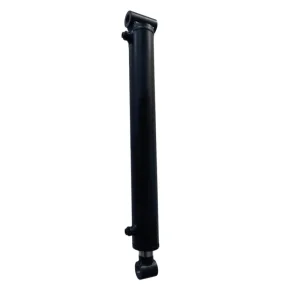
High-Quality Lifting Cylinder HCL602
View Product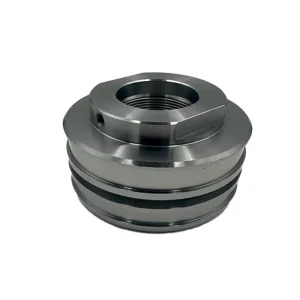
Custom Hydraulic Cylinder Piston MPM-HCPT11
View Product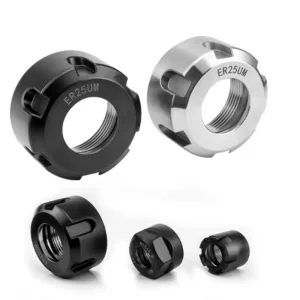
OEM ER Collet MPM-EN0072 CNC Tooling
View Product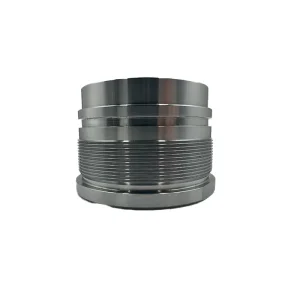
Hydraulic Cylinder Head MPM-HCHD11
View Product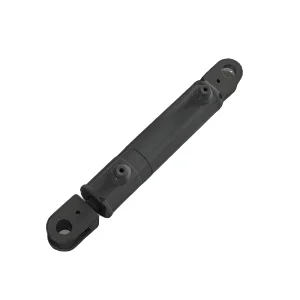
Heavy Machinery Steering Cylinder HCS302
View Product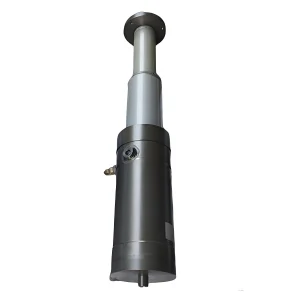
Wholesale 3-Stage Telescopic Cylinder
View Product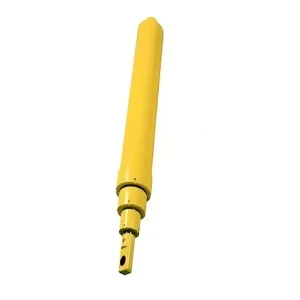
High-Quality 4-Stage Telescopic Cylinder
View Product