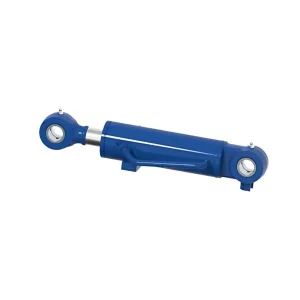
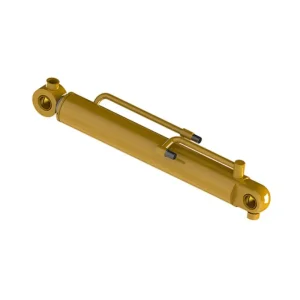
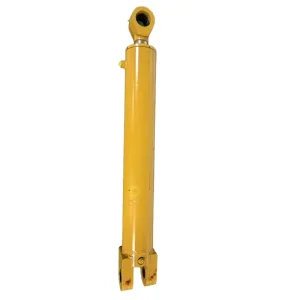
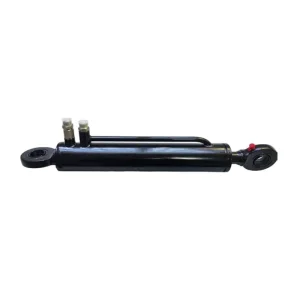
Precision Core Assemblies & Hydraulic Components
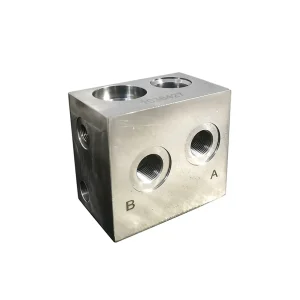
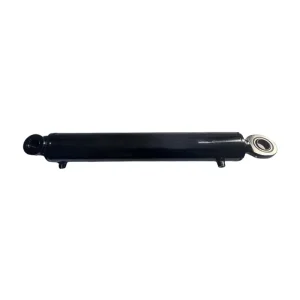
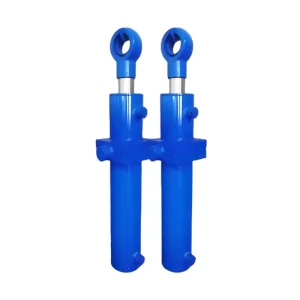
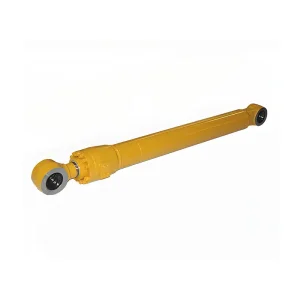
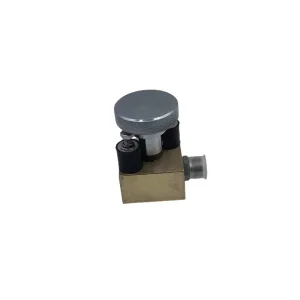
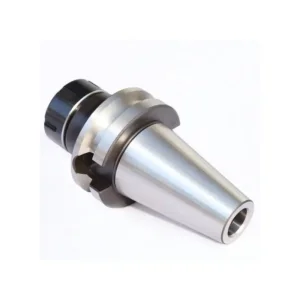
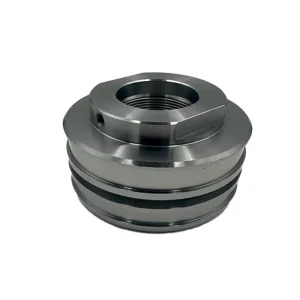
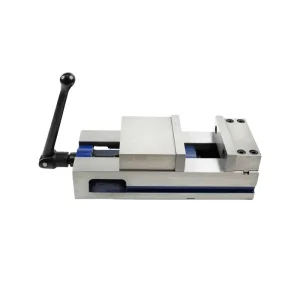
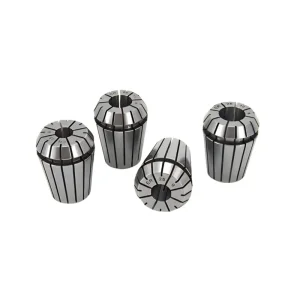
Explore our precision CNC engineered cylinder assemblies, valve blocks, and toolholders manufactured directly in our Qingdao advanced production facility.
State of the Welded Base End Assembly Market
Evaluating structural integrity, metallurgical criteria, and heavy engineering shifts in international hydraulic actuator base integration.
Global Actuator Rigidity Demands
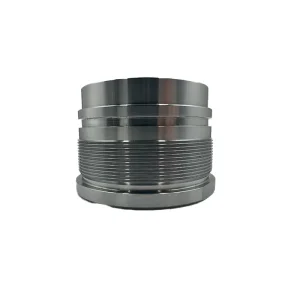
Modern mobile hydraulics demand extreme duty-cycle envelopes. In traditional threaded or bolted tie-rod cylinders, catastrophic fatigue occurs along root threads under surging operational pressures beyond 350 bar. A fully homogeneous welded base end assembly provides supreme structural rigidity, completely mitigating mechanical stretch and external oil leak risks in heavy duty installations.
China’s Advanced Manufacturing Leap
Through comprehensive vertical integration, Chinese manufacturing hubs like Qingdao have combined CNC automated multi-axis turning, specialized friction-welding routines, and metallurgical testing into a seamless value chain. As a premier China welded base end assembly supplier, MPM leverages in-house cold drawn seamless barrel machining alongside custom clevis/trunnion forge forging.
Metallurgical Superiority (27SiMn / Q355D)
Failure analysis shows that end caps suffer high notch-stress concentrations during shock deceleration. MPM adheres to strict alloy selection protocols—utilizing forged 27SiMn, AISI 1045, or quenched-and-tempered alloy cast steels that undergo rigorous ultrasonic inspection (UT) to prevent micro-porosity and internal fissures prior to welding.
Industrial Trends Shaping Welded End Assemblies
From robotic automated gas metal arc welding (GMAW) to intelligent hydraulic sensing integrated directly into the cylinder base.
Smart Sensorized Base Cavities
Modern hydraulic actuators are evolving into interconnected IoT nodes. Modern cylinder bases are increasingly machined with internal cavity ports to integrate magnetostrictive linear position sensors and pressure transducers, allowing real-time telemetry while fully protected inside the heavy welded steel cap.
Advanced Circular Friction Welding
Traditional manual welding introduces heat-affected zone (HAZ) variability. As an industry leader, MPM leverages computerized circumferential submerged-arc and inertia friction welding, guaranteeing consistent root pass penetration, zero metallurgical spatter inside the bore, and optimal dynamic shear strength.
Eco-Friendly Anti-Corrosive Cladding
Marine and offshore operations expose welded bases to heavy saline spray. In addition to standard zinc phosphate priming, modern end assemblies can be upgraded with laser-cladded nickel-chrome alloys or specialized eco-friendly ceramic coats exceeding 1,000 hours of ASTM B117 salt spray testing.
Engineered Scenarios: Heavy Duty Mechanical Environments
Demonstrating structural resilience where shock loading, extreme deflection, and contamination challenge component longevity.
Mining Dumpers & Underground LHD
Underground Load-Haul-Dump machines operate under severe cyclical shocks. Welded spherical bearing base assemblies absorb multi-directional pivot flexure, preventing bending moments on the cylinder barrel during sudden ore bucket drop cycles.
Agricultural Heavy Tillage
Reversible plows and high-tonnage soil cultivators require compact retracted length (pin-to-pin). Welded cross-tube and clevis bases minimize mounting dead zones, ensuring agile frame rollover without mechanical interference.
Material Handling & High Mast Forklifts
Forklift lift and tilt systems experience millions of continuous stroke cycles. Precision reamed pin holes matched with hardened self-lubricating bronze or composite bushings ensure play-free steering and minimal maintenance overhead.
Mobile Truck Cranes & Outriggers
Hydraulic outriggers and luffing arms require high buckling resistance. Solid forged flat-bottom welded bases distribute the immense reactive downward force directly into structural pads without localized barrel flaring.
MPM Engineering Technical Roadmap (2025–2030)
Continuous technological advancement in automated manufacturing, non-destructive testing, and hybrid materials.
Automated Robotic Cells
Full deployment of 6-axis robotic welding stations coupled with laser tracking to achieve 100% repeatability in root penetration and weld bead geometry on heavy-wall assemblies.
AI Acoustic Inspection
Implementation of in-situ acoustic emission sensors during friction welding, utilizing neural networks to detect micro-inclusion anomalies instantly before components leave the lathe spindle.
Ultra-High Yield Alloys
Pioneering the commercial adoption of micro-alloyed bainitic steels, yielding 30% reduction in end cap weight while enhancing low-temperature impact toughness down to -40°C.
Zero-Emission Net-Shape Forging
Transitioning base blank manufacturing towards closed-die precision near-net forging to reduce raw material machining waste by 42% across our Qingdao partner supply chain.
Turnkey Solutions for Global Equipment Manufacturers
Overcoming cross-border procurement challenges through standard compliance, rigorous metallurgy, and tailored logistics.
Drawing & Sample Reverse Engineering
Whether you require standard ISO 6020/2, NFPA tie-rod replacement, or completely proprietary machinery kinematics, our engineering team can reverse engineer from field samples or CAD models (.STEP, .DWG, .IGES), returning verified technical drawings within 24–48 hours.
Quality Verification & Non-Destructive Testing
Every welded base assembly undergoes thorough testing: ultrasonic flaw detection for internal fusion, magnetic particle inspection for micro-cracks along the weld toe, and coordinate measuring machine (CMM) validation of pin hole roundness and concentricity.
Export-Grade Protection & Global Freight
Export components are coated in rust-preventative VCI oil, fitted with plastic thread guards, sealed in desiccated moisture-barrier wraps, and crated in fumigated export-grade plywood boxes compliant with ISPM 15 standards for safe ocean or air transport worldwide.
Frequently Asked Questions
Comprehensive engineering insights regarding base design, weld procedures, steel grades, and manufacturing workflows.
Engineered Excavator, Crane & Steering Cylinders
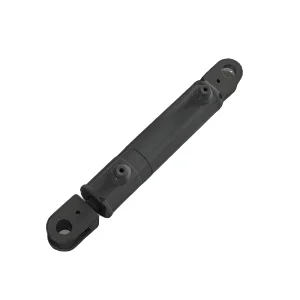
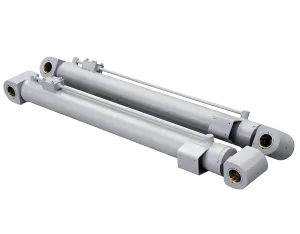
OEM-replacement and tailored industrial hydraulic cylinders built to exact metric and imperial dimensional tolerances.