Engineered Workholding & Hydraulic Systems Portfolio (Part I)
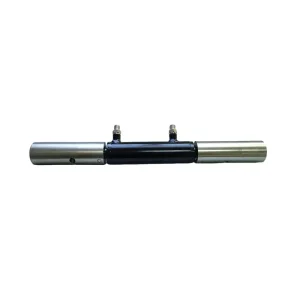
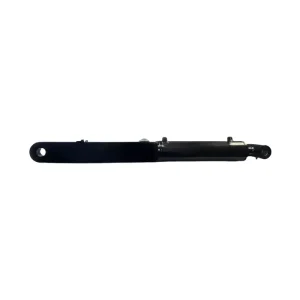
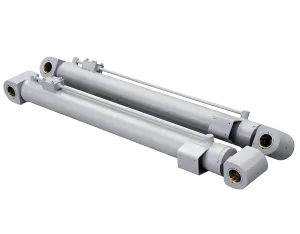
Featured hydraulic actuators, collets, retention components, and modular elements engineered for rigorous manufacturing environments.
Engineering Fundamentals of QGG Precision Tool Vices
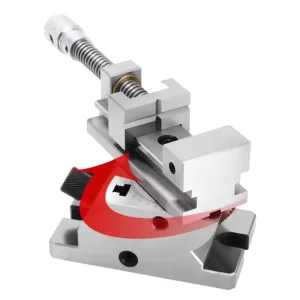
The standard QGG toolmaker vice represents the pinnacle of screw-driven, high-rigidity manual clamping fixtures designed specifically for surface grinding, multi-axis wire-cut EDM, and high-precision inspection coordinate checking.
20CrMnTi Alloy & Cryogenic Cycle
Forged from premium structural alloy steel (20CrMnTi or high-carbon alloy steel), every QGG vice body undergoes precision carburizing, followed by deep sub-zero cryogenic stabilization at -80°C. This eliminates retained austenite, ensuring lifelong micro-dimensional retention under volatile plant temperatures.
Screw-Driven Downward Force Geometry
Unlike standard utility vises that tend to tilt upward under heavy clamping pressure, QGG mechanisms incorporate a precisely guided horizontal lead screw and a downward-acting angled wedge. As clamping torque is applied, the movable jaw generates a dynamic downward vector, suppressing workpiece floating.
Perpendicularity & Squareness Tolerances
Each unit is finish-ground on ultra-precision guideway surface grinding machines. Moving jaw parallelism to bed, jaw-to-side perpendicularity, and overall body squareness are strictly held within 0.005mm/100mm, allowing the toolmaker to orient the vice on its base, front, or side surfaces safely.
Solving Micro-Drift in Advanced Industrial Supply Chains
In modern toolrooms and mass manufacturing lines, small dimensional deviations cause severe stack-up errors. QGG precision vises bridge the gap between heavy primary clamping and fine micromachining.
Aerospace Turbine Impellers
Clamping miniature turbine components and monocrystalline superalloy test samples without causing localized surface work-hardening or micro-cracking.
Medical Stent & Orthopedic Molds
Enabling mirror surface grinding of surgical grade tool steel (e.g., 440C, titanium alloy fixtures) with negligible thermal deflection under wet coolant floods.
Automotive Precision Stamping
Rapid refixturing of punch pins, progressive die matrices, and ejection pilots with modular repeatability down to <0.003mm.
Semiconductor Die Workholding
Non-magnetic, highly ground fixturing bases for sub-millimeter silicon carbide (SiC) wafer carrier trimming and packaging mold fabrication.
Technical Specification & Global Metrological Compliance
Every vice machined across our Qingdao precision machining bays undergoes multi-axis CMM verification, calibrated laser interferometry, and full hardness batch tracing.
| Model Series | Jaw Width (mm) | Jaw Height (mm) | Clamping Range (mm) | Parallelism / Perpendicularity | Hardness | Standard Compliance |
|---|---|---|---|---|---|---|
| QGG-50 | 50 | 25 | 0 - 65 | 0.005mm / 100mm | HRC 58 - 62 | ISO 9001 / DIN 8611 |
| QGG-63 | 63 | 32 | 0 - 85 | 0.005mm / 100mm | HRC 58 - 62 | JIS B6161 Industrial |
| QGG-73 | 73 | 35 | 0 - 100 | 0.005mm / 100mm | HRC 58 - 62 | DIN / CE Standards |
| QGG-88 | 88 | 40 | 0 - 125 | 0.005mm / 100mm | HRC 58 - 62 | Metric & Imperial |
| QGG-100 | 100 | 45 | 0 - 125 | 0.005mm / 100mm | HRC 58 - 62 | Sub-Zero Stabilized |
| QGG-125 | 125 | 50 | 0 - 160 | 0.008mm / 100mm | HRC 58 - 62 | Heavy Toolroom Class |
| QGG-150 | 150 | 50 | 0 - 200 | 0.008mm / 100mm | HRC 58 - 62 | High Rigidity Series |
Engineering Trajectory: Next-Generation Workholding
As modern machining pivots toward dark factories, micro-electro-discharge integration, and nanometer-scale tolerances, our engineering team executes a clear progression framework.
Sub-Zero Alloy Optimization
Adoption of vacuum low-pressure carburizing with ultra-deep liquid nitrogen stabilization (-196°C) to completely eradicate residual stress states across all batch models.
PVD DLC Wear Coatings
Application of low-friction Diamond-Like Carbon (DLC) films to internal screw drives and guideway sliding surfaces, boosting wear resistance by over 300% under non-lubricated EDM cycles.
Smart IoT Force Monitoring
Embedded piezoelectric thin-film force sensors capable of streaming real-time micro-clamping torque and clamp deformation data to CNC controllers via industrial wireless links.
Robotic Chuck Automation
Fully pneumatic/hydraulic hybrid automation interface integration compatible with Erowa, System 3R, and standardized pneumatic chuck palettes for automated robotic cell loading.
Frequently Asked Questions on QGG Precision Vices
In-depth responses curated by our senior applications and tooling engineers for global distributors and factory engineers.
What is the principal difference between QGG and QKG precision vises?
QGG vises utilize a precision manual screw drive mechanism that generates powerful, stable horizontal and downward clamping force through an ergonomic hex handle, ideal for versatile toolroom grinding. QKG models utilize an inclined pull-rod clamp mechanism that allows lightning-fast manual positioning and self-locking, making QKG preferred for rapid repeated loading in EDM wire cutting.
How is the anti-float mechanism constructed in QGG vises?
The anti-float mechanism is formed by precision machining the interface between the movable jaw and the underlying slide rail at a specific micro-angle (typically 45° to 60°). When the lead screw applies horizontal forward force, this wedge geometry resolves a secondary vertical force vector downwards, pulling the jaw firmly against the bedway to prevent workpiece lifting.
What maintenance is required to preserve 0.005mm parallelism over years?
Always demagnetize the vise completely after use on magnetic surface grinder chucks to prevent micro-chips from adhering to ground surfaces. Thoroughly clean coolant residue, wipe down with high-purity mineral oil or corrosion inhibitors, and store in a constant-temperature tool cabinet. Never drop or overtighten past recommended torque ratings.
Can QGG vices be customized for non-magnetic or stainless applications?
Yes. For corrosive Wire-Cut EDM environments or sensitive cleanroom electronics, our factory supplies custom versions made of martensitic stainless steel (SUS440C) vacuum hardened to 55-58 HRC, completely rustproof under deionized water immersion.
Integrated Industrial Catalog & Assemblies (Part II)
Further core manufactured products from Qingdao Micro Precision Machinery, maintaining strict DIN, ISO, and JIS engineering standards.