Precision Machine Vices & Hydraulic Motion Components
Explore our premium workholding mechanisms and heavy-duty actuators engineered in our Qingdao facility for high-tolerance industrial applications.
Engineering Principles of Precision Cross-Type Machine Vices
A technical evaluation of bi-directional dual-axis mechanics, structural stiffness parameters, and high-tensile material properties.
Dual-Axis Orthogonal Indexing
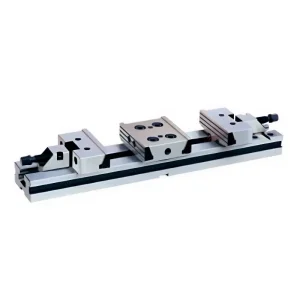
Cross-type machine vices (also known as 2-axis compound slide cross tables) integrate an X-axis and Y-axis slide mechanism directly atop the base plate. This allows machinists to align parts along perpendicular axes without dismounting the work, maintaining sub-0.015mm parallelism across the entire slide length.
High-Tensile HT250/FC30 Castings
Constructed utilizing close-grained pearlitic cast iron (FC30 or HT250) stress-relieved via vibratory and thermal cycling. This metallurgical structure dampens vibration frequencies under high-velocity end-milling and prevents structural body twisting when jaw clamping forces exceed 25 kN.
Hardened Precision Acme Leadscrews
Both coordinate channels utilize case-hardened 40Cr alloy steel trapezoidal leadscrews paired with adjustable phosphor bronze split-nuts. Backlash elimination adjustments guarantee dialed graduations down to 0.02mm per division, preventing workpiece shift under heavy lateral milling.
In modern high-mix, low-volume CNC fabrication, machine operators frequently face bottle-necks when performing precise secondary operations—such as keyway slotting, multi-point PCD pitch drilling, and face contours—on standard 3-axis CNC vertical machining centres (VMC) or conventional knee mills. The application of a China cross-type machine vice eliminates repetitive fixture recalibration by converting a simple single-axis spindle into an agile multi-coordinate processing cell.
At Qingdao Micro Precision Machinery (MPM), our production discipline reflects decades of fluid power and tooling manufacturing. Every cross-slide vice undergoes precision slideway scraping, hardened jaw induction hardening (HRC 55–60), and stringent orthogonal testing on coordinate measuring machines (CMM) prior to packaging.
| Engineering Feature | MPM Heavy-Duty Cross-Type Vices | Standard Conventional Drill Vices | Hydraulic AngLock Vices |
|---|---|---|---|
| Coordinate Positioning | Full X-Y Orthogonal Micro-Travel | Single Plane / Uniaxial Only | Stationary / Fixture Dependent |
| Lead-Screw Backlash Tolerances | ≤ 0.03 mm (Adjustable Bronze Nut) | ≤ 0.15 mm (Cast Iron Threads) | N/A (Piston Direct Push) |
| Damping Capacity | High (Pearlitic HT250 Iron) | Medium (Grey Cast Iron HT150) | High (Forged Alloy Steel) |
| Max Recommended Clamping Force | 28 kN to 40 kN | 10 kN to 15 kN | 45 kN to 75 kN |
Why Tier-1 Global Procurement Teams Choose China Machine Tool Infrastructure
Cost reduction without mechanical compromise: How Qingdao's industrial ecosystem delivers high-accuracy tooling components to OEM and distribution channels worldwide.
Cluster Raw Material Economies
Our Shandong production base leverages immediate proximity to coastal iron casting foundries and certified alloy steel mills. This drastically shortens the metallurgical procurement cycle, guaranteeing metallurgical homogeneity from ingot melt to finished casting.
End-to-End Vertical Machining
Unlike assembly-only trading entities, Qingdao Micro Precision executes CNC 5-axis slideway milling, high-frequency induction hardening, precision OD/ID cylindrical grinding, and surface scraping under one roof, guaranteeing tight process control across repeat orders.
Intermodal Port Connectivity
Direct dispatch from Qingdao Port—one of the largest deepwater container hubs in the world—enables seamless FCL and LCL container logistics with shortened inland transport, reducing export lead times to Europe, North America, and Southeast Asia.
Precision Localization & Multi-Sector Industrial Deployment
From rapid prototyping toolrooms to demanding automated mining hydraulics fabrication, cross-type workholding provides multi-axis agility.
Toolroom & Die Prototyping
For custom die-stamping plates, compound slide vices provide rapid coordinate adjustments for multi-cavity drilling and localized clearance milling without expensive CNC reprogram cycles.
Hydraulic Manifold Porting
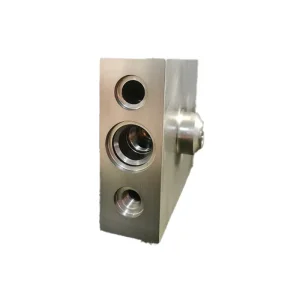
Machining counterbalance valve cavities (such as Sun T3A, T13A, and T2A cavities) requires exact orthogonal center-drilling and step-reaming. Cross-type tables hold tight coordinate intervals across multi-port blocks.
Heavy Machinery Component Repair
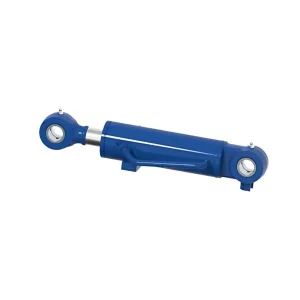
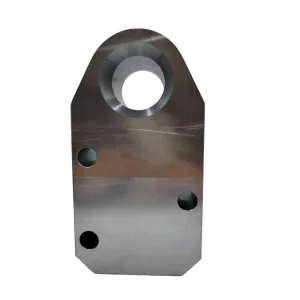
Excavator cylinder heads, spherical bearing retention ears, and trunnion mountings require precision refurbishment where off-axis alignment causes premature hydraulic seal blowout and piston scoring.
Aerospace Jigs & Fixtures
Specialty composite and aluminum bracket fabrication demands low-stress holding and precise pitch hole patterns (PCD) on standard radial drills, providing high flexibility for small-batch runs.
Strict Global Compliance & Quality Engineering Frameworks
Ensuring absolute dimensional repeatability, metallurgical reliability, and transparent technical documentation across international boundaries.
International Thread & Geometric Standards
All fasteners and leadscrew assemblies conform to international standards—ISO metric (6H thread tolerance) or imperial Unified coarse/fine (UNC/UNF). T-slots are strictly machined to DIN 650 or ANSI B5.1M specifications to ensure seamless mounting on standard machine platen surfaces.
Material Traceability (EN 10204 3.1)
Every batch of cross vices and hydraulic valve components is tracked from casting heat code to finished assembly. Full mechanical testing, hardness mapping (HB/HRC), and chemical spectrometry certificates are archived and provided upon procurement request.
Export-Grade Anti-Corrosion Packing
To withstand intercontinental ocean freight and fluctuating humidity cycles, every vice is treated with vapor-phase corrosion inhibiting (VCI) oil, vacuum-sealed in polyethylene moisture envelopes, and secured within robust, heavy-duty fumigated wooden crates.
Next-Generation Trends in Cross-Type Workholding Technology
How automation, digital coordinate readout, and intelligent clamping sensors are reshaping conventional machining practices.
Integrated Digital Readout (DRO)
The transition from mechanical micrometer dials to integrated magnetic and optical glass linear scale DRO units directly on both cross axes. This drastically reduces manual backlash calculation and human dial-reading parallax errors.
Pneumatic & Hydro-Mechanical Booster Hybridization
Modern fast-paced production lines demand rapid automatic clamping. Hybrid cross vices now incorporate pneumatic rapid-closing channels coupled with mechanical toggle or hydraulic pressure boosters to generate 50kN gripping forces within 0.8 seconds.
Modular Zero-Point Base Integration
Future workholding demands immediate pallet exchange. Contemporary cross-table models are now pre-machined with standardized pitch locating bushings for direct adaptation onto pneumatic zero-point chucking plates, cutting setup changeovers from 20 minutes to under 30 seconds.
Frequently Asked Questions: Sourcing Cross-Type Machine Vices
Direct technical answers addressing geometric alignment, lead times, custom casting requirements, and minimum orders.
Comprehensive CNC Tooling & Hydraulic Motion Lineup
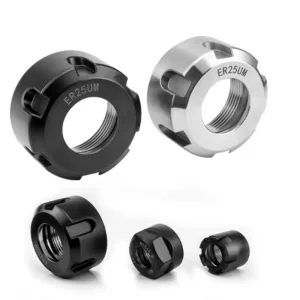
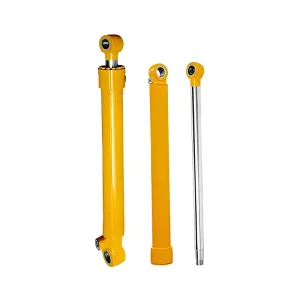
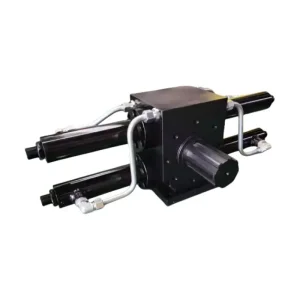
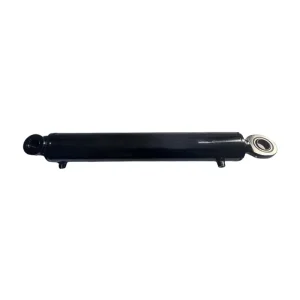
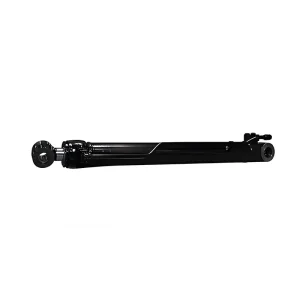
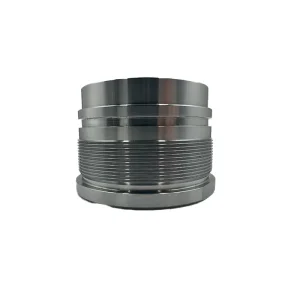
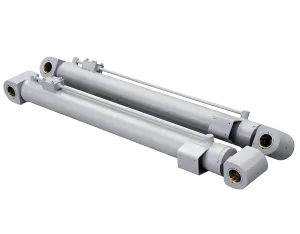
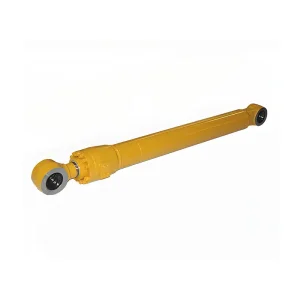
Explore our complete manufacturing capabilities encompassing precision collets, excavator cylinders, and custom hydraulic valve bodies.